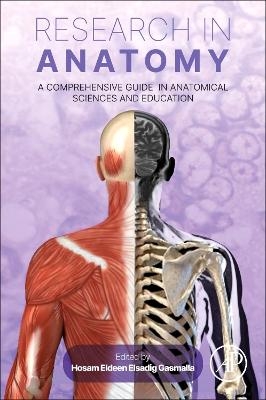
Research in Anatomy
Academic Press Inc (Verlag)
978-0-443-13635-1 (ISBN)
The book is divided into two parts. Part one is the introductory section, which covers the fundamentals of anatomical research through seven chapters. It starts by providing brief descriptions and examples of various research designs and offering a step-by-step guide on how to conduct systematic literature searches. Subsequent chapters in this section compare human and animal studies in anatomical research, discuss how to conduct systematic reviews, cover essential aspects of data analysis and management in anatomical research, outline methods for sharing anatomy research findings, and highlight the vital role of cadavers in advancing anatomical knowledge and medical education. Finally, this section explores the methods and approaches used to study and improve anatomy education.
The second section explores various specialised research areas in detail. It provides guidance and insights on several topics, including developmental anatomy research, the use of surgical observations for anatomical research, and morphometric studies in anatomy. Additionally, it discusses the application of medical imaging tools for anatomical studies and the significance of macroscopic and microscopic examination and imaging techniques in neuroanatomical research. Finally, this section explores anatomical variability
Dr. Hosam Eldeen E. Gasmalla is a medical doctor and educator with nearly two decades of experience in anatomy teaching and research for undergraduate medical, dentistry, and physiotherapy students, as well as postgraduate students. His expertise spans Sudan, Rwanda, Türkiye, and the United Kingdom. He graduated from medical school at Al-Neelain University in Sudan and practised medicine for a few years before transitioning to a full-time role in teaching and research in anatomy, holding a master's and a PhD in the field. As an educator, his experience is complemented by a master's degree in health professions education and recognised by the fellowship of the Academy of Medical Educators, UK. He has a particular interest in student assessment with good leadership, teaching experience and publications in this field, including leading the module of “assessment of learners in the master's program of health professions education. His portfolio of publications is in three themes: Anatomy education, clinical anatomy (with a focus on neuroanatomy) and medical education (with a focus on assessment).
Part 1 - Introductory section
1. Introduction to research methods
2. Data collection, entry, analysis, and management
3. Human versus animal studies
4. Developing systematic reviews and meta-analyses of anatomical studies
Part 2 - Advanced specialized section
5. Anatomical research based on cadaveric study
6. Anatomical research based on morphometric study
7. Anatomical research based on radiological tools
8. Anatomical research based on microscopic study
9. Anatomical research based on surgical practice
10. Developmental anatomy research
11. Anatomical variability
12. Neuroanatomical research
13. Research in anatomical education
14. Disseminating research results
| Erscheinungsdatum | 02.09.2025 |
|---|---|
| Verlagsort | San Diego |
| Sprache | englisch |
| Maße | 152 x 229 mm |
| Gewicht | 610 g |
| Themenwelt | Studium ► 1. Studienabschnitt (Vorklinik) ► Anatomie / Neuroanatomie |
| Naturwissenschaften ► Biologie | |
| ISBN-10 | 0-443-13635-1 / 0443136351 |
| ISBN-13 | 978-0-443-13635-1 / 9780443136351 |
| Zustand | Neuware |
| Informationen gemäß Produktsicherheitsverordnung (GPSR) | |
| Haben Sie eine Frage zum Produkt? |
aus dem Bereich