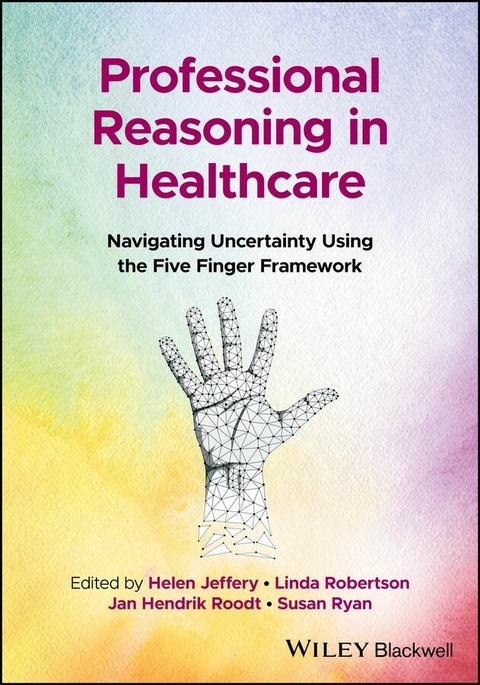
Professional Reasoning in Healthcare (eBook)
John Wiley & Sons (Verlag)
978-1-119-89216-8 (ISBN)
A guide to decision-making and critical thinking in diverse healthcare practice contexts.
Professional reasoning is an essential component of health practice. To thrive in a world that demands constant change where there is not necessarily a right or wrong answer, strong frameworks are needed to support effective decision making. Critical to safe, ethical and culturally responsive practice decisions is the ability to integrate information from research evidence, the client, and the context/environment. Practitioners draw from these elements, along with the expertise of others, and through integration of the information with who they are, what they know, and how they operate. This creates a way forward that is right for the client, applicable to the context, and a good fit with themselves. This book provides such a framework.
Professional Reasoning in Healthcare: Navigating Uncertainty Using the Five Finger Framework aims to drive a revolution in professional decision-making and critical analysis among healthcare professionals. Built around an innovative framework for fostering thinking, this book illustrates the situated nature of learning and the uniqueness of practice decisions to individual practitioners and clients. The simplicity of the Five Finger framework belies the complexity of reasoning it stimulates. Written using narratives, the reader is able to imagine the situation as the thinking is made visible. It provides simple yet effective tools and techniques for promoting reflective and reflexive thinking and for integrating the evidence into effective decisions. It promises to help readers develop habits of critical thinking that lead to healthier, more effective decision-making processes.
Readers will find:
- Scenarios that bring the professional reasoning to life
- Tools and techniques to help translate theory into immediate practice
- Strategies to enhance reflective thinking skills, transformative learning, and sense-making
- Detailed discussion of topics including team culture, person-centred practice, social learning theory, cultural influences on reasoning, emotional intelligence, and more
- An overview of transdisciplinary thinking and a complexity-based view on ethics and values
Professional Reasoning in Healthcare is ideal for healthcare professionals, managers, students, and educators who are charged with developing skills in making critical decisions in diverse practice contexts.
Helen Jeffrey is Principal Lecturer at Otago Polytechnic, Te P?kenga, New Zealand.
Linda Robertson is Emeritus Associate Professor at Otago Polytechnic, Te P?kenga, New Zealand.
Jan Hendrik Roodt is Academic Facilitator, Te P?kenga, New Zealand, and Director of Polar Analytics, Finland.
Susan Ryan is Professor Emerita at University College Cork, Ireland.
Professional Reasoning in Healthcare A guide to decision-making and critical thinking in diverse healthcare practice contexts. Professional reasoning is an essential component of health practice. To thrive in a world that demands constant change where there is not necessarily a right or wrong answer, strong frameworks are needed to support effective decision making. Critical to safe, ethical and culturally responsive practice decisions is the ability to integrate information from research evidence, the client, and the context/environment. Practitioners draw from these elements, along with the expertise of others, and through integration of the information with who they are, what they know, and how they operate. This creates a way forward that is right for the client, applicable to the context, and a good fit with themselves. This book provides such a framework. Professional Reasoning in Healthcare: Navigating Uncertainty Using the Five Finger Framework aims to drive a revolution in professional decision-making and critical analysis among healthcare professionals. Built around an innovative framework for fostering thinking, this book illustrates the situated nature of learning and the uniqueness of practice decisions to individual practitioners and clients. The simplicity of the Five Finger framework belies the complexity of reasoning it stimulates. Written using narratives, the reader is able to imagine the situation as the thinking is made visible. It provides simple yet effective tools and techniques for promoting reflective and reflexive thinking and for integrating the evidence into effective decisions. It promises to help readers develop habits of critical thinking that lead to healthier, more effective decision-making processes. Readers will find: Scenarios that bring the professional reasoning to life Tools and techniques to help translate theory into immediate practice Strategies to enhance reflective thinking skills, transformative learning, and sense-making Detailed discussion of topics including team culture, person-centred practice, social learning theory, cultural influences on reasoning, emotional intelligence, and more An overview of transdisciplinary thinking and a complexity-based view on ethics and values Professional Reasoning in Healthcare is ideal for healthcare professionals, managers, students, and educators who are charged with developing skills in making critical decisions in diverse practice contexts.
Helen Jeffrey is Principal Lecturer at Otago Polytechnic, Te Pukenga, New Zealand. Linda Robertson is Emeritus Associate Professor at Otago Polytechnic, Te Pukenga, New Zealand. Jan Hendrik Roodt is Academic Facilitator, Te Pukenga, New Zealand, and Director of Polar Analytics, Finland. Susan Ryan is Professor Emerita at University College Cork, Ireland.
List of Contributors vii
Foreword ix
Preface x
Acknowledgments xii
Chapter 1 Synthesizing Knowledge for Situated Practice: The Five Finger Framework 1
Historical Influences on Professional Reasoning
Helen Jeffery and Susan Ryan
Chapter 2 The Five Finger Framework: Development and Rationale 16
Fostering Thinking Skills
Jan Hendrik Roodt and Linda Robertson
Chapter 3 Grasping the Whole: The Practitioner Perspective 42
Practitioner Influences on Professional Decisions
Sian E. Griffiths, Kim Reay, and Helen Jeffery
Chapter 4 Using the Expertise of Others: Many Hands Make Light Work 57
Accessing Knowledge from Others to Inform Professional Decisions
Elizabeth Martin
Chapter 5 Walking Hand in Hand: Collaborative Practice 68
Eliciting and Incorporating Client Perspectives
Helen Jeffery
Chapter 6 Knowing the Context like the Back of Your Hand 83
Contextual Influences on Professional Reasoning
Helen Jeffery
Chapter 7 Letting the Research Lend a Hand 99
Evaluating, Synthesizing, and Implementing Knowledges
Luciana Blaga and Linda Robertson
Chapter 8 Synthesizing World Views 116
Transdisciplinarity and the Five Finger Framework
Jan Hendrik Roodt
Chapter 9 Tools for Implementing the Five Finger Framework 126
Ideas, Activities, and Tips for Practice and Education Settings
Helen Jeffery and Jan Hendrik Roodt
Index 143
An essential tool and a great insight to the decision-making skills that health professionals go through on a daily basis - a must read for all practitioners, new and seasoned!
Lara Gallichan BSc Hons, Speech Language Therapist, NZSTA
Written in a clear and accessible manner, there is no doubt this book will be an invaluable resource for students, clinicians, and teachers alike. By providing real-world examples, the reader easily appreciates the value of the Five Finger Framework and how it can improve their professional reasoning and practice. This book should be a compulsory reading for all students, and I would highly recommend it to all practising healthcare workers.
Dr Ruth Jeffery PhD, MSc, PGDip Med Rad Sci (NM), LLB(Hons), BA, BSc, NZDMI.
The ability to critically reflect upon the way that professional reasoning and judgement occurs is pivotal and is profoundly ethical for practice, research, and leadership.
Amongst the unique features of this text is the introduction of the Five Finger Framework to assist lifelong learners to comprehensively problem pose and problem solve. This resonates well with situated learning with its focus upon context, interpersonal relationships and shared decision making.
The book is culturally aware, transdisciplinary and has the potential to become a core text for learners at all levels of education particularly for those within practice-based education and mentorship relationships.
Dr Sheena E.E.Blair Dip OT, M.Ed, ED, FRCOT
Thanks for offering real, concrete, and doable approaches for improving professional reasoning.... using real stories of real practitioners to show how this works in practice.... broadening the views on client and culture.... In short, thanks for "handing us" the Five Finger Framework. It will work for students, practitioners, educators, and scholars. I would adopt it in a heartbeat if I were still teaching!
Barbara A. Schell, Professor Emerita, School of Occupational Therapy, Brenau University, PhD, OT/L, FAOTA.
This internationally relevant text presents the Five Finger Framework as a tool for enabling practice reasoning, critical reflection, and decision-making across a range of transdisciplinary approaches in health and social care settings. The metaphor of a hand unfolds a structured process for thinking through many-layered aspects to reach the end goal we all aim for - working effectively, visibly and in a traceable and thus accountable manner for collaborative solution-focused approaches.
Margaret McKenzie, Associate Professor, Registered Social Worker (NZ)
CHAPTER 2
The Five Finger Framework: Development and Rationale: Fostering Thinking Skills
Jan Hendrik Roodt1 and Linda Robertson2
1Advanced Academic, Facilitator, Te Pūkenga, New Zealand
2Associate Professor Emeritus, Occupational Therapy, Te Pūkenga, New Zealand
INTRODUCTION
Client interactions, making decisions, and taking relevant action occupy the days of professionals in service enterprises such as occupational therapy, social work, and nursing. This also extends to teaching, engineering professions, and systems design. As we grow and progress in our professional fields, we become more accomplished at the daily tasks. However, where do novices start, and how do practitioners deal with the rapidly changing world that is increasingly volatile, uncertain, and ambiguous?
This chapter introduces the Five Finger Framework (FFF), building upon the historic concepts discussed within Chapter 1. We begin by examining the modern practice environment, followed by an exploration of evidence‐based practice (EBP) and its complexities. The notion of artful and situated practice is introduced. It involves integrating critical reflective practice, continuous transformative learning, and anticipatory thinking. The motivations behind practicing mindfully, including the concept of moral empathy, are explored. Additionally, the factors that facilitate or hinder critical reflective practice are discussed.
Next, development of the FFF based on current research findings is covered. To provide context for the discussion, we briefly touch upon the relevant research and outcomes that were published, presented, and tested in New Zealand. Then the use of the hand and fingers as metaphor is explored within the pedagogical context.
The chapter concludes by providing a concise description of the hand, palm, and five finger metaphor and introducing how evidence can be utilized to support reasoning and action in EBP.
THE COMPLEXITY OF PRACTICE DRIVES THE NEED FOR PROFESSIONAL REASONING SKILLS
Practitioners face a growing challenge due to the increasing complexity, volatility, and uncertainty in their work environments. The situation is largely driven by the rapid socio‐technological changes observed in what is commonly referred to as the “Second Machine Age” (Brynjolfsson & McAfee, 2016). They must now navigate diverse stakeholder expectations, ranging from practice‐specific considerations to broader concerns such as finance, environmental sustainability, regulatory compliance, employment matters, and political imperatives. This necessitates the development of heightened sense‐making abilities and high‐level thinking skills (Bannigan & Moores, 2009; Turner, 2019) to deliver quality outcomes for clients.
The quality of professional work depends on how practice is motivated, designed, and evaluated, all with a focus on achieving positive outcomes for the clients. In this context, quality refers to the extent to which interventions are comprehensive, justified, and beneficial for the clients. This understanding takes into consideration the specific circumstances and is documented and agreed upon by all relevant parties. It is also reflected in the execution of the intervention.
For instance, reasoning in practice can be seen as a technical rational process that relies on evidence. It involves following established routines and behaviors to provide services to clients. This approach aims to minimize risks and ensure accountability by adhering to established rules and protocols (Rolfe et al., 2010). The search for evidence to support professional practice is influenced by beliefs regarding what constitutes effective and valuable practice. The technical rational approach involves applying a set of predetermined rules or procedures, derived from research, as a formula for practice. The assumption is that following established rules and protocols ensures efficient and effective service delivery. It relies on a belief that practice can be standardized and made predictable through adherence to these rules.
However, accomplished practitioners may also view practice as a rational artful endeavor, where professional judgment and intuition play essential roles. Here, the argument is that practice is characterized by a lack of predictability, requiring professionals to make complex decisions that rely on a combination of professional judgment, intuition, and common sense. According to this approach, professionals need to be adaptable and flexible in their knowledge application, identifying and utilizing principles as appropriate to each unique situation. In unexpected circumstances, rigid rules may not provide helpful guidance, and professionals must rely on “a mixture of professional judgment, intuition and common sense” (Fish & Coles, 1998, p. 32).
Views of Reasoning
In nursing literature, two views of reasoning have been described as “the external, scientific and the internal, intuitive” (Rycroft‐Malone et al., 2009, p. 81). The external, scientific approach to care involves relying on evidence‐based knowledge and established guidelines in practice. The focus is on the use of external sources, such as research findings and standardized protocols, to guide decision making and actions. It values the systematic application of scientific evidence to provide consistent and reliable care to patients. On the other hand, the internal, intuitive approach recognizes the importance of healthcare professionals' personal experiences, judgment, and intuition in practice. Practitioners employing this approach interpret external sources by engaging their tacit knowledge (knowing why rather than knowing what – a combination of experience, insight, and intuition) and understanding of the context and patient needs. Those individuals can make quick decisions and take appropriate actions based on a combination of intuition, reflection, and on‐the‐spot experimentation.
Schön (1983) originally introduced the concept of reflection‐in‐action, which emphasizes being mindful in the moment of action and considering not only what needs to be done but also why. The artful practitioner engages in reflection, on‐the‐spot experimentation, and action, using a model of “knowing in action” (Rolfe et al., 2010, p. 168). At this advanced level of practice, professionals may possess a deep understanding of their patients and situations and make intuitive decisions without consciously knowing the basis for their knowledge. They become situated and embodied in the sense‐making and meaning‐making processes of interventions.
While the discussion has primarily focused on healthcare practice, we recognize that professional reasoning is relevant to all fields and disciplines. In the field of system design engineering, the ability to adopt a broad perspective and handle unforeseen circumstances is a crucial aspect of professional artistry. Buede and Miller (2016, p. 5) argue that “big picture people” or holistic practitioners in engineering possess this skill set. These professionals are adept at considering multiple factors, understanding the interconnectedness of system components, and incorporating a comprehensive perspective into their work. As a result, at the graduate level of engineering education, critical thinking skills are increasingly emphasized. These skills go beyond technical knowledge and encompass aspects such as fairness, precision, and logic in the testing, identifying, and evaluation of assumptions, concepts, and information. Ralston and Bays (2013) highlight the integration of these intellectual traits into engineering training, aiming to cultivate qualities such as humility, integrity, intellectual empathy, and intellectual perseverance.
Thus, professional reasoning skills play a vital role in developing expertise and ensuring high‐quality practice under uncertainty and in complex environments. The skills involve the ability to gather and critically evaluate information, make sound judgments, and consider the broader implications of one's decisions and actions. Honing these skills is indispensable for professionals to navigate complex and unpredictable situations, address challenges and achieve positive outcomes within their respective domains. Incorporating professional reasoning into education and training enables undergraduate students to acquire the necessary skills and perspectives to excel in their chosen professions.
EVIDENCE‐BASED PRACTICE
The EBP movement has provided many challenges for professionals in relation to translating evidence into care. For instance, when general practitioners (GPs) felt that their traditional role was being challenged in the 1980s, a model of evidence‐based medicine (EBM) was developed that was thought to reflect real‐world practice more accurately. The three components were:
- Mindfulness in one's approach toward EBM itself, and to the influences on decision making.
- Pragmatism – in one's approach to finding and evaluating evidence; and
- Knowledge of the patient – as the most useful resource in effective communication of evidence (Galbraith et al., 2017, p. 1).
Rycroft‐Malone et al. (2009) outlined four types of evidence in nursing practice: research,...
| Erscheint lt. Verlag | 11.1.2024 |
|---|---|
| Sprache | englisch |
| Themenwelt | Medizin / Pharmazie ► Naturheilkunde |
| Schlagworte | allied health • Communities of Practice • critical thinking • Ergotherapie • Ergotherapie / Praxis • evidence-based practice • five finger framework • Gesundheits- u. Sozialwesen • Health & Social Care • Healthcare decision making • local best practice • Medical Professional Development • Medical Science • Medizin • occupational therapy • Occupational Therapy Practice • peer learning • person-centred practice • Perspektiven in medizinischen Berufen • Professional Reasoning • reflective practice • Social Learning Theory |
| ISBN-10 | 1-119-89216-3 / 1119892163 |
| ISBN-13 | 978-1-119-89216-8 / 9781119892168 |
| Informationen gemäß Produktsicherheitsverordnung (GPSR) | |
| Haben Sie eine Frage zum Produkt? |
 EPUB (Adobe DRM)
Kopierschutz: Adobe-DRM
Adobe-DRM ist ein Kopierschutz, der das eBook vor Mißbrauch schützen soll. Dabei wird das eBook bereits beim Download auf Ihre persönliche Adobe-ID autorisiert. Lesen können Sie das eBook dann nur auf den Geräten, welche ebenfalls auf Ihre Adobe-ID registriert sind.
Details zum Adobe-DRM
Dateiformat: EPUB (Electronic Publication)
EPUB ist ein offener Standard für eBooks und eignet sich besonders zur Darstellung von Belletristik und Sachbüchern. Der Fließtext wird dynamisch an die Display- und Schriftgröße angepasst. Auch für mobile Lesegeräte ist EPUB daher gut geeignet.
Systemvoraussetzungen:
PC/Mac: Mit einem PC oder Mac können Sie dieses eBook lesen. Sie benötigen eine
eReader: Dieses eBook kann mit (fast) allen eBook-Readern gelesen werden. Mit dem amazon-Kindle ist es aber nicht kompatibel.
Smartphone/Tablet: Egal ob Apple oder Android, dieses eBook können Sie lesen. Sie benötigen eine
Geräteliste und zusätzliche Hinweise
Buying eBooks from abroad
For tax law reasons we can sell eBooks just within Germany and Switzerland. Regrettably we cannot fulfill eBook-orders from other countries.
aus dem Bereich