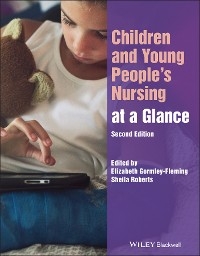
Children and Young People's Nursing at a Glance (eBook)
John Wiley & Sons (Verlag)
978-1-119-83082-5 (ISBN)
Children and Young People's Nursing at a Glance
The market-leading at a Glance series is popular among healthcare students and newly qualified practitioners for its concise, simple approach and excellent illustrations.
Each bite-sized chapter is covered in a double-page spread with clear, easy-to-follow diagrams, supported by succinct explanatory text.
Covering a wide range of topics, books in the at a Glance series are ideal as introductory texts for teaching, learning and revision, and are useful throughout university and beyond.
Everything you need to know about Children and Young People's Nursing ... at a Glance!
Children and Young People's Nursing at a Glance is an ideal reference text and revision guide on the clinical care needs of neonates, children, and young people, while also considering policy, skills, and the practice of children's nursing in today's healthcare environment.
The Second Edition has been comprehensively reviewed against contemporary evidence-based practice guidelines and consideration given to the changing landscape of children and young people's health to illuminate best clinical practice for nurses. In Children and Young People's Nursing at a Glance, readers can expect to find specialised information on topics such as:
- Neonatal transport, jaundice and hyperbilirubinaemia, congenital heart disease, neonatal resuscitation, incubator care, and sudden infant death syndrome
- Nutrition in childhood, breastfeeding, bottle feeding, feed calculations, growth charts, appropriate behaviours by age, and common behavioural problems
- Pain assessment, pain management, preoperative preparation, postoperative care, pressure area care, managing fluid balance, administering medication, and drug calculations
- Inflammatory bowel disease, gastro-oesophageal reflux, coeliac disease, appendicitis, constipation, renal problems, haematological problems, and musculoskeletal problem
Presenting the essential information in an easily accessible, concise and highly visual format, Children and Young People's Nursing at a Glance is an essential resource for children's nurses, nursing associates, and students who are working towards registration, along with practicing nurses in need of a refresher.
All content reviewed by students for students
Wiley nursing books are designed exactly for their intended audience. All of our books are developed in collaboration with students. This means that our books are always published with you, the student, in mind.
If you would like to be one of our student reviewers, go to www.reviewnursingbooks.com to find out more.
This new edition is also available as an e-book. For more details, please see www.wiley.com/buy/9781119830665
Elizabeth Gormley-Fleming, Associate Director of Academic Quality Assurance, Centre for Academic Quality Assurance, and Children's Nursing Team, School of Health and Social Work, University of Hertfordshire, Hatfield, UK.
Sheila Roberts, Senior Lecturer, Children's Nursing Team, School of Health and Social Work, University of Hertfordshire, Hatfield, UK.
Children and Young People s Nursing at a Glance The market-leading at a Glance series is popular among healthcare students and newly qualified practitioners for its concise, simple approach and excellent illustrations. Each bite-sized chapter is covered in a double-page spread with clear, easy-to-follow diagrams, supported by succinct explanatory text. Covering a wide range of topics, books in the at a Glance series are ideal as introductory texts for teaching, learning and revision, and are useful throughout university and beyond. Everything you need to know about Children and Young People s Nursing at a Glance! Children and Young People s Nursing at a Glance is an ideal reference text and revision guide on the clinical care needs of neonates, children, and young people, while also considering policy, skills, and the practice of children s nursing in today s healthcare environment. The Second Edition has been comprehensively reviewed against contemporary evidence-based practice guidelines and consideration given to the changing landscape of children and young people s health to illuminate best clinical practice for nurses. In Children and Young People s Nursing at a Glance, readers can expect to find specialised information on topics such as: Neonatal transport, jaundice and hyperbilirubinaemia, congenital heart disease, neonatal resuscitation, incubator care, and sudden infant death syndrome Nutrition in childhood, breastfeeding, bottle feeding, feed calculations, growth charts, appropriate behaviours by age, and common behavioural problems Pain assessment, pain management, preoperative preparation, postoperative care, pressure area care, managing fluid balance, administering medication, and drug calculations Inflammatory bowel disease, gastro-oesophageal reflux, coeliac disease, appendicitis, constipation, renal problems, haematological problems, and musculoskeletal problem Presenting the essential information in an easily accessible, concise and highly visual format, Children and Young People s Nursing at a Glance is an essential resource for children s nurses, nursing associates, and students who are working towards registration, along with practicing nurses in need of a refresher. All content reviewed by students for students Wiley nursing books are designed exactly for their intended audience. All of our books are developed in collaboration with students. This means that our books are always published with you, the student, in mind. If you would like to be one of our student reviewers, go to www.reviewnursingbooks.com to find out more. This new edition is also available as an e-book. For more details, please see www.wiley.com/buy/9781119830665
Elizabeth Gormley-Fleming, Associate Director of Academic Quality Assurance, Centre for Academic Quality Assurance, and Children's Nursing Team, School of Health and Social Work, University of Hertfordshire, Hatfield, UK. Sheila Roberts, Senior Lecturer, Children's Nursing Team, School of Health and Social Work, University of Hertfordshire, Hatfield, UK.
11
Advanced physical assessment
Figure 11.1 Rapid clinical assessment of a seriously ill child will identify any potential respiratory, cardiovascular, or neurological failures. Use the ABCDE approach for a systematic assessment of the child.
This chapter follows on from the section on observation of the sick child (Chapter 10), further developing these skills in the advanced physical assessment of children. Utilizing the ABCDE (Airway, Breathing, Circulation, Disability, Exposure) approach, this chapter will allow you to identify the deteriorating child and consider appropriate action.
While the majority of children who become unwell will recover with minimal intervention, the rapidity with which a child can deteriorate can lead to anxiety in even experienced practitioners. A rapid clinical assessment of a seriously ill child will identify any potential respiratory, cardiovascular, or neurological failures (Figure 11.1). Rapid assessment allows for initiation of appropriate treatment to prevent progression to respiratory or cardiac arrest
The ABCDE approach allows for a systematic assessment of the child to take place:
- A – airway
- B – breathing
- C – circulation
- D – disability
- E – exposure
A baseline of vital signs includes temperature, heart/pulse rate, respiratory rate and effort, blood pressure, pain assessment, level of consciousness, and oxygen saturation. Physical assessment commences with observing the general appearance of the child and how the child interacts with the adults and others around them. Do they look well or unwell? Are they pale or flushed? Active or lethargic? Calm or agitated? Compliant or combative? What position are they in – sitting, lying, are they moving?
Airway
It is vital to establish that the airway is patent on immediate inspection and assessment of the child. Look for noises, secretions, coughing, and the presence of any artificial airways.
A crying, screaming, or talkative child indicates an airway that is patent at that time, whereas a child who appears floppy and quiet may require immediate airway support. If there are any concerns about a child's ability to maintain their airway, follow the Paediatric Life Support Algorithm. Look at the child: do they look cyanosed around the lips and nose? In children with darker skin it may not be immediately apparent, so check the tongue. If the child seems to be drooling excessively, ask the parent or carer if this is normal. Difficulty in swallowing can be an indication of an airway problem. What sounds can you hear? A bark, seal‐like cough, or noisy breathing on inspiration can indicate some narrowing of the upper airway, as in croup for example.
Breathing
Once a clear airway is established, breathing can be assessed. Remove the child's top with consent. Remember to maintain privacy, dignity, and warmth at all times. This assessment must take account of the work and effectiveness of breathing.
Look at the rate of breathing: is it within normal parameters for the child's age? Is the chest moving equally on inspiration? Auscultate the chest and listen for breath sounds. Bilateral air entry with the absence of adventitious noises and equal chest movement is the norm. If it is not, this may indicate a pneumothorax, infection, or inflammation.
Is there any drawing (recession) under the ribs (subcostal), between the ribs (intercostal), or in the sternal notch (tracheal)? While all infants ‘tummy’ breathe, if this is fast and drawing in excessively it can indicate a breathing problem.
Consider the child's general position. Are they in a relaxed position or playing? Children in respiratory distress will often adopt a tripod position. This is where they sit with their arms stretched out and pushing up against a table or their knees. They will stretch their head back and may possibly be blowing out when breathing in an attempt to improve ventilation.
Listen to the child talking. If they are only able to answer in short sentences or not at all, then these are signs of respiratory distress. Listen for any noises during breathing. Wheeze is the noise air makes as it is squeezed back out of the lungs. This is not necessarily a sign of respiratory distress in toddlers and infants if the other symptoms discussed are absent, but it can be a source of concern for parents.
Oxygen saturation levels, as discussed in other chapters, are a useful measure, but must be considered in the context of the child's overall condition.
As part of the ongoing physical assessment of the child, note oxygen requirements and delivery mode.
Circulation
Assessment of the child's state of hydration and circulation can take place once the respiratory system has been assessed. Checking the pulse is integral to assessing circulation. While palpating the pulse, consider not just the rate of the heart, but the volume and rhythm of the pulse. The location used should be noted. A thin, thready central pulse can indicate shock or severe dehydration. In infants and small children it is often easier to check the brachial pulse than the radial pulse, or consider using a stethoscope placed over the apex of the heart. For infants under 6 months of age, consider taking a femoral pulse when checking the nappy area. Remember, as with all procedures, to explain to the parent or carer what you are doing and why.
Look at the child's face and hands. Do they look pale or grey, are the lips dry and cracked? Look at the oral mucosa and nail‐bed colour. Note any finger clubbing. Along with sunken eyes, this could indicate a child in shock or dehydrated. Skin turgor should be assessed and noted.
In infants with a patent fontanelle, ask the parents if it looks sunk in any way compared to its normal appearance. Capillary refill time is an important measure, but bear in mind that small infants and toddlers can be very sensitive to environmental changes and will have a sluggish capillary refill time due to a change in room temperature rather than shock. For this reason it is often better to check the capillary refill time on the forehead or chest. Consider urine output and ask the parent or carer how long the current nappy has been on if one is worn. If it is dry after being on for a few hours, consider the child's hydration status.
Disability
In the context of advanced assessment, when discussing disability it is not in relation to an existing condition, but rather to any acute changes in the child's level of consciousness. The use of the AVPU (Alert, Voice, Pain, Unresponsive) system allows for a rapid initial assessment of the child, and goes hand in hand with assessment of the airway. Is the child awake and responsive, or floppy and unconscious? The biggest risk to life in an unconscious child is an occluded airway. If the child is awake, ask the attending carers if the child is their usual self, or if anything has changed. Signs of a neurological problem are headaches, vomiting – especially on waking or after a head injury – dizzy spells, altered visual acuity, or a change in the appearance of the eyes. In infants, neurological signs can be more discreet, but a bulging fontanelle or inconsolable high‐pitched crying is an indication of a problem.
A formal tool for assessing neurological status is the Glasgow Coma Scale, and an adapted paediatric version is available. This uses a scoring system to assess the level of neurological deficit and can provide an indication as to what treatment may need to be carried out. Infants have a poor ability to maintain their blood sugar level when unwell, so any signs of an altered level of consciousness in infants and small children should trigger checking of the blood glucose level. Identify any abnormal movement or gait. The use of mobility aids, prosthetics/orthotics, hearing aids, or glasses should be noted and recorded.
The growth and development of the infant and child should be noted. This will also include measurement of the head circumference, assessment of sensory function, and fine and gross motor skills.
Exposure
The final part of the advanced physical assessment is an overall review of the child. The skin should be assessed the colour, turgor, brushing wounds, lesions, rashes, and pressure injuries noted.
Infants and small children should be assessed from head to toe for the presence of any rashes, scars, bruises, or deformities. Remember to check the axilla, the nappy area, behind the ears, and around the nape of the neck. If you suspect there is a non‐blanching rash, then have a high suspicion for sepsis until proven otherwise. While the majority of rashes seen will be normal, innocuous rashes associated with various common childhood conditions, they are often a source of anxiety for carers. If older children present acutely unwell, then check for the presence of rashes, but allow them the opportunity to undress in privacy before conducting the assessment. If the temperature has not been checked already then this should be done, but remember sepsis can present without fever, particularly in infants. Unusual marks or bruises must never be ignored and in the case of child protection concerns, reference should be made to local safeguarding procedures.
Gastrointestinal system
This will include...
| Erscheint lt. Verlag | 23.3.2023 |
|---|---|
| Reihe/Serie | At a Glance (Nursing and Healthcare) |
| Wiley Series on Cognitive Dynamic Systems | Wiley Series on Cognitive Dynamic Systems |
| Mitarbeit |
Herausgeber (Serie): Ian Peate |
| Sprache | englisch |
| Themenwelt | Medizin / Pharmazie ► Pflege |
| Schlagworte | General Clinical Nursing • Kinderkrankenpflege • Klinische Krankenpflege • Krankenpflege • Krankenpflege in der Pädiatrie u. Neonatologie • Medical Science • Medizin • nursing • Nursing Children & Young People • Pädiatrie • Pediatrics |
| ISBN-10 | 1-119-83082-6 / 1119830826 |
| ISBN-13 | 978-1-119-83082-5 / 9781119830825 |
| Informationen gemäß Produktsicherheitsverordnung (GPSR) | |
| Haben Sie eine Frage zum Produkt? |
 EPUB (Adobe DRM)
Kopierschutz: Adobe-DRM
Adobe-DRM ist ein Kopierschutz, der das eBook vor Mißbrauch schützen soll. Dabei wird das eBook bereits beim Download auf Ihre persönliche Adobe-ID autorisiert. Lesen können Sie das eBook dann nur auf den Geräten, welche ebenfalls auf Ihre Adobe-ID registriert sind.
Details zum Adobe-DRM
Dateiformat: EPUB (Electronic Publication)
EPUB ist ein offener Standard für eBooks und eignet sich besonders zur Darstellung von Belletristik und Sachbüchern. Der Fließtext wird dynamisch an die Display- und Schriftgröße angepasst. Auch für mobile Lesegeräte ist EPUB daher gut geeignet.
Systemvoraussetzungen:
PC/Mac: Mit einem PC oder Mac können Sie dieses eBook lesen. Sie benötigen eine
eReader: Dieses eBook kann mit (fast) allen eBook-Readern gelesen werden. Mit dem amazon-Kindle ist es aber nicht kompatibel.
Smartphone/Tablet: Egal ob Apple oder Android, dieses eBook können Sie lesen. Sie benötigen eine
Geräteliste und zusätzliche Hinweise
Buying eBooks from abroad
For tax law reasons we can sell eBooks just within Germany and Switzerland. Regrettably we cannot fulfill eBook-orders from other countries.
aus dem Bereich