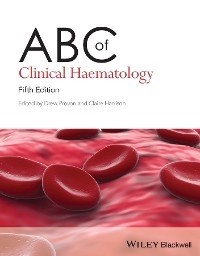
ABC of Clinical Haematology (eBook)
John Wiley & Sons (Verlag)
9781119890768 (ISBN)
An essential guide and introduction to the diagnosis, treatment and management of disorders across the breadth of clinical haematology
Extensively revised, this 5th edition of ABC of Clinical Haematology covers all aspects of contemporary haematology, providing the basic science behind the disease and diagnostic aspects, along with up to date management. The text assumes little prior haematology knowledge, enabling clear understanding by non-experts, including medical students and nurses. Full colour illustrations and text boxes highlighting important learning points together enable more efficient reader comprehension.
ABC of Clinical Haematology covers:
- Iron deficiency anaemia, macrocytic anaemia, hereditary anaemias, polycythaemia vera, essential thrombocythaemia, and myelofibrosis
- Chronic myeloid leukaemia, acute leukaemias, lymphoma, stem cell transplantation, cellular therapies, adult myelodysplastic syndrome, and myeloma
- Bleeding disorders, thrombosis, anticoagulation, and paediatric haematology, platelet disorders
- Amyloidosis, with focus on systemic light chain amyloidosis, and haematological emergencies
- New tests, treatments, and management solutions that are now available for certain conditions, especially common blood related disorders
With contributions from leading experts in their respective fields, ABC of Clinical Haematology, Fifth Edition provides an ideal reference for primary care practitioners and other healthcare professionals working with patients who have blood related problems.
About the ABC series
The ABC series has been designed to help you access information quickly and deliver the best patient care, and remains an essential reference tool for GPs, junior doctors, medical students and healthcare professionals.
Now offering over 80 titles, this extensive series provides you with a quick and dependable reference on a range of topics in all the major specialties.
The ABC series is the essential and dependable source of up-to-date information for all practitioners and students in primary healthcare.
To receive automatic updates on books and journals in your specialty, join our email list. Sign up today at www.wiley.com/email
Drew Provan, Emeritus Reader in Autoimmune Haematology, Department of Haematology, Barts and The London School of Medicine and Dentistry, Queen Mary University of London, London, UK.
Claire Harrison, Professor of Myeloproliferative Neoplasms and Deputy Medical Director, Guy's and St Thomas' NHS Foundation Trust UK.
Drew Provan, Emeritus Reader in Autoimmune Haematology, Department of Haematology, Barts and The London School of Medicine and Dentistry, Queen Mary University of London, London, UK. Claire Harrison, Professor of Myeloproliferative Neoplasms and Deputy Medical Director, Guy's and St Thomas' NHS Foundation Trust UK.
Contributors iv
Preface to the Fifth Edition v
1 Iron Deficiency Anaemia 1
Catherine Booth and Drew Provan
2 Macrocytic Anaemia 7
Samah Babiker and Nita Prasannan
3 The Hereditary Anaemias 13
Rachel Kesse- Adu
4 Polycythaemia Vera Essential Thrombocythaemia and Myelofibrosis 19
Anna L. Godfrey and Claire Harrison
5 Chronic Myeloid Leukaemia 25
Hugues de Lavallade
6 The Acute Leukaemias 31
Michael Austin and Bela Patel
7 Platelet Disorders 39
Marie A. Scully and John Paul Westwood
8 Adult Myelodysplastic Syndrome 47
Sally B. Killick
9 Myeloma and Other Plasma Cell Dyscrasias 53
Sally Moore and Karthik Ramasamy
10 Bleeding Disorders Thrombosis and Anticoagulation 59
Vickie McDonald
11 Lymphoma 65
Karen Stanley and David Wrench
12 Stem Cell Transplantation 81
Michelle Escebedo- Cousin and Kirsty Thomson
13 Cellular Therapies 87
Reuben Benjamin
14 Paediatric Haematology 91
John D. Grainger and Lianna Reynolds
15 Amyloidosis with a Focus on Systemic Light Chain Amyloidosis 101
Ayesha Shameem Mahmood
16 Haematological Emergencies 109
Vered Stavi and Igor Novitzky- Basso
Index 119
CHAPTER 1
Iron Deficiency Anaemia
Catherine Booth1 and Drew Provan2
1 Barts Health NHS Trust; NHS Blood and Transplant, London, UK
2 Department of Haematology, Barts Health NHS Trust; London School of Medicine & Dentistry, London, UK
OVERVIEW
- Iron deficiency is the commonest cause of anaemia worldwide and is frequently seen in general practice.
- The anaemia of iron deficiency is caused by defective synthesis of haemoglobin, resulting in red cells that are smaller than normal (microcytic) and contain reduced amounts of haemoglobin (hypochromic).
Iron metabolism
Iron has a pivotal role in many metabolic processes, and the average adult contains 3–5 g of iron, of which two‐thirds is in the oxygen‐carrying molecule haemoglobin (Hb).
A normal Western diet provides about 15 mg of iron daily, of which 5–10% is absorbed (~1 mg), principally in the duodenum and upper jejunum, where the acidic conditions help the absorption of iron in the ferrous form. Absorption is helped by the presence of other reducing substances, such as hydrochloric acid and ascorbic acid. The body has the capacity to increase its iron absorption in the face of increased demand – for example, in pregnancy, lactation, growth spurts and iron deficiency (Table 1.1).
Once absorbed from the bowel, iron is transported across the mucosal cell to the blood, where it is carried by the protein transferrin to developing red cells in the bone marrow. Iron stores comprise ferritin, a labile and readily accessible source of iron, and haemosiderin, an insoluble form found predominantly in macrophages.
About 1 mg of iron a day is lost from the body in urine, faeces, sweat and cells shed from the skin and gastrointestinal tract. Menstrual losses of an additional 20 mg a month and the increased requirements of pregnancy (500–1000 mg) contribute to the higher incidence of iron deficiency in women of reproductive age (Box 1.1).
Clinical features of iron deficiency
The symptoms accompanying iron deficiency depend on how rapidly the anaemia develops. In cases of chronic, slow blood loss, the body adapts to the increasing anaemia, and patients can often tolerate extremely low concentrations of haemoglobin – for example, <70 g/l – with remarkably few symptoms. Most patients complain of increasing lethargy and dyspnoea. More unusual symptoms are headaches, tinnitus, taste disturbance and restless leg syndrome. Pica (a desire to eat non‐food substances) and, most characteristically, pagophagia (abnormal consumption of ice) are uncommon but well‐described and resolve promptly with iron replacement. In children, chronic iron deficiency anaemia can lead to impaired psychomotor and cognitive development.
Table 1.1 Daily dietary iron requirements.
| Male | 1 mg |
| Adolescence | 2–3 mg |
| Female (reproductive age) | 2–3 mg |
| Pregnancy | 3–4 mg |
| Infancy | 1 mg |
| Maximum bioavailability from normal diet (about) | 4 mg |
On examination, several skin, nail, hair and other epithelial changes may be seen in chronic iron deficiency. Atrophy of the skin occurs in about a third of patients, and hair thinning may be particularly noted in young women. Nails may become brittle, but the classic finding of koilonychia (spoon‐shaped nails) is unlikely to be seen in clinical practice in higher‐income countries. Patients may also complain of angular stomatitis, in which painful cracks appear at the angle of the mouth, sometimes accompanied by glossitis. Although uncommon, oesophageal and pharyngeal webs can be a feature of iron deficiency anaemia (consider this in middle‐aged women presenting with dysphagia). These changes are believed to be due to a reduction in the iron‐containing enzymes in the epithelium and gastrointestinal tract. Few of these epithelial changes are seen in modern practice and are of limited diagnostic value.
Tachycardia and cardiac failure may occur with severe anaemia irrespective of cause, and in such cases, prompt remedial action should be taken.
When iron deficiency is confirmed, a full clinical history, including leading questions on possible gastrointestinal blood loss or malabsorption (as in, for example, coeliac disease), should be obtained. Menstrual losses should be assessed, and the importance of dietary factors and regular blood donation should not be overlooked (Figure 1.1).
Box 1.1 Causes of iron deficiency anaemia.
Most iron deficiency anaemia is the result of blood loss, especially in affluent countries.
| Blood loss | Increased demand | Poor intake |
|---|
| Reproductive system Menorrhagia Gastrointestinal tract Oesophagitis Oesophageal varices Hiatus hernia (ulcerated) Peptic ulcer Inflammatory bowel disease Haemorrhoids (rarely) Carcinoma: stomach, colorectal Angiodysplasia Hereditary haemorrhagic telangiectasia (rare) Parasitic infection (e.g. hookworm/strongyloides) – commonest cause of iron deficiency worldwide Renal tract Carcinoma (especially bladder) Schistosoma haematobium infection Intravascular haemolysis with renal haemosiderin excretion Iatrogenic Multiple blood sampling (especially premature infants) Blood or platelet donation | Growth spurts (especially in premature infants) Pregnancy, lactation Patients with chronic renal failure undergoing haemodialysis and receiving erythropoietin | Malabsorption Coeliac disease Atrophic gastritis (also may result from iron deficiency) Infection: Helicobacter pylori, tropical sprue Post‐surgical: gastric bypass, small bowel resection Dietary Vegans Elderly Infants under 12 months fed predominantly on cow’s milk |
Diet alone is seldom the sole cause of iron deficiency anaemia in adults in Britain except when it prevents an adequate response to a physiological challenge – as in pregnancy, for example. In children, by contrast, diet is a key factor, particularly in infants slow to wean (e.g. by 6 months) or those fed cow’s milk (which has low iron content and poor bioavailability) before 12 months.
A state of ‘functional iron deficiency’ is common in patients with chronic inflammatory conditions and often co‐exists with anaemia or chronic disease. Total body iron may be normal, but iron stores cannot be mobilized for making new red cells due to changes in metabolic or transport pathways.
Figure 1.1 Diagnosis and investigation of iron‐deficiency anaemia.
Laboratory investigations
A full blood count and film should be assessed (Box 1.2). These will confirm the anaemia, and recognising the indices of iron deficiency is usually straightforward (reduced haemoglobin concentration, reduced mean cell volume (MCV), reduced mean cell haemoglobin (MCH), reduced mean cell haemoglobin concentration). It is worth noting that a reduction in haemoglobin concentration is a late feature of iron deficiency, and in up to 40% of cases, MCV may be normal. The first change may be an increase in the red cell distribution width. There may be a reactive thrombocytosis. Some modern analysers will determine the percentage of hypochromic red cells or the haemoglobin content of reticulocytes, both of which reflect the availability of iron for making new red cells. The blood film shows microcytic hypochromic red cells, pencil cells and occasional target cells (Figure 1.2, Table 1.2).
Box 1.2 Investigations in iron deficiency anaemia.
- Full clinical history and physical examination
- Full blood count and blood film examination
- Haematinic assays (serum ferritin, iron studies, vitamin B12, folate)
- % hypochromic red cells and reticulocyte Hb content (if available and diagnosis is uncertain)
- Urea and electrolytes, liver function tests
- Coeliac serology
- Urinalysis
- Fibreoptic and/or CT imaging studies of the gastrointestinal tract
- Pelvic ultrasound (females, if indicated)
Figure 1.2 Blood film showing changes from iron‐deficiency anaemia.
Table 1.2 Diagnosis of iron deficiency anaemia.
| Haemoglobin | Men <130 g/l, women <120 g/l |
|---|
| MCV | Reduced* |
| MCH | Reduced* |
| MCHC | Reduced* |
| Blood film | Microcytic hypochromic red cells with pencil cells and target cells |
| Serum ferritin | <15 μg/l most specific <30 μg/l likely iron deficient |
| Transferrin saturation | ≤15% strongly supportive <20% suggestive of iron deficiency |
| % hypochromic red... |
| Erscheint lt. Verlag | 21.3.2023 |
|---|---|
| Reihe/Serie | ABC Series |
| ABC Series | ABC Series |
| Sprache | englisch |
| Themenwelt | Medizin / Pharmazie ► Medizinische Fachgebiete ► Innere Medizin |
| Schlagworte | Anaemia • blood diseases • blood disorders • Haematological Emergencies • Haematology diagnosis • Haematology disease • Haematology management • Haematology research • Haematology symptoms • haematology textbook • Haematology treatment • Hämatologie • Hämatologisches Labor • Hematology • Klinische Medizin • laboratory hematology • leukemia • Medical Science • Medizin |
| ISBN-13 | 9781119890768 / 9781119890768 |
| Informationen gemäß Produktsicherheitsverordnung (GPSR) | |
| Haben Sie eine Frage zum Produkt? |
 EPUB (Adobe DRM)
Kopierschutz: Adobe-DRM
Adobe-DRM ist ein Kopierschutz, der das eBook vor Mißbrauch schützen soll. Dabei wird das eBook bereits beim Download auf Ihre persönliche Adobe-ID autorisiert. Lesen können Sie das eBook dann nur auf den Geräten, welche ebenfalls auf Ihre Adobe-ID registriert sind.
Details zum Adobe-DRM
Dateiformat: EPUB (Electronic Publication)
EPUB ist ein offener Standard für eBooks und eignet sich besonders zur Darstellung von Belletristik und Sachbüchern. Der Fließtext wird dynamisch an die Display- und Schriftgröße angepasst. Auch für mobile Lesegeräte ist EPUB daher gut geeignet.
Systemvoraussetzungen:
PC/Mac: Mit einem PC oder Mac können Sie dieses eBook lesen. Sie benötigen eine
eReader: Dieses eBook kann mit (fast) allen eBook-Readern gelesen werden. Mit dem amazon-Kindle ist es aber nicht kompatibel.
Smartphone/Tablet: Egal ob Apple oder Android, dieses eBook können Sie lesen. Sie benötigen eine
Geräteliste und zusätzliche Hinweise
Buying eBooks from abroad
For tax law reasons we can sell eBooks just within Germany and Switzerland. Regrettably we cannot fulfill eBook-orders from other countries.
aus dem Bereich