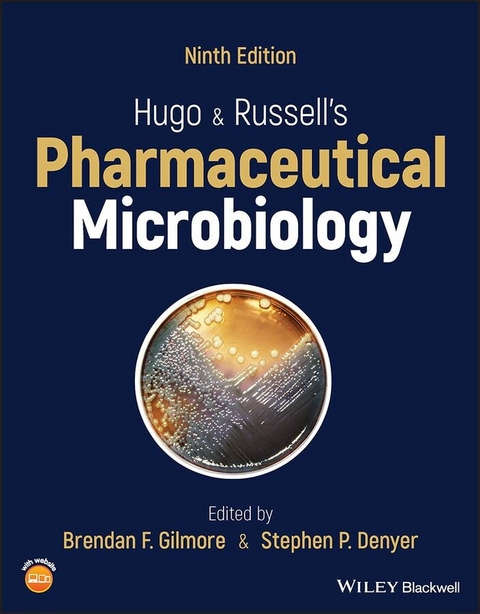
Hugo and Russell's Pharmaceutical Microbiology (eBook)
John Wiley & Sons (Verlag)
978-1-119-43455-9 (ISBN)
Discover the very latest developments in pharmaceutical microbiology in the 9th edition of this popular textbook
Microbiology is one of the essential pharmaceutical sciences upon which the study and practice of pharmacy is built. It has a bearing on all aspects of the manufacture of medicines and sterile products, from their design and development to their delivery as quality products. Few interventions are more central to modern medicine than the treatment of infection, where antibiosis, vaccination and hygienic practices have essential roles to play. The COVID-19 pandemic, the appearance of new pathogens and the rise of antibiotic resistance have demonstrated most completely the need for pharmaceutical practitioners, researchers and industrial scientists to be fully conversant with this field.
The 9th edition of Hugo and Russell's Pharmaceutical Microbiology has been updated to meet this need. Having long served as the sole comprehensive textbook covering this subject, it has now been adapted to a critical new period in the advancement of medical and pharmaceutical research and development. Its experienced editors have incorporated contributions from subject experts and created a text which will serve the next generation of pharmacy students, pharmaceutical industry scientists and researchers.
In this ninth edition of Hugo and Russell's Pharmaceutical Microbiology, readers will find:
- A mix of established and new authors bringing practical and research experience to their chapters
- Material covering the fundamentals of microbiology, microbial behavior and laboratory investigation
- Revised chapters incorporating new material on microbe-host interactions, antibiotic resistance, emerging pathogens, public health microbiology, healthcare-associated infection and pharmaceutical manufacture
- Emerging understandings from the COVID-19 pandemic on infection prevention and control and vaccine development
- Practitioners providing their insights on clinical practice and pharmaceutical production
- An accompanying website incorporating teaching resources
Hugo and Russell's Pharmaceutical Microbiology, 9th edition promises to remain the essential text for pharmacy and medical students, as well as researchers and industry professionals.
Brendan F. Gilmore, Ph.D is Professor of Pharmaceutical Microbiology at Queen's University of Belfast, UK.
Stephen P. Denyer, Ph.D is Emeritus Professor of Pharmacy at the Universities of Brighton and Sussex, Brighton, UK.
Hugo & Russell s Pharmaceutical Microbiology Discover the very latest developments in pharmaceutical microbiology in the 9th edition of this popular textbook Microbiology is one of the essential pharmaceutical sciences upon which the study and practice of pharmacy is built. It has a bearing on all aspects of the manufacture of medicines and sterile products, from their design and development to their delivery as quality products. Few interventions are more central to modern medicine than the treatment of infection, where antibiosis, vaccination and hygienic practices have essential roles to play. The COVID-19 pandemic, the appearance of new pathogens and the rise of antibiotic resistance have demonstrated most completely the need for pharmaceutical practitioners, researchers and industrial scientists to be fully conversant with this field. The 9th edition of Hugo and Russell s Pharmaceutical Microbiology has been updated to meet this need. Having long served as the sole comprehensive textbook covering this subject, it has now been adapted to a critical new period in the advancement of medical and pharmaceutical research and development. Its experienced editors have incorporated contributions from subject experts and created a text which will serve the next generation of pharmacy students, pharmaceutical industry scientists and researchers. In this ninth edition of Hugo and Russell s Pharmaceutical Microbiology, readers will find: A mix of established and new authors bringing practical and research experience to their chapters Material covering the fundamentals of microbiology, microbial behavior and laboratory investigation Revised chapters incorporating new material on microbe-host interactions, antibiotic resistance, emerging pathogens, public health microbiology, healthcare-associated infection and pharmaceutical manufacture Emerging understandings from the COVID-19 pandemic on infection prevention and control and vaccine development Practitioners providing their insights on clinical practice and pharmaceutical production An accompanying website incorporating teaching resources Hugo and Russell s Pharmaceutical Microbiology, 9th edition promises to remain the essential text for pharmacy and medical students, as well as researchers and industry professionals.
Brendan F. Gilmore, Ph.D is Professor of Pharmaceutical Microbiology at Queen's University of Belfast, UK. Stephen P. Denyer, Ph.D is Emeritus Professor of Pharmacy at the Universities of Brighton and Sussex, Brighton, UK.
Notes on Contributors vii
Preface to the First Edition ix
Preface to the Ninth Edition x
About the Companion Website xi
Part 1 Introducing Pharmaceutical Microbiology 1
1 Introduction to Pharmaceutical Microbiology 3
Brendan F. Gilmore and Stephen P. Denyer
Part 2 Biology of Microorganisms 11
2 Fundamental Features of Microbiology 13
Norman Hodges and Stephen P. Denyer
3 Bacteria 27
David Allison
4 Fungi 47
Kevin Kavanagh
5 Viruses and Other Acellular Infectious Agents: Characteristics and Control 63
Timofey Skvortsov and Jean-Yves Maillard
6 Protozoa 98
Tim Paget
Part 3 Pathogens and Host Response 121
7 Principles of Microbial Pathogenicity and Epidemiology 123
David Allison and Andrew J. McBain
8 Microbial Biofilms: Consequences for Health 135
Brendan F. Gilmore
9 Immunology 147
Mark Gumbleton and Mathew W. Smith
10 Vaccination and Immunisation 174
Gavin J. Humphreys and Andrew J. McBain
Part 4 Prescribing Therapeutics and Infection Control 191
11 Antibiotics and Synthetic Antimicrobial Agents: Their Properties and Uses 193
Brendan F. Gilmore
12 Mechanisms of Action of Antibiotics and Synthetic Anti-infective Agents 232
Peter Lambert
13 Bacterial Resistance to Antibiotics 249
Brendan F. Gilmore and Stephen P. Denyer
14 Clinical Uses of Antimicrobial Drugs 272
Hayley Wickens and Conor Jamieson
15 Antibiotic Prescribing and Antimicrobial Stewardship 289
Rebecca Craig
16 Infection Prevention and Control: Healthcare-associated Infection 304
Elaine Cloutman-Green
Part 5 Contamination and Contamination Control 321
17 Microbial Spoilage, Infection Risk and Contamination Control 323
Rosamund M. Baird
18 Chemical Disinfectants,Antiseptics and Preservatives 343
Sean P. Gorman and Brendan F. Gilmore
19 Laboratory Evaluation of Antimicrobial Agents 365
Brendan F. Gilmore and Sean P. Gorman
20 Microbicides: Mode of Action and Resistance 385
Stephen P. Denyer and Jean-Yves Maillard
21 Sterilisation Procedures and Sterility Assurance 403
Alistair K. Brown and Stephen P. Denyer
Part 6 Pharmaceutical Production 433
22 Sterile Pharmaceutical Products and Principles of Good Manufacturing Practice 435
Tim Sandle
23 The Manufacture and Quality Control of Immunological Products 462
Tim Sandle
24 Recombinant DNA Technology 480
Miguel Cámara and Stephan Heeb
Part 7 Current Trends and New Directions 507
25 The Wider Contribution of Microbiology to the Pharmaceutical Sciences 509
Mathew W. Smith, James C. Birchall and Sion A. Coulman
26 Alternative Strategies to Antibiotics: Priorities for Development 529
Brendan F. Gilmore
Index 544
1
Introduction to Pharmaceutical Microbiology
Brendan F. Gilmore1 and Stephen P. Denyer2
1 Professor of Pharmaceutical Microbiology, School of Pharmacy, Queen’s University Belfast, Belfast, UK
2 Emeritus Professor of Pharmacy, Universities of Brighton and Sussex, Brighton, UK
CONTENTS
1.1 Pharmaceutical Microbiology: Microorganisms and Medicines
1.1.1 The Discipline of Pharmaceutical Microbiology
In its most literal sense, pharmaceutical microbiology is the study of microorganisms relevant to pharmacy and the pharmaceutical sciences. As a branch of the much wider discipline of applied microbiology, however, it is also concerned with understanding the fundamental importance of microorganisms in global health and disease. Pharmaceutical microbiology therefore includes an understanding of: the fundamentals of microbial physiology and pathogenicity, including host interactions; immunological products; the design, manufacture and appropriate use of antibiotics and other antimicrobial agents; strategies to prevent the emergence of resistance; practices in public health designed to control infectious disease; environmental design for the manufacture of medicinal products and medical devices; microbiological control in the preparation of pharmaceutical products and their preservation during use; the beneficial exploitation of microorganisms, including pharmaceutical biotechnology; and advances in molecular microbiology.
1.1.2 Microorganisms and Medicines
The observed steady improvement in global public health and the increasing trajectory of human life expectancy owes much to improved sanitation and healthcare, alongside better nutrition and a wider availability and access to effective medicines for the treatment and control of human and animal diseases. Indeed, the opening comments in previous editions of Hugo & Russell's Pharmaceutical Microbiology have reflected positively on global trends in controlling infectious disease, whilst recognising that still microbial infections and diarrhoeal diseases remain the leading causes of death in low‐ and low‐middle‐income countries (LMICs). Two infectious diseases, smallpox and rinderpest, the high‐mortality cattle disease, have been declared eradicated by the World Health Organisation (WHO). At the time of writing, polio, once a global epidemic, remains endemic in only two countries, Afghanistan and Pakistan, with Africa having been declared free of wild‐type polio in 2020. It is now expected that polio, and parasitic infection by the guinea worm Dracunculus medinensis, will be eradicated in the next few years. These and other significant advances in public health are major achievements, but a new threat has emerged, antibiotic resistance, which has been referred to as the silent pandemic. Antibiotics have been estimated to extend human lifespan by 23 years on average, yet the emergence of antibiotic resistance to all current classes of antibiotics has been reported, and no major new class of antibiotic drug has been brought to the market in over 35 years. In 2019, the Institute and Faculty of Actuaries (UK) published their antibiotic resistance working party report on the impact of antimicrobial resistance (AMR) on mortality and morbidity, which predicted for the first time a reduction in UK life expectancy attributable to AMR. A recent analysis of the global burden of antimicrobial resistance estimated that in 2019, 1.27 million deaths were attributable to antibiotic‐resistant bacteria, greater than from either human immunodeficiency virus/acquired immunodeficiency syndrome (HIV/AIDS) or malaria. Antibiotic resistance is a problem not of the future, but of the present.
The development of the many vaccines and medicines that have been crucial to the improvement in world health has been the result of the large investment in research and development made by the major international pharmaceutical companies and also by national governments investing in research infrastructure and training. As a result, the research, development and production of pharmaceuticals has become one of the most successful, profitable and important industries in many countries worldwide. The global pharmaceutical market has experienced unprecedented growth in the past two decades, from $390 billion in 2001 to $1.27 trillion by the end of 2020. In the UK, the pharmaceutical industry is a major contributor to the national economy, with 2 of the top 15 global pharmaceutical companies headquartered there, representing a 2.5% share of the global pharmaceutical sector. The UK industry generates a turnover of £36.7 billion, with an export market value of £23.4 billion and an import value of £21.4 billion. It employs more than 63,000 people, and whilst 41% of pharmaceutical products are exported, 30% are for the domestic UK market and the remainder are substances used in the manufacture of other pharmaceutical products. Overall, the UK pharmaceutical industry contributes £14 billion (gross value added, GVA) to the UK economy. During the coronavirus disease (COVID)‐19 global pandemic, the UK pharmaceutical industry supported 68 commercial COVID‐19 clinical trials in 2020 alone.
The growth in the pharmaceutical industry in recent decades has been paralleled by the development and implementation of increasingly rigorous and stringent standards and regulations for pharmaceutical product manufacture and quality. Manufacture or assembly of a pharmaceutical product must be conducted under license from the appropriate authority (e.g., the Medicines and Healthcare Products Regulatory Agency [MHRA] in the UK, or the Food and Drug Administration [FDA] in the USA), and manufacturers must demonstrate compliance with current good manufacturing practice (GMP) guidelines, the minimum standards that a medicines manufacturer must meet in their production process. The final product must meet all current standards for quality, safety and efficacy; many of these standards are harmonised across national bodies. Most medicines or pharmaceutical products are complex formulations containing the active ingredient formulated with inactive excipients which ensure the stability, safety and efficacy of the final product. Whilst the efficacy and safety of the active agent or drug fall within the domain of the pharmacologist and the toxicologist, respectively, ensuring the quality of the final pharmaceutical product requires a multidisciplinary approach. Analytical chemists and pharmacists/pharmaceutical scientists take lead responsibility for ensuring that the components of the final formulation are present in the correct physical form and concentration; however, quality is not established solely on the physicochemical properties of the product but also through stringent microbiological quality control to ensure formulation efficacy and safety.
Whilst not yet a feature of this book, the appearance of three‐dimensional (3D) printed pharmaceuticals will be a matter for consideration in the future. This technology signals a potential shift from the traditional centralised mass production of medicines to the point‐of‐care manufacture of discrete batches of highly personalised dosage forms for particular patient and clinical circumstances. Thus, GMP approaches towards quality and safety that have been designed around conventional medicine manufacture will need to be adjusted to include real‐time quality‐assurance mechanisms, GMP‐compliant 3D printer validation and new requirements to accommodate multiple manufacturing sites. The first 3D printed oral antiepileptic drug, levetiracetam, was approved for human use by the FDA in 2015.
It is obvious that medicines contaminated with potentially pathogenic microorganisms pose a significant risk of harm to the end‐user, especially in vulnerable patients. Indeed, medicines to be administered to patients parenterally, that is, other than via the gastrointestinal tract, which include intravenous, intramuscular, subcutaneous and intraspinal injections, and ocular, otic and intranasal products, must be sterile and are marketed as sterile products. They must also be free from microbially derived toxins and pyrogens, including lipopolysaccharides, which can lead to anaphylactic reactions. Perhaps less predictable, although still self‐evident, the presence of microorganisms in pharmaceutical products can cause physical and chemical spoilage, which may lead to changes in the formulation itself or to degradation or decomposition of the active drug and/or excipients. This can result in sub‐therapeutic concentrations of the active drug in the contaminated formulation or impaired delivery characteristics, both leading to therapeutic failure, or the presence of toxic drug metabolites. Physical and chemical changes to the formulation may be obvious, such as changes to odour, flavour or elegance of the product, which would lead to lack of patient acceptance. Thus, it is clear that pharmaceutical microbiology must encompass the practices of sterilisation and...
| Erscheint lt. Verlag | 5.1.2023 |
|---|---|
| Sprache | englisch |
| Themenwelt | Medizin / Pharmazie ► Gesundheitsfachberufe |
| Medizin / Pharmazie ► Medizinische Fachgebiete | |
| Schlagworte | antibiotic resistance • Antibiotics • Covid-19 • Emerging Pathogens • epidemiology • healthcare-associated infection • immunology • Infection control • Medical Science • Medizin • microbial contamination, microbial biofilms • microbicides • pharmaceutical manufacture • pharmacology • Pharmacology & Pharmaceutical Medicine • Pharmacy • Pharmakologie • Pharmakologie u. Pharmazeutische Medizin • Pharmazeutische Mikrobiologie • Pharmazie • sterilization • Vaccine development • viral pathogenicity |
| ISBN-10 | 1-119-43455-6 / 1119434556 |
| ISBN-13 | 978-1-119-43455-9 / 9781119434559 |
| Informationen gemäß Produktsicherheitsverordnung (GPSR) | |
| Haben Sie eine Frage zum Produkt? |
 EPUB (Adobe DRM)
Kopierschutz: Adobe-DRM
Adobe-DRM ist ein Kopierschutz, der das eBook vor Mißbrauch schützen soll. Dabei wird das eBook bereits beim Download auf Ihre persönliche Adobe-ID autorisiert. Lesen können Sie das eBook dann nur auf den Geräten, welche ebenfalls auf Ihre Adobe-ID registriert sind.
Details zum Adobe-DRM
Dateiformat: EPUB (Electronic Publication)
EPUB ist ein offener Standard für eBooks und eignet sich besonders zur Darstellung von Belletristik und Sachbüchern. Der Fließtext wird dynamisch an die Display- und Schriftgröße angepasst. Auch für mobile Lesegeräte ist EPUB daher gut geeignet.
Systemvoraussetzungen:
PC/Mac: Mit einem PC oder Mac können Sie dieses eBook lesen. Sie benötigen eine
eReader: Dieses eBook kann mit (fast) allen eBook-Readern gelesen werden. Mit dem amazon-Kindle ist es aber nicht kompatibel.
Smartphone/Tablet: Egal ob Apple oder Android, dieses eBook können Sie lesen. Sie benötigen eine
Geräteliste und zusätzliche Hinweise
Buying eBooks from abroad
For tax law reasons we can sell eBooks just within Germany and Switzerland. Regrettably we cannot fulfill eBook-orders from other countries.
aus dem Bereich