A History of Plague in Java, 1911–1942 (eBook)
258 Seiten
Southeast Asia Program Publications (Verlag)
978-1-5017-6685-5 (ISBN)

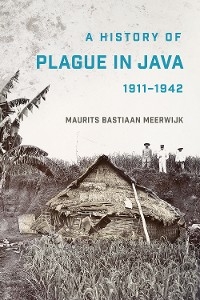
In A History of Plague in Java, 1911–1942, Maurits Bastiaan Meerwijk demonstrates how the official response to the 1911 outbreak of plague in Malang led to one of the most invasive health interventions in Dutch colonial Indonesia. Eager to combat disease, Dutch physicians and officials integrated the traditional Javanese house into the "rat-flea-man" theory of transmission. Hollow bamboo frames and thatched roofs offered hiding spaces for rats, suggesting a material link between rat plague and human plague. Over the next thirty years, 1.6 million houses were renovated or rebuilt, millions more were subjected to periodic inspection, and countless Javanese were exposed to health messaging seeking to "rat-proof" their beliefs along with their houses.
The transformation of houses, villages, and people was documented in hundreds of photographs and broadcast to overseas audiences as evidence of the "ethical" nature of colonial rule, proving so effective as propaganda that the rebuilding continued even as better alternatives, such as inoculation, became available. By systematically reshaping the built environment, the Dutch plague response dramatically expanded colonial oversight and influence in rural Java.
Maurits Bastiaan Meerwijk is Scientific Secretary at the Health Council of the Netherlands and a Postdoctoral Researcher at the Institute for History at Leiden University. Follow him on X @maurits_1989.
Introduction
1. Plague, Rats, and the House in Java
2. Colonizing the Home with Bamboo, Tiles, and Timber
3. The Spectacle of Home Improvement
4. Plague Propaganda
5. Plague, Malaria, and Vaccination
Conclusion
| Erscheint lt. Verlag | 15.12.2022 |
|---|---|
| Zusatzinfo | 13 b&w halftones, 1 map |
| Verlagsort | Ithaca |
| Sprache | englisch |
| Maße | 150 x 150 mm |
| Themenwelt | Geisteswissenschaften ► Geschichte ► Regional- / Ländergeschichte |
| Studium ► Querschnittsbereiche ► Prävention / Gesundheitsförderung | |
| Technik ► Architektur | |
| Schlagworte | colonial medicine and colonial photography, home improvement in Java, Dutch colonial period, bamboo houses and plague control, Dutch colonial health policy, rat-flea-man transmission theory |
| ISBN-10 | 1-5017-6685-6 / 1501766856 |
| ISBN-13 | 978-1-5017-6685-5 / 9781501766855 |
| Informationen gemäß Produktsicherheitsverordnung (GPSR) | |
| Haben Sie eine Frage zum Produkt? |
 EPUB (Adobe DRM)
Kopierschutz: Adobe-DRM
Adobe-DRM ist ein Kopierschutz, der das eBook vor Mißbrauch schützen soll. Dabei wird das eBook bereits beim Download auf Ihre persönliche Adobe-ID autorisiert. Lesen können Sie das eBook dann nur auf den Geräten, welche ebenfalls auf Ihre Adobe-ID registriert sind.
Details zum Adobe-DRM
Dateiformat: EPUB (Electronic Publication)
EPUB ist ein offener Standard für eBooks und eignet sich besonders zur Darstellung von Belletristik und Sachbüchern. Der Fließtext wird dynamisch an die Display- und Schriftgröße angepasst. Auch für mobile Lesegeräte ist EPUB daher gut geeignet.
Systemvoraussetzungen:
PC/Mac: Mit einem PC oder Mac können Sie dieses eBook lesen. Sie benötigen eine
eReader: Dieses eBook kann mit (fast) allen eBook-Readern gelesen werden. Mit dem amazon-Kindle ist es aber nicht kompatibel.
Smartphone/Tablet: Egal ob Apple oder Android, dieses eBook können Sie lesen. Sie benötigen eine
Geräteliste und zusätzliche Hinweise
Buying eBooks from abroad
For tax law reasons we can sell eBooks just within Germany and Switzerland. Regrettably we cannot fulfill eBook-orders from other countries.
aus dem Bereich