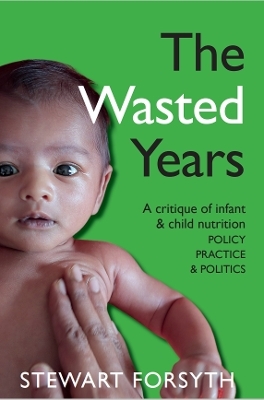
The Wasted Years
Swan & Horn (Verlag)
978-1-909675-34-6 (ISBN)
- Titel nicht im Sortiment
- Artikel merken
The development of policy and practice for infant and young-child feeding has a long and troubled history, with decades of conflict and a failure to deliver solutions to the target population - infants, children and their parents. The key divisions are between the World Health Organization (WHO), industry and breastfeeding interest groups. And more recently health professionals and parents have become caught in the crossfire.
How can the feeding of young children worldwide generate so much division and dysfunction, leading to acrimony, boycotts and legal actions? And how has this situation been allowed to persist for so many decades?
In 2020 the global mortality rate for children under five years of age was reported to be 4.9 million a year; 45% of those deaths were nutrition related. Around 149 million children under the age of five were suffering from the physical and cognitive effects of stunting. Another 49 million were affected by wasting.
Today, global breastfeeding rates are disappointing, the global pandemic of childhood obesity is still spreading, and more children are both overweight and malnourished - the so-called double burden of malnutrition.
With this backdrop, Professor Forsyth proposes that poor leadership and ineffective partnership-working are key factors in the failure to deliver effective policies and practices, and have contributed to preventable suffering in this vulnerable population. He takes a health-professional perspective to unpick the opposing philosophies and idealogies and reflects on the underlying policies, practices and politics. To prevent further dysfunctional behaviour and unnecessary suffering-he concludes-the wasted years must end, and a fresh start begin. This requires new thinking, new priorities and new people.
WHAT THE BOOK COVERS
* The roles of WHO, governments, health professionals, activist groups and parents
* Inappropriate marketing of breastmilk substitutes by the infant-formula industry
* Limitations of scientific evidence for underpining infant-feeding policy and practice
* Recognising there is more to infant feeding than just breastfeeding
* Controversies about introducing and continuing solid foods
* Policies that have to be sensitive to the global socioeconomic diversity of families
* The importance of family-friendly policies and issues of realism and idealism
* Misuse of the concept of 'conflict of interest'
* Failures in leadership and governance across all stakeholders
* The need for an independent review and transformational change
WHO THIS BOOK IS FOR
* Health policy-makers
* The infant-formula industry
* Breastfeeding groups and activists
* Parents, families and caregivers
* Health professionals including doctors, midwives, nurses and nutritionists
Professor Stewart Forsyth is Honorary Professor of Paediatrics, University of Dundee, and formerly Medical Director and Consultant Paediatrician, NHS Tayside, Scotland in the UK. He graduated in medicine from the University of Glasgow in 1973, and after junior training posts in medicine, surgery and obstetrics and paediatrics, pursued a career in medical paediatrics specializing in neonatal intensive care in Edinburgh and Dundee and was appointed consultant paediatrician in 1983 with responsibility for the Neonatal Service in Dundee, Tayside. Subsequently he was appointed to Clinical Director roles and latterly was the Medical Director for the University Teaching Hospitals. His Scotland-wide roles included Specialist Advisor on Medical Paediatrics to the Chief Medical Officer, Vice-Chair of the Scottish Governments Child Health Support Group, Chair of National Review of Neonatal Services in Scotland, and Deputy Convenor of Children in Scotland the largest children's charity in Scotland. More recently he has been Chair of the Early Nutrition and Later Health Task Force at the International Life Sciences Institute in Brussels. In 2012 he received the OBE award from HRH The Queen for contribution to children's health in Scotland. He has had a longstanding research interest in infant and young-child nutrition and was the paediatric lead for the Dundee Infant Feeding Study which he initiated with his colleague Professor Peter Howie, Professor of Obstetrics and Gynaecology in 1986, and the results of the study were published in the British Medical Journal in 1990, 1993 and 1998. The study was one of the most comprehensive prospective assessments of the health benefits of breastfeeding during childhood in a developed country, and the published papers are still regularly referenced today. His most recent research has been related to the role of long chain polyunsaturated fatty acids in health and wellbeing in early life. Professor Forsyth was commissioned to undertake advisory and health service reviews for the Scottish Government and also the UK Government, he is a past member of the Scottish Infant Feeding Advisory Group that was chaired by the Chief Nurse for Scotland, and in the past he has been a regular contributor to infant-feeding organizations including the Annual Conference of the Baby Friendly Initiative. He is also Board Chairman of a Counselling organization based in Dundee and a founding member and former Chair of an organization called Parent-to-Parent which provides support for families with children with special needs.
Introduction1
About the Author3
Abbreviations and acronyms used in this book4
Boxes, figures and tables in this book7
1 Three institutions9
The World Health Organization (WHO)9
WHO and the UN10
WHO and Codex Alimentarius11
Performance of the three institutions12
2 Three policies15
The Code16
The Innocenti Declaration19
WHO Global Strategy for Infant and Young Child Feeding20
3 Why has the Code been associated with decades of conflict?27
The Code - is it time for a new perspective?31
4 Why have breastfeeding policies failed to engage with populations?39
Exclusive breastfeeding40
Interface between exclusive breastfeeding and the introduction of
complementary foods42
Breastfeeding for two years or beyond44
Personalized breastmilk and depersonalized infant-feeding policies46
Breastmilk and the newborn gastrointestinal tract49
Suboptimal lactation50
Emotional and psychological consequences of ceasing breastfeeding52
Personalized care and support for parents55
5 Why has complementary feeding been neglected?61
Complementary-feeding strategy62
Exclusive breastfeeding and the complementary feeding interface68
An integrated approach to infant and young-child feeding is essential69
Complementary feeding and malnutrition70
6 Is non-compliance prevalent across all stakeholders?77
Evidence of lack of commitment to the Code by governments78
Evidence of failure of compliance by health services79
Evidence of failure to govern the Code82
Non-compliance issues for families83
A way forward84
7 When is a breastmilk substitute no longer a breastmilk substitute?91
What is the policy status of this new interpretation of breastmilk substitutes?92
Is WHO's interpretation of breastmilk substitutes plausible?94
What is the objective of WHO's new interpretation of 'breastmilk substitutes'?98
The impact on parents99
8 How critical is the duration of continued breastfeeding for child health?109
Evidence or opinion?109
Establishing evidence on breastfeeding and child health111
More on the Belarus PROBIT study116
Breastfeeding in the second year of life121
Alignment of research and advocacy122
9 The journey from scientific research to clinical practice129
Intervention studies130
Docosahexaenoic acid (DHA)131
Cochrane reviews (meta-analyses)132
Data from randomized clinical trials (RCTs)133
Appraisal of evidence and the process of making policy133
What is the best evidence for public health policy-makers?134
Pragmatism when applying research to practice134
10 Family-friendly policies-less idealism and more realism137
Philosophical divisions137
Public engagement138
Economic status141
Misleading information143
The importance of choosing the right language147
Advising on policy149
Equality, caring and respect150
Interface with health professionals152
11 The relationship of breastfeeding to maternal health157
Breastfeeding, menstruation and infertility157
Breastfeeding, obesity, cardiovascular disease and diabetes158
More findings from the PROBIT study162
Breastfeeding and cancer163
Breastfeeding, cancer and docosahexaenoic acid (DHA)166
12 Interest groups, advocates and activists171
Special interest, advocates and activists171
The Global Breastfeeding Collective173
WHO and activism175
How could this be managed differently?179
13 Dysfunctional partnership-working183
WHO and industry184
Industry and governance186
WHO working with health professionals189
A Strategic Advisory Group (SAG) on infant and young-child feeding192
14 Product regulation and monitoring195
Evaluation of changes in formula composition196
DHA and infant formulas196
Regulatory systems for marketing, promotion, labelling and packaging199
Transformational change203
15 Stakeholder conflict of interest and independent regulation217
Self-interest218
Conflict of interest219
Collaborative infant-feeding research219
Sponsorship of educational meetings220
Conflict of interest or interest in conflict?223
The interface between policy-makers, paediatricians and industry228
Is there a way forward?231
Should WHO disentangle itself from conflict of interest?233
16 An independent review of infant-feeding policy-making is long overdue241
Roles and responsibilities of WHO, WHA and governments241
Roles and responsibilities of policy-makers, health professionals and industry243
Parent-friendly policies244
Integrated approach to infant and young-child diet245
Policy integration245
Independent regulatory authorities246
The way forward247
17 A memorandum of understanding between WHO and Nestle251
What should Nestle and WHO bring to the table?251
18 A framework for change management259
Global and national policy-making259
Infant feeding and morbidity and mortality259
Breastmilk and infant formula260
Complementary feeding260
Inequality260
The importance of food261
Parental involvement261
Health benefits of breastfeeding for infants261
Infant-feeding policy262
Conflict of interest262
Interest groups, advocates and activists263
Partnership-working263
Governance263
Critical success factors264
19 Seven steps to transformational change265
A strategic framework to balance global and national responsibilities265
A global and national code of practice for infant and young-child feeding 265
A global regulatory framework for regulation of infant formula 266
A research framework that supports research in academic and industry 266
A governance framework to set standards for all stakeholders 267
A parental involvement framework 267
A memorandum of understanding (MoU) between WHO and Nestle 267
20 Final reflections269
21 On the 40th Anniversary of the adoption of the Code279
Epilogue283
References284
Useful links299
Index302
| Erscheinungsdatum | 02.11.2022 |
|---|---|
| Verlagsort | Cove |
| Sprache | englisch |
| Maße | 152 x 258 mm |
| Themenwelt | Medizin / Pharmazie ► Gesundheitsfachberufe ► Diätassistenz / Ernährungsberatung |
| Medizin / Pharmazie ► Medizinische Fachgebiete ► Pädiatrie | |
| Studium ► Querschnittsbereiche ► Prävention / Gesundheitsförderung | |
| ISBN-10 | 1-909675-34-2 / 1909675342 |
| ISBN-13 | 978-1-909675-34-6 / 9781909675346 |
| Zustand | Neuware |
| Informationen gemäß Produktsicherheitsverordnung (GPSR) | |
| Haben Sie eine Frage zum Produkt? |
aus dem Bereich