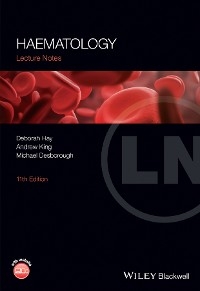
Haematology (eBook)
John Wiley & Sons (Verlag)
978-1-119-84122-7 (ISBN)
The definitive overview of haematology and its recent developments
Haematology has advanced considerably in recent decades. As new developments emerge, there is a continuous need for an accessible and up-to-date survey for medical students, discussing the major haematological disorders, their clinical presentations, their treatments, and more.
Written by specialists with an interest in medical education, Lecture Notes: Haematology is a succinct, highly illustrated student guide to the essentials of this important field. It integrates the physiological, pathological, and clinical dimensions of haematology in a single comprehensive guide, and provides medical students and early-career clinicians with the core knowledge required to succeed in the subject. The 11th edition of this guide includes updated sections and expanded chapters detailing the newest advances in the field.
In this 11th edition of Lecture Notes: Haematology, readers will also find:
- Discussion of both pathogenesis and management of all major haematological disorders
- Online clinical cases with >150 multiple choice questions to allow you to test and apply your knowledge
Lecture Notes: Haematology, 11th edition is a valuable resource for medical students and junior doctors looking to increase their expertise in this medical specialty.
DEBORAH HAY, DPhil, MRCP, FRCPath, Clinical Tutor for Laboratory Medicine, Nuffield Department of Clinical Laboratory Science and Radcliffe Department of Medicine, University of Oxford, Oxford; Honorary Consultant Haematologist, Cambridge University Hospitals NHS Foundation Trust, Cambridge, UK.
ANDREW KING, DPhil, MRCP, FRCPath, Consultant Haematologist, Cambridge University Hospitals NHS Foundation Trust, Cambridge, UK.
MICHAEL DESBOROUGH, DPhil, MRCP, FRCPath, Consultant Haematologist, Oxford University Hospitals NHS Foundation Trust, Oxford; Radcliffe Department of Medicine, University of Oxford, Oxford, UK.
The definitive overview of haematology and its recent developments Haematology has advanced considerably in recent decades. As new developments emerge, there is a continuous need for an accessible and up-to-date survey for medical students, discussing the major haematological disorders, their clinical presentations, their treatments, and more. Written by specialists with an interest in medical education, Lecture Notes: Haematology is a succinct, highly illustrated student guide to the essentials of this important field. It integrates the physiological, pathological, and clinical dimensions of haematology in a single comprehensive guide, and provides medical students and early-career clinicians with the core knowledge required to succeed in the subject. The 11th edition of this guide includes updated sections and expanded chapters detailing the newest advances in the field. In this 11th edition of Lecture Notes: Haematology, readers will also find: Discussion of both pathogenesis and management of all major haematological disorders Online clinical cases with >150 multiple choice questions to allow you to test and apply your knowledge </ul> Lecture Notes: Haematology, 11th edition isa valuable resource for medical students and junior doctors looking to increase their expertise in this medical specialty.
DEBORAH HAY, DPhil, MRCP, FRCPath, Clinical Tutor for Laboratory Medicine, Nuffield Department of Clinical Laboratory Science and Radcliffe Department of Medicine, University of Oxford, Oxford; Honorary Consultant Haematologist, Cambridge University Hospitals NHS Foundation Trust, Cambridge, UK. ANDREW KING, DPhil, MRCP, FRCPath, Consultant Haematologist, Cambridge University Hospitals NHS Foundation Trust, Cambridge, UK. MICHAEL DESBOROUGH, DPhil, MRCP, FRCPath, Consultant Haematologist, Oxford University Hospitals NHS Foundation Trust, Oxford; Radcliffe Department of Medicine, University of Oxford, Oxford, UK.
Preface vii
About the companion website ix
1 An introduction to haematopoiesis 1
2 The blood count in health and disease 15
3 Anaemia: general principles 23
4 Haemolytic anaemias 39
5 Disorders of globin synthesis 55
6 An introduction to haematological malignancies 71
7 Cellular and molecular investigations in haematology 79
8 Neoplastic disorders of myeloid cells 91
9 Neoplastic disorders of lymphoid cells 105
10 Plasma cell myeloma and other paraproteinaemias 121
11 Aplastic anaemia and pure red cell aplasia 131
12 Stem cell transplantation and cellular therapy 137
13 Haemostasis and bleeding disorders 147
14 Thrombosis and anticoagulant therapy 163
15 Blood groups and blood transfusion 173
Index 187
1
An introduction to haematopoiesis
LEARNING OBJECTIVES
After reading this chapter, you should be able to:
- describe the site and process of formation of blood cells
- understand the concept of a stem cell, and the idea of lineage specification of blood cells
- recognize the different types and functions of mature blood cells
- describe the basic structure of lymph nodes
- define B cells and T cells through their respective receptor gene rearrangements
- understand that malignant diseases of haematological cells derive from their recognizable normal counterparts.
An introduction to the blood and its diseases
An appreciation of blood and its normal components is essential for the care of patients in nearly every clinical specialty. Simple tests of haematological function inform our understanding of the responses to infection and inflammation, nutrition and gastrointestinal dysfunction, as well as renal and liver disease, and can sometimes provide the earliest indicators of malignant disease in tissues which are otherwise clinically hard to assess. This alone makes an understanding of basic haematology essential for every doctor.
Beyond this, haematology also encompasses some of the most common acquired and inherited disorders responsible for morbidity and mortality around the world, and some of the most aggressive and yet treatable malignancies. It has also provided transformational insights into the molecular basis of disease that have informed therapeutics in many specialties.
This opening chapter provides an overview of the formation and function of the cellular components of blood, which will be needed for each of the subsequent sections of this text.
The formation of blood
As the developing embryo grows, it starts to require a means of delivering oxygen to tissues for respiration. The circulation and blood develop at the same time, from around 3 weeks’ gestation, and there are close links between the cellular origins of the first blood cells and the vasculature.
Haematopoietic stem cells originate in the para‐aortic mesoderm of the embryo. Primitive red blood cells, platelet precursors and macrophages are initially formed in the vasculature of the extraembryonic yolk sac, before the principal site of haematopoiesis shifts to the fetal liver at around 5–8 weeks’ gestation. The liver remains the main source of blood in the fetus until shortly before birth, although the bone marrow starts to develop haematopoietic activity from as early as 10 weeks’ gestation.
After birth, the marrow is the sole site of haematopoiesis in healthy individuals. During the first few years of life, nearly all the marrow cavities contain red haematopoietic marrow, but this recedes so that by adulthood, haematopoiesis is limited to marrow in the vertebrae, pelvis, sternum and the proximal ends of the femora and humeri, with minor contributions from the skull bones, ribs and scapulae (Figure 1.1). It is the posterior superior iliac spine of the pelvis – a bony landmark readily palpable in most individuals ‐ which is the usual site of bone marrow biopsy for the clinical assessment of the process of haematopoiesis.
Although the sites of haematopoiesis in the adult are therefore relatively limited, other sites retain their capacity to produce blood cells if needed. In conditions in which there is an increased haematopoietic drive (such as chronic haemolytic anaemias and chronic myeloproliferative disorders), haematopoietic tissue will expand and may extend into marrow cavities that do not normally support haematopoiesis in the adult. Foci of haematopoietic tissue may also appear in the adult liver and spleen and other tissues (known as extramedullary haematopoiesis).
Haematopoietic stem cells
The process of haematopoiesis needs to generate adequate numbers of specialised blood cells throughout life from a small pool of precursor cells. This is accomplished using the unique properties of haematopoietic stem cells.
Long‐term haematopoietic stem cells (HSCs) in the bone marrow are capable of both self‐renewal and differentiation into the progenitors of individual blood cell lineages. The progenitor cells of individual lineages then undergo many rounds of division and further differentiation in order to yield populations of mature blood cells. This process can be represented as a hierarchy of cells, with HSCs giving rise to populations of precursor cells, which in turn give rise to cells increasingly committed to producing a single type of mature blood cell (Figure 1.2). Thus, the immediate progeny of HSCs are the multipotent progenitor cells, which have limited self‐renewal capacity but retain the ability to differentiate into all blood cell lineages. Although there is still debate about exactly how lineage‐restricted subsequent precursors are, the concept of sequential and irreversible differentiation is widely accepted. In Figure 1.2, the HSC is seen giving rise to two major lineages: the lymphoid lineage, in which a common lymphoid progenitor gives rise to B cells, T cells and natural killer (NK) cells; and a myeloid lineage, with a common myeloid progenitor giving rise to red cells, granulocytes and platelets. The division of haematopoiesis into myeloid and lymphoid compartments is fundamental to an understanding of haematological disease.
Figure 1.1 The red shading indicates the position of red (blood‐forming) marrow in the adult. The posterior superior iliac spine of the pelvis is the usual site of bone marrow biopsy for clinical assessment of the process of haematopoiesis.
Figure 1.2 A schematic representation of the process of haematopoiesis. Multipotent stem cells give rise to lymphoid (pink) and myeloid (blue) lineages. The myeloid lineage further divides into granulocytic, erythroid and megakaryocytic (platelet) lineages. As cells progress through this process of differentiation, they accrue more functional specialization and lose their multipotency. GMP, granulocyte macrophage progenitor; HSC, haematopoietic stem cell; MEP, megakaryocyte/erythroid progenitor; NK, natural killer.
The process of haematopoiesis outlined above has several advantages. First, it permits the massive expansion of cell numbers needed to maintain an adequate population of mature blood cells. It also means that the production of each type of mature blood cell can be controlled individually, tailoring production to specific physiological requirements. Finally, it requires relatively little proliferative activity on the part of the long‐term HSCs themselves, thereby minimizing the risk of developing mutations in these crucial cells during DNA replication and cell division.
Haematopoietic stem cells were first detected and defined functionally through experiments in which a subset of cells from the bone marrow was shown to produce blood cells of all lineages when transplanted into lethally irradiated mice, which have no haematopoietic potential of their own. Subsequent work has used cell surface markers and flow cytometric techniques (see Chapter 7) to define this population: positivity for the cell surface marker CD34 combined with negativity for CD38 describes a population of multipotential cells that is capable of regenerating all cell lineages from the bone marrow. The cell surface marker CD34 is also used to isolate cells with multipotency and self‐renewal capacity for autologous and allogeneic stem cell transplantation (see Chapter 12).
Differentiating blood cells
Precisely how the ultimate lineage choice of differentiating progenitor cells is determined remains a subject of research. It has been argued that factors intrinsic to the HSC itself, such as stochastic fluctuations in transcription factor levels, may direct lineage specification. However, it is also known that proper regulation of HSCs and progenitor cells requires their interaction with extrinsic factors, such as non‐haematopoietic cells in the bone marrow niche (e.g. endothelial cells and osteoblastic progenitors). HSCs and progenitor cells are not randomly distributed in the marrow, but exist in ordered proximity relative to mesenchymal cells, endothelial cells and the vasculature. Signalling from these non‐haematopoietic cells, plus physicochemical cues such as hypoxia and blood flow, are therefore likely to influence the transcriptional activity and fate of HSCs. It is clear, however, that the process of lineage specification is accompanied by a gradual reduction in the multipotency of the cell.
Myelopoiesis
Signalling through myeloid growth factors such as granulocyte‐macrophage colony stimulating factor (GM‐CSF) is essential for the survival and proliferation of myeloid cells. The specification of the myeloid lineage is also known to require the interaction of a series of specific transcription factors, including C/EBPα, RUNX1‐core binding factor complex and c‐Myb. As well as being essential for the normal formation of myeloid cells, it is becoming clear that an appreciation of these factors and others like them is critical for an understanding of myeloid diseases such as acute myeloid leukaemia (see Chapter 8).
The separation of the erythroid and megakaryocytic components of myelopoiesis requires the action of...
| Erscheint lt. Verlag | 13.9.2022 |
|---|---|
| Reihe/Serie | Lecture Notes |
| Lecture Notes | Lecture Notes |
| Sprache | englisch |
| Themenwelt | Medizin / Pharmazie ► Medizinische Fachgebiete ► Innere Medizin |
| Schlagworte | anemia • Blood Disease • Cellular biology • clinical training • Disease • Haematology • haemostasis • Hämatologie • Hematology • Lecture notes • Medical Science • Medical study • Medicine • Medizin • Microbiology • Pathology |
| ISBN-10 | 1-119-84122-4 / 1119841224 |
| ISBN-13 | 978-1-119-84122-7 / 9781119841227 |
| Informationen gemäß Produktsicherheitsverordnung (GPSR) | |
| Haben Sie eine Frage zum Produkt? |
 EPUB (Adobe DRM)
Kopierschutz: Adobe-DRM
Adobe-DRM ist ein Kopierschutz, der das eBook vor Mißbrauch schützen soll. Dabei wird das eBook bereits beim Download auf Ihre persönliche Adobe-ID autorisiert. Lesen können Sie das eBook dann nur auf den Geräten, welche ebenfalls auf Ihre Adobe-ID registriert sind.
Details zum Adobe-DRM
Dateiformat: EPUB (Electronic Publication)
EPUB ist ein offener Standard für eBooks und eignet sich besonders zur Darstellung von Belletristik und Sachbüchern. Der Fließtext wird dynamisch an die Display- und Schriftgröße angepasst. Auch für mobile Lesegeräte ist EPUB daher gut geeignet.
Systemvoraussetzungen:
PC/Mac: Mit einem PC oder Mac können Sie dieses eBook lesen. Sie benötigen eine
eReader: Dieses eBook kann mit (fast) allen eBook-Readern gelesen werden. Mit dem amazon-Kindle ist es aber nicht kompatibel.
Smartphone/Tablet: Egal ob Apple oder Android, dieses eBook können Sie lesen. Sie benötigen eine
Geräteliste und zusätzliche Hinweise
Buying eBooks from abroad
For tax law reasons we can sell eBooks just within Germany and Switzerland. Regrettably we cannot fulfill eBook-orders from other countries.
aus dem Bereich