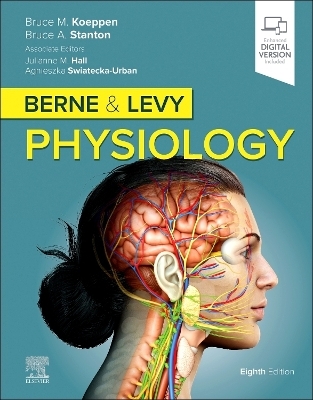
Berne & Levy Physiology
Elsevier - Health Sciences Division (Verlag)
978-0-323-84790-2 (ISBN)
Uses a logical, organ system-based approach that clearly describes all of the mechanisms that control and regulate bodily function
Includes new clinical case examples, as well as In the Clinic and At the Molecular Level boxes that highlight practical aspects of this fundamental science
Provides key experimental observations and examples that offer a rich understanding of the body's dynamic processes
Discusses recent discoveries such as the role of lymphatics in the nervous system
Begins each chapter with a bulleted list of questions and ends with key concepts covered in that chapter
Enhanced eBook version included with purchase. Your enhanced eBook allows you to access all of the text, figures, and references from the book on a variety of devices
Bruce Koeppen, founding dean of the Frank H. Netter MD School of Medicine at Quinnipiac, recently received two prestigious awards: honored by the Patient is U Foundation - a nonprofit that aims to encourage human communication in health care and support both patients and providers and the (LCME) Liaison Committee on Medical Education's 2019 Distinguished Service Award. Bruce Stanton received the Unsung Hero Award in 2019 from the Cystic Fibrosis Foundation. He played a key role in the development of Vertex modulators and is connected with sparking the creation of a Patient Registry which has had an enormous impact on the length and quality of lives in CF patients. Julianne Hall, Assoc. Professor of medical sciences at the Frank H. Netter MD School of Medicine at Quinnipiac University teaches courses, pharmacology, physiology, and pathophysiology. Before joining Quinnipiac, Hall was an assistant professor at the Campbell University College of Pharmacy and Health Sciences in Bules Creek, North Carolina. She has a doctorate in pharmacology from Duke University and a bachelor's degree in biology from Trinity College. Dr. Swiatecka-Urban, Assoc. Prof. of Pediatrics at the University of Pitt, is a designated Nephrotic Syndrome Specialist (NSS) by NephCure Kidney International. The NSS program was created to address the importance of connecting patients to experts earlier in their diagnoses and to simultaneously improve patients' quality of life and advance critical research. Her research spans both renal and respiratory systems.
Section 1: Cellular Physiology
1. Principles of Cell and Membrane Function
2. Homeostasis: Volume and Composition of Body Fluid Compartments
3. Signal Transduction, Membrane Receptors, Second Messengers, and Regulation of Gene Expression
Section 2: Neurophysiology
4. The Nervous System: Introduction to Cells and Systems
5. Generation and Conduction of Action Potentials
6. Synaptic Transmission
7. The Somatosensory System
8. The Special Senses
9. Organization of Motor Function
10. Integrative Functions of the Nervous System
11. The Autonomic Nervous System and Its Central Control
Section 3: Muscle Physiology
12. Skeletal Muscle Physiology
13. Cardiac Muscle
14. Smooth Muscle
Section 4: Cardiovascular Physiology
15. Overview of Circulation
16. Elements of Cardiac Function
17. Properties of the Vasculature
18. Regulation of the Heart and Vasculature
19. Integrated Control of the Cardiovascular System
Section 5: Respiratory Physiology
20. Introduction to the Respiratory System
21. Static Lung and Chest Wall Mechanics
22. Dynamic Lung and Chest Wall Mechanics
23. Ventilation, Perfusion, and Ventilation/Perfusion Relationships
24. Oxygen and Carbon Dioxide Transport
25. Control of Respiration
26. Host Defense and Metabolism in the Lung
Section 6: Gastrointestinal Physiology
27. Functional Anatomy and General Principles of Regulation in the Gastrointestinal Tract
28. The Cephalic, Oral, and Esophageal Phases of the Integrated Response to a Meal
29. The Gastric Phase of the Integrated Response to a Meal
30. The Small Intestinal Phase of the Integrated Response to a Meal
31. The Colonic Phase of the Integrated Response to a Meal
32. Transport and Metabolic Functions of the Liver
Section 7: Renal Physiology
33 Elements of Renal Function
34. Solute and Water Transport Along the Nephron: Tubular Function
35. Control of Body Fluid Osmolality and Volume
36. Potassium, Calcium, and Phosphate Homeostasis
37. Role of the Kidneys in the Regulation of Acid-Base Balance
Section 8: Endocrine Physiology
38. Introduction to the Endocrine System
39. Hormonal Regulation of Energy Metabolism
40. Hormonal Regulation of Calcium and Phosphate Metabolism
41. The Hypothalamus and Pituitary Gland
42. The Thyroid Gland
43. The Adrenal Gland
44. The Male and Female Reproductive Systems
| Erscheinungsdatum | 27.05.2023 |
|---|---|
| Zusatzinfo | Approx. 700 illustrations (700 in full color); Illustrations |
| Verlagsort | Philadelphia |
| Sprache | englisch |
| Maße | 216 x 276 mm |
| Gewicht | 2580 g |
| Themenwelt | Studium ► 1. Studienabschnitt (Vorklinik) ► Physiologie |
| ISBN-10 | 0-323-84790-0 / 0323847900 |
| ISBN-13 | 978-0-323-84790-2 / 9780323847902 |
| Zustand | Neuware |
| Informationen gemäß Produktsicherheitsverordnung (GPSR) | |
| Haben Sie eine Frage zum Produkt? |
aus dem Bereich