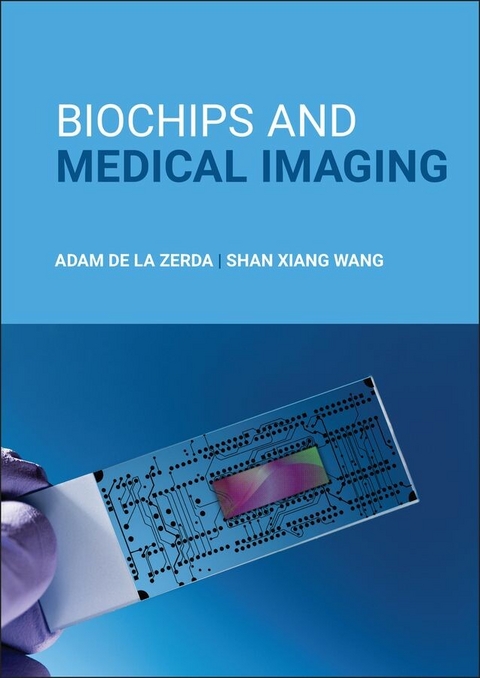
Biochips and Medical Imaging (eBook)
John Wiley & Sons (Verlag)
978-1-118-91048-1 (ISBN)
Advanced, recent developments in biochips and medical imaging
Biochips and Medical Imaging is designed as a professional resource, covering recent biochip and medical imaging developments. Within the text, the authors encourage uniting aspects of engineering, biology, and medicine to facilitate advancements in the field of molecular diagnostics and imaging.
Biochips are microchips for efficiently screening biological analytes. This book aims at presenting information on the state-of-the-art and emerging biosensors, biochips, and imaging devices of the body’s systems, including the endocrine, circulatory, and immune systems.
Medical diagnostics includes biochips (in-vitro diagnostics) and medical and molecular imaging (in-vivo imaging). Biochips and Medical Imaging explores the role of in-vitro and in-vivo diagnostics. It enables an instructor to share in-depth examples of the use of biochips in diagnosing cancer and cardiovascular diseases.?
- Provides real-life knowledge on biochips and medical imaging, written by leading researchers
- Serves as a resource for professionals working in the biochip or imaging fields
- Features an accessible approach for anyone interested in biochips and their applications
Readers of Biochips and Medical Imaging can expand their knowledge of medical technology, even if they have no biological knowledge and a limited math background. With its focus on important developments, this book is sure to also capture the interest of bioengineering and biomaterials scientists, structural biologists, electrical engineers, and nanotechnologists.
ADAM DE LA ZERDA is an Associate Professor in the departments of Structural Biology and Electrical Engineering at Stanford University and a Chan Zuckerberg Investigator. Dr. de la Zerda has received numerous awards for his research including the Forbes Magazine 30-under-30 in Science & Healthcare and published over 30 papers in leading journals. He holds a number of patents and is the founder of the medical diagnostics company Visby Medical.
SHAN XIANG WANG is the Leland T. Edwards Professor in the School of Engineering, Stanford University. He currently serves as the Director of the Stanford Center for Magnetic Nanotechnology and a Professor of Materials Science & Engineering, jointly of Electrical Engineering, and by courtesy of Radiology . He has published over 300 papers, and holds 66 patents (issued and pending). Dr. Wang was an inaugural Frederick Terman Faculty Fellow at Stanford University (1994-1997), an IEEE Magnetics Society Distinguished Lecturer (2001-2002), and elected an IEEE Fellow (2009) and American Physical Society (APS) Fellow (2012).
Advanced, recent developments in biochips and medical imaging Biochips and Medical Imaging is designed as a professional resource, covering recent biochip and medical imaging developments. Within the text, the authors encourage uniting aspects of engineering, biology, and medicine to facilitate advancements in the field of molecular diagnostics and imaging. Biochips are microchips for efficiently screening biological analytes. This book aims at presenting information on the state-of-the-art and emerging biosensors, biochips, and imaging devices of the body's systems, including the endocrine, circulatory, and immune systems. Medical diagnostics includes biochips (in-vitro diagnostics) and medical and molecular imaging (in-vivo imaging). Biochips and Medical Imaging explores the role of in-vitro and in-vivo diagnostics. It enables an instructor to share in-depth examples of the use of biochips in diagnosing cancer and cardiovascular diseases. Provides real-life knowledge on biochips and medical imaging, written by leading researchers Serves as a resource for professionals working in the biochip or imaging fields Features an accessible approach for anyone interested in biochips and their applications Readers of Biochips and Medical Imaging can expand their knowledge of medical technology, even if they have no biological knowledge and a limited math background. With its focus on important developments, this book is sure to also capture the interest of bioengineering and biomaterials scientists, structural biologists, electrical engineers, and nanotechnologists.
ADAM DE LA ZERDA is an Associate Professor in the departments of Structural Biology and Electrical Engineering at Stanford University and a Chan Zuckerberg Investigator. Dr. de la Zerda has received numerous awards for his research including the Forbes Magazine 30-under-30 in Science & Healthcare and published over 30 papers in leading journals. He holds a number of patents and is the founder of the medical diagnostics company Visby Medical. SHAN XIANG WANG is the Leland T. Edwards Professor in the School of Engineering, Stanford University. He currently serves as the Director of the Stanford Center for Magnetic Nanotechnology and a Professor of Materials Science & Engineering, jointly of Electrical Engineering, and by courtesy of Radiology . He has published over 300 papers, and holds 66 patents (issued and pending). Dr. Wang was an inaugural Frederick Terman Faculty Fellow at Stanford University (1994-1997), an IEEE Magnetics Society Distinguished Lecturer (2001-2002), and elected an IEEE Fellow (2009) and American Physical Society (APS) Fellow (2012).
Preface
Acknowledgements
Chapter 1: Cell Biology
Chapter 2: Biological Lab Techniques
Chapter 3: Human Physiology
Chapter 4: Cancer
Chapter 5: Cardiovascular Diseases (CVD)
Chapter 6: DNA Chips and Sequencing
Chapter 7: Next-Generation Sequencing and FET-Based Biochips
Chapter 8: Protein Assays and Chips
Chapter 9: Label-Free Affinity-Based Biosensors
Chapter 10: Magneto-Nanosensor Biochips
Chapter 11: Microfluidic Chips for Capturing Circulating Tumor Cells
Chapter 12: Molecular Diagnostics
Chapter 13: Magnetic Resonance Imaging
Chapter 14: Radionuclide Imaging
Chapter 15: Fluorescence and Raman Imaging
Chapter 16: Optical Coherence Tomography
Chapter 17: Photoacoustic Imaging
Chapter 18: Imaging Controls & Concepts
Index
1
Cell Biology
1.1 Cell Biology Introduction
A study of the human body can be approached from many different levels. At a broad level, the human body consists of several systems (e.g. digestive, nervous, and endocrine). Each one of these systems is composed of functional units called organs (e.g. heart, brain, and liver). Similarly, each organ is composed of different tissues that perform different tasks. Tissues are then composed of cells that perform different functions (e.g. myocytes, neurons, and stem cells). The cell is the smallest unit of life in the human body. Cells are composed of smaller functional units called organelles (e.g. nucleus and mitochondria). These organelles perform various tasks to keep the cell alive and functional. On an even smaller scale, cells and organelles contain biomolecules (e.g. proteins and DNA).
The cell is the basic structural and functional unit of all organisms. The human body is composed of about 10 trillion cells. Cell biology focuses on the study of cells, including their structure and function, organelles, interaction with other cells, and life cycle (including division and death). There are many types of cells that are typically named according to their functioning, e.g. nerve cells, muscle cells, bone cells, gland cells, reproductive cells (sperm and ovum), and blood cells (including red blood cells, lymphocytes, and neutrophils).
1.2 Cell Structure
Human cells range in size from 7.5 to 150 μm. Human cells are eukaryotic, meaning they have a nucleus. Although the structure of eukaryotic cells can be very complex, their three basic components are the membrane, cytoplasm, and nucleus. A typical eukaryotic cell structure is seen in Figure 1.1. The membrane is an envelope that surrounds the cell and serves as a protective barrier (blue in Figure 1.1a). The cytoplasm (yellow in Figure 1.1a) is the interior of the cell and contains the cell organelles. The nucleus (violet in Figure 1.1a) contains the genetic information of the cell. Figure 1.1b is a microscopic image of human epithelial cells. The distinction between the membrane, cytoplasm, and nucleus is clear in this image.
Figure 1.1 (a) Eukaryotic cell schematic.
(Source: Reprinted with permission from Encyclopedia Britannica, © 2018 by Encyclopedia Britannica, Inc.),
(b) human epithelial cells.
1.3 Cell Membrane
The cell membrane is approximately 4–7 nm thick and forms a semipermeable boundary between the intracellular space (inside the cell) and the extracellular space (outside the cell). It mainly consists of phospholipids, proteins, and cholesterol. Phospholipid molecules (Figure 1.2a) have a hydrophilic (“water‐loving”) head and hydrophobic (“water‐hating”) tails. In the cell membrane, two phospholipids face each other, with the hydrophobic tails in the interior of the membrane, to form a phospholipid bilayer (Figure 1.2b). Cholesterol molecules are embedded within the phospholipid bilayer, and they provide stability and rigidity to the cell membrane (Figure 1.2c). There are two main classifications of membrane proteins: receptors and transporters. Receptors help send information to and from the cell. Transporters help selectively transport molecules into and out of the cell. Remember that the bilayer has hydrophilic surfaces on both sides and a nonpolar hydrophobic layer in the center. This nonpolar layer prevents the transportation of polar molecules through the membrane. Only small nonpolar molecules can pass through this structure because they can squeeze through the spacing between polar heads and pass the nonpolar barrier by dissolving in it. Large nonpolar molecules, polar molecules, and ions cannot pass through the membrane. However, the cell needs these molecules in order to survive (e.g. glucose). Thus, the role of transport proteins is to selectively transport vital proteins across the membrane. Various carbohydrate chains (sugars) are attached to membrane proteins and lipids as a tagging mechanism. These carbohydrates are involved in cell recognition and immunity.
1.4 Proteins
Membrane proteins, although important, are not the only types of proteins used by the cell. Receptors, which bind to other molecules to transmit signals, exist in abundance both inside and outside of the cell. Enzymes are an important subcategory of proteins that catalyze biological reactions. Their names typically end in “‐ase” (e.g. endonuclease and ligase). Structural proteins give shape and structure to cells and organelles (e.g. collagen, actin, and myosin). There exist many other protein types that serve specific functions (e.g. antibodies).
Figure 1.2 (a) Phospholipid
(Source: OpenStax [1], used under CC BY‐ SA 4.0 https://creativecommons.org/licenses/by‐sa/4.0/),
(b) phospholipid bilayer
(Source: OpenStax [2] used under CC BY‐SA 4.0 https://creativecommons.org/licenses/by‐sa/4.0/),
(c) cell membrane.
1.5 Cytoplasm and Organelles
The cytoplasm is a gel‐like substance inside the cell membrane that holds all the cell’s organelles. Many cell activities occur inside the cytoplasm, including glycolysis (the enzymatic process that converts glucose to energy) and protein synthesis. Organelles are smaller sub‐cell structures with specific functions. Some important organelles are ribosomes, endoplasmic reticulum (ER), Golgi, mitochondria, lysosomes, centrioles, cilia, and flagella.
Did You Know?
A bilayer is not the only possible stable arrangement of phospholipids. Phospholipids can also form single‐layered structures called micelles. If the hydrophobic tails are short enough (or if the molecules have single tails), then the tails can pack together to form a nonpolar sphere surrounded by a shell of polar phospholipid heads. A micelle structure is shown in Figure 1.3.
Figure 1.3 Micelle structure.
Source:buzzle.com.
What is special about this structure? It is better known as soap. Have you ever wondered why water and soap remove greasiness from your hands but water alone cannot? When you scrub your hands with soap, you break soap micelles on the surface of your hands exposing the nonpolar tails to the dirt. Because grease is nonpolar, it normally does not dissolve in water. However, it easily dissolves in the nonpolar tails of phospholipids. Then, phospholipids form the micelle structure again (because they are still in a water environment) and trap the dirt in the core as seen in Figure 1.3. The outside of the sphere is hydrophilic and the whole structure can dissolve in water. Now with the help of the micelle, the nonpolar dirt can dissolve in water and get washed away.
The nucleus contains the cell’s genetic material (DNA). Ribosomes are responsible for synthesizing proteins. They are approximately 25–30 nm in size and consist of ribosomal RNA (rRNA) and ribosomal proteins. Ribosomes play a significant role in the translation of mRNA into proteins (discussed later).
There are two types of endoplasmic reticulum (ER): the rough ER and the smooth ER (Figure 1.4). The rough ER receives newly made proteins, chemically modifies them, and then transports them to the Golgi. The surface of the rough ER is covered with ribosomes that give the ER a rough appearance. The smooth ER makes new membrane components (e.g. fats and carbohydrates) and stores calcium ions. Unlike the rough ER, the smooth ER does not have ribosomes attached to its membrane, so it has a smooth appearance under a microscope.
Figure 1.4 Rough ER (RER) vs. smooth ER (SER).
Source: Sadava et al. [3], figure 4.19 on p. 78, By permission of Oxford University Press.
The Golgi apparatus receives proteins from the rough ER, chemically modifies them, and transports them to their final destination (e.g. nucleus, cytoplasm, cell membrane, and cell exterior).
Mitochondria (singular: mitochondrion) are the powerhouses of the cell. They provide energy (in the form of ATP) to the cell through a process called oxidative phosphorylation. In this process, the mitochondria uses molecules produced during glucose metabolism to make ATP. Mitochondria range from 500 to 1000 nm in diameter (Figure 1.5a). The mitochondrion consists of two membranes: the outer membrane and the inner membrane. The inner membrane surface contains proteins and peptides required for converting glucose metabolites into energy. In order to maximize surface area for energy production, the inner membrane forms a labyrinth‐like structure called cristae, depicted in Figure 1.5b. Interestingly, mitochondria have structural similarities to bacteria, and they even possess their own circular DNA. This is because mitochondria originated as endosymbiotic prokaryotes. In other words, at some point during evolution, eukaryotic cells incorporated a bacterium (ancestor of mitochondrion) into their own cell structure and then...
| Erscheint lt. Verlag | 19.7.2022 |
|---|---|
| Sprache | englisch |
| Themenwelt | Medizin / Pharmazie ► Gesundheitsfachberufe |
| Medizin / Pharmazie ► Medizinische Fachgebiete | |
| Schlagworte | Bildgebendes Verfahren • Bildgebende Verfahren i. d. Biomedizin • Biochemie • Biochemie u. Chemische Biologie • Biochemistry (Chemical Biology) • Biochip • biochip development</p> • biochips diagnosing cancer • Bioengineering • biomedical engineering • Biomedical Imaging • Biomedizintechnik • Biosensor • Biotechnologie • Biotechnologie i. d. Biowissenschaften • Biotechnology • Biowissenschaften • Chemie • Chemistry • imaging body systems • In-vitro diagnostics • in-vivo diagnostics • Life Sciences • <p>biomaterials scientists • Medical Imaging • nanotechnologist • structural biology |
| ISBN-10 | 1-118-91048-6 / 1118910486 |
| ISBN-13 | 978-1-118-91048-1 / 9781118910481 |
| Informationen gemäß Produktsicherheitsverordnung (GPSR) | |
| Haben Sie eine Frage zum Produkt? |
 EPUB (Adobe DRM)
Kopierschutz: Adobe-DRM
Adobe-DRM ist ein Kopierschutz, der das eBook vor Mißbrauch schützen soll. Dabei wird das eBook bereits beim Download auf Ihre persönliche Adobe-ID autorisiert. Lesen können Sie das eBook dann nur auf den Geräten, welche ebenfalls auf Ihre Adobe-ID registriert sind.
Details zum Adobe-DRM
Dateiformat: EPUB (Electronic Publication)
EPUB ist ein offener Standard für eBooks und eignet sich besonders zur Darstellung von Belletristik und Sachbüchern. Der Fließtext wird dynamisch an die Display- und Schriftgröße angepasst. Auch für mobile Lesegeräte ist EPUB daher gut geeignet.
Systemvoraussetzungen:
PC/Mac: Mit einem PC oder Mac können Sie dieses eBook lesen. Sie benötigen eine
eReader: Dieses eBook kann mit (fast) allen eBook-Readern gelesen werden. Mit dem amazon-Kindle ist es aber nicht kompatibel.
Smartphone/Tablet: Egal ob Apple oder Android, dieses eBook können Sie lesen. Sie benötigen eine
Geräteliste und zusätzliche Hinweise
Buying eBooks from abroad
For tax law reasons we can sell eBooks just within Germany and Switzerland. Regrettably we cannot fulfill eBook-orders from other countries.
aus dem Bereich