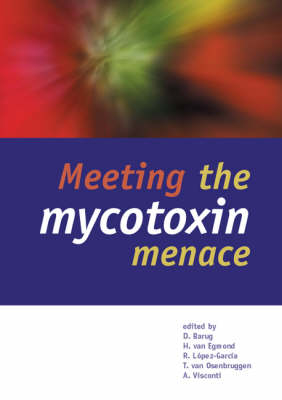
Meeting the mycotoxin menace
Wageningen Academic Publishers (Verlag)
978-90-76998-28-2 (ISBN)
- Titel erscheint in neuer Auflage
- Artikel merken
"Mycotoxins are toxic secondary metabolites of moulds belonging essentially to the Aspergillus, Penicillium, and Fusarium genera. They can be produced on a wide range of agricultural commodities and under a diverse range of situations. Due to their various toxic effects and their good thermal stability, the presence of mycotoxins in foods and feeds is potentially hazardous to the health of both humans and animals. Mycotoxins may cause damage to e.g. liver, kidney or the nervous system, some are even carcinogenic. There is growing concern for ways in which these fungi and their mycotoxins can be prevented from entering the human and animal food chain. And worldwide changes in legislation ever increase the need for more precise and sensitive mycotoxin analytical methods.
'Meeting the mycotoxin menace' contains the peer-reviewed papers of the second World Mycotoxin Forum held 17-18 February 2003 in Noordwijk, the Netherlands. The book focuses on the various aspects related to the presence, prevention, control, sampling and analysis of mycotoxins in agricultural commodities, foods and feeds. In this publication special attention is given to new developments in this field. The editors firmly believe that the very nature of the themes chosen and the excellence of the papers by invited experts from various disciplines will draw an audience from both the food and feed industry, regulatory authorities and science."
Contents 7; Mycotoxins: Current issues in U.S.A 15; Deepak Bhatnagar, Gary A. Payne, Thomas E. Cleveland and Jane F. Robens; Abstract 15; 1. Introduction 16; 2. Regulatory limits for mycotoxins in food and feed 18; 3. Economic impact of mycotoxins 19; 4. Detection/screening methods for mycotoxins 20; 5. Post-harvest decontamination of commodities 20; 6. Development of biomarkers 21; 7. Preharvest control of mycotoxins 21; 8. Genetics of toxin biosynthesis 29; 9. Genomics of toxigenic fungi 33; 10. Other issues 37; Acknowledgement 38; References 38; Mycotoxins: Current issues in South America 47; Maya Pineiro; 1. Introduction 47; 2. Problems and issues in the region 49; 3. Technical and organizational approaches 52; 4. Looking forwards: building capabilities for mycotoxin prevention and control in south american through fao's technical assistance 55; 5. Conclusions 63; References 64; Current mycotoxin issues in Australia and Southeast Asia 67; J.I. Pitt and Ailsa D. Hocking; Abstract 67; 1. Introduction 67; 2. Mycotoxin problems in Australia 68. 3. Mycotoxin problems in Southeast Asia 72; References 76; Mycotoxins worldwide: Current issues in Africa 79; Gordon S. Shephard; Abstract 79; 1. Introduction 79; 2. Mycotoxin exposure 81; 3. Mycotoxin issues 82; 4. Conclusion 84; References 84; Plant breeding as a tool for reducing mycotoxins in cereals 87; T. Miedaner; Abstract 87; 1. Introduction 88; 2. Principles of resistance breeding 89; 3. Common features of cereal diseases connected with mycotoxins 90; 4. Small-grain cereals/Fusarium head blight (scab) 92; 5. Maize/Gibberella ear rot 95; 6. Maize/Fusarium ear rot 97; 7. Maize/Aspergillus ear rot 99; 8. Biotechnological approaches 101; 10. Conclusions and outlook 105; Acknowledgment 106; References 106; Control of Fusarium and Aspergillus species and associated mycotoxins on wheat and maize 111; P. Nicholson, N. Gosman, R. Draeger, and A. Steed; Abstract 111; 1. Fusarium head blight 111; 2. Gibberella ear rot (Red fusariosis) 113; 3. Maize pink ear rot (Pink fusariosis) 113; 4. Aspergillus ear and kernel rot 113; 5. Control 114. 6. Fungicides 114; 7. Plant Breeding 116; 8. Fusarium head blight 116; 9. Maize ears rots 119; 10. Aspergillus ear rot 120; 11. Transgenic approaches 120; 12. Agronomic practices 122; 13. Biological control 123; 14. Conclusion 123; Acknowledgements 124; References 124; Making wine safer: the case of ochratoxin A 131; Z. Kozakiewicz, P. Battilani, J. Cabanes, A. Venancio, G. Mule, E. Tjamos, A. Lichter, N. Magan, V. Sanchis, A. Lebrihi, G. Zinzani and S. Minguez; Abstract 131; 1. Introduction 132; 2. Materials and methods 133; 3. Results 135; 4. Discussion and conclusions 137; Acknowledgements 138; References 139; Biocontrol of aflatoxins in peanuts 141; J.I. Pitt; Abstract 141; 1. Introduction 142; 2. Biocontrol by competitive exclusion 143; 3. Theoretical considerations 143; 4. Practical considerations: laboratory and glasshouse studies 145; 5. Field studies 147; Acknowledgements 151; References 151. The implementation of EU controls on imported food 153; Hans J. Jeuring; Abstract 153; 1. Introduction 153; 2. Legislation 154; 3. Food Law Enforcement Practitioners 156; 4. The current situation 158; 5. An example: importcontrols and mycotoxin legislation 159; References 161; The fate of mycotoxins during cereal processing 163; K.A. Scudamore and J.N. Banks; Abstract 163; 1. Introduction 163; 2. Important mycotoxins in cereals 164; 3. Commercial processes and the factors that affect mycotoxin levels 165; 4. Changes in mycotoxin levels during processing for specific mycotoxins 166; 5. A case study: Fate of ochratoxin A in cereal processing 172; 6. Aspects of processing relevant for the cereal industry and legislators 175; 7. Conclusions 176; Acknowledgement 176; References 176; Peanuts, aflatoxin, and the U.S. origin certification program 181; Julie Adams and Thomas B. Whitaker; Abstract 181; 1. Introduction 182; 2. Origin certification program 183; 3. EU peanut aflatoxin regulations 184; 4. USDA aflatoxin control program 185; 5. Origin certification agreement 188; 6. Practical considerations 192; 7. Summary and conclusions 192. References 194; Mycotoxins in spices: red pepper 195; Dilek Heperkan and Ozlem Ceyda Ermis, Ankara; Abstract 195; 1. Introduction 195; 2. Fungal contamination of spices 196; 3. Toxin production potential of moulds isolated from spices and herbs 203; 4. Mycotoxins occurring in spices 204; 5. Case study: Red pepper 209; 6. Materials 209; 7. Methods 210; 8. Result and discussion 210; 9. Conclusions 213; References 214; Sampling and sample preparation of pistachios 219; Thomas F. Schatzki and Natsuko Toyofuku; Abstract 219; 1. Introduction 219; 2. Theory 220; 3. Methods and materials 223; 4. Results and discussion 228; Acknowledgments 232; References 232; Development of certified reference materials for mycotoxins 235; Ralf Dieter Josephs, Robert Koeber, Alexander Bernreuther, Thomas Peter Josef Linsinger and Heinz Schimmel; Abstract 235; 1. Introduction 235; 2. Actual IRMM certification concept 238; 3. Conclusions 250; Acknowledgements 250; References 251. Multi-mycotoxin determination methodology 253; Jean-Yves Pierard, Christophe Depasse, Arnout Delafortrie and Jean-Claude Motte; Abstract 253; 1. Introduction: the multi-mycotoxin approach 254; 2. Materials and methods 255; 3. Discussion and results 258; 4. Conclusions 265; Aknowledgements 265; References 265; Moulds and mycotoxins in silage 267; Johanna Fink-Gremmels; 1. Introduction 267; 2. Penicillium roqueforti and its toxins 268; 3. Aspergillus fumigatus and its toxins 268; 4. Fusarium species and their toxins 269; 5. Conclusion 270; References 270; Mycotoxins in the animal production chain 273; B. Veldman; 1. Introduction 273; 2. Prevalence of mycotoxins in feed commodities 273; 2. Adverse effects impairing animal health and productivity 274; 3. Animal health risks and exposure assessment 276; 4. Carry-over 276; 5. Conclusion 278; References 278; The use of a dynamic in vitro model of the gastrointestinal tract (TIM) in studying mycotoxin adsorbents 279; E.E. Zeijdner, G. Avantaggiato, S. Sidler, F. Escribano, A. Visconti and R. Havenaar; 1. Introduction 279. 2. TNO's gastrointestinal models (TIM) 280; 3. Physiological relevance 282; 4. Validation and application in the agro-feed area 283; 5. Efficacy testing of mycotoxin binders in TIM 286; 6. Conclusions 289; References 289; Mycotoxin research: progress and future prospects 293; Naresh Magan; 1. Introduction 293; 2. Present areas of research 293; 3. Future research areas which will need attention 295; 4. Other areas of interest 299; 5. Conclusions 299; References 300.
| Erscheint lt. Verlag | 6.1.2004 |
|---|---|
| Sprache | englisch |
| Maße | 170 x 240 mm |
| Themenwelt | Studium ► Querschnittsbereiche ► Prävention / Gesundheitsförderung |
| Veterinärmedizin | |
| Weitere Fachgebiete ► Land- / Forstwirtschaft / Fischerei | |
| ISBN-10 | 90-76998-28-0 / 9076998280 |
| ISBN-13 | 978-90-76998-28-2 / 9789076998282 |
| Zustand | Neuware |
| Informationen gemäß Produktsicherheitsverordnung (GPSR) | |
| Haben Sie eine Frage zum Produkt? |
aus dem Bereich