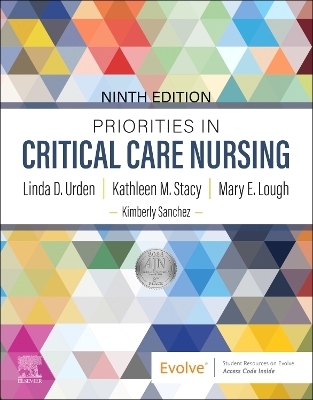
Priorities in Critical Care Nursing
Elsevier - Health Sciences Division (Verlag)
978-0-323-80990-0 (ISBN)
Need-to-know content reflects the realities of today’s progressive and critical care environments
UNIQUE! Balanced coverage of technology and psychosocial concerns includes an emphasis on patient care priorities to help you learn to provide the highest-quality nursing care
Consistent format features a Clinical Assessment and Diagnostic Procedures chapter followed by one or more Disorders and Therapeutic Management chapters for each content area
Strong quality and safety focus throughout includes Evidence-Based Practice boxes that highlight evidence specific to the discussion; Patient-Centered Care boxes that provide recommendations to address patient uniqueness; Quality Improvement boxes describing quality initiatives and implications for practice; Teamwork and Collaboration boxes that provide guidelines for effective handoffs, assessments, and communication between nurses and other hospital staff; Safety boxes that highlight important guidelines and tips to ensure patient safety in critical care settings; and Informatics boxes that provide additional online resources
Patient Care Management Plans at the end of the book provide a complete care plan for every priority patient problem, including outcome criteria, nursing interventions, and rationales
Priority Patient and Family Education Plan boxes list priority topics to be taught to the patient and family prior to discharge
UPDATED! Content reflects the latest evidence-based guidelines and national and international treatment protocols
NEW! Expanded coverage of self-care for healthcare professionals is consistent with the 2020-2030 Future of Nursing report
UNIQUE! Facilitating Care Transitions chapter provides guidance to ensure patient safety through all phases and locations of care transitions to other departments and discharge, including patient and family education
NEW! Trending Priorities in Healthcare boxes highlight trends and issues inherent in society that affect health care as it is delivered throughout various sites and geographical settings, such as limited English proficiency (LEP), homelessness, and external disaster preparedness
NEW! Greater emphasis on the psychosocial and spiritual wellbeing of critical care patients
NEW! Algorithms facilitate the use of multiple data points to design the most evidence-based, accurate, and timely plans of care, including three new algorithms in this edition for Protein Calorie Malnutrition, Burns, and Pulmonary Embolus
NEW! Introduction of International Classification for Nursing Practice (ICNP) diagnoses provides a structured vocabulary to capture patient diagnosis and facilitate patient care management to address those health issues
NEW! Case studies for the Next Generation NCLEX® on the companion Evolve website help you prepare for the revolutionary changes coming to the NCLEX® Exam
NEW! Coverage of key trends includes content on the opioid epidemic, special considerations for bariatric patients, acute chest syndrome, and COVID-19
Professor Emeritus Linda D. Urden works at the Hahn School of Nursing and Health Science and Beyster Institute for Nursing Research, University of San Diego in San Diego, California. Critical Care Clinical Nurse Specialist, Clinical Professor Kathleen M. Stacy works at the Hahn School of Nursing and Health Science, University of San Diego, San Diego, California. Nurse Scientist, Critical Care Clinical Nurse Specialist Mary E. Lough works at Stanford Health Care; Clinical Assistant Professor, Stanford University, Stanford, California.
UNIT ONE: FOUNDATIONS IN CRITICAL CARE NURSING
1. Caring for the Critically Ill Patient
2. Ethical and Legal Issues
3. Facilitating Care Transitions
UNIT TWO: COMMON PROBLEMS IN CRITICAL CARE
4. Psychosocial and Spiritual Considerations
5. Nutritional Alterations and Management
6. The Older Adult
7. Pain and Pain Management
8. Sedation and Delirium Management
9. Palliative and End-of-Life Care
UNIT THREE: CARDIOVASCULAR ALTERATIONS
10. Cardiovascular Clinical Assessment and Diagnostic Procedures
11. Cardiovascular Disorders
12. Cardiovascular Therapeutic Management
UNIT FOUR: PULMONARY ALTERATIONS
13. Pulmonary Clinical Assessment and Diagnostic Procedures
14. Pulmonary Disorders
15. Pulmonary Therapeutic Management
UNIT FIVE: NEUROLOGICAL ALTERATIONS
16. Neurological Clinical Assessment and Diagnostic Procedures
17. Neurologic Disorders and Therapeutic Management
UNIT SIX: KIDNEY ALTERATIONS
18. Kidney Clinical Assessment and Diagnostic Procedures
19. Kidney Disorders and Therapeutic Management
UNIT SEVEN: GASTROINTESTINAL ALTERATIONS
20. Gastrointestinal Clinical Assessment and Diagnostic Procedures
21. Gastrointestinal Disorders and Therapeutic Management
UNIT EIGHT: ENDOCRINE ALTERATIONS
22. Endocrine Clinical Assessment and Diagnostic Procedures
23. Endocrine Disorders and Therapeutic Management
UNIT NINE: MULTISYSTEM ALTERATIONS
24. Trauma
25. Burns
26. Shock, Sepsis, and Multiple Organ Dysfunction Syndrome
27. Hematological and Oncological Emergencies
| Erscheinungsdatum | 22.02.2023 |
|---|---|
| Verlagsort | Philadelphia |
| Sprache | englisch |
| Gewicht | 1400 g |
| Themenwelt | Pflege ► Fachpflege ► Anästhesie / Intensivmedizin |
| ISBN-10 | 0-323-80990-1 / 0323809901 |
| ISBN-13 | 978-0-323-80990-0 / 9780323809900 |
| Zustand | Neuware |
| Informationen gemäß Produktsicherheitsverordnung (GPSR) | |
| Haben Sie eine Frage zum Produkt? |
aus dem Bereich