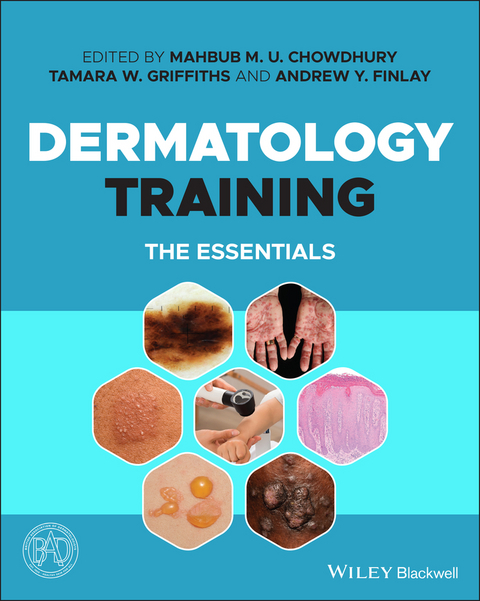
Dermatology Training (eBook)
John Wiley & Sons (Verlag)
978-1-119-71573-3 (ISBN)
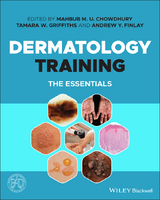
The fundamentals of professional development, clinical practice, general dermatology, therapeutics and procedural dermatology, and specialist areas of dermatology relevant to all UK and international trainees and healthcare professionals are addressed in 29 reader-friendly chapters.
Throughout this highly practical textbook, the expert authors provide tips and advice for handling common clinical situations, developing leadership skills, getting into research and gaining surgical experience, as well as key pearls and pitfalls. The book contains over 70 Specialty Certificate Exam (SCE) questions to assist in exam preparation, and includes contributions from current trainees that offer real insights into day-to-day dermatology training. A must-have for all those involved in the dermatology training process, including educational supervisors, this textbook:
- Provides detailed descriptions of the key themes that trainees in dermatology need to understand
- Features over 500 clinical images, tables and figures including disease presentations in various skin types, and highlights relevant issues relating to skin diversity
- Aligns with the new Capabilities in Practice (CiPs) assessment tool, which evaluates the trainee's ability to deliver and perform in the workplace
Dermatology Training: The Essentials is highly recommended reading for all trainees in dermatology, doctors taking the Certificate for Eligibility for Specialist Registration (CESR) route to accreditation in dermatology, general practitioners training for an Extended Role (GPwER), and junior doctors and medical students considering a career in dermatology.
Mahbub M.U. Chowdhury, MBChB, FRCP, FAcadMEd, Consultant Dermatologist, University Hospital of Wales, and Honorary Senior Lecturer, Cardiff University, Cardiff, UK.
Tamara W. Griffiths, BA, MD, FRCP, FAAD, Consultant Dermatologist, Dermatology Centre, Salford Royal Hospital NHS Trust, and Honorary Senior Lecturer, University of Manchester, UK.
Andrew Y. Finlay, CBE, MBBS, FRCP, Professor of Dermatology, School of Medicine, Cardiff University, Cardiff, UK.
Dermatology Training: The Essentials helps readers understand what is required to work effectively in a demanding clinical dermatology training programme. Developed by the British Association of Dermatologists and British College of Dermatology, this accessible textbook covers all key themes outlined in the 2021 Joint Royal Colleges of Physicians Training Board (JRCPTB) curriculum. The fundamentals of professional development, clinical practice, general dermatology, therapeutics and procedural dermatology, and specialist areas of dermatology relevant to all UK and international trainees and healthcare professionals are addressed in 29 reader-friendly chapters. Throughout this highly practical textbook, the expert authors provide tips and advice for handling common clinical situations, developing leadership skills, getting into research and gaining surgical experience, as well as key pearls and pitfalls. The book contains over 70 Specialty Certificate Exam (SCE) questions to assist in exam preparation, and includes contributions from current trainees that offer real insights into day-to-day dermatology training. A must-have for all those involved in the dermatology training process, including educational supervisors, this textbook: Provides detailed descriptions of the key themes that trainees in dermatology need to understand Features over 500 clinical images, tables and figures including disease presentations in various skin types, and highlights relevant issues relating to skin diversity Aligns with the new Capabilities in Practice (CiPs) assessment tool, which evaluates the trainee s ability to deliver and perform in the workplace Dermatology Training: The Essentials is highly recommended reading for all trainees in dermatology, doctors taking the Certificate for Eligibility for Specialist Registration (CESR) route to accreditation in dermatology, general practitioners training for an Extended Role (GPwER), and junior doctors and medical students considering a career in dermatology.
Mahbub M.U. Chowdhury, MBChB, FRCP, FAcadMEd, Consultant Dermatologist, University Hospital of Wales, and Honorary Senior Lecturer, Cardiff University, Cardiff, UK. Tamara W. Griffiths, BA, MD, FRCP, FAAD, Consultant Dermatologist, Dermatology Centre, Salford Royal Hospital NHS Trust, and Honorary Senior Lecturer, University of Manchester, UK. Andrew Y. Finlay, CBE, MBBS, FRCP, Professor of Dermatology, School of Medicine, Cardiff University, Cardiff, UK.
Preface viii
About the Editors ix
Foreword xi
Authors xii
Acknowledgements xv
Abbreviations xvi
About the Companion Website xix
Section 1: Developing professionalism 1
1. Think critically, research and publish 3
Girish K. Patel, Andrew Y. Finlay and John R. Ingram
2. How to lead and manage 14
Ruth Murphy and Mahbub M.U. Chowdhury
3. Ethical dilemmas 24
Leila Asfour and Andrew Y. Finlay
Section 2: Fundamentals of clinical practice 35
4. Basic science of the skin 37
Lloyd Steele and Edel A. O'Toole
5. Dermatopathology 52
Richard A. Logan
6. Teledermatology 69
William T.N. Hunt and Carolyn Charman
7. Dermoscopy 78
Ausama Atwan
8. Clinical measurement methods 93
Andrew Y. Finlay
9. Global and public health 105
Thomas King and L. Claire Fuller Copyrighted Material
Section 3: General dermatology 113
10. Medical dermatology 115
Victoria J. Lewis and Giles Dunnill
11. Paediatric dermatology 139
Lindsay Shaw
12. Infections and infestations 150
Cherng Jong and Roderick Hay
13. Skin cancer 164
Alla M. Altayeb and Richard J. Motley
14. Dermatology for skin of colour 180
Sharon A. Belmo
15. Psychodermatology 197
Anthony Bewley
16. Emergency dermatology 210
Ruwani P. Katugampola
Section 4: Therapeutics and procedural dermatology 223
17. Topical therapy 225
Maulina Sharma
18. Systemic therapy 238
Sarah H. Wakelin and Mahbub M.U. Chowdhury
19. Skin surgery 252
S. Walayat Hussain
20. Wound care and dressings 276
Mark Collier and Tamara W. Griffiths
21. Cosmetic dermatology 291
Tamara W. Griffiths
22. Laser therapy 301
Raman Bhutani and Manjunatha Kalavala
Section 5: Subspecialty dermatology 311
23. Cutaneous allergy 313
Deirdre A. Buckley and Mahbub M.U. Chowdhury
24. Photosensitivity 332
Tsui Chin Ling and Jean Ayer
25. Phototherapy and photodynamic therapy 346
Sally H. Ibbotson and Robert Dawe
26. Lymphoedema 357
Kristiana Gordon and Peter Mortimer
27. Hair and nail diseases 367
Donna Cummins and Anita Takwale
28. Genital skin diseases 378
Manu Shah and Karen Gibbon
29. Oral medicine 390
Jane Setterfield
Key resources and websites 407
Specialty Certificate Exam (SCE): questions 408
Specialty Certificate Exam (SCE): answers 421
Dermatology training and Capabilities in Practice 429
Index 432
Abbreviations
| AA | alopecia areata |
| ABPI | ankle brachial pressure index |
| ACD | allergic contact dermatitis |
| ACE | angiotensin‐converting enzyme |
| AD | atopic dermatitis |
| AGEP | acute generalised exanthematous pustulosis |
| AIBD | autoimmune bullous disease |
| AJCC | American Joint Committee on Cancer |
| AK | actinic keratosis |
| ALA | aminolaevulinic acid |
| AMP | antimicrobial peptide |
| APTD | argon‐pumped tunable dye |
| ARCP | Annual Review of Competency Progression |
| AZA | azathioprine |
| BAD | British Association of Dermatologists |
| BCC | basal cell carcinoma |
| BD | Bowen’s disease |
| BMI | body mass index |
| BP | bullous pemphigoid |
| BSA | body surface area |
| BSCA | British Society for Cutaneous Allergy |
| BSDS | British Society for Dermatological Surgery |
| BSF | British Skin Foundation |
| CAT | critically appraised topic |
| CBT | cognitive behavioural therapy |
| CCCA | central centrifugal cicatricial alopecia |
| CD | contact dermatitis |
| CDLQI | Children’s Dermatology Life Quality Index |
| CEP | congenital erythropoietic porphyria |
| CNS | clinical nurse specialist |
| CPSA | Cosmetic Practice Standards Authority |
| CT | computed tomography |
| CTCL | cutaneous T‐cell lymphoma |
| CTLA | cytotoxic T‐lymphocyte‐associated protein |
| CU | contact urticaria |
| CXR | chest X‐ray |
| DA | dermatitis artefacta |
| DALY | disability‐adjusted life‐year |
| DEJ | dermoepidermal junction |
| DEXA | dual‐energy X‐ray absorptiometry |
| DHEAS | dehydroepiandrosterone sulfate |
| DHSC | Department of Health and Social Care |
| DIF | direct immunofluorescence |
| DLQI | Dermatology Life Quality Index |
| DMF | dimethyl fumarate |
| DPD | dihydropyrimidine dehydrogenase |
| DRESS | drug reaction with eosinophilia and systemic symptoms |
| Dsg | desmoglein |
| EASI | Eczema Area and Severity Index |
| EB | epidermolysis bullosa |
| EBA | epidermolysis bullosa acquisita |
| EBD | evidence‐based dermatology |
| EDTA | ethylenediaminetetraacetic acid |
| eGFR | estimated glomerular filtration rate |
| ELISA | enzyme‐linked immunosorbent assay |
| EM | erythema multiforme |
| EMLA | eutectic mixture of local anaesthetics |
| ENA | extractable nuclear antigen |
| EPP | erythropoietic protoporphyria |
| ESCD | European Society of Contact Dermatitis |
| FBC | full blood count |
| FDA | Food and Drug Administration |
| FFA | frontal fibrosing alopecia |
| FISH | fluorescent in situ hybridisation |
| FPHL | female pattern hair loss |
| FTSG | full‐thickness skin graft |
| FTU | fingertip unit |
| FU | fluorouracil |
| G6PD | glucose‐6‐phosphate dehydrogenase |
| GCS | glucocorticosteroid |
| GMC | General Medical Council |
| GP | general practitioner |
| GRADE | Grading of Recommendations Assessment, Development and Evaluation |
| GVHD | graft‐versus‐host disease |
| HCP | healthcare professional |
| HCQ | hydroxychloroquine |
| HDU | high‐dependency unit |
| HHV | human herpesvirus |
| HLA | human leucocyte antigen |
| HPV | human papillomavirus |
| HRQoL | health‐related quality of life |
| HS | hidradenitis suppurativa |
| HSV | herpes simplex virus |
| ICD | irritant contact dermatitis |
| ICDRG | International Contact Dermatitis Research Group |
| ICU | immunological contact urticaria |
| IDQoL | Infants’ Dermatitis Quality of Life Index |
| IHD | ischaemic heart disease |
| IIF | indirect immunofluorescence |
| IL | interleukin |
| IM | intramuscular |
| IMF | immunofluorescence |
| IPL | intense pulsed light |
| IVIg | intravenous immunoglobulin |
| JAK | Janus kinase |
| JRCPTB | Joint Royal College of Physicians’ Training Board |
| KA | keratoacanthoma |
| KTP | potassium titanyl phosphate |
| LAD | linear IgA disease |
| LE | lupus erythematosus |
| LED | light‐emitting diode |
| LMIC | low‐ and middle‐income country |
| LP | lichen planus |
| LPP | lichen planopilaris |
| LS | lichen sclerosus |
| MAL | methyl aminolaevulinate |
| MASI | Melasma Area and Severity Index |
| MCC | Merkel cell carcinoma |
| MCID | minimal clinically important difference |
| MDT | multidisciplinary team |
| MED | minimal erythema dose |
| MF | mycosis fungoides |
| MHRA | Medicines and Healthcare products Regulatory Agency |
| MIC | middle‐income country |
| MM | malignant melanoma |
| MMF | mycophenolate mofetil |
| MMP | mucous membrane pemphigoid |
| MPD | minimal phototoxic dose |
| MRI | magnetic resonance imaging |
| MRSA | methicillin‐resistant Staphylococcus aureus |
| MTX | methotrexate |
| NGO | non‐governmental organisation |
| NHS | National Health Service |
| NICE | National Institute for Health and Care Excellence |
| NICU | non‐immunological contact urticaria |
| NSAID | non‐steroidal anti‐inflammatory drug |
| NTD | neglected tropical disease |
| NTN | National Training Number |
| ODSS | Oral Disease Severity Score |
| P3NP | serum procollagen 3... |
| Erscheint lt. Verlag | 7.12.2021 |
|---|---|
| Sprache | englisch |
| Themenwelt | Medizin / Pharmazie ► Gesundheitsfachberufe |
| Medizin / Pharmazie ► Medizinische Fachgebiete ► Dermatologie | |
| Schlagworte | clinical dermatology trainees • Cosmetic / Esthetic Dermatology • Dermatologie • Dermatology • dermatology CESR • dermatology educational supervisors • dermatology healthcare professionals • dermatology professional development • dermatology SCE • dermatology training • dermatology training curriculum • dermatology training guide • dermatology training reference • dermatology training textbook • Kosmetische u. Ästhetische Dermatologie • Medical Science • Medical Specialty Education • Medizin • Medizinstudium • Medizinstudium / Einzelne Fächer |
| ISBN-10 | 1-119-71573-3 / 1119715733 |
| ISBN-13 | 978-1-119-71573-3 / 9781119715733 |
| Informationen gemäß Produktsicherheitsverordnung (GPSR) | |
| Haben Sie eine Frage zum Produkt? |
 EPUB (Adobe DRM)
Kopierschutz: Adobe-DRM
Adobe-DRM ist ein Kopierschutz, der das eBook vor Mißbrauch schützen soll. Dabei wird das eBook bereits beim Download auf Ihre persönliche Adobe-ID autorisiert. Lesen können Sie das eBook dann nur auf den Geräten, welche ebenfalls auf Ihre Adobe-ID registriert sind.
Details zum Adobe-DRM
Dateiformat: EPUB (Electronic Publication)
EPUB ist ein offener Standard für eBooks und eignet sich besonders zur Darstellung von Belletristik und Sachbüchern. Der Fließtext wird dynamisch an die Display- und Schriftgröße angepasst. Auch für mobile Lesegeräte ist EPUB daher gut geeignet.
Systemvoraussetzungen:
PC/Mac: Mit einem PC oder Mac können Sie dieses eBook lesen. Sie benötigen eine
eReader: Dieses eBook kann mit (fast) allen eBook-Readern gelesen werden. Mit dem amazon-Kindle ist es aber nicht kompatibel.
Smartphone/Tablet: Egal ob Apple oder Android, dieses eBook können Sie lesen. Sie benötigen eine
Geräteliste und zusätzliche Hinweise
Buying eBooks from abroad
For tax law reasons we can sell eBooks just within Germany and Switzerland. Regrettably we cannot fulfill eBook-orders from other countries.
aus dem Bereich