ABC of Wound Healing (eBook)
John Wiley & Sons (Verlag)
978-1-118-59383-7 (ISBN)
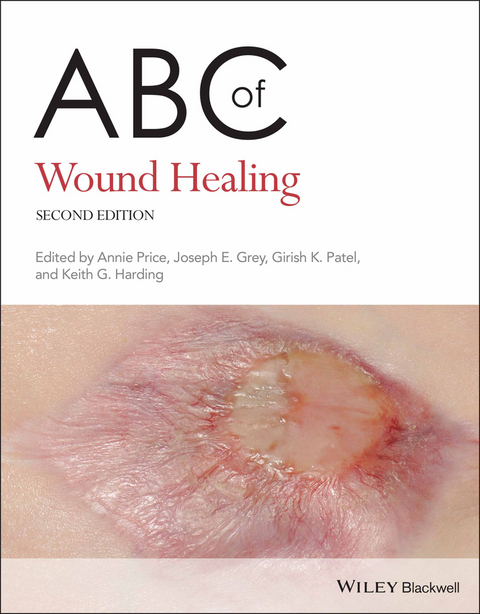
ABC of Wound Healing, Second Edition
ABC of Wound Healing is a practical, highly illustrated guide to assessment, diagnosis and management of all common types of acute and chronic wounds. This concise yet comprehensive reference covers all essential aspects of wound healing care, including epidemiology, pathophysiology, assessment, treatment, long-term management, and prevention
This revised second edition contains several new chapters on lymphoedema, nutrition, skin care, continence, and scarring. Updated and expanded chapters cover a wider range of devices and therapies, and discuss additional factors that impact wound healing processes, offering new clinical photographs as a visual guide. Applying a multidisciplinary approach to the provision of wound care, ABC of Wound Healing:
- Covers common wounds including traumatic wounds, surgical wounds, diabetic foot ulcers, pressure injuries, and venous and arterial leg ulcers
- Emphasises the importance of reaching a diagnosis, the fundamental step in managing any wound
- Provides up-to-date information on physical, chemical, biological and emerging therapies for patients with various types of wounds
- Contains hundreds of full-colour illustrations and clinical photographs of wounds and treatments
ABC of Wound Healing, Second Edition, remains a must-have guide for junior doctors, specialist registrars in medicine and surgery, specialist nurses, general practitioners and medical students.
Annie Price, Specialist Registrar in Rehabilitation Medicine, Cardiff and Vale University Health Board, Cardiff, UK.
Joseph E. Grey, Consultant Physician, Cardiff and Vale University Health Board, Cardiff, UK.
Girish K. Patel, Consultant Dermatologist, Welsh Institute of Dermatology, Cardiff, and Honorary Professor, Cardiff University School of Biosciences, Cardiff University, UK.
Keith G. Harding CBE, Medical Director of the Welsh Wound Innovation Centre, Pontyclun, UK; Honorary Consultant in Wound Healing, Cardiff and Vale University Health Board, Cardiff, UK; Professor of Wound Healing Research, Cardiff University School of Medicine, Cardiff, UK; and Senior Clinical Research Director, Skin Research Institute of Singapore, Singapore.
ABC of Wound Healing, Second Edition ABC of Wound Healing is a practical, highly illustrated guide to assessment, diagnosis and management of all common types of acute and chronic wounds. This concise yet comprehensive reference covers all essential aspects of wound healing care, including epidemiology, pathophysiology, assessment, treatment, long-term management, and prevention This revised second edition contains several new chapters on lymphoedema, nutrition, skin care, continence, and scarring. Updated and expanded chapters cover a wider range of devices and therapies, and discuss additional factors that impact wound healing processes, offering new clinical photographs as a visual guide. Applying a multidisciplinary approach to the provision of wound care, ABC of Wound Healing: Covers common wounds including traumatic wounds, surgical wounds, diabetic foot ulcers, pressure injuries, and venous and arterial leg ulcers Emphasises the importance of reaching a diagnosis, the fundamental step in managing any wound Provides up-to-date information on physical, chemical, biological and emerging therapies for patients with various types of wounds Contains hundreds of full-colour illustrations and clinical photographs of wounds and treatments ABC of Wound Healing, Second Edition, remains a must-have guide for junior doctors, specialist registrars in medicine and surgery, specialist nurses, general practitioners and medical students.
Annie Price, Specialist Registrar in Rehabilitation Medicine, Cardiff and Vale University Health Board, Cardiff, UK. Joseph E. Grey, Consultant Physician, Cardiff and Vale University Health Board, Cardiff, UK. Girish K. Patel, Consultant Dermatologist, Welsh Institute of Dermatology, Cardiff, and Honorary Professor, Cardiff University School of Biosciences, Cardiff University, UK. Keith G. Harding CBE, Medical Director of the Welsh Wound Innovation Centre, Pontyclun, UK; Honorary Consultant in Wound Healing, Cardiff and Vale University Health Board, Cardiff, UK; Professor of Wound Healing Research, Cardiff University School of Medicine, Cardiff, UK; and Senior Clinical Research Director, Skin Research Institute of Singapore, Singapore.
List of Contributors, vi
Foreword, viii
1 Wound Assessment, 1
Joseph E. Grey and Girish K. Patel
2 Traumatic Wounds, 9
Steven L.A. Jeffery and Stuart Enoch
3 Surgical Wounds and Surgical Site Infection, 14
Rhiannon L. Harries, Jared Torkington, and David Leaper
4 Burns, 20
Jonathan J. Cubitt and William A. Dickson
5 Diabetic Foot Ulcers, 26
Michael E. Edmonds and Annie Price
6 Venous and Arterial Leg Ulcers, 34
Joseph E. Grey and Girish K. Patel
7 Pressure Injuries, 41
Joseph E. Grey and Jacqui Fletcher
8 Uncommon Causes of Ulceration, 49
Girish K. Patel and Vincent Piguet
9 Infections, 56
Brendan Healy and Andrew Freedman
10 Lymphoedema and Wounds, 64
Christine Moffatt and Melanie Thomas
11 Nutrition, Skin Care and Continence, 71
Amy Ferris, Joseph E. Grey, and Girish K. Patel
12 Scars, 78
Paul Martin and Duncan A. McGrouther
13 Dressings and Devices, 85
Samantha Holloway, Stuart Enoch, and Joseph E. Grey
14 Drugs and Biological Approaches to Wound Healing, 94
Gregory Schultz and Girish K. Patel
Index, 102
CHAPTER 1
Wound Assessment
Joseph E. Grey1 and Girish K. Patel2,3
1 Department of Clinical Gerontology, Cardiff and Vale University Health Board, Cardiff, UK
2 Welsh Institute of Dermatology, Cardiff and Vale University Health Board, Cardiff, UK
3 Cardiff University School of Biosciences, Cardiff, UK
OVERVIEW
- Most wounds heal without difficulty, but all wounds have the potential to become chronic.
- The key to successful wound management is diagnosis and treatment of the underlying cause, which requires a detailed history and assessment.
- Certain wound characteristics point to a specific diagnosis and indicate the status of the wound, e.g. infected or clean, healing or non‐healing.
- Many local and systemic factors may impede healing; these should be identified and corrected where possible.
- Despite best practice, a small minority of wounds will never heal; improving quality of life and preventing complications are the treatment goals in these cases.
The majority of wounds, of whatever aetiology, heal without difficulties (see Chapters 2–4). Some wounds, however, are subject to factors that impede but do not prevent healing if managed appropriately. In contrast, most common chronic wounds do not heal until the underlying disease is adequately treated (see Chapters 5–8). A minority of wounds do not heal despite best practice, where control of symptoms and prevention of complications, rather than healing, become the goals of treatment.
Complications of chronic wounds
- Sinus formation
- Fistula
- Unrecognised malignancy
- Malignant transformation in the ulcer bed (Marjolin ulcer)
- Osteomyelitis
- Contractures and deformity in surrounding joints
- Systemic amyloidosis
- Heterotopic calcification
- Colonisation by multiple drug‐resistant pathogens leading to antibiotic resistance
- Anaemia
- Septicaemia
Approach to patients with wounds
In patients with wounds, it is important that the normal processes of developing a diagnostic hypothesis are followed before attempting to treat the wound. A detailed clinical history should be taken, along with an examination of the wound, surrounding skin and (where relevant) the limb, and any appropriate investigations should be performed. Seek to define the cause of the wound and factors that might impede healing. In order to aid management, regular wound assessments are used to monitor progress.
A systematic approach to wound assessment is helpful. The following factors should be considered as part of every wound assessment.
Site of the wound
The site of the wound may aid diagnosis; diabetic foot ulcers often arise in areas of abnormal pressure distribution caused by disordered foot architecture. Venous ulcers mostly occur in the gaiter area of the leg. Non‐healing ulcers, sometimes in unusual sites, should prompt consideration of malignancy.
Size of the wound
This should be assessed at first presentation and regularly thereafter to monitor response to treatment and provide an indication of healing. The simplest method is using a ruler to measure wound dimensions (longest length and perpendicular width). Wound surface area can be measured using an acetate tracing; the outline of the wound margin is traced onto transparent acetate sheets marked with 1 cm squares and the longest diameter in one plane is multiplied by the longest diameter in the perpendicular plane (for approximately circular wounds) or the number of squares contained within the wound outline are added together (for irregularly shaped wounds). These methods are relatively subjective and can be unreliable; accuracy is also affected by patient positioning, body curvature or tapering of the limbs. More sophisticated methods include using digitised area measurement software or laser techniques, but these require training and specialist equipment. Clinical photography should be carried out whenever possible.
Common types of chronic wounds. (a) Venous leg ulcer. (b) Pressure injury. (c) Post‐operative wound dehiscence. (d) Diabetic foot ulcer.
Causes of ulceration.
|
Depth of the wound
Accurate methods for measuring wound depth are not practical or available in routine clinical practice. However, approximate measurements of greatest depth should be taken to assess the extent of the wound. Undermining of the edge of the wound must be identified by digital examination or use of a probe. The depth and extent of sinuses and fistulae should be identified. Undermining areas and sinuses should be packed with an appropriate dressing to facilitate healing. Undermining wounds and sinuses with narrow necks that are difficult to dress can sometimes be laid open at the bedside to facilitate drainage and dressing. Wounds associated with multiple sinuses or fistulae should be referred for specialist surgical intervention.
Factors that impede wound healing.
| Local factors | Systemic factors |
|---|
|
|
Wound edge
Although not diagnostic, examination of the wound edge may help to identify its aetiology in the context of the clinical history. All healing wounds have a thin, shiny, tapered edge. Whereas venous leg ulcers generally have gently sloping edges, arterial ulcers often appear well demarcated and ‘punched out’, and rolled or everted edges should raise the suspicion of malignancy. A biopsy should be taken from the edge of any suspicious wound.
Clinical history
- Ulcer duration
- Previous ulceration
- History of trauma
- Family history of ulceration
- Ulcer characteristics:
- Site
- Pain
- Odour
- Exudate/discharge
- Underlying medical conditions including:
- Diabetes mellitus
- Peripheral vascular disease
- Ischaemic heart disease, cerebrovascular accident
- Neuropathy
- Connective tissue diseases, e.g. rheumatoid arthritis
- Varicose veins
- Deep venous thrombosis
- Previous venous or arterial surgery
- Smoking
- Medications
- Allergies to drugs and dressings
General principles of wound management
- Diagnose and treat the underlying cause of the wound
- Identify and correct factors that impede healing
- Wash the wound (clean tap water for chronic wounds, sterile water or saline for acute wounds)
- Remove non‐viable tissue and debris
- Choose a dressing appropriate for the level of wound exudate (see Chapter 13)
Wound bed
Healthy granulation tissue is pink in colour and is an indicator of healing. Unhealthy granulation tissue is dark red in colour, often bleeds on contact and may indicate the presence of wound infection. Excess granulation or overgranulation may also be associated with infection or non‐healing wounds. This can be treated by cautery with silver nitrate or topically applied steroid preparations. The type of tissue at the base of the wound will provide useful information relating to expectation of total healing time and the risk of complications. For example, bone at the base of the wound may...
| Erscheint lt. Verlag | 12.11.2021 |
|---|---|
| Reihe/Serie | ABC Series |
| ABC Series | ABC Series |
| Sprache | englisch |
| Themenwelt | Medizin / Pharmazie ► Gesundheitsfachberufe |
| Medizin / Pharmazie ► Medizinische Fachgebiete ► Dermatologie | |
| Medizin / Pharmazie ► Medizinische Fachgebiete ► Notfallmedizin | |
| Schlagworte | Dermatologie • Dermatology • General Clinical Nursing • Klinische Krankenpflege • Krankenpflege • Medical Science • Medizin • nursing • Scarring • wound assessment guide • wound care guide • wound diagnosis guide • wound healing advice • wound healing guide • wound healing reference • Wound infection • wound management guide • wound therapy guide • wound treatment guide • wound types • Wundheilung |
| ISBN-10 | 1-118-59383-9 / 1118593839 |
| ISBN-13 | 978-1-118-59383-7 / 9781118593837 |
| Informationen gemäß Produktsicherheitsverordnung (GPSR) | |
| Haben Sie eine Frage zum Produkt? |
 EPUB (Adobe DRM)
Kopierschutz: Adobe-DRM
Adobe-DRM ist ein Kopierschutz, der das eBook vor Mißbrauch schützen soll. Dabei wird das eBook bereits beim Download auf Ihre persönliche Adobe-ID autorisiert. Lesen können Sie das eBook dann nur auf den Geräten, welche ebenfalls auf Ihre Adobe-ID registriert sind.
Details zum Adobe-DRM
Dateiformat: EPUB (Electronic Publication)
EPUB ist ein offener Standard für eBooks und eignet sich besonders zur Darstellung von Belletristik und Sachbüchern. Der Fließtext wird dynamisch an die Display- und Schriftgröße angepasst. Auch für mobile Lesegeräte ist EPUB daher gut geeignet.
Systemvoraussetzungen:
PC/Mac: Mit einem PC oder Mac können Sie dieses eBook lesen. Sie benötigen eine
eReader: Dieses eBook kann mit (fast) allen eBook-Readern gelesen werden. Mit dem amazon-Kindle ist es aber nicht kompatibel.
Smartphone/Tablet: Egal ob Apple oder Android, dieses eBook können Sie lesen. Sie benötigen eine
Geräteliste und zusätzliche Hinweise
Buying eBooks from abroad
For tax law reasons we can sell eBooks just within Germany and Switzerland. Regrettably we cannot fulfill eBook-orders from other countries.
aus dem Bereich