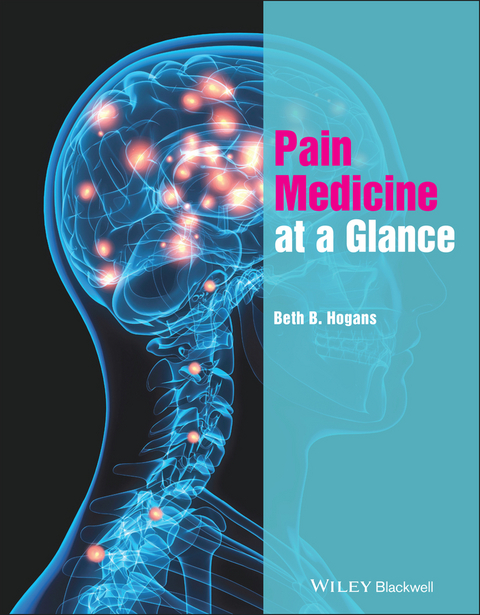
Pain Medicine at a Glance (eBook)
John Wiley & Sons (Verlag)
978-1-118-83764-1 (ISBN)
The market-leading at a Glance series is popular among healthcare students and newly qualified practitioners for its concise, simple approach and excellent illustrations.
Each bite-sized chapter is covered in a double-page spread with clear, easy-to-follow diagrams, supported by succinct explanatory text.
Covering a wide range of topics, books in the at a Glance series are ideal as introductory texts for teaching, learning and revision, and are useful throughout university and beyond.
Everything you need to know about Pain Medicine... at a Glance!Pain Medicine at a Glance is a user-friendly, visual introduction to the impact of pain in various clinical care settings, focusing on primary care needs. Aligned with learning objectives developed by the Johns Hopkins School of Medicine, this authoritative guide covers the basic forms and pathophysiology of pain, the clinical skills necessary for delivering excellent care, pharmacological and non-pharmacological treatments, and a variety of special cases such as healthcare ethics, integrative care, and treatment planning for chronic pain self-management therapy and the management of pain in children and older adults.
A new addition to the market-leading at a Glance series, the text offers concise and accessible chapters, full-color illustrations, self-assessment questions, and easy-to-follow diagrams. Topics include pain assessment, cognitive factors that influence pain, applying behavioral perspectives on pain, managing opioids and other pharmacological therapies, treating acute pain in patients with substance abuse issues, and more. Perfect for learning, revision, and teaching, this book:
- Provides a foundation of clinical and basic science knowledge about pain and its mechanisms
- Describes major forms of pain, including surgical, orofacial, musculoskeletal, and obstetric pain
- Offers advice on fostering empathy and compassionate practices in pain medicine
- Covers non-pharmacological treatments such as physical therapy, hydrotherapy, meditation, acupuncture, massage, and various focal treatments
- Includes discussion of recent advances and new discoveries in pain science
Pain Medicine at a Glance is the ideal companion for medical and healthcare students, junior doctors, advanced practice providers, nurse practitioners, and others involved in diagnosing and treating pain-associated illness.
For more information on the complete range of Wiley medical student and junior doctor publishing, please visit: www.wiley.com
To receive automatic updates on Wiley books and journals, join our email list. Sign up today at www.wiley.com/email
All content reviewed by students for students
Wiley Medical Education books are designed exactly for their intended audience. All of our books are developed in collaboration with students. This means that our books are always published with you, the student, in mind.
If you would like to be one of our student reviewers, go to www.reviewmedicalbooks.com to find out more. This book is also available as an e-book. For more details, please see www.wiley.com/buy/9781118837665
Beth B. Hogans is Associate Professor in the Department of Neurology at Johns Hopkins Medical School, and Associate Director for Education in the Geriatric Research Education and Clinical Center at the Veterans Affairs Maryland Health Care System in Maryland, USA. She is board certified in Neurology, Clinical Neurophysiology and Pain (ABPM), and is Chair of the Pain Education Special Interest Group for the International Association for the Study of Pain (IASP).
Pain Medicine at a Glance The market-leading at a Glance series is popular among healthcare students and newly qualified practitioners for its concise, simple approach and excellent illustrations. Each bite-sized chapter is covered in a double-page spread with clear, easy-to-follow diagrams, supported by succinct explanatory text. Covering a wide range of topics, books in the at a Glance series are ideal as introductory texts for teaching, learning and revision, and are useful throughout university and beyond.Everything you need to know about Pain Medicine... at a Glance! Pain Medicine at a Glance is a user-friendly, visual introduction to the impact of pain in various clinical care settings, focusing on primary care needs. Aligned with learning objectives developed by the Johns Hopkins School of Medicine, this authoritative guide covers the basic forms and pathophysiology of pain, the clinical skills necessary for delivering excellent care, pharmacological and non-pharmacological treatments, and a variety of special cases such as healthcare ethics, integrative care, and treatment planning for chronic pain self-management therapy and the management of pain in children and older adults. A new addition to the market-leading at a Glance series, the text offers concise and accessible chapters, full-color illustrations, self-assessment questions, and easy-to-follow diagrams. Topics include pain assessment, cognitive factors that influence pain, applying behavioral perspectives on pain, managing opioids and other pharmacological therapies, treating acute pain in patients with substance abuse issues, and more. Perfect for learning, revision, and teaching, this book: Provides a foundation of clinical and basic science knowledge about pain and its mechanisms Describes major forms of pain, including surgical, orofacial, musculoskeletal, and obstetric pain Offers advice on fostering empathy and compassionate practices in pain medicine Covers non-pharmacological treatments such as physical therapy, hydrotherapy, meditation, acupuncture, massage, and various focal treatments Includes discussion of recent advances and new discoveries in pain science Pain Medicine at a Glance is the ideal companion for medical and healthcare students, junior doctors, advanced practice providers, nurse practitioners, and others involved in diagnosing and treating pain-associated illness. For more information on the complete range of Wiley medical student and junior doctor publishing, please visit: www.wiley.com To receive automatic updates on Wiley books and journals, join our email list. Sign up today at www.wiley.com/email All content reviewed by students for students Wiley Medical Education books are designed exactly for their intended audience. All of our books are developed in collaboration with students. This means that our books are always published with you, the student, in mind. If you would like to be one of our student reviewers, go to www.reviewmedicalbooks.com to find out more. This book is also available as an e-book. For more details, please see www.wiley.com/buy/9781118837665
Beth B. Hogans is Associate Professor in the Department of Neurology at Johns Hopkins Medical School, and Associate Director for Education in the Geriatric Research Education and Clinical Center at the Veterans Affairs Maryland Health Care System in Maryland, USA. She is board certified in Neurology, Clinical Neurophysiology and Pain (ABPM), and is Chair of the Pain Education Special Interest Group for the International Association for the Study of Pain (IASP).
PAIN MEDICINE At-A-Glance Table of Contents
Dr. Beth Brianna Hogans, M.D., Ph.D
I Pain Basics
1 What is pain, how do we assess it?
2 Nociceptive processing, how does pain occur?
3 What are the major types of pain?
4 How prevalent is pain, what are the common forms?
5 How do we resolve dilemmas in pain?
6 What are the big challenges in pain?
7 Cognitive factors that influence pain
II Pain Clinical skills 8 Managing pain safely: diagnosis and treatment
9 Gathering the history with a pain narrative
10 Assessing pain in those with communication barriers
11 Examination skills I: Observation and affect
12 Examination skills II: Inspection and manual skills
13 Knowledge, skills, and compassionate practices
14 Counseling and shared decision-making: applying psychological approaches in primary care for pain
15 Communicating with teams of patients with pain
16 Planning therapy: coordinated, comprehensive care
III Pain Pharmacology 17 Basic considerations for pharmacological therapy - balancing mechanisms of drugs and disease
18 Non-steroidal anti-inflammatory drugs (NSAIDs) and acetaminophen (over-the-counter analgesia)
19 Neuromodulating agents: pain-active anti-depressants and anti-convulsants
20 Opioids - the basics and perioperative pain control
21 Opioids - the details: equianalgesia and safe use
22 Opioids - advanced practice - alternative delivery: IV, PCA, epidural
23 Focal treatments for pain in primary practice: topical, iontophoretic, basic injections, TENS
24 Interventional treatments and surgery for pain
IV Non-pharm. treatments 25 Activating treatment: Physical/occupational therapy, hydrotherapy, exercise: walking, yoga, chi gong
26 Cognitive therapies: CBT, ACT, reframing
27 Manual therapies: massage: trigger points, acupressure, chiropractic, stretching, inversion
28 Therapies that utilize descending pain pathways: video, music, distraction, acupuncture, meditation
V Major pain forms 29 Acute and Chronic pain: the basics
30 Surgical and procedural pain
31 Musculoskeletal pain
32 Orofacial pain
33 Neck Pain, cervical and thoracic spine pain
34 Arm Pain
35 Low back pain
36 Back pain emergencies
37 Radiating leg, buttock, and groin pain
38 Knee pain
39 Foot and ankle pain
40 Headache emergencies
41 Headache - basic diagnosis and management
42 Headache - chronic pain and the acute flare
43 Visceral pain
44 Pelvic pain
45 Exceptional causes of severe, chronic pain: CRPS, fibromyalgia, erythromelalgia
VI Special patient groups and clinical contexts 46 Management of pain with substance abuse
47 Pain at the end of life, opioid rotation
48 Opioids for chronic pain: preventing iatrogenic OUD
49 Tapering opioids in patients with pain
50 Pain in infants, children, and adolescents
51 Pain in older patients
52 Pharmacotherapy in aging, renal & liver dysfunction
53 Pain in pregnancy and the peripeurium
Appendices
I Sample exam sheet
II Sample pain diary
III Daily stretching guide
IV Patient packet - Your power over pain
V Glossary
9
The pain‐focused clinical history: well‐developed illness narratives impact pain outcomes
History‐taking for the patient with acute pain can focus on eliciting relevant details with empathy and compassion. To build a more durable relationship with patients in persistent pain, it is essential to honor the pain narrative by starting with open questions, such as: “tell me how your pain began.” It is precisely the patient who has told their story many times who will be most impressed by your willingness to listen attentively. In truth, the diagnostic process begins with an illness narrative, embedded there you find the cardinal features of the pain. It is imperative to listen with openness and without interrupting, because this is essential to establishing trust (Frankel and Stein 2001). There will never be another opportunity to lay the correct foundation for a robust therapeutic alliance. Try to suspend disbelief: perhaps the worst experience for someone with pain is to feel disbelieved. People are exquisitely sensitive to the perception that others are not taking their problems seriously. Don't be the one who leaps to a psychological explanation when genuine pain mechanisms are at work. Small fiber neuropathy is one condition that produces disruptive pain with very few clinical signs. Empathetic demeanor and compassionate concern will elicit gratitude from the patient whose diagnosis remains to be determined (Murinson et al. 2008).
In the pain history, the cardinal features include: Quality, Region, Severity, and Timing. It is also helpful to elicit: what is “Usually associated with” the pain, what steps have made the pain “Very much better,” and what has made the pain “Worse,” Table 9.1. Pain severity can be rapidly assessed with a standard scale (Figure 9.1). It is sometimes necessary to establish the cardinal features of more than one “pain.” For example, patients with headaches often experience multiple headache types; each should be characterized and may require different therapy.
Table 9.1 Pain alphabet.
| Pain |
| Quality |
| Region |
| Severity |
| Timing |
| Usually associated with |
| Very much better with |
| Worse with |
Figure 9.1 The numerical rating scale.
In the acute setting, the pain history may be quite brief. In this context, the biomedical model is relevant: what are the proximate causes of a pain problem, what are the pertinent medical conditions. Clinically, we think in terms of “finding a pain generator,” i.e., locating the primary afferent nerve endings activated by an injury. The quick pain history and the biomedical model are typically insufficient when pain is longer‐lasting.
In the chronic pain setting, the insightful provider finds that biopsychosocial history gathering is often more effective. Time is spent establishing rapport and building a relationship (Cole and Bird 2013). The patient with a persistent pain problem will have more extensive relevant experience: prior testing, interventional, conventional, and alternative therapies, and personal perspectives on the cause of their pain. Understanding the patient's insight into their pain strengthens therapeutic alliance (McCormack et al. 2013) (Figure 9.2). Recognizing what the patient values and genuinely enjoys in life becomes essential when implementing a chronic disease model to change behavior, as is necessary in managing persistent pain‐associated conditions. Knowing that patient wants to return to specific sports, hobbies, or work‐related activities will make discussions of “engagement in physical therapy” or “maintaining a moderate exercise program” more successful, couched in terms of returning to valued activities. This is referred to as motivational interviewing, discussed later (Miller and Rollnick 2002).
Figure 9.2 In the effective patient‐provider relationship, there are many forms of communication, patient experiences, and potential outcomes that impact pain care.
For those with cognitive impairments and dementia, it is important to utilize situationally appropriate observations. Pain behaviors in older adults can include irritability, social isolation, grimacing, groaning, sweating, tachypnea, tachycardia, guarding, and limping. For more detail, see Chapter 51.
For children, it is important to conduct an age‐appropriate pain assessment. Children over the age of 7 should be assessed for capacity to utilize the numerical rating scale. From 4 to 7 the FACES scale is more appropriate. Infants and pre‐verbal children require behavioral pain scales such as the FLACC and the NIPS. Please see Chapter 50 for more details.
Emotional impact
Some patients will become irritable when socioemotional barriers are explored. Others will express sincere appreciation that you want to understand their experiences more fully. By empathetically entering into the patient's experience you can lighten their burden while fostering genuine connection that will be a strong foundation for future progress (Rogers 1967). More in Chapter 10.
Sleep
The quality and quantity of sleep has a direct and profound influence on pain persistence and severity. It is critical to ask about sleep at the initial visit and to check back about sleep quality and quantity at subsequent visits, see Chapter 25 for details.
Function
Pain has a profound effect on multiple domains of function as noted in Chapter 1, Figure . Functional assessment in patients with pain, usually focuses on specific domains, noted here in Table 9.2.
Table 9.2 Pain functional interference.
Does pain interfere with your:
|
Biopsychosocial model
The degree to which the patient will recognize aspects of the biopsychosocial model is expediently explored with an educational handout about the model. The patient, once introduced to the concepts, see Chapter 8, is presented with a check list, such as that in Table 9.3, providing the opportunity to endorse multiple complicating factors.
Table 9.3 Biopsychosocial model: with examples for each Bio – Psycho – Social model: the details.
| Biological | Psychological | Social |
|---|
| Disc/vertebral degeneration | Depression | Smoking |
| Facet joint arthritis | Anxiety | Poor ergonomics |
| Ingrowth of pain‐type nerve endings | PTSD | Lack of exercise |
| Ligamentous stretch or hypertrophy | Post‐TBI | Stress |
| Muscle strain | Other mental illness | Physical demands |
| Radiculopathy | Dysphoria | Poor sleep |
| Altered central pain processing | Somatic focus | De‐conditioning |
| Low self‐efficacy | Lack of social support |
| Substance abuse | Expectations |
| Personality d/o |
Openness to treatments – foundations of MI
A useful way to assess openness to treatments is, besides asking the patient what treatments they are interested in, is to use a check sheet as part of the check‐in or counseling process. See Chapter 16 and Appendix 5.
Social history and work–life
The role of professional work–life in the social history has fallen from vogue but serves a central purpose in understanding the patient's everyday jargon and cognitive frame.
A check‐in form (or tablet protocol) that efficiently assesses pain can allow a provider to track changes over time, screen for opioid abuse risk, and provide valuable diagnostic information, in addition to conveying information about other prescription medicines, dietary supplements, exercise patterns, social habits, and comorbid conditions.
References
- Cole, S.A. and Bird, J. (2013). The Medical Interview: The Three Function Approach with Student Consult Online Access, 3e. Philadelphia, PA: Saunders.
- Frankel, R.M. and Stein, T. (2001). Getting the most out of the clinical encounter: the four habits. The Journal of Medical...
| Erscheint lt. Verlag | 27.8.2021 |
|---|---|
| Reihe/Serie | At a Glance |
| At a Glance | At a Glance |
| Sprache | englisch |
| Themenwelt | Medizin / Pharmazie ► Allgemeines / Lexika |
| Medizin / Pharmazie ► Medizinische Fachgebiete | |
| Medizin / Pharmazie ► Studium | |
| Schlagworte | Anästhesie • Anästhesie u. Schmerzbehandlung • Anesthesia & Pain Management • interprofessional competencies for pain • medical education • Medical Science • Medizin • Medizinstudium • pain clinical guide • pain clinical skills • pain forms • pain healthcare students • pain medical students • Pain Medicine • pain pathophysiology • pain pharmacology • pain prescribing • pain reference • pain science • pain textbook • pain therapies • Pain Treatment • pain types • Schmerzmedizin |
| ISBN-10 | 1-118-83764-9 / 1118837649 |
| ISBN-13 | 978-1-118-83764-1 / 9781118837641 |
| Informationen gemäß Produktsicherheitsverordnung (GPSR) | |
| Haben Sie eine Frage zum Produkt? |
 EPUB (Adobe DRM)
Kopierschutz: Adobe-DRM
Adobe-DRM ist ein Kopierschutz, der das eBook vor Mißbrauch schützen soll. Dabei wird das eBook bereits beim Download auf Ihre persönliche Adobe-ID autorisiert. Lesen können Sie das eBook dann nur auf den Geräten, welche ebenfalls auf Ihre Adobe-ID registriert sind.
Details zum Adobe-DRM
Dateiformat: EPUB (Electronic Publication)
EPUB ist ein offener Standard für eBooks und eignet sich besonders zur Darstellung von Belletristik und Sachbüchern. Der Fließtext wird dynamisch an die Display- und Schriftgröße angepasst. Auch für mobile Lesegeräte ist EPUB daher gut geeignet.
Systemvoraussetzungen:
PC/Mac: Mit einem PC oder Mac können Sie dieses eBook lesen. Sie benötigen eine
eReader: Dieses eBook kann mit (fast) allen eBook-Readern gelesen werden. Mit dem amazon-Kindle ist es aber nicht kompatibel.
Smartphone/Tablet: Egal ob Apple oder Android, dieses eBook können Sie lesen. Sie benötigen eine
Geräteliste und zusätzliche Hinweise
Buying eBooks from abroad
For tax law reasons we can sell eBooks just within Germany and Switzerland. Regrettably we cannot fulfill eBook-orders from other countries.
aus dem Bereich