Better Births (eBook)
John Wiley & Sons (Verlag)
978-1-119-62884-2 (ISBN)
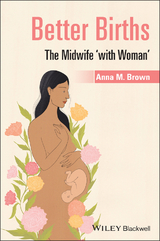
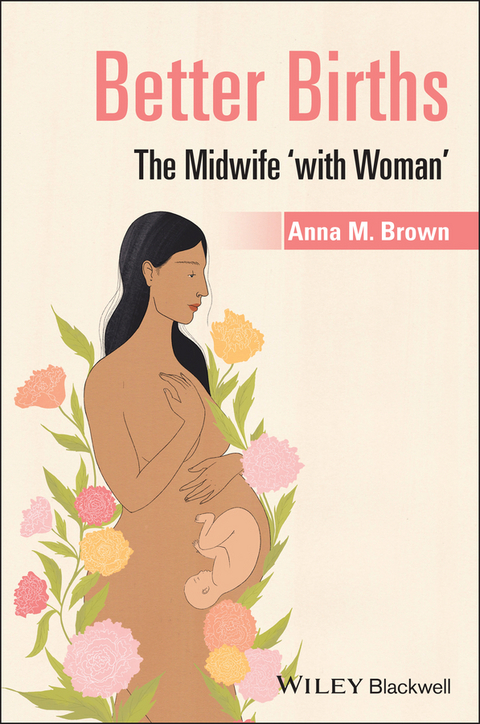
Better Births: The Midwife 'with Woman' provides readers with an in-depth understanding of the fundamental concepts at the heart of all midwifery practice. Written for student midwives and qualified practitioners alike, this evidence-based textbook examines what it means to be 'with woman' from a range of perspectives, in a variety of contexts, and in diverse areas of practice. Based on Rodgers' evolutionary concept analysis-the theoretical approach to developing knowledge in nursing science-this authoritative resource systematically examines and analyses the most recent literature and evidence, presenting findings of high relevance to midwives and childbearing women with contributions from international experts.
- Introduces the concept of being 'with woman' and explains the evolutionary concept analysis approach
- Provides insights on the relationship between woman and midwife and on fulfilling the 'with woman' concept
- Reviews contemporary literature to identify new knowledge and generate questions about the concept
- Includes discussion of global and historical perspectives, high risk midwifery, mental health issues, supporting the bereaved woman, delivering nurturing care to the older childbearing woman, midwifery education, public health, the future of midwifery, and more
Better Births is essential reading for undergraduate and graduate students in midwifery programmes, scholars and educators in the field, sociologists and researchers in related disciplines, and general readers interested in women's position in society, birth and motherhood, and feminism.
Anna M. Brown is a Midwifery Teaching Fellow in the School of Health Sciences, University of Surrey, UK, where she facilitates teaching on all levels of midwifery programmes.
Better Births: The Midwife 'with Woman provides readers with an in-depth understanding of the fundamental concepts at the heart of all midwifery practice. Written for student midwives and qualified practitioners alike, this evidence-based textbook examines what it means to be 'with woman' from a range of perspectives, in a variety of contexts, and in diverse areas of practice. Based on Rodgers' evolutionary concept analysis the theoretical approach to developing knowledge in nursing science this authoritative resource systematically examines and analyses the most recent literature and evidence, presenting findings of high relevance to midwives and childbearing women with contributions from international experts. Introduces the concept of being 'with woman' and explains the evolutionary concept analysis approach Provides insights on the relationship between woman and midwife and on fulfilling the 'with woman' concept Reviews contemporary literature to identify new knowledge and generate questions about the concept Includes discussion of global and historical perspectives, high risk midwifery, mental health issues, supporting the bereaved woman, delivering nurturing care to the older childbearing woman, midwifery education, public health, the future of midwifery, and more Better Births is essential reading for undergraduate and graduate students in midwifery programmes, scholars and educators in the field, sociologists and researchers in related disciplines, and general readers interested in women s position in society, birth and motherhood, and feminism.
About the Editor Anna M. Brown is a Midwifery Teaching Fellow in the School of Health Sciences, University of Surrey, UK, where she facilitates teaching on all levels of midwifery programmes.
Preface ix
Foreword xiv
1 An Evolutionary Concept Analysis 1
Anna M. Brown, Kath Lawton, Lauren Brown; Victoria Walker, Lucy Jane, Paruit Cass (midwives); and Emily and Victoria (women)
2 Ethical Perspectives of Being 'with Woman' 23
Anna M. Brown; Donna Hunt (midwife); and Emily (woman)
3 'With Woman' in 'Normal Birth' 46
Anna M. Brown; Laura Pagden, Rhiannon Brown, Donna Hunt (midwives); and Sarah, Helen, and Lissie (women)
4 'With Woman' in Screening and Fetal Medicine 74
Angie Bowles (Independent Midwife); Anna M. Brown; and Hannah (woman)
5 'With the High-Risk Woman and Neonate' 96
Anna M. Brown, Leontia Pillay, Kath Lawton, Ann Robinson; Kerry-Anne Horne, Rhiannon Brown, Victoria Walker, Julia Derrick, Amy Duncan, Olivia Boswell, Jo Willard (midwives); and Katrina (woman) and Angela* (woman)
6 'With Woman' with Gestational Diabetes Mellitus 130
Anna M. Brown, Julia Derrick; Amy Duncan (midwives); and Joanne (woman)
7 'With Woman' in Perineal Trauma 147
Angie Wilson (Specialist Midwife); and Ruth* and Emilia* (women)
8 'With Woman' from a Mental Health Perspective 173
Nadine Page (Mental Health Specialist), Erin Pascoe (Specialist Midwife); Aisha-Sky Lindsay (midwife); and Helena* (woman)
9 'With Woman' in Prison 189
Anna M. Brown; Clare Cochrane (Specialist Midwife); and Women
10 'With the Older Woman' 203
Clare Edney (Midwife), Anna M. Brown; and Kate* and Lucy* (women)
11 'With the Bereaved Woman' 221
Anna M. Brown, Zara Chamberlain (Specialist Midwife); Jennie (Student Midwife); and Kitty* (woman)
12 Global Midwifery Perspective of the 'with Woman' Concept 245
Julia Boon, Miriam Shibli and colleagues; Dina Ryan Davidson and colleagues; Elisabetta Colciago, Thorhild Borlaug, Natalie Papagiorcopulo, Alex Bell, Priscilla (midwives); and Annabel, Dina and Erin (women)
Conclusion: Reflections on Midwifery Practice: Does Professional Regulation Promote a 'With Woman' Philosophy? 269
Melvyn John Dunstall
Further Reading 282
Index 283
Preface
I have been a midwife for 35 years. Throughout this time, I have witnessed the impact and implications of childbirth. However, more recent events have encouraged me to examine childbirth experiences which have involved close family members. Heartfelt comments have ranged from desperate pleas such as ‘nobody tells you the reality of becoming a mother … I feel overwhelmed’ to ‘I feel abandoned’. Such observations have urged me to explore the concept of what it means to women and midwives to be ‘with woman’. In addition, new standards for the profession were published in November 2019, one of which requires midwives to be able to provide and promote continuity of care and carer. This is not a new phenomenon but seen through the concept of being ‘with woman’ would provide a safer and more effective delivery of maternity care.
‘With woman’ is an old term in the English language from which the word ‘midwife’ is derived. The meaning and concept of being ‘with woman’ may be interpreted as providing care and support in a physical, psychological, emotional and spiritual sense. Hunter (2002, p. 650), explored this concept to focus on the ‘presence and support by a caregiver as desired by the labouring woman’. Early on, nurse‐midwife core competencies in America emphasised the importance of human presence with the childbearing woman as a therapeutic and professional philosophy (ACNM 1979). More recently, Bradfield et al.'s (2018a) integrative review of the literature explored the ‘with woman’ phenomena to present an understanding and perspective of this concept. The authors suggest that being ‘with woman’ is an evolutionary construct, which is dynamic and continues to develop, and is fundamental to midwifery practices and professional philosophy.
An integrative review of the literature pertaining to midwives being ‘with woman’ (Bradfield et al. 2018a) suggests that this concept is a developing, integrative construct that is dynamic and ever evolving. Its philosophy underpins midwifery practice to identify and guide it in context, making it contemporary and creating spaces for innovation and further research, enhancing an ever‐growing body of knowledge. ‘With woman’ requires building mutually trusting relationships between the woman, her partner and the midwife and the complexities and challenges that this entails. It needs to take into consideration the expectations and decisions of women in partnership with the midwife. This relationship ‘with woman’ ought to be empowering for both woman and midwife, but sadly women's stories are a disappointing testament to a lack of control in what should be a safe and happy life‐changing event.
The purpose of this textbook is to provide an arena of enquiry and debate for those interested in the concept of being ‘with woman’ in the childbearing context. Recent publications from the Royal College of Midwives (RCM) on Better Births (NHS England 2016a), followed by the implementation of research (NHS England 2017), explored what women want from the childbearing experience. This National Maternity Review (NHS England 2016b) set out a five‐year plan to ensure that NHS maternity services in England are safer and more personal and that women's expectations of the childbearing experience is as close as is reasonably possible. The Better Births vision is to ensure that women are able to build a trusting relationship with their named midwife based on mutual trust and respect in line with the woman's decisions and fulfilling a true philosophy of being ‘with woman’. This can only be achieved through a personal relationship of continuity of carer over the childbearing. Such a relationship has been found to have positive effects on women's birthing experience and safer outcomes for mothers and neonates (Hunter 2009; Dahlberg and Aune 2013; Sandall 2014; Rayment‐Jones et al. 2015).
A national Maternity Transformation Programme (NHS England 2016b) has been created to achieve the Better Births (NHS England 2016a) vision through its implementation and establish transformed maternity services. This is to be achieved by providing consistency of care throughout the antenatal, intrapartum and postnatal periods by a known midwife or obstetrician. The named midwife would take responsibility for coordinated care throughout the childbearing continuum and develop a mutually trusting relationship with the woman and her family. In attempting to fulfil the ‘with woman’ concept, the provision of care will impact on models of midwifery care and how midwives work.
A wide range of literature documents the different models of midwifery care that have underpinned midwifery practice over the past few decades. Much debate has resulted from these publications (Hatem et al. 2008; McLachlan et al. 2012; Walsh and Devane 2012; Tracy et al. 2013; Sandall et al. 2015; Brady et al. 2019; Gidaszewski et al. 2019). The recommendations in the Five Year Forward View for Implementing Better Births: Continuity of Carer (NHS England 2017) suggest two models that could be most effective in promoting this concept: team continuity and case loading. Much of the literature available presents benefits but also highlights the impact that these models of care can have on midwives attempting to delivery maternity services with the capacity to be ‘with woman’ (Leinweber and Rowe 2010; Yoshida and Sandall 2013; Davis and Homer 2016; Bradfield et al. 2018b). Ultimately, the aim is to ensure safe and personalised care to meet all women's needs, whatever their circumstances, through the most effective midwifery model of care. I see the ‘with woman’ concept as the fundamental building block for these recommendations and in a sense it has always been the true philosophy underpinning holistic midwifery practice.
The thread of being ‘with woman’ is explored in each chapter in this textbook through an examination of the literature focused on an aspect or situation in the journey of childbearing women or their neonate. The different chapters explore attributes of the concept to be ‘with woman’ to bring together a more in‐depth understanding, thus generating discussion of what this concept means to women and midwives in differing situations and environments. The aim of each chapter is to illustrate the different attributes of the overall ‘with woman’ concept. The objective is to generate debate and discussion in a classroom or clinical setting to further examine current practice and create a space in which contemporary practice could be developed to inform future midwifery care.
Chapters explore the focused literature for a specific aspect of midwifery care; for example, pregnant women in prison and the maternity care that is available to them. Rodgers' phases of Evolutionary Concept Analysis (1989, Rodgers and Knafl 2000) will be the framework on which each chapter is based to identify attributes of the concept (Foster 2017) and it provides a different perspective from which the evidence can be explored. Integral to each chapter, individual situations will be illustrated with examples from practice. The reality and feasibility of being ‘with woman’ in a variety of situations is illustrated by midwives from their daily clinical experiences. Women are also invited to share their stories, which will help to analyse the concept of interest pertinent to these women's needs and the focus of each specific chapter. An asterisk next to the midwife/woman's name indicates a changed given name to maintain anonymity.
This textbook seeks to present the evidence of ‘with woman’ in different circumstances and viewed from women's and midwives' perspectives, to engender understanding and learning and ensure better births for all women. In addition, I believe that the content will inform and re‐ignite the passion for midwifery, in students and midwives, which sadly has seen a decline in the last two decades. Students engaging with the content will develop reflective skills to successfully inform their knowledge and clinical competence. I hope that the content is relevant to practitioners and those interested in women's position in society, those interested in women's human rights around birth and motherhood and those who strive to promote the legalisation and protection of the midwifery profession.
References
- American College of Nurse‐Midwives (1979). The Core Competencies of Basic Midwifery Practice. Washington DC: ACNM.
- Bradfield, Z., Duggan, R., Hauck, Y., and Kelly, M. (2018a). Midwives being “with woman”: an integrative review. Women and Birth 31: 143–152.
- Bradfield, Z., Kelly, M., Hauck, Y., and Duggan, R. (2018b). Midwives “with woman” in the private obstetric model: where divergent philosophies meet. Women and Birth http://doi.org/10.1016/j.wombi.2018.07.013.
- Brady, S., Lee, N., Gibbons, K., and Bogossian, F. (2019). Women‐centred care: an integrative review of the empirical literature. International Journal of Nursing Studies 94: 107–119.
- Dahlberg, U. and Aune, I. (2013). The woman's birth experience‐ the effects of interpersonal relationships and continuity of care....
| Erscheint lt. Verlag | 30.4.2021 |
|---|---|
| Sprache | englisch |
| Themenwelt | Medizin / Pharmazie ► Gesundheitsfachberufe ► Hebamme / Entbindungspfleger |
| Medizin / Pharmazie ► Pflege | |
| Schlagworte | Birth • Feminism • Geburt • Gynäkologie • Gynäkologie u. Geburtshilfe • Hebammenpraxis • Human Rights • Krankenpflege • Krankenpflege i. d. Frauenheilkunde • Maternity • Medical Science • Medizin • Midwifery • midwifery care • midwifery critical review • midwifery literature • midwifery literature review • Midwifery model • Midwifery Practice • midwifery practise • midwifery scholarship • midwifery textbook • midwifery with woman • midwife with woman concepts • midwife with woman perspectives • Motherhood • NMC Standards • nursing • Obstetrics & Gynecology • Sociology • Storytelling • Women's Health Nursing • women's rights |
| ISBN-10 | 1-119-62884-9 / 1119628849 |
| ISBN-13 | 978-1-119-62884-2 / 9781119628842 |
| Informationen gemäß Produktsicherheitsverordnung (GPSR) | |
| Haben Sie eine Frage zum Produkt? |
 EPUB (Adobe DRM)
Kopierschutz: Adobe-DRM
Adobe-DRM ist ein Kopierschutz, der das eBook vor Mißbrauch schützen soll. Dabei wird das eBook bereits beim Download auf Ihre persönliche Adobe-ID autorisiert. Lesen können Sie das eBook dann nur auf den Geräten, welche ebenfalls auf Ihre Adobe-ID registriert sind.
Details zum Adobe-DRM
Dateiformat: EPUB (Electronic Publication)
EPUB ist ein offener Standard für eBooks und eignet sich besonders zur Darstellung von Belletristik und Sachbüchern. Der Fließtext wird dynamisch an die Display- und Schriftgröße angepasst. Auch für mobile Lesegeräte ist EPUB daher gut geeignet.
Systemvoraussetzungen:
PC/Mac: Mit einem PC oder Mac können Sie dieses eBook lesen. Sie benötigen eine
eReader: Dieses eBook kann mit (fast) allen eBook-Readern gelesen werden. Mit dem amazon-Kindle ist es aber nicht kompatibel.
Smartphone/Tablet: Egal ob Apple oder Android, dieses eBook können Sie lesen. Sie benötigen eine
Geräteliste und zusätzliche Hinweise
Buying eBooks from abroad
For tax law reasons we can sell eBooks just within Germany and Switzerland. Regrettably we cannot fulfill eBook-orders from other countries.
aus dem Bereich