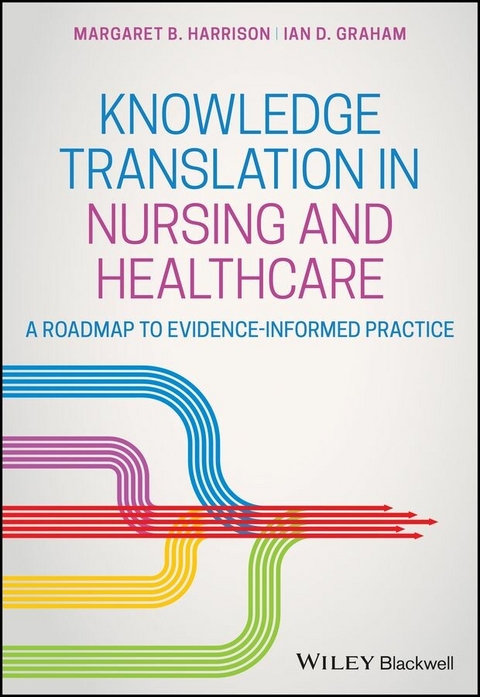
Knowledge Translation in Nursing and Healthcare (eBook)
John Wiley & Sons (Verlag)
978-1-119-12332-3 (ISBN)
Knowledge Translation in Nursing and Healthcare provides authoritative guidance on the implementation of evidence-informed practice, covering issue identification and clarification, solution building and implementation, evaluation, and sustainment. Integrating theory, empirical research, and experiential knowledge, this hands-on resource assists nurses and healthcare practitioners in collecting quality evidence, transforming it into a useable, customized recommendation, and then applying best practice in various point-of-care settings.
Written by highly experienced implementation researchers working with practitioners, the book demonstrates how the synthesis and translation of evidence supports improvement of existing care and service delivery models, and produces increased benefit for both patients and health services. Examples drawn from the authors' first-hand experience-such as pressure injury prevention in acute care, transition of care for people with heart failure, and community leg ulcer care-illustrate the use of best practice in addressing care and quality issues. This important reference and guide:
- Outlines a planning framework that activates research and evidence in practice settings, moving knowledge into action and sustaining the use of best practice
- Introduces the framework that enables effective evidence-informed methodology and decision-making
- Features numerous illustrative field examples of both successful and unsuccessful implementations in a variety of practical situations
- Offers perspectives on best practice implementation from experienced practitioners and researchers
Knowledge Translation in Nursing and Healthcareis a must-have for those wanting to implement, evaluate, and sustain best practice in the delivery of evidence-informed healthcare to patients, families, and communities.
Margaret B. Harrison, BN, MHA, PhD, Professor Emerita, School of Nursing, Queen's University, Kingston, Canada. She is a practice-based researcher who focuses on improving care with the use of evidence.
Ian D. Graham, PhD, FCAHS, FNYAM, FRSC, Professor, School of Epidemiology and Public Health, University of Ottawa, and Senior Scientist, Centre for Practice-Changing Research, The Ottawa Hospital Research Institute, Ottawa, Canada. He is an applied implementation science practitioner.
Knowledge Translation in Nursing and Healthcare provides authoritative guidance on the implementation of evidence-informed practice, covering issue identification and clarification, solution building and implementation, evaluation, and sustainment. Integrating theory, empirical research, and experiential knowledge, this hands-on resource assists nurses and healthcare practitioners in collecting quality evidence, transforming it into a useable, customized recommendation, and then applying best practice in various point-of-care settings. Written by highly experienced implementation researchers working with practitioners, the book demonstrates how the synthesis and translation of evidence supports improvement of existing care and service delivery models, and produces increased benefit for both patients and health services. Examples drawn from the authors' first-hand experience such as pressure injury prevention in acute care, transition of care for people with heart failure, and community leg ulcer care illustrate the use of best practice in addressing care and quality issues. This important reference and guide: Outlines a planning framework that activates research and evidence in practice settings, moving knowledge into action and sustaining the use of best practice Introduces the framework that enables effective evidence-informed methodology and decision-making Features numerous illustrative field examples of both successful and unsuccessful implementations in a variety of practical situations Offers perspectives on best practice implementation from experienced practitioners and researchers Knowledge Translation in Nursing and Healthcareis a must-have for those wanting to implement, evaluate, and sustain best practice in the delivery of evidence-informed healthcare to patients, families, and communities.
Margaret B. Harrison, BN, MHA, PhD, Professor Emerita, School of Nursing, Queen's University, Kingston, Canada. She is a practice-based researcher who focuses on improving care with the use of evidence. Ian D. Graham, PhD, FCAHS, FNYAM, FRSC, Professor, School of Epidemiology and Public Health, University of Ottawa, and Senior Scientist, Centre for Practice-Changing Research, The Ottawa Hospital Research Institute, Ottawa, Canada. He is an applied implementation science practitioner.
About the Authors xiv
Acknowledgments xvi
Foreword xvii
Glossary xxi
1 Introduction 1
2 Perspectives from the Field: Improving Care Through Evidence-Informed Practice 10
3 Guiding Theories, Models, and Frameworks 20
4 A Roadmap for Implementing Best Practice 43
Part 1 Phase I: Issue Identification and Clarification 69
5 The Call-to-Action 71
6 Find the Best Practice Evidence 79
7 Assemble Local Evidence on Context and Current Practices 95
Part 2 Phase II: Build Solutions 107
8 Customize Best Practices to the Local Context 109
9 Discover Barriers and Drivers to Best Practice Implementation 137
10 Implementation Strategies: What Do We Know Works? 171
11 Tailor Implementation Strategies 238
12 Field Test, Plan Evaluation, and Prepare to Launch 261
Part 3 Phase III: Implement, Evaluate, and Sustain 295
13 Launch and Evaluate 297
14 Sustain the Gains 305
15 Reflections: Is It Worth it? 326
Index 333
"Changing behavior using theory and evidence can be a daunting challenge - Drs. Harrison and Graham have risen to this challenge by providing us with a thoughtful and pragmatic "Roadmap" to guide our implementation activities from planning to sustainability. These authors have integrated the science and practice of implementation into a user-friendly "Roadmap" to optimize our success as implementers on the clinical frontline."
--Dr. Sharon E. Straus, HBSc, MSc, MD, FRCP (C), Professor, Dept. of Medicine, University of Toronto; Physician-in-Chief, St. Michael's Hospital; Director, KT Program, St. Michael's Hospital
"This is exactly what I've been looking for, something practical to use to teach KT and evidence implementation."
--Professor Jed Duff RN PhD FACORN, Professor and Chair of Nursing, Metro North Hospital and Health Service and Queensland University of Technology, Royal Brisbane & Women's Hospital, Nursing & Midwifery Research Centre, Herston, Queensland 4029
"As a healthcare leader with many years of experience in the practice environment and within accreditation, this book offers you a way for moving best practice into the healthcare environment, that is relevant and in touch with your reality. With a focus on improved outcomes for both care recipients and the providers, the approach outlined in this guide is easy to follow and simplifies the pathway to enabling implementation of best practice. In the complex world within which healthcare is provided, these authors demonstrate their deep understanding of your reality and provide you with this valuable guide. Enjoy the journey guided by The Roadmap!"
--Wendy Nicklin RN, BN, MSc(A), CHE, FACHE FISQ,ua, UCD.D, Former Vice President of Clinical Services, Chief Nurse Executive, The Ottawa Hospital, subsequently President and CEO of Accreditation Canada, President (Board Chair) of International Society for Quality in Health Care (ISQUA)
"Drs. Harrison and Graham are global leaders in knowledge translation and implementation science. Their book provides a practical and science-based approach to move evidence from the page to the hands of the knowledge user where it makes a difference."
--Lisa Hopp PhD RN FAAN, Dean and Professor; Director, Indiana Center for Evidence Based Nursing Practice, Purdue University Northwest, Hammond IN
"This book is full of outstanding practical advice, based on solid research and real world experiences, on how to best overcome barriers in the implementation of evidence-based care. It should be a staple resource for enhancing the quality and safety of healthcare."
--Bernadette Mazurek Melnyk, PhD, APRN-CNP, FAANP, FNAP, FAAN, Vice President for Health Promotion, University Chief Wellness Officer Dean and Professor, College of Nursing Executive Director, the Helene Fuld Health Trust National Institute for Evidence-based Practice in Nursing and Healthcare The Ohio State University and safety of healthcare
Foreword
A quick Internet search will show you that many books have been written about evidence‐based practice, so why should you be interested in this book? There are several good answers to this question, read on.
The proliferation of products that collate and synthesize evidence to offer best practice recommendations has increased exponentially over the last two decades. Yet there is often a disconnect between what is recommended and what happens in practice. Why? It is partly because evidence does not get moved, intact, from one place to another. It cannot. Research is rarely the only piece of the evidence jigsaw that practitioners draw on in their practice, and there needs to be a good fit between evidence and context for it to have a chance of making a difference. There are many factors at play, which need to be considered and negotiated, and this is rarely straightforward. Therefore, if evidence is to get transformed to inform practice, this requires purposeful action. This is why you should pick up this book.
The authors of this book have brought together research, theory and their accumulated expertise and wisdom from decades of practice‐based knowledge translation work to provide a map and compass to help those in roles that facilitate evidence‐informed care navigate the way. As a “Roadmap to Evidence‐Informed Practice” this book provides a comprehensive and systematic approach, drawing on practical examples, offering tips and tools, and reflecting on lessons learnt. As such, it provides a resource for the implementer to focus on solutions rather than get overwhelmed by the challenges.
The book is organized around the Roadmap Framework that Drs Graham and Harrison have developed from their extensive research and practice in the field. The framework includes three overarching phases: issue identification and clarification, build solutions, and field test, and implement, evaluate, sustain, which provides a logical and systematic way of walking the reader through activities required at each stage. A focus on research and evaluation activities at each stage also supports capacity and capability building for professional practice and research awareness. The content is grounded in nursing practice examples, which translates theory and research into concrete implementation actions. It is a book that you can dip in and out of, or read sequentially. The result is an invaluable and accessible “how to” of implementation.
Another notable feature of this book is the thread of collaboration and partnership that runs through it. Translating evidence to inform practice is not an individual practitioner or provider effort. The relationship between knowing and doing is bounded within the health and care systems people work in. Social and interactional aspects of knowledge translation have been receiving increasing attention. The idea that there are two homogenous communities where one produces knowledge and the other uses it, is rightly, becoming outdated. Therefore, it is refreshing to see how the authors weave in a focus on collaboration and partnership working as a pathway to best practice implementation through co‐producing knowledge and practice.
As leaders in the field, these authors have created a roadmap that is authoritative, comprehensive, and useful. What they have managed to achieve is a rare balance of theory and research combined with the practical. This book should be a “go to” for those implementing evidence‐informed nursing and healthcare practice.
Jo Rycroft‐Malone, RN, BSc(Hons), MSc, PhD,
Professor of Health Research
Dean, Faculty of Health & Medicine, Lancaster University, UK
Director, National Institute for Health Research Health Services & Delivery Research Programme
As I read through this new book by Margaret Harrison and Ian Graham entitled “Knowledge Translation in Nursing and Healthcare: A Roadmap to Evidence‐Informed Practice,” I reflected on my years of clinical practice as well as some major implementation projects in healthcare that I have been involved in over the years.
I completed my Doctorate in Nursing (with a focus on Knowledge Translation (KT) and Shared Decision Making) following many years of clinical experience in tertiary neonatal intensive care. During my career I have had the privilege of working as a clinician at the point of care, as an educator and consultant to support practice change, and as a KT Specialist and researcher to develop and evaluate different strategies to improve uptake of best practice.
One of the major initiatives I was involved in was a collaboration between a provincial data registry group, a research team of implementation science and clinical experts, and healthcare organizations providing maternal newborn services in Ontario. The aim of the project was to develop and implement an electronic audit and feedback system across the province, and then evaluate the effect on clinical practice for selected performance indicators. The results of this project were very promising with evidence of improved rates for four of six performance indicators of perinatal care over 30 months post implementation. A number of barriers and enablers were identified, and we learned many lessons from this project both with respect to the design of effective audit and feedback, and about contextual and individual factors that enabled or blocked change. For example, leadership support for effective change was critical, as were professional attitudes to the change and staff motivation, trust in the data and credibility of the evidence, the availability of essential resources, and collaborative inter‐professional relationships.
Reading this new book by two internationally recognized experts in the field of implementation of change in healthcare, I appreciate the successes and failures of our project even more now. Evidence‐based guidelines or data signaling an evidence‐practice gap do not automatically trigger practice change, even if the evidence is sound and the data are trustworthy. In my years of clinical practice prior to this initiative I have witnessed quality improvement initiatives where limited strategies were used to support practice change (e.g. staff education or the development and communication of a new policy or procedure). Inevitably, this was insufficient to address the full scope of barriers that existed and as a result implementation was incomplete and practice improvement, if any, was limited – wasting time, effort, resources, and money. Successful practice change in healthcare requires a multi‐level, multi‐pronged approach informed by current evidence and tailored to address the existing barriers to change within the specific context of care.
This new book provides a comprehensive roadmap to guide you through the planning process for successful implementation of sustained practice change in your organization. This is an extremely interesting, well written resource that is a pleasure to read. It is a rich source of information based on the authors’ years of experience in the field and informed by a wide range of theories and scientific evidence. This book also demonstrates the complexity of the change process, what it takes to successfully implement new practices and the commitment of time and resources required to carry out each phase. It is full of real‐life examples, tools, tips, references, and a step‐by‐step approach to help guide you along your journey. This book is a tremendous resource for nurses as well as other healthcare professionals. I wholeheartedly recommend that you read this book and take advantage of the wealth of knowledge contained within to help guide your implementation projects. Enjoy!
Sandra Dunn RN PhD
KT Specialist, BORN Ontario
Adjunct Professor, University of Ottawa, School of Nursing
Senior Research Associate, Ottawa Hospital Research Institute
Praise for Knowledge Translation in Nursing and Healthcare
Changing behavior using theory and evidence can be a daunting challenge – Drs. Harrison and Graham have risen to this challenge by providing us with a thoughtful and pragmatic “Roadmap” to guide our implementation activities from planning to sustainability. These authors have integrated the science and practice of implementation into a user‐friendly “Roadmap” to optimize our success as implementers on the clinical frontline.
Dr. Sharon E. Straus, HBSc, MSc, MD, FRCP (C)
Professor, Dept. of Medicine, University of Toronto
Physician‐in‐Chief, St. Michael's Hospital
Director, KT Program, St. Michael's Hospital
“This is exactly what I’ve been looking for, something practical to use to teach KT and evidence implementation.”
Professor Jed Duff RN PhD FACORN,
Professor and Chair of Nursing, Metro North Hospital and Health Service and Queensland University of Technology
Royal Brisbane & Women’s Hospital, Nursing & Midwifery Research Centre, Herston, Queensland 4029
As a healthcare leader with many years of experience in the practice environment and within accreditation, this book offers you a way for moving best practice into the healthcare environment, that is relevant and in touch with your reality. With a focus on improved outcomes for both care recipients and the providers, the approach outlined in this guide is easy to follow and simplifies the pathway to enabling implementation of best...
| Erscheint lt. Verlag | 10.3.2021 |
|---|---|
| Sprache | englisch |
| Themenwelt | Medizin / Pharmazie ► Pflege |
| Schlagworte | Ausbildung u. Perspektiven i. d. Krankenpflege • Evidence-based healthcare • evidence-based implementation • Evidence-based Nursing • evidence-based practice • evidence-informed healthcare • evidence-informed nursing • Evidenzbasierte Praxis • healthcare best practice • knowledge translation healthcare • knowledge translation nursing • Krankenpflege • nursing • nursing best practice • Nursing Education & Professional Development • research nursing |
| ISBN-10 | 1-119-12332-1 / 1119123321 |
| ISBN-13 | 978-1-119-12332-3 / 9781119123323 |
| Informationen gemäß Produktsicherheitsverordnung (GPSR) | |
| Haben Sie eine Frage zum Produkt? |
 EPUB (Adobe DRM)
Kopierschutz: Adobe-DRM
Adobe-DRM ist ein Kopierschutz, der das eBook vor Mißbrauch schützen soll. Dabei wird das eBook bereits beim Download auf Ihre persönliche Adobe-ID autorisiert. Lesen können Sie das eBook dann nur auf den Geräten, welche ebenfalls auf Ihre Adobe-ID registriert sind.
Details zum Adobe-DRM
Dateiformat: EPUB (Electronic Publication)
EPUB ist ein offener Standard für eBooks und eignet sich besonders zur Darstellung von Belletristik und Sachbüchern. Der Fließtext wird dynamisch an die Display- und Schriftgröße angepasst. Auch für mobile Lesegeräte ist EPUB daher gut geeignet.
Systemvoraussetzungen:
PC/Mac: Mit einem PC oder Mac können Sie dieses eBook lesen. Sie benötigen eine
eReader: Dieses eBook kann mit (fast) allen eBook-Readern gelesen werden. Mit dem amazon-Kindle ist es aber nicht kompatibel.
Smartphone/Tablet: Egal ob Apple oder Android, dieses eBook können Sie lesen. Sie benötigen eine
Geräteliste und zusätzliche Hinweise
Buying eBooks from abroad
For tax law reasons we can sell eBooks just within Germany and Switzerland. Regrettably we cannot fulfill eBook-orders from other countries.
aus dem Bereich