
Outbreak (eBook)
John Wiley & Sons (Verlag)
978-1-68367-355-2 (ISBN)
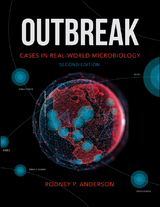
Outbreak: Cases in Real-World Microbiology, 2nd Edition, is the newest edition of this fascinating textbook designed for introductory microbiology students and instructors. Thoroughly revised, this collection of case studies of real-world disease outbreaks, generously illustrated in full color, offers material that directly impacts college-level students, while the book's unique presentation offers instructors the flexibility to use it effectively in a number of ways.
More than 90 outbreak case studies, organized into six sections according to the human body system affected, illustrate the wide range of diseases caused by microbial pathogens. The studies are presented at differing levels of difficulty and can be taught at all undergraduate levels. Each case study includes questions for students to think about, discuss, and answer, and the book includes an appendix that directs students to the specific reference material on which each case was based, providing the opportunity to investigate further and to apply the reference content to the case being studied.
Each of the six sections of the book concludes with a College Perspective and a Global Perspective case study. The College Perspective provides a direct and practical link between the microbiology course and the daily lives of students. The Global Perspective connects students with outbreaks that have occurred in countries around the world to facilitate understanding of the social, religious, economic, and political values at play in the treatment and prevention of infectious disease. At the end of every section, detailed descriptions offer concise yet complete information on each disease involved in that section.
Rodney P. Anderson, Ph.D., is a past chair of the American Society for Microbiology (ASM) Conference for Undergraduate Educators, which developed the core curriculum for undergraduate microbiology courses. He teaches microbiology and genetics to undergraduates in the Department of Biological and Allied Health Sciences at Ohio Northern University and conducts interdisciplinary seminars in disease and society addressed to microbiology nonmajors. Outreach activities have included microbial presentations at local elementary schools.
Rodney P. Anderson, Ph.D., is a past chair of the American Society for Microbiology (ASM) Conference for Undergraduate Educators, which developed the core curriculum for undergraduate microbiology courses. He teaches microbiology and genetics to undergraduates in the Department of Biological and Allied Health Sciences at Ohio Northern University and conducts interdisciplinary seminars in disease and society addressed to microbiology nonmajors. Outreach activities have included microbial presentations at local elementary schools.
SECTION I
Outbreaks of Diseases of the Respiratory Tract
For full indeed is earth of woes, and full the sea; and in the day as well as night diseases unbidden haunt mankind, silently bearing ills to men.
Hesiod, Works and Days, ca. line 101(Trans., J. Banks, 1856)
Among those who require a visit to a physician, infections of the respiratory system are the most common reason for the visit. These respiratory infections account for an average of ~80 physician visits per 100 persons each year. Infections of the lower respiratory tract, such as pneumonia and influenza, are also the leading cause of death by infectious disease worldwide. Pneumonia, influenza, and tuberculosis result in about 4.3 million deaths per year.
Containment of a respiratory outbreak can be complicated by a pathogen’s ability to survive outside the body. For example, some cold‐causing viruses can remain infective on an environmental surface for several hours. This makes classroom desks and doorknobs potential fomites for the spread of disease. Pathogens on the hands can be inoculated into the eyes and drain into the nose. There they can attack and initiate a respiratory tract infection. Consequently, one important way to decrease spread of respiratory pathogens is to wash hands frequently and to avoid touching the eyes.
The primary method of spread for respiratory tract pathogens is via airborne particles and mucus droplets. Airborne particles can travel over 1 meter through the air and still remain infectious, while mucus droplets travel less than 1 meter through the air. As a result, respiratory pathogens are highly contagious and spread rapidly through a community. Outbreaks of respiratory pathogens are common in colleges. Students who occupy college residence halls usually share rooms with one or more students and are in contact with hundreds of students at sporting events, in recreational facilities, and in classrooms. As a result, the number of opportunities for transmission of respiratory pathogens is greatly increased relative to others who live at home. The frequency of transmission of respiratory pathogens is significantly higher during cold‐weather periods, when students are restricted to indoor activities. Therefore, annual winter outbreaks of colds, influenza, strep throat, and bronchitis in this setting are common.
Although several thousand microbes are inhaled each day, the defenses of the respiratory system are very efficient and regularly prevent infection and disease. Mucus is secreted by goblet cells within the respiratory epithelium. This mucus traps most microbes before they travel deep into the respiratory tract. It helps to inhibit attachment of microbes to host cell receptors. Microbes that are trapped in the mucus are swept out of the respiratory system by cilia on the surface of the pseudostratified epithelium. The mucus is swallowed, and the microbes are destroyed in the digestive system. In addition, the mucus has a high concentration of dissolved solutes. The hypertonic environment thus created inhibits the growth of most cellular microbes—bacteria, fungi, and protozoa. In the alveoli of the lungs, macrophages are present to phagocytize microbes that escape the other defenses.
Microbial pathogens have evolved strategies to bypass these defenses. Adhesins on the surfaces of microbes allow pathogens to attach to receptors on epithelial cells so that the microbes are not swept out of the respiratory tract. These adhesins are highly specific and at times limit infections to certain parts of the respiratory tract. For example, rhinoviruses attach to receptors located in the upper respiratory tract and are thus limited to causing a common cold. Influenza A virus, however, attaches all along the respiratory mucosa and can cause a wide range of respiratory diseases, from a common cold to life‐threatening pneumonia.
Microbes that can survive in the alveoli of the lungs are the most dangerous, causing a life‐threatening infection that blocks gas exchange. Streptococcus pneumoniae has an antiphagocytic capsule that inhibits phagocytosis by alveolar macrophages. Strains with a capsule cause pneumonia, while those without a capsule are nonpathogenic. Mycobacterium tuberculosis, the causative agent of tuberculosis, a chronic infection of the lungs, and Legionella pneumophila, the causative agent of Legionnaires’ disease, avoid being digested after being phagocytized by alveolar macrophages.
The outbreaks described in this chapter emphasize the serious nature of respiratory tract infections, the difficulty in consistently and effectively implementing basic disease control measures, and the rapid spread of microbes that travel through the air.
Table I‐1 Selected outbreak‐causing respiratory pathogens
| Organism | Key Physical Properties | Disease Characteristics |
| Bacteria |
| Bordetella pertussis | Fastidious, Gram‐negative coccobacillus | Whooping cough in unvaccinated individuals |
| Chlamydophila pneumoniae | Obligate intracellular bacterium; very small; Gram negative | Pneumonia, bronchitis |
| Corynebacterium diphtheriae | Gram‐positive, club‐shaped bacillus | Diphtheria in unvaccinated individuals |
| Streptococcus pyogenes | Gram‐positive streptococcus; beta‐hemolytic on blood agar; group A surface antigen | Strep throat, scarlet fever, rheumatic fever |
| Legionella pneumophila | Fastidious, Gram‐negative bacillus | Pneumonia (Legionnaires' disease) |
| Mycobacterium tuberculosis | Acid‐fast bacillus found in chains or cords; cell wall contains mycolic acid, which results in drug and disinfectant resistance | Tuberculosis |
| Mycoplasma pneumoniae | Wall‐less bacterium; variable shape | Walking pneumonia |
| Streptococcus pneumoniae | Gram‐positive diplococcus; alpha‐hemolytic on blood agar | Otitis media, sinusitis, conjunctivitis, pneumonia |
| Viruses |
| Adenovirus | Nonenveloped polyhedral capsid with double‐stranded DNA | Pharyngitis, bronchiolitis, pneumonia, conjunctivitis |
| Epstein‐Barr virus | Enveloped polyhedral capsid with double‐stranded DNA | Mononucleosis |
| Hantavirus | Enveloped helical capsid with negative‐sense single‐stranded RNA | Hantavirus pulmonary syndrome; zoonotic disease carried by rodents |
| Influenza viruses (A, B, and C) | Enveloped pleomorphic capsid with segmented negative‐sense single‐stranded RNA | Influenza, pneumonia; predisposes to secondary bacterial pneumonia |
| Mumps virus | Enveloped pleomorphic capsid with negative‐sense single‐stranded RNA | Mumps |
| Parainfluenza viruses | Enveloped pleomorphic capsid with negative‐sense single‐stranded RNA | Croup, bronchiolitis, pneumonia, laryngitis |
| Respiratory syncytial virus | Enveloped helical capsid with negative‐sense single‐stranded RNA | Bronchiolitis and pneumonia, primarily in infants |
| Rhinoviruses | Nonenveloped polyhedral capsid with negative‐sense single‐stranded RNA | Common cold |
| Rubella virus | Enveloped polyhedral capsid with positive‐sense single‐stranded RNA | German measles; can cause significant birth defects when pregnant women are infected |
| Rubeola virus | Enveloped helical capsid with negative‐sense single‐stranded RNA | Measles in unvaccinated individuals |
| Varicella‐zoster virus | Enveloped polyhedral capsid with double‐stranded DNA | Chickenpox in unvaccinated individuals; shingles as a latent manifestation |
OUTBREAK I‐1 A Legionellosis Outbreak—Barceloneta
In the fishing neighborhood of Barceloneta, Spain, on the Mediterranean waterfront, 33 people were hospitalized in respiratory distress. Four of the victims were in serious condition. The area is predominantly inhabited by elderly people. The youngest victim was 49, while the oldest was 92. The common signs and symptoms were fatigue, malaise, high fever, shortness of breath, and coughing. Examination revealed rales (crackling sounds heard during breathing, indicating fluid in the lungs) and bilateral shadowing in the lungs on X ray (indicating fluid accumulation in both lungs).
City health officials carried out bacterial analyses of a ventilation system in the neighborhood located in a seaside building which uses a water tower as part of the cooling system for air conditioning. They isolated Legionella pneumophila, a Gram‐negative, rod‐shaped bacterium (Fig....
| Erscheint lt. Verlag | 16.4.2020 |
|---|---|
| Reihe/Serie | ASM |
| ASM | ASM Books |
| Sprache | englisch |
| Themenwelt | Medizin / Pharmazie ► Medizinische Fachgebiete ► Mikrobiologie / Infektologie / Reisemedizin |
| Naturwissenschaften ► Biologie | |
| Schlagworte | Biowissenschaften • clinical microbiology • day care nursery--juneau • diarrhea outbreak associated • hepatitis outbreak associated • Klinische Mikrobiologie • Life Sciences • listeriosis outbreak associated • Medical Science • Medizin • Microbiology • Mikrobiologie u. Virologie • outbreak • refugee camp--democratic rlic • swimming pool-related outbreak • syphilis outbreak connected • zika virus spreads |
| ISBN-10 | 1-68367-355-7 / 1683673557 |
| ISBN-13 | 978-1-68367-355-2 / 9781683673552 |
| Informationen gemäß Produktsicherheitsverordnung (GPSR) | |
| Haben Sie eine Frage zum Produkt? |
 EPUB (Adobe DRM)
Kopierschutz: Adobe-DRM
Adobe-DRM ist ein Kopierschutz, der das eBook vor Mißbrauch schützen soll. Dabei wird das eBook bereits beim Download auf Ihre persönliche Adobe-ID autorisiert. Lesen können Sie das eBook dann nur auf den Geräten, welche ebenfalls auf Ihre Adobe-ID registriert sind.
Details zum Adobe-DRM
Dateiformat: EPUB (Electronic Publication)
EPUB ist ein offener Standard für eBooks und eignet sich besonders zur Darstellung von Belletristik und Sachbüchern. Der Fließtext wird dynamisch an die Display- und Schriftgröße angepasst. Auch für mobile Lesegeräte ist EPUB daher gut geeignet.
Systemvoraussetzungen:
PC/Mac: Mit einem PC oder Mac können Sie dieses eBook lesen. Sie benötigen eine
eReader: Dieses eBook kann mit (fast) allen eBook-Readern gelesen werden. Mit dem amazon-Kindle ist es aber nicht kompatibel.
Smartphone/Tablet: Egal ob Apple oder Android, dieses eBook können Sie lesen. Sie benötigen eine
Geräteliste und zusätzliche Hinweise
Buying eBooks from abroad
For tax law reasons we can sell eBooks just within Germany and Switzerland. Regrettably we cannot fulfill eBook-orders from other countries.
aus dem Bereich