Dermatology at a Glance (eBook)
John Wiley & Sons (Verlag)
978-1-119-39272-9 (ISBN)
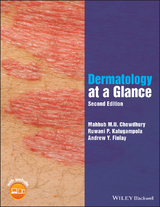
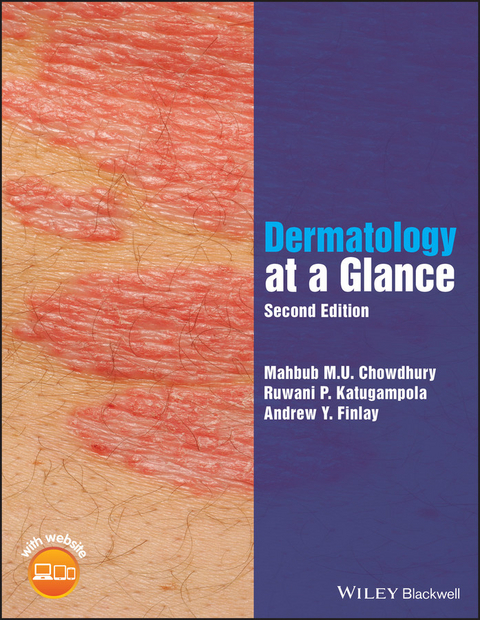
The field of Dermatology is expanding at a rapid pace - new research findings and advanced treatment technologies have amplified the need for concise and up-to-date information on this dynamic area of medicine. Dermatology at a Glance provides medical students and trainees with a clear introduction to dermatological practice. This valuable resource covers essential components of dermatology, from patient consultation and basic procedures to advanced treatments of skin disorders. Illustrated with over 300 high-quality slides and full-colour photographs, this book is an ideal reference for those seeking to interview and examine patients, identify and diagnose skin diseases, and develop treatment plans.
Now in its second edition, Dermatology at a Glance offers revised coverage of the epidemiology, pathogenesis, and presentations of various skin disorders, and examines central aspects of the British Association of Dermatologists core curriculum. New chapters on topics such as dermoscopy, diagnostic methods for lesions and rashes, cosmetic dermatology, and drug reactions reflect current research and practices.
- Perfect for revision and quick consultation with its highly visual approach
- Eight brand new chapters, including hidradenitis suppurativa, itch, and systemic and topical drugs
- Accompanied by a companion site featuring self-assessment resources and an image bank
Dermatology at a Glance is an indispensable resource for medical students, dermatology specialty and primary care trainees.
Dr Mahbub Chowdhury, Consultant Dermatologist, Welsh Institute of Dermatology, University Hospital of Wales, Cardiff, UK.
Dr Ruwani Katugampola, Consultant Dermatologist, Welsh Institute of Dermatology, University Hospital of Wales, Cardiff, UK.
Professor Andrew Finlay, Professor of Dermatology, School of Medicine, Cardiff University, Cardiff, UK.
The field of Dermatology is expanding at a rapid pace new research findings and advanced treatment technologies have amplified the need for concise and up-to-date information on this dynamic area of medicine. Dermatology at a Glance provides medical students and trainees with a clear introduction to dermatological practice. This valuable resource covers essential components of dermatology, from patient consultation and basic procedures to advanced treatments of skin disorders. Illustrated with over 300 high-quality slides and full-colour photographs, this book is an ideal reference for those seeking to interview and examine patients, identify and diagnose skin diseases, and develop treatment plans. Now in its second edition, Dermatology at a Glance offers revised coverage of the epidemiology, pathogenesis, and presentations of various skin disorders, and examines central aspects of the British Association of Dermatologists core curriculum. New chapters on topics such as dermoscopy, diagnostic methods for lesions and rashes, cosmetic dermatology, and drug reactions reflect current research and practices. Perfect for revision and quick consultation with its highly visual approach Eight brand new chapters, including hidradenitis suppurativa, itch, and systemic and topical drugs Accompanied by a companion site featuring self-assessment resources and an image bank Dermatology at a Glance is an indispensable resource for medical students, dermatology specialty and primary care trainees.
Dr Mahbub Chowdhury, Consultant Dermatologist, Welsh Institute of Dermatology, University Hospital of Wales, Cardiff, UK. Dr Ruwani Katugampola, Consultant Dermatologist, Welsh Institute of Dermatology, University Hospital of Wales, Cardiff, UK. Professor Andrew Finlay, Professor of Dermatology, School of Medicine, Cardiff University, Cardiff, UK.
Preface to the Second Edition vii
Preface to the First Edition viii
About the Authors ix
Foreword x
Acknowledgements xi
List of Abbreviations xii
About the Companion Website xiv
Part 1 Principles of Dermatology 1
1 Evidence-Based Dermatology 2
2 Dermatology: The Best on the Web 4
3 Dermatology: Then and Now 6
4 How the Skin Works 8
5 The Burden of Skin Disease 10
Part 2 The Patient Consultation 13
6 Taking the History 14
7 How to Examine the Skin 16
8 Diagnostic Clues 18
Part 3 Basic Procedures 21
9 Surgical Basics 22
10 Key Procedures 24
11 Dermoscopy 26
Part 4 Treatments 31
12 Topical Therapy 32
13 Practical Special Management 36
14 Systemic Therapies 38
Part 5 Inflammatory Diseases 43
15 Psoriasis 44
16 Atopic Dermatitis 47
17 Acne and Teenage Skin 50
18 Hidradenitis Suppurativa 52
19 Common Inflammatory Diseases 54
Part 6 ER Dermatology 57
20 Acute Dermatology 58
21 Blistering Skin Diseases 60
22 Drug Reactions 64
Part 7 Skin Infections 67
23 Bacterial Infections 68
24 Viral Infections 70
25 Fungal Infections 72
26 Skin Infestations 74
27 Tropical Skin Diseases 76
Part 8 Specific Sites 79
28 The Red Face 80
29 Oral and Genital Disease 84
30 Nail and Hair Disease 86
Part 9 Specific Ages 89
31 The Newborn Infant 90
32 The Child with a Rash 92
33 Skin Problems in Pregnancy 94
34 Elderly Skin 96
Part 10 Skin Allergy 99
35 Cutaneous Allergy 100
36 The Working Hands 102
37 Urticaria 104
Part 11 Skin Tumours 107
38 Benign Skin Lesions 108
39 Non-Melanoma Skin Cancers 111
40 Malignant Melanoma 114
41 Other Malignant Skin Conditions 116
Part 12 Photodermatology 119
42 Pigmentation 120
43 Sun and Skin 122
44 Phototherapy 124
45 Photodermatoses 126
Part 13 Systemic Diseases 129
46 Skin Signs of Systemic Disease 130
47 Autoimmune Disease and Vasculitis 133
48 The Immunosuppressed Patient 136
Part 14 Miscellaneous Conditions 139
49 Psychodermatology 140
50 Pruritus 142
51 Cosmetic Dermatology 144
52 Skin Breakdown 147
53 Hereditary Skin Diseases 150
Self-Assessment
Clinical Picture Quiz 154
Clinical Picture Quiz Answers 162
References 166
Index 167
"It would be helpful to have on the shelf of your nurse's office or in your personal collection. If you are new to dermatology and on your journey to becoming a specialist nurse, I would very much recommend this book. For those of you like me who have worked for many years in this exciting field you will be sure to find new information on the less familiar topics you come across in your clinical setting. This book lays the foundations to equip nurses to move closer towards the status of 'specialist nurse'." (Dermatological Nursing, Vol 18. No 4)
"Dermatology at a Glance covers a complex scientific subject in an easily understandable way. It is clearly and concisely written with key points highlighted at the end of each chapter, including a valuable additional warning section indicating possible pitfalls to be aware of or avoid. There is a helpful list of reliable information sources for further study, and the history and examination sections provide practical advice." (Clinical and Experimental Dermatology)
3
Dermatology: Then and Now
Historical Highlights
- 1572 – The first printed book on dermatology, De Morbis Cutaneis, was published by Geronimo Mercuriali. He later presided over a disastrous medical response to the plague in Venice in 1576.
- Eighteenth century: Dermatology emerges as a specialty – Skin diseases were usually dealt with by general physicians. Daniel Turner (1667–1740) trained as a surgeon, and in 1712 published the first skin disease book in English, A Treatise of Diseases Incident to the Skin, with detailed treatment recipes (Figure 3.1).
- Eighteenth and nineteenth centuries: Classification war – Across science there was a huge drive to classify, in dermatology led by Joseph Plenck (1735–1807) from Vienna. Rival French and English classifications of skin disease were published; Robert Willan's (1757–1812) system (inspired by Plenck's) eventually won. Many of the disease names are still in use, including their mistakes (e.g. mycosis fungoides meaning ‘fungus fungus’, now known to be a T‐cell lymphoma). Willan first described erythema nodosum.
Thomas Bateman (1778–1821) described molluscum contagiosum, alopecia areata, and senile purpura. Clinical illustrations from the Sydenham Society Atlas (Figures 3.2 and 3.3) are still accurate.
- Nineteenth century: German, Austrian, and French dominance – Many skin diseases are named after the French or German dermatologists who first described them. Austrian physician von Hebra (1816–1880) founded the influential Vienna Dermatology School and discovered the cause of scabies. In London, Erasmus Wilson (1809–1884), founded the Journal of Cutaneous Medicine, named lichen planus, and brought Cleopatra's Needle from Egypt to London (Figure 3.4). John Pringle described adenoma sebaceum (Figures 3.5 and 3.6).
- The golden age of skin hospitals – There were huge numbers of dermatology beds: L'Hôpital St Louis in Paris had 1100, of which 700 were reserved for scabies. Often ineffective topical treatment was used for psoriasis, fungal disease, syphilis, and tuberculosis.
Figure 3.1 Frontispiece of the first dermatology textbook in English, 1726 edition, by Daniel Turner.
Figure 3.2 Pemphigus foliaceus, from Atlas of Skin Diseases, Sydenham Society, late nineteenth century.
Figure 3.3 Alopecia areata, from Atlas of Skin Diseases, Sydenham Society, late nineteenth century.
Figure 3.4 ‘Cleopatra's Needle’. The plaque commemorates the dermatologist Sir Erasmus Wilson, who transported this 3450‐year‐old Luxor obelisk to the Embankment, London, in 1877.
Figure 3.5 Dr John Pringle (1855–1923), who described adenoma sebaceum, ‘Pringle's disease’.
Figure 3.6 Moulage of lupus vulgaris and cutaneous horn, from John Pringle's 1903 translation of Jacobi's Portfolio of Dermochromes.
Twentieth Century
Key figures of twentieth‐century dermatology (Table 3.1).
Table 3.1 Key figures of twentieth‐century dermatology.
| Sir Archibald Grey (1880–1967) – founded the British Association of Dermatologists in 1921. |
| Dr Geoffrey Dowling (1891–1976) – an exceptional clinician and clear thinker who influenced a generation of British dermatologists. |
| Dr Frederic Mohs (1910–2002) – first used histologically controlled removal of skin cancer in 1936 in Wisconsin. The technique was named after him and is described in Chapter 10. |
| Dr Albert Kligman (1916–2010) – US dermatologist whose career spanned the introduction of topical steroids to the recognition of topical retinoids being effective in photodamage, a word he invented. Controversial because of his use of prisoners in clinical testing in the 1950s and 1960s |
| Dr Arthur Rook (1918–1991) – a consultant first in Cardiff then in Cambridge, founded the Textbook of Dermatology, now the massive four volume standard textbook used by dermatologists worldwide. |
1903: Neils Finsen was awarded the Nobel Prize for UVB treatment of lupus vulgaris (skin tuberculosis).
1920s: X‐rays used for fungal skin infections and skin cancer.
1930–1950: Antibiotics conquer fatal cellulitis and tuberculosis. Goeckerman (tar + UVB) and Ingram regimes (dithranol + UVB) widely used for psoriasis.
1940s: ‘Dermatology and Venereology’ grew as a single specialty as the skin and mucosal problems of syphilis and gonorrhoea were so common. But in the Second World War specialists treated sexually transmitted disease in the troops and the speciality of genitourinary medicine developed from this. In Europe, only the UK, Eire, and Malta have dermatology and venereology as separate specialities.
1950s: Topical steroids: the biggest ever advance for eczema.
1960s: Griseofulvin for fungal infection.
1970: PUVA for psoriasis, and topical azoles for fungal infection.
1980s: Isotretinoin cures severe acne and ichthyoses alleviated with etretinate or acitretin. Aciclovir introduced for herpes simplex.
AIDS: explosion of HIV induced skin disease, e.g. Kaposi's sarcoma, until retrovirals introduced.
1990s: Terbinafine and itraconazole finally cure fungal infections.
Ciclosporin for psoriasis, developed when psoriasis improvement was noticed after transplantation. New insight into psoriasis immunopathogenesis.
Twenty‐First Century
- Biologics for psoriasis revolutionise treatment of severe psoriasis, drastically reducing need for dermatology beds. Next biologic revolution starting for eczema, hidradenitis suppurativa.
- Development of daycare treatment centres across the UK.
- Dermatology cancer therapy becomes major part of speciality.
- New subspecialities develop: cancer surgery, cutaneous allergy, photodermatology, paediatric dermatology, genital dermatology, post‐transplant dermatology.
- Dermoscopy introduced as clinical diagnostic technique.
- Cosmetic dermatology grows rapidly in response to consumer/patient demand and new procedures (e.g. laser treatment).
The Spreading of Knowledge
- Moulages – Incredibly realistic wax 3D models of skin diseases for teaching (Figure 3.6), created from 1867 by Jules Barreta, Hôpital St Louis, Paris. Worth seeing there or at Gordon Museum, London.
- British Journal of Dermatology (BJD) – Founded in 1888 by Malcolm Morris and Henry Brooke, the BJD is one of the top dermatology journals worldwide. In 1921 Sir Archibald Grey and the BJD team founded the British Association of Dermatologists.
- Journal of Investigative Dermatology – The highest impact scientific dermatology journal, official journal of the main European, American, and Japanese scientific dermatology societies.
- World Congress of Dermatology – Held every five years since the first in Paris in 1889; held in London in 1896 and 1952. Now four‐yearly: Vancouver 2015, Milan 2019, Singapore 2023.
Skin Disease: Cultural Aspects
- Films – Turner's housekeeper/lover in Mr Turner has a scabby skin condition. www.skinema.com describes:
- Actors with skin conditions (e.g. Tom Cruise and acne).
- Villains with skin conditions (e.g. Al Pacino in Scarface).
- Realistic roles of ordinary people with skin disease.
- Television – The TV series The Singing Detective, a musical drama by Dennis Potter, was a focused portrayal of the anguish of severe psoriasis; Potter had psoriatic arthropathy. There were 240 references to dermatology in the 180 episodes of the comedy series Seinfeld, many depicting skin disease in a negative way.
- Literature – Psoriasis in literature is reviewed by Frans Meulenberg (1997). John Updike had psoriasis, as did the main characters of From the Journal of a Leper and the novel The Centaur. Vladimir Nabokov (author of Lolita) had psoriasis but mostly ignored it in his writings. In The Unconsoled Kazuo Ishiguro describes a man with severe skin disease.
- Art – Paul Klee (1879–1940), modern artist, had scleroderma, altering the way he used a paintbrush. There appears to be a basal cell carcinoma beneath Michelangelo's (1475–1564) eye in one of his self‐portraits. In the Mona Lisa (1503) by Leonardo da Vinci, the yellow spot at the medial aspect of the left upper eyelid may be a xanthelasma: have a close look...
| Erscheint lt. Verlag | 6.9.2019 |
|---|---|
| Reihe/Serie | At a Glance |
| At a Glance | At a Glance |
| Sprache | englisch |
| Themenwelt | Medizin / Pharmazie ► Gesundheitsfachberufe |
| Medizin / Pharmazie ► Medizinische Fachgebiete ► Dermatologie | |
| Schlagworte | Andrew Y. Finlay</p> • common skin conditions • Cosmetic / Esthetic Dermatology • dermatological treatment • Dermatologie • Dermatology • Dermatology at a Glance • dermatology exam prep • dermatology test prep • dermatology text • diagnosing skin conditions • function of skin • guide to dermatology • guide to skin conditions • guide to skin disorders • identifying skin conditions • identifying skin diseases • identifying skin disorders • Kosmetische u. Ästhetische Dermatologie • <p>dermatology • Mahbub M. U. Chowdhury • Medical Science • Medical Specialty Education • Medizin • Medizinstudium / Einzelne Fächer • Ruwani P. Katugampola • Skin Ailments • skin condition images • skin conditions • skin diseases • skin disorder case studies • skin disorders • skin disorder textbook • treating skin conditions • treating skin disorders • understanding the structure of skin • visual guide to dermatology • visual guide to skin disorders |
| ISBN-10 | 1-119-39272-1 / 1119392721 |
| ISBN-13 | 978-1-119-39272-9 / 9781119392729 |
| Informationen gemäß Produktsicherheitsverordnung (GPSR) | |
| Haben Sie eine Frage zum Produkt? |
 EPUB (Adobe DRM)
Kopierschutz: Adobe-DRM
Adobe-DRM ist ein Kopierschutz, der das eBook vor Mißbrauch schützen soll. Dabei wird das eBook bereits beim Download auf Ihre persönliche Adobe-ID autorisiert. Lesen können Sie das eBook dann nur auf den Geräten, welche ebenfalls auf Ihre Adobe-ID registriert sind.
Details zum Adobe-DRM
Dateiformat: EPUB (Electronic Publication)
EPUB ist ein offener Standard für eBooks und eignet sich besonders zur Darstellung von Belletristik und Sachbüchern. Der Fließtext wird dynamisch an die Display- und Schriftgröße angepasst. Auch für mobile Lesegeräte ist EPUB daher gut geeignet.
Systemvoraussetzungen:
PC/Mac: Mit einem PC oder Mac können Sie dieses eBook lesen. Sie benötigen eine
eReader: Dieses eBook kann mit (fast) allen eBook-Readern gelesen werden. Mit dem amazon-Kindle ist es aber nicht kompatibel.
Smartphone/Tablet: Egal ob Apple oder Android, dieses eBook können Sie lesen. Sie benötigen eine
Geräteliste und zusätzliche Hinweise
Buying eBooks from abroad
For tax law reasons we can sell eBooks just within Germany and Switzerland. Regrettably we cannot fulfill eBook-orders from other countries.
aus dem Bereich