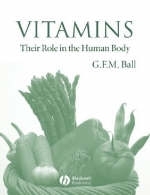
Vitamins
Wiley-Blackwell (Verlag)
978-0-632-06478-6 (ISBN)
- Titel erscheint in neuer Auflage
- Artikel merken

This single-source reference draws together the current knowledge of the vitamins’ biological properties in the context of human nutrition. Vitamins are co-enzymes, antioxidants or precursors of hormones and are therefore involved in a great many biochemical and physiological processes. They play a vital role in the maintenance of health, and there is evidence that dietary sources of vitamins have beneficial effects in the prevention of heart-related diseases, bone diseases and possibly cancer.
Following introductory chapters on historical and nutritional aspects of vitamins, the next four chapters cover relevant and detailed aspects of physiology and functional anatomy, biochemistry, immunology and the regulation of protein synthesis by nuclear hormone receptors. These background chapters, supported by a glossary of terms, provide the scientific principles upon which vitamin functions are based. The following thirteen chapters deal with each vitamin in turn. Subject areas include chemical structure, intestinal absorption, transport, metabolism, biochemical and physiological actions, immunoregulatory properties, deficiency-related diseases and potential toxicity. An extensive bibliography refers the reader to the original research literature.
Vitamins is aimed at nutritionists, biochemists, physiologists and physicians whether they be researchers, teachers or students. Food scientists, food technologists and many others working in the health professions will also find much of use and interest in the book. The inclusion of the theoretical principles in the background chapters makes the book an ideal starting point for those working outside the area who need a solid overview of the subject.
George F. M. Ball is the author of Vitamins: Their Role in the Human Body, published by Wiley.
Foreword xiii
Preface xv
1 Historical Events Leading to the Establishment of Vitamins 1
1.1 Introduction 1
1.2 Early studies of nutritionally related diseases 2
1.3 Experiments on formulated diets 6
1.4 Naming of the vitamins 7
Further reading 7
References 7
2 Nutritional Aspects of Vitamins 8
2.1 Definition and classification of vitamins 8
2.2 Nutritional vitamin deficiency 8
2.3 Stability and bioavailability of vitamins 10
2.4 Vitamin requirements 11
Further reading 11
References 11
3 Background Physiology and Functional Anatomy 12
3.1 Movement of solutes across cell membranes and epithelia 13
3.2 The blood–brain, blood–cerebrospinal fl uid and placental barriers 26
3.3 Functional anatomy of the small and large intestine, liver and kidney 29
3.4 Digestion and absorption 36
3.5 Glucose transport 39
3.6 Digestion, absorption and transport of dietary fat 44
3.7 Neural and endocrine communication systems 47
3.8 Structure of bone and its growth and development 55
3.9 Cell proliferation 62
Further reading 64
References 64
4 Background Biochemistry 67
4.1 Major degradation pathways in which B-group vitamins are involved as coenzymes 68
4.2 Amino acid utilization 71
4.3 Defences against free radicals and other reactive species 75
4.4 Haemostasis 76
4.5 Atherosclerosis 80
Further reading 90
References 90
5 Background Immunology 94
5.1 General features of the immune system 94
5.2 Innate immunity 95
5.3 Inflammation 101
5.4 Acquired immunity 103
5.5 Cytokines 106
5.6 Hypersensitivity 107
5.7 Immune suppression 108
5.8 Neuroendocrine modulation of immune responses 108
Further reading 108
References 108
6 The Genetic Control of Protein Synthesis and its Regulation by Nuclear Hormone Receptors 110
6.1 Functional structure of DNA 110
6.2 Role of RNA in protein synthesis 113
6.3 Gene expression 116
6.4 Mutation and polymorphism 116
6.5 Basal transcription 118
6.6 Regulated transcription 120
6.7 Jun, Fos and the AP-1 complex 125
6.8 Nuclear hormone receptors as regulators of protein synthesis 126
Further reading 131
References 131
7 Vitamin A: Retinoids and Carotenoids 133
7.1 Historical overview 134
7.2 Chemistry and biological functions 134
7.3 Dietary sources 136
7.4 Absorption, transport and metabolism 136
7.5 Nutritional factors that influence vitamin A status 150
7.6 The role of vitamin A in vision 151
7.7 Retinoids as regulators of gene expression 155
7.8 Effects of vitamin A on the immune system 171
7.9 Role of vitamin A in bone metabolism and embryonic development 174
7.10 Vitamin A and cancer 176
7.11 Vitamin A deficiency and toxicity 178
Further reading 180
References 180
8 Vitamin D 188
8.1 Historical overview 189
8.2 Chemistry and biological functions 190
8.3 Dietary sources 191
8.4 Cutaneous synthesis, intestinal absorption, transport and metabolism 191
8.5 Molecular action of the vitamin D hormones 198
8.6 Calcium and phosphate homeostasis 208
8.7 Immunoregulatory properties 218
8.8 Effects of vitamin D on insulin secretion 221
8.9 Vitamin D-related diseases 221
8.10 Therapeutic applications of vitamin D analogues 222
8.11 Toxicity 223
8.12 Dietary requirement 224
Further reading 224
References 224
9 Vitamin E 234
9.1 Historical overview 235
9.2 Chemistry, biopotency and units of activity 235
9.3 Dietary sources 236
9.4 Absorption, transport and delivery to tissues 236
9.5 Antioxidant role 239
9.6 Effect upon the ageing immune responses 240
9.7 Vitamin E and atherosclerosis 241
9.8 Vitamin E deficiency 247
9.9 Dietary intake 251
Further reading 252
References 252
10 Vitamin K 256
10.1 Historical overview 256
10.2 Chemistry 257
10.3 Dietary sources 258
10.4 Absorption, transport and metabolism 258
10.5 Biochemical and physiological functions 263
10.6 Vitamin K deficiency 268
Further reading 269
References 269
11 Thiamin (Vitamin B1) 273
11.1 Historical overview 274
11.2 Chemistry and biological activity 274
11.3 Dietary sources and bioavailability 274
11.4 Absorption, transport and metabolism 275
11.5 Biochemical functions 277
11.6 Neurophysiological functions 280
11.7 Vitamin B1 deficiency 282
11.8 Nutritional aspects 286
Further reading 287
References 287
12 Flavins: Riboflavin, FMN and FAD (Vitamin B2) 289
12.1 Historical overview 289
12.2 Chemistry 290
12.3 Dietary sources and bioavailability 291
12.4 Absorption, transport and metabolism 291
12.5 Biochemical functions 297
12.6 Vitamin B2 deficiency 298
12.7 Nutritional aspects 298
Further reading 299
References 299
13 Niacin: Nicotinic Acid and Nicotinamide 301
13.1 Historical overview 301
13.2 Chemistry 301
13.3 Dietary sources and bioavailability 302
13.4 Absorption, transport and metabolism 303
13.5 Biochemical functions 306
13.6 Niacin deficiency 308
13.7 Nutritional aspects 308
Further reading 309
References 309
14 Vitamin B6 310
14.1 Historical overview 310
14.2 Chemistry and biological activity 311
14.3 Dietary sources and bioavailability 311
14.4 Absorption, transport and metabolism 312
14.5 Biochemical functions 315
14.6 Regulation of steroid hormone action 319
14.7 Immune function 320
14.8 Vitamin B6 deficiency 322
14.9 Nutritional aspects 322
Further reading 323
References 323
15 Pantothenic Acid and Coenzyme A 326
15.1 Historical overview 326
15.2 Chemistry 327
15.3 Dietary sources and bioavailability 327
15.4 Absorption, transport and metabolism 328
15.5 Biochemical functions of coenzyme A and acyl carrier protein in cellular metabolism 330
15.6 Physiological roles of coenzyme A in the modification of proteins 332
15.7 Deficiency in animals and humans 334
15.8 Dietary intake 334
Further reading 335
References 335
16 Biotin 337
16.1 Historical overview 337
16.2 Chemistry 338
16.3 Dietary sources and bioavailability 338
16.4 Absorption, transport and metabolism 339
16.5 Biochemical and physiological functions 341
16.6 Biotin deficiency 343
Further reading 345
References 345
17 Folate 347
17.1 Historical overview 348
17.2 Chemistry 348
17.3 Dietary sources and bioavailability 348
17.4 Absorption, transport and metabolism 351
17.5 Biochemical functions 359
17.6 Homocysteine-related occlusive arterial and thrombotic diseases 363
17.7 Folate and neural tube defects 371
17.8 Folate deficiency 374
17.9 Dietary intake 376
Further reading 376
References 377
18 Vitamin B12 383
18.1 Historical overview 383
18.2 Chemistry 384
18.3 Dietary sources and bioavailability 384
18.4 Absorption, transport and metabolism 385
18.5 Biochemical functions 387
18.6 Vitamin B12 deficiency 388
18.7 Dietary intake 390
Further reading 391
References 391
19 Vitamin C 393
19.1 Historical overview 394
19.2 Chemistry 394
19.3 Dietary sources and bioavailability 395
19.4 Absorption, transport and metabolism 395
19.5 Effect of ascorbic acid upon absorption of inorganic iron 400
19.6 Inhibition of N-nitroso compound formation 401
19.7 Biochemical and neurochemical functions 403
19.8 Role of ascorbic acid in mesenchymal differentiation 406
19.9 Antioxidant role 407
19.10 Immune function 409
19.11 Vitamin C and cardiovascular disease 412
19.12 Vitamin C deficiency 414
19.13 Dietary intake 415
Further reading 415
References 415
Abbreviations 421
Glossary 423
Index 429
| Erscheint lt. Verlag | 1.11.2004 |
|---|---|
| Verlagsort | Hoboken |
| Sprache | englisch |
| Maße | 196 x 254 mm |
| Gewicht | 1270 g |
| Themenwelt | Medizin / Pharmazie ► Gesundheitsfachberufe ► Diätassistenz / Ernährungsberatung |
| Medizin / Pharmazie ► Medizinische Fachgebiete ► Pharmakologie / Pharmakotherapie | |
| ISBN-10 | 0-632-06478-1 / 0632064781 |
| ISBN-13 | 978-0-632-06478-6 / 9780632064786 |
| Zustand | Neuware |
| Informationen gemäß Produktsicherheitsverordnung (GPSR) | |
| Haben Sie eine Frage zum Produkt? |
aus dem Bereich