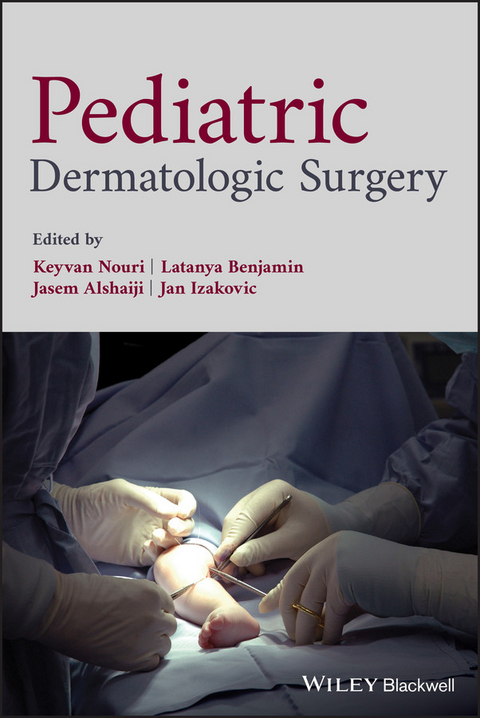
Pediatric Dermatologic Surgery (eBook)
John Wiley & Sons (Verlag)
978-1-118-76978-2 (ISBN)
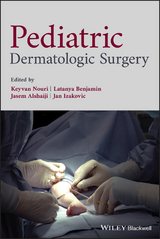
A complete guide to the surgical techniques used to treat childhood skin conditions
Recent advances have expanded the role of pediatric dermatologic surgery in both specialist and primary care settings. However, such surgeries can pose unique challenges to trainees and experienced practitioners alike. Procedures are carried out under local anesthesia and can be a source of distress and concern among young patients. Moreover, child's skin poses its own set of complicating factors, making the business of performing these procedures especially delicate and precise.
This book provides a step-by-step primer on invasive and non-invasive treatments of childhood skin disorders, offering concise and clearly illustrated guidance on current methods and best practices. Addressing conditions' effects, the impact of recent developments in their treatment, the ethics of operative procedures on children, and multiple treatment options for childhood dermatologic disease, Pediatric Dermatologic Surgery is an indispensable resource for trainee dermatologists and pediatricians, as well as practicing specialists.
Keyvan Nouri, MD, Professor of Dermatology, Ophthalmology, Otolaryngology & Surgery, Louis C. Skinner, Jr., M.D. Endowed Chair in Dermatology, Richard Helfman Professor of Dermatologic Surgery, Vice-Chairman of the University of Miami Medical Group, Director of Mohs, Dermatologic, & Laser Surgery, Director of Surgical Training, University of Miami Miller School of Medicine, Miami, FL, USA.
Latanya Benjamin, MD, FAAD, FAAP, Associate Professor of Pediatric Dermatology, Florida Atlantic University, Boca Raton, FL, USA.
Jasem Alshaiji, MD, Consultant Dermatologist, Head of Pediatric Dermatology Unit, Department of Dermatology, Amiri Hospital, Kuwait City, Kuwait.
Jan Izakovic, MD, Volunteer Associate Professor, Department of Dermatology & Cutaneous Surgery, Division of Pediatric Dermatology, University of Miami Leonard M. Miller School of Medicine, Miami, FL, USA.
A complete guide to the surgical techniques used to treat childhood skin conditions Recent advances have expanded the role of pediatric dermatologic surgery in both specialist and primary care settings. However, such surgeries can pose unique challenges to trainees and experienced practitioners alike. Procedures are carried out under local anesthesia and can be a source of distress and concern among young patients. Moreover, child s skin poses its own set of complicating factors, making the business of performing these procedures especially delicate and precise. This book provides a step-by-step primer on invasive and non-invasive treatments of childhood skin disorders, offering concise and clearly illustrated guidance on current methods and best practices. Addressing conditions effects, the impact of recent developments in their treatment, the ethics of operative procedures on children, and multiple treatment options for childhood dermatologic disease, Pediatric Dermatologic Surgery is an indispensable resource for trainee dermatologists and pediatricians, as well as practicing specialists.
Keyvan Nouri, MD, Professor of Dermatology, Ophthalmology, Otolaryngology & Surgery, Louis C. Skinner, Jr., M.D. Endowed Chair in Dermatology, Richard Helfman Professor of Dermatologic Surgery, Vice-Chairman of the University of Miami Medical Group, Director of Mohs, Dermatologic, & Laser Surgery, Director of Surgical Training, University of Miami Miller School of Medicine, Miami, FL, USA. Latanya Benjamin, MD, FAAD, FAAP, Associate Professor of Pediatric Dermatology, Florida Atlantic University, Boca Raton, FL, USA. Jasem Alshaiji, MD, Consultant Dermatologist, Head of Pediatric Dermatology Unit, Department of Dermatology, Amiri Hospital, Kuwait City, Kuwait. Jan Izakovic, MD, Volunteer Associate Professor, Department of Dermatology & Cutaneous Surgery, Division of Pediatric Dermatology, University of Miami Leonard M. Miller School of Medicine, Miami, FL, USA.
List of Contributors vii
1 The Embryogenesis of the Skin 1
Jasem Alshaiji
2 Basic Structure and Function of the Neonatal, Infantile, and Childhood Skin 13
Nawaf Almutairi
3 Approach to the Child as a Patient 23
Nawaf Almutairi
4 Preoperative and Postoperative Care of Children Undergoing Pediatric Dermatology Procedures 31
Alanna F. Bree
5 The Pediatric Surgical Tray 37
V.M. Carlberg and J.L. Fewkes
6 Anesthesia for Children 49
Marcia Hogeling
7 Skin Biopsy Techniques 63
Grace Sun
8 Common Pediatric Dermatologic Surgery Procedures 73
Meagan Barrett, Nicole Harter, and Ashley Wysong
9 Suturing Techniques 93
Israel D. Andrews, Jennifer J. Schoch, and Kathryn Ann Potter
10 Wound Closure Technique 105
Daniel Belkin and Ashley Wysong
11 Wound Closure Material 115
V.M. Carlberg and J.L. Fewkes
12 Dressings 125
Grace Sun
13 Nail Surgery 131
Jane Sanders Bellet
14 Complications of Surgery and Invasive Procedures 143
Yoon Cohen and Harper N. Price
15 Improving Scars 161
Harper N. Price and Maria Princesa P. Curtis
16 Special Dermatologic Surgery 171
Ramin Fathi, James William Behan, and Meena Julapalli
17 Lasers for Vascular Lesions 189
Nawaf Almutairi and Jasem Alshaiji
18 Lasers for Scars and Striae 197
Sebastian Verne, Robert Magno, Ariel Eber, Marina Perper, Ibrahim Alomair, Abdulkareem Alfuraih, Mana Alharbi, and Keyvan Nouri
19 Lasers for Acne 207
Mohammad-Ali Yazdani Abyaneh, Robert D. Griffith, Leyre Falto-Aizpurua, Harleen Arora, and Keyvan Nouri
20 Laser for Verrucae 223
Ariel Eber, Marina Perper, Sebastian Verne, Robert Magno, Mana Alharbi, Ibrahim Alomair, Abdulkareem Alfuraih, Ali Rajabi-Estarabadi, and Keyvan Nouri
21 Lasers and Lights for Onychomycosis 229
Elizabeth Yim, Leyre A. Falto-Aizpurua, Jennifer Ledon, and Keyvan Nouri
22 Lasers for Pigmented Lesions 241
Harleen Arora, Leyre Falto-Aizpurua, Ali Rajabi-Estarabadi, and Keyvan Nouri
23 Lasers for Tattoos 257
Stephanie Mlacker, Leyre Falto-Aizpurua, Colin McNamara, and Keyvan Nouri
24 Lasers for Hair Removal 273
Fleta Netter Bray, Leyre Falto-Aizpurua, Robert D. Griffith, Brian Simmons, Ali Rajabi-Estarabadi, and Keyvan Nouri
25 Lasers for Other Specific Dermatologic Disorders 289
Leyre Falto-Aizpurua, Mohammad-Ali Yazdani Abyaneh, Harleen Arora, Robert D. Griffith, Ali Rajabi-Estarabadi, and Keyvan Nouri
26 Medical Ethics and Bioethics in Pediatric Dermatology 303
Katlein França, Tulsie Narendra Patel, Shailee Bipin Patel, and Keyvan Nouri
Index 315
1
The Embryogenesis of the Skin
Jasem Alshaiji
Department of Dermatology, Amiri Hospital, Kuwait City, Kuwait
1.1 Introduction
The skin is complex tissue and is the biggest constantly renewable organ in the body. It has many different cell types and specialized structures (such as hair, nails, and glands) derived from both embryonic ectoderm and mesoderm. Skin cell types that originate from ectoderm include keratinocytes, neural crest‐derived melanocytes, Merkel cells, and neurons, whereas skin cell types that originate from mesoderm include fibroblasts, endothelial cells, adipocytes and bone marrow‐derived Langerhans cells [1].
There are two distinct dating systems, one refers to estimated gestational age () and is used in textbooks and by researchers, in which fertilization occurs on day 1 (first day of the last menstrual period ()), whereas menstrual age, used by obstetricians and most clinicians, has fertilization occurring on day 14 [2, 3].
Fetal skin development can be divided into three temporally overlapping stages: organogenesis (specification), histogenesis (morphogenesis) and maturation (differentiation) [4]. These stages roughly correspond to the embryonic period (0–60 days), the early fetal period (2–5 months), and the late fetal period (5–9 months) of development. The first stage involves the specification of ectoderm lateral to the neural plate to become epidermis and the allocation of subsets of mesenchymal and neural crest cells to become dermis. The second stage is the process by which these committed tissues begin to form their specialized structures, including epidermal stratification, epidermal appendage formation, subdivision between the dermis and subcutis, and vascular formation. The third stage refers to the process by which these newly specialized tissues further differentiate and assume their mature forms [1].
Understanding the stages of normal human skin development allows the definition of critical periods when the skin may be more vulnerable to developmental errors; it provides an opportunity to study the evolution of skin function, establishing a background for understanding the natural history of expression of genetic skin disease in its earliest form; and it provides the essential information for the evaluation of skin samples used in the prenatal diagnosis of genodermatoses for which molecular methods are still not adaptable [5].
The timing at which sampling of the skin for various diagnostic procedures are performed should be recognized. Chorionic villus sampling for fetal DNA is sampled around 10 weeks EGA, amniotic fluid cells (amniocentesis) can be obtained at around 14–16 weeks EGA, whereas fetal skin biopsy is performed typically at 19–21 weeks EGA [5–8].
1.2 Stages of Skin Development
1.2.1 Embryonic Stage (Specification)
During the third week after fertilization, the human embryo undergoes gastrulation, a complex process of involution and cell redistribution that results in the formation of the three primary embryonic germ layers: ectoderm, mesoderm, and endoderm. Shortly after gastrulation, ectoderm further subdivides into neuroectoderm and presumptive epidermis [1].
1.2.1.1 Epidermis
At six weeks EGA, the epidermis that covers most of the embryo are two‐layered epithelium consisting of basal cells and periderm cells [9–11]. The basal cells are more columnar and have intercellular attachment mediated by E‐ and P‐cadherin and they express keratins K5, K14, K8 and K19 [12–14]. The periderm cells are larger and flatter than underlying basal cells and they express K5, K14, K8, K18 and K19 [13–16]. Their apical surfaces are studded with microvilli and tight junctions attach them at their lateral surfaces [11]. Two of the immigrant cells, melanocytes and Langerhans cells, are present in the embryonic epidermis among basal cells. Melanocytes are dendritic as early as 50 days EGA in general body skin but there is no evidence of melanosomes in the cytoplasm [17]. Langerhans cells are recognized in embryonic skin as early as 42 days EGA and they have dendritic morphology and probably derived from yolk sac or fetal liver at this age [18–20]. The third immigrant cells, Merkel cells, can be seen in embryonic palmar skin as early as 55–60 days EGA and they express K8, K18, K10 and K20 [21–25]. K20 is the only keratin found exclusively in Merkel cells. They are distributed randomly and in a suprabasal position. They are neuroendocrine cells acting as slow‐adapting mechanoreceptors. It is generally accepted that Merkel cells are derived from keratinocytes in situ [21, 23, 25–27].
1.2.1.2 Dermis
The embryonic dermis is highly cellular and amorphous, consisting of a loose network of mesenchymal cells (fibroblasts, mast cells and skin‐derived precursor‐SKP‐cells) with little intervening fibrous connective tissue matrix, and its origin varies depend on the body site [28]. Dermal mesenchyme of the face and anterior scalp is derived from neural crest ectoderm; the limb and ventral body wall mesenchyme is derived from the lateral plate mesoderm, whereas the dorsal body wall mesenchyme derives from the dermomyotomes of the embryonic somite [29].
The cell migration is promoted through the high water content and hyaluronic‐acid‐rich environment of the dermal mesenchyme, whereas the exchange of signals between epidermis and dermis is achieved through the compact mesenchyme and is very important in stimulating the onset of appendage formation [5, 30].
Types I, III and VI collagen are distributed uniformly throughout the dermis whereas type V collagen is concentrated primarily along basement membranes and surrounding cells. The ratio of collagen III to collagen I is 3:1, the opposite what it is in the adult [31].
The embryonic dermis does not contain elastic fibers yet, but fibrillin and elastin proteins of the elastic fibers can be identified by immunohistochemistry and microfibrils can be seen by electron microscopy () [11]. Blood vessels have been identified in fetal skin through the process of vasculogenesis (de novo) as early as nine weeks EGA and its pattern varies among different regions of the body [32]. Development of the cutaneous innervation closely parallels that of the vascular system in term of its pattern, rate of maturation, and organization. Cutaneous nerves are composed of somatic sensory fibers, which can be identified at seven weeks EGA, and sympathetic autonomic fibers, which are not yet recognized [33].
1.2.1.3 Dermoepidermal Junction (DEJ)
The Dermoepidermal Junction () connects the developing epidermis (the basal cells) to the dermis and it provides resistance against shearing forces on the skin. The embryonic DEJ is simple, flat, and generic basement membrane and consists of a lamina lucida and a lamina densa. It is composed of molecules that are common to all basement membranes zones (e.g. type IV collagen, laminin, heparin sulfate, proteoglycans, nidogen/entactin) [34]. The α6 and β4 integrin subunits are expressed quite early by embryonic basal cells, but they become localized to the basal surface until after 9.5 weeks EGA, at the same time as bullous pemphigoid antigens (BPA1 and BPA2) are first detected by immunohistochemistry and hemidesmosomes are recognized by EM [34, 35]. The anchoring filaments and anchoring fibrils are identified by nine weeks EGA [4, 36]. Collagen VII (the anchoring fibril protein) is seen slightly earlier at eight weeks EGA [36].
1.2.1.4 Subcutis (Hypodermis)
The subcutis can be first recognized at 50–60 days EGA through a plane of thin‐walled vessels that separate the hypodermis from the overlying cellular dermis [4]. However, it is difficult distinguish it from dermis before this time due to similarities in the cells found in both structures and the fact that the adipose tissue is not yet synthesized. There is no morphologic evidence that epidermal appendages started to form in embryonic skin [37].
1.2.2 Embryonic‐Fetal Transition (Morphogenesis)
The embryonic‐fetal transition is regarded as the most remarkable time in skin development and occurs at around two months (eight weeks) EGA. During this time hematopoiesis has switched from the extraembryonic yolk sac to the bone marrow. The cells of the skin begin to express nearly every characteristic of adult skin. It is also the time that is more vulnerable to errors in development [5].
1.2.2.1 Epidermis
The most important change in the skin at this stage is stratification of the epidermis from two to three cell layers. Intermediate cells are both similar to and distinct from basal and periderm cells. Keratins are more abundant and distributed in a more specific manner than in other two cells. The expression of the major keratin pairs in both basal‐ and...
| Erscheint lt. Verlag | 10.4.2019 |
|---|---|
| Sprache | englisch |
| Themenwelt | Medizin / Pharmazie ► Medizinische Fachgebiete ► Dermatologie |
| Medizin / Pharmazie ► Medizinische Fachgebiete ► Pädiatrie | |
| Schlagworte | childhood dermatologic surgery • childhood skin basics • childhood skin conditions • childhood skin disease • childhood skin disorders • childhood skin fundamentals • children’s skin conditions • children’s skin disease • children’s skin disorders • children’s skin surgery • dermatologic surgery • dermatologic surgery guide • dermatologic surgery reference • dermatologic surgical techniques • Dermatologie • Dermatology • invasive pediatric skin surgery • Jan Izakovic.</p> • Jasem Alshaiji • Keyvan Nouri • Latanya T. Benjamin • <p>pediatric dermatology • Medical Science • Medizin • non-invasive pediatric skin surgery • Pädiatrie • pediatric anesthesia • Pediatric Dermatologic Surgery • pediatric dermatologic surgery guide • pediatric dermatologic surgery reference • pediatric dermatologic surgery techniques • pediatric dermatology guide • pediatric dermatology reference • Pediatric Laser Surgery • Pediatrics • pediatric skin biopsy • Pediatric Surgical procedures • skin surgery in children |
| ISBN-10 | 1-118-76978-3 / 1118769783 |
| ISBN-13 | 978-1-118-76978-2 / 9781118769782 |
| Informationen gemäß Produktsicherheitsverordnung (GPSR) | |
| Haben Sie eine Frage zum Produkt? |
 EPUB (Adobe DRM)
Kopierschutz: Adobe-DRM
Adobe-DRM ist ein Kopierschutz, der das eBook vor Mißbrauch schützen soll. Dabei wird das eBook bereits beim Download auf Ihre persönliche Adobe-ID autorisiert. Lesen können Sie das eBook dann nur auf den Geräten, welche ebenfalls auf Ihre Adobe-ID registriert sind.
Details zum Adobe-DRM
Dateiformat: EPUB (Electronic Publication)
EPUB ist ein offener Standard für eBooks und eignet sich besonders zur Darstellung von Belletristik und Sachbüchern. Der Fließtext wird dynamisch an die Display- und Schriftgröße angepasst. Auch für mobile Lesegeräte ist EPUB daher gut geeignet.
Systemvoraussetzungen:
PC/Mac: Mit einem PC oder Mac können Sie dieses eBook lesen. Sie benötigen eine
eReader: Dieses eBook kann mit (fast) allen eBook-Readern gelesen werden. Mit dem amazon-Kindle ist es aber nicht kompatibel.
Smartphone/Tablet: Egal ob Apple oder Android, dieses eBook können Sie lesen. Sie benötigen eine
Geräteliste und zusätzliche Hinweise
Buying eBooks from abroad
For tax law reasons we can sell eBooks just within Germany and Switzerland. Regrettably we cannot fulfill eBook-orders from other countries.
aus dem Bereich