Cardiovascular Disease (eBook)
John Wiley & Sons (Verlag)
978-1-118-82989-9 (ISBN)
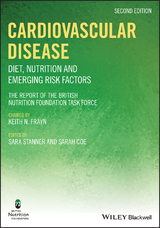
A comprehensive, accessible summary of the latest research in heart disease risk factors
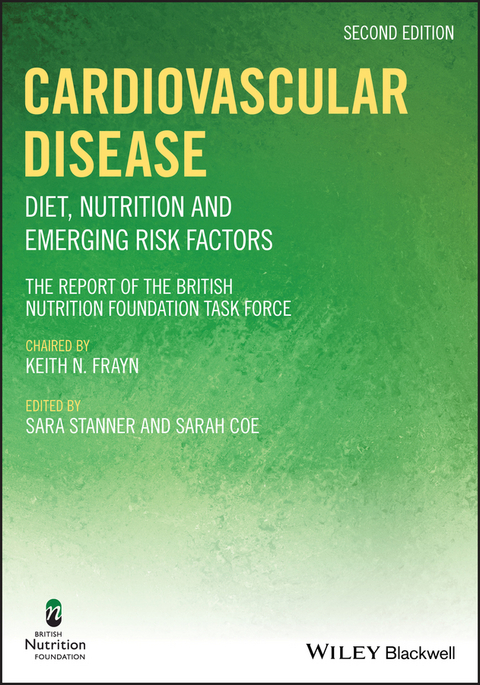
Cardiovascular Disease (CVD) is a major cause of early death and disability across the world. The major markers of risk-including high blood cholesterol, smoking, and obesity-are well known, but studies show that such markers do not account for all cardiovascular risk. Written by a team of renowned experts in the field, this comprehensive and accessible book examines the evidence for emerging and novel risk factors, and their relationship with diet and nutrition.
Fully updated throughout, Cardiovascular Disease: Diet, Nutrition and Emerging Risk Factors, 2nd Edition covers everything from the epidemiology of cardiovascular disease, to genetic factors, to inflammation and much more - offering invaluable advice on reducing risk factors and preventing CVD. This new edition:
- Authoritatively reports on the link between emerging aspects of diet, lifestyle and cardiovascular disease risk
- Focuses on novel risk factors of CVD, including the human gut microbiome and fetal and childhood origins, and how it can be prevented
- Features recommendations for interventions and future research
- Includes references, commonly asked questions that summarise the take-home messages, and an online glossary
Cardiovascular Disease: Diet, Nutrition and Emerging Risk Factors, 2nd Edition is an important book for researchers and postgraduate students in nutrition, dietetics, food science, and medicine, as well as for cardiologists and cardiovascular specialists.
PROFESSOR KEITH N. FRAYN is Emeritus Professor of Human Metabolism at the University of Oxford. He has published extensively in the area of metabolic regulation, including the textbook Human Metabolism: a Regulatory Perspective.
SARA STANNER is Science Director at the British Nutrition Foundation (BNF). She edited the first edition of Cardiovascular Disease: Diet, Nutrition and Emerging Risk Factors and other BNF Task Force books.
SARAH COE is a Nutrition Scientist at the British Nutrition Foundation (BNF). She is Technical Editor and Secretariat of this BNF Task Force report.
A comprehensive, accessible summary of the latest research in heart disease risk factors Cardiovascular Disease (CVD) is a major cause of early death and disability across the world. The major markers of risk including high blood cholesterol, smoking, and obesity are well known, but studies show that such markers do not account for all cardiovascular risk. Written by a team of renowned experts in the field, this comprehensive and accessible book examines the evidence for emerging and novel risk factors, and their relationship with diet and nutrition. Fully updated throughout, Cardiovascular Disease: Diet, Nutrition and Emerging Risk Factors, 2nd Edition covers everything from the epidemiology of cardiovascular disease, to genetic factors, to inflammation and much more offering invaluable advice on reducing risk factors and preventing CVD. This new edition: Authoritatively reports on the link between emerging aspects of diet, lifestyle and cardiovascular disease risk Focuses on novel risk factors of CVD, including the human gut microbiome and fetal and childhood origins, and how it can be prevented Features recommendations for interventions and future research Includes references, commonly asked questions that summarise the take-home messages, and an online glossary Cardiovascular Disease: Diet, Nutrition and Emerging Risk Factors, 2nd Edition is an important book for researchers and postgraduate students in nutrition, dietetics, food science, and medicine, as well as for cardiologists and cardiovascular specialists.
PROFESSOR KEITH N. FRAYN is Emeritus Professor of Human Metabolism at the University of Oxford. He has published extensively in the area of metabolic regulation, including the textbook Human Metabolism: a Regulatory Perspective. SARA STANNER is Science Director at the British Nutrition Foundation (BNF). She edited the first edition of Cardiovascular Disease: Diet, Nutrition and Emerging Risk Factors and other BNF Task Force books. SARAH COE is a Nutrition Scientist at the British Nutrition Foundation (BNF). She is Technical Editor and Secretariat of this BNF Task Force report.
Foreword vii
List of Common Abbreviations ix
About the Companion Website xi
Terms of Reference xiii
Task Force Membership xv
1 The Aetiology and Epidemiology of Cardiovascular Disease 1
Professor Keith N. Frayn and Sara Stanner
2 The Fetal and Childhood Origins of Cardiometabolic Disease 29
Professor Caroline Fall and Dr Kalyanaraman Kumaran
3 Obesity, Metabolic Syndrome and Type 2 Diabetes 49
Professor Keith N. Frayn, Dr Stacey Lockyer, and Sara Stanner
4 Lipid-Related Factors 75
Professor Leanne Hodson
5 Inflammation-Related Factors 99
Professor Parveen Yaqoob and Professor Gordon Ferns
6 Adipose Tissue-Derived Factors 121
Dr Vidya Mohamed-Ali and Dr Mashael AlJaber
7 Endothelial and Vascular Function 153
Professor Gordon Ferns and Professor Sumantra Ray
8 The Haemostatic System: Coagulation, Platelets, and Fibrinolysis 179
Professor Coen Stehouwer, Professor Marlien Pieters and Dr Moniek P.M. de Maat
9 Oxidative Stress and Cardiovascular Disease 213
Professor Richard Bruckdorfer
10 Vitamins and Risk of Cardiovascular Disease 245
Professor Robert Clarke
11 Influences of the Human Gut Microbiome 271
Professor Julie Lovegrove and Dr Gemma Walton
12 Physical Fitness and Physical Activity: Effects on Risk of Cardiovascular Disease 293
Professor Marie Murphy, Professor Steven N. Blair, and Bridget Benelam
13 Diet and Cardiovascular Disease: Where Are We Now? 311
Professor Judith L. Buttriss and Sarah Coe
14 Conclusions of the Task Force 367
15 Recommendations of the Task Force 375
16 Cardiovascular Disease: Answers to Common Questions 393
References 415
Index 511
1
The Aetiology and Epidemiology of Cardiovascular Disease
- 1.1 Introduction
- 1.2 Aims
- 1.3 Definitions
- 1.4 Pathogenesis
- 1.5 Epidemiology of Cardiovascular Disease
- 1.6 Risk Factors for Cardiovascular Disease
- 1.6.1 Definition of Risk Factors
- 1.6.2 Approaches Used to Investigate the Relationship Between Risk Factors and Disease
- 1.6.3 Interpretation of the Association
- 1.6.4 Conventional Risk Factors for Coronary Heart Disease
- 1.6.5 Conventional Risk Factors for Cerebrovascular Disease
- 1.6.6 Smoking and Peripheral Vascular Disease
- 1.6.7 Trends in the Classic Cardiovascular Risk Factors
- 1.6.8 The Emergence of New Risk Factors
- 1.7 Role of Diet
- 1.8 Structure of the Report
- 1.9 Key Points
1.1 Introduction
The British Nutrition Foundation Task Force on Cardiovascular Disease: Diet, Nutrition and Emerging Risk Factors first reported in 2005 (Stanner 2005). That report has proved to be very popular and has attracted much interest but the field has moved on. This encouraged the British Nutrition Foundation to reconvene the Task Force to produce an updated report on the field.
In the intervening years, many things have changed. Interest in antioxidant vitamin supplementation has decreased with the publication of several trials reporting negative, or adverse, outcomes. At the same time, the scientific understanding of antioxidant mechanisms has progressed, so these failed trials can be seen in perspective. The importance of physical activity in protection against cardiovascular disease () has been emphasised, along with an understanding that its opposites, physical inactivity and sedentary behaviour, have detrimental effects. There has been an explosion of interest in, and understanding of, the importance of colonic microorganisms – sometimes called the microbiome – to human health and disease, and this report includes a new chapter on that topic (Chapter 11).
The epidemiology of CVD has changed subtly. The global burden of CVD has continued to increase, particularly reflecting the increased age and obesity of populations in many countries. A divergence has opened up in CVD mortality rates, which are lower in Japan and the Mediterranean countries such as France, Spain, Portugal, and Italy, and highest in Eastern European countries, such as Russia and Ukraine. Mortality from CVD, including coronary heart disease () and stroke, has continued to decrease worldwide, probably because of improvements in primary and secondary prevention and improved medical care. However, concern has been expressed that improved survival after myocardial infarction () or stroke may outweigh falling incidence of new events, leading to an increase in disease prevalence and, therefore, a greater population burden of serious morbidity and increased treatment need.
The intervening years have also seen some controversies over diet and CVD. The widespread acceptance in 2005 of an adverse role for dietary saturated fat has been challenged, and this controversy continues – in this report we will review what evidence is available (see Section 13.4.3). In the previous edition of this report we discussed the value of low‐fat diets in CVD prevention. In the time since, there has also been great interest in low‐carbohydrate diets, which have been popularly promoted in the media as a means of weight loss, including by a number of celebrities. The UK's Scientific Advisory Committee on Nutrition () reported on Carbohydrates and Health in 2015 (Scientific Advisory Committee on Nutrition 2015). The report found that ‘the hypothesis that diets higher in total carbohydrate cause weight gain is not supported by the evidence from randomised controlled trials’, but did emphasise a potentially adverse role for ‘sugars and sugars‐sweetened foods and beverages’, especially in relation to risk of type 2 diabetes (see Section 13.4.4).
1.2 Aims
The aims of this chapter are:
- To introduce and explain the topic of CVD and its components, CHD, cerebrovascular disease and peripheral vascular disease.
- To introduce approaches used to investigate the relationship between risk factors and disease.
- To distinguish classic, or established, risk factors from emerging risk factors.
- To explain genetic factors and how they modify CVD risk and its relationship to diet/nutrition.
- To review the worldwide epidemiology of CVD and its components.
- To introduce the Task Force's report on Diet, Nutrition and Emerging Risk Factors for CVD.
1.3 Definitions
This report is concerned with factors that relate to the risk of developing CVD and how these may be influenced by diet. CVD includes arterial disease affecting the blood supply to the heart or to the brain, or to the peripheral regions of the body. The term CVD refers to a number of individual diseases affecting the cardiovascular system. In some cases, in this report, we will use the term ‘cardiovascular diseases’ when we wish to make this clear. Cardiovascular diseases account for over half of all deaths in middle age and one‐third of all deaths in old age in most developed countries. Globally CVDs account for 30% of all deaths.
There are many links between CVD and metabolic derangements, especially type 2 diabetes and obesity‐related traits. For that reason, the term ‘cardiometabolic risk’ is often used to cover the combined risk of both CVD and metabolic disease, and will be used in this way throughout this report.
Research over the last decade has led to a greater understanding of the independent contribution of several factors identified in the initial report to cardiovascular risk. Although we have continued to use the term ‘emerging risk factors’ throughout this report to distinguish them from the classical risk factors, many are now established in terms of their ability to predict CVD risk.
1.3.1 Coronary Heart Disease
CHD is a condition in which the walls of the arteries supplying blood to the heart muscle (coronary arteries) become thickened. This thickening, caused by the development of lesions in the arterial wall, is called atherosclerosis; the lesions are called plaques. Atherosclerosis can restrict the supply of blood to the heart muscle (the myocardium) and may manifest to the patient as chest pain on exertion (angina) or breathlessness on exertion. If the cap covering the plaque ruptures, exposing the contents to the circulation, the blood may clot and obstruct the flow completely, resulting in a MI or heart attack. CHD is also known as ischaemic heart disease.
The term acute coronary syndromes is used to denote a hospitalisation for unstable angina (angina without an obvious trigger), or thrombolysis (treatment to dissolve clots) for suspected MI or an emergency revascularisation procedure for relief of ischaemic chest pain at rest.
There are several causes of sudden death, but most are related to CHD or cerebrovascular disease (see Section 1.3.2). Sudden cardiac death may be due to MI or to cardiac arrhythmia. Cardiac arrhythmias are situations where the heart rate becomes irregular, and/or too rapid or too slow. Arrhythmias may be provoked by intercurrent stress or illness but are more common, and more frequently fatal, in hearts previously damaged by ischaemic heart disease or any other cause of cardiac dysfunction, such as raised blood pressure (hypertension – usually considered to be 140/90 mm Hg or higher) or excess alcohol consumption. The main risk factors for arrhythmias and sudden cardiac death are thus very similar to those for CHD.
CHD is not the only form of heart disease. There are congenital abnormalities of the heart, some with a genetic cause, and acquired abnormalities. Among the latter is a grouping of changes which include impaired ability of the heart to pump, impaired ability to relax in diastole, and remodelling of the ventricles, especially thickening of the walls of the left ventricle, often with dilatation of the left ventricle observed as left ventricular hypertrophy. Ultimately these changes may lead to heart failure.
Underlying these changes may be cardiomyopathy – diseases of the heart muscle. Cardiomyopathy is a natural consequence of a MI, which results in death of some of the heart muscle and its replacement with fibrotic scar tissue....
| Erscheint lt. Verlag | 31.12.2018 |
|---|---|
| Reihe/Serie | British Nutrition Foundation | British Nutrition Foundation |
| Mitarbeit |
Chef-Herausgeber: Keith N. Frayn |
| Sprache | englisch |
| Themenwelt | Sachbuch/Ratgeber ► Gesundheit / Leben / Psychologie ► Ernährung / Diät / Fasten |
| Medizin / Pharmazie ► Allgemeines / Lexika | |
| Medizin / Pharmazie ► Gesundheitsfachberufe ► Diätassistenz / Ernährungsberatung | |
| Medizinische Fachgebiete ► Innere Medizin ► Kardiologie / Angiologie | |
| Studium ► Querschnittsbereiche ► Epidemiologie / Med. Biometrie | |
| Schlagworte | adipose tissue-derived factors • aetiology of cardiovascular disease • Cardiology • Cardiovascular Disease • Cardiovascular Disease: Diet, Nutrition and Emerging Risk Factors</p> • cardiovascular health • causes of cardiovascular disease • CVD • Diabetes mellitus • Diet and cardiovascular disease • Dietetics • epidemiology of cardiovascular disease • food science • genetic factors and cardiovascular disease • Gesundheit • Gesundheit, Ernährung u. Diät • Gesundheits- u. Sozialwesen • Health & Social Care • Health, Diet & Nutrition • Heart health • hypertension risks • inflammation-related factors • Kardiovaskuläre Erkrankung • Kardiovaskuläre Erkrankungen • lifecourse nutrition • lipid-related factors • <p>cardiovascular disease • Medical Science • Medicine • Medizin • Nutrition • Nutrition and cardiovascular disease • obesity and cardiovascular disease • physical activity and cardiovascular disease • preventing cardiovascular disease • risk of cardiovascular disease • the haemostatic system • the human gut microbiome • Vascular dysfunction • vitamins and cardiovascular disease |
| ISBN-10 | 1-118-82989-1 / 1118829891 |
| ISBN-13 | 978-1-118-82989-9 / 9781118829899 |
| Informationen gemäß Produktsicherheitsverordnung (GPSR) | |
| Haben Sie eine Frage zum Produkt? |
 EPUB (Adobe DRM)
Kopierschutz: Adobe-DRM
Adobe-DRM ist ein Kopierschutz, der das eBook vor Mißbrauch schützen soll. Dabei wird das eBook bereits beim Download auf Ihre persönliche Adobe-ID autorisiert. Lesen können Sie das eBook dann nur auf den Geräten, welche ebenfalls auf Ihre Adobe-ID registriert sind.
Details zum Adobe-DRM
Dateiformat: EPUB (Electronic Publication)
EPUB ist ein offener Standard für eBooks und eignet sich besonders zur Darstellung von Belletristik und Sachbüchern. Der Fließtext wird dynamisch an die Display- und Schriftgröße angepasst. Auch für mobile Lesegeräte ist EPUB daher gut geeignet.
Systemvoraussetzungen:
PC/Mac: Mit einem PC oder Mac können Sie dieses eBook lesen. Sie benötigen eine
eReader: Dieses eBook kann mit (fast) allen eBook-Readern gelesen werden. Mit dem amazon-Kindle ist es aber nicht kompatibel.
Smartphone/Tablet: Egal ob Apple oder Android, dieses eBook können Sie lesen. Sie benötigen eine
Geräteliste und zusätzliche Hinweise
Buying eBooks from abroad
For tax law reasons we can sell eBooks just within Germany and Switzerland. Regrettably we cannot fulfill eBook-orders from other countries.
aus dem Bereich