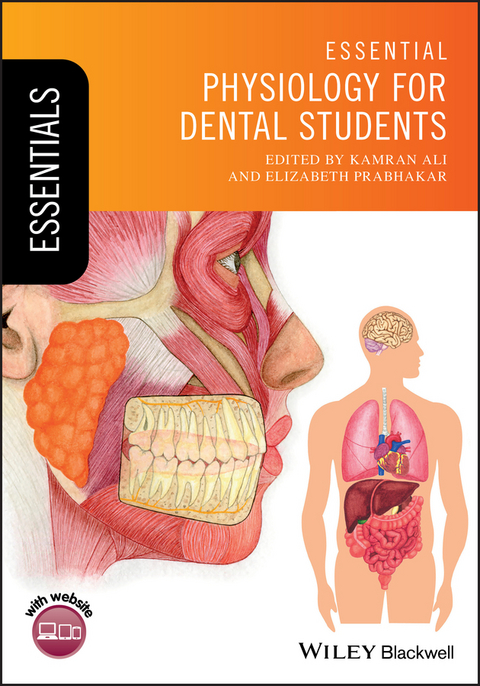
Essential Physiology for Dental Students (eBook)
John Wiley & Sons (Verlag)
978-1-119-27175-8 (ISBN)
Essential Physiology for Dental Students offers comprehensive information on human physiology, tailored to the needs of students of dentistry. This new addition to the Dentistry Essentials series helps students gain a deeper understanding of how physiological concepts apply to clinical dental practice. Each chapter outlines an organ system in sufficient detail whilst emphasizing its relevance to clinical dentistry. Written in a student-friendly style, it contextualizes how normal and altered physiology affects dental care and highlights the implications of dental interventions on the body's functioning.
Essential Physiology for Dental Students provides readers with complete coverage of: cell physiology; nerve and muscle physiology; the cardiovascular system; the respiratory system; the gastro-intestinal system; the renal system; haematology; endocrinology including the regulation of blood glucose and blood calcium; and the central nervous system.
- Covers each system in detail, while emphasizing the relevance to dental students
- Presented using a reader-friendly layout with illustrations and clinical photographs throughout
- Features interactive MCQs and EMQs and downloadable images on a companion website
Essential Physiology for Dental Students is an excellent resource for undergraduate dentistry students, dental hygiene and therapy students, and dental nursing students. It also greatly benefits newly qualified dentists preparing for postgraduate examinations such as MFDS, LDS, ORE, and also the US National Boards.
About the Editors
Kamran Ali, PhD, MMEd, BDS (Hons), FDSRCS (Eng), FCPS (Pak), FFDRCSI (Ire), FFDTEd, FDSRCPS (Glasg), PFHEA, is an Associate Professor and Consultant in Oral Surgery at the Peninsula Dental School University of Plymouth, UK.
Elizabeth Prabhakar, PhD, FHEA, CBiol, is a Senior Lecturer in Medical Sciences at the BARTS and the London School of Medicine & Dentistry, Queen Mary University of London, Malta and a former Lecturer in Physiology, Peninsula School of Medicine and Dentistry, University of Plymouth, UK.
Essential Physiology for Dental Students offers comprehensive information on human physiology, tailored to the needs of students of dentistry. This new addition to the Dentistry Essentials series helps students gain a deeper understanding of how physiological concepts apply to clinical dental practice. Each chapter outlines an organ system in sufficient detail whilst emphasizing its relevance to clinical dentistry. Written in a student-friendly style, it contextualizes how normal and altered physiology affects dental care and highlights the implications of dental interventions on the body s functioning. Essential Physiology for Dental Students provides readers with complete coverage of: cell physiology; nerve and muscle physiology; the cardiovascular system; the respiratory system; the gastro-intestinal system; the renal system; haematology; endocrinology including the regulation of blood glucose and blood calcium; and the central nervous system. Covers each system in detail, while emphasizing the relevance to dental students Presented using a reader-friendly layout with illustrations and clinical photographs throughout Features interactive MCQs and EMQs and downloadable images on a companion website Essential Physiology for Dental Students is an excellent resource for undergraduate dentistry students, dental hygiene and therapy students, and dental nursing students. It also greatly benefits newly qualified dentists preparing for postgraduate examinations such as MFDS, LDS, ORE, and also the US National Boards.
About the Editors Kamran Ali, PhD, MMEd, BDS (Hons), FDSRCS (Eng), FCPS (Pak), FFDRCSI (Ire), FFDTEd, FDSRCPS (Glasg), PFHEA, is an Associate Professor and Consultant in Oral Surgery at the Peninsula Dental School University of Plymouth, UK. Elizabeth Prabhakar, PhD, FHEA, CBiol, is a Senior Lecturer in Medical Sciences at the BARTS and the London School of Medicine & Dentistry, Queen Mary University of London, Malta and a former Lecturer in Physiology, Peninsula School of Medicine and Dentistry, University of Plymouth, UK.
List of Contributors ix
Preface xi
About the Companion Website xiii
Part I Introduction 1
1 The Cell: Structure and Function 3
Vehid Salih and Kamran Ali
Part II Nerve Muscle Physiology 9
2 Nerve Physiology 11
Elizabeth Prabhakar and Kamran Ali
3 Muscle Physiology 23
Elizabeth Prabhakar and Kamran Ali
Part III Cardiovascular System 35
4 Heart 37
Poorna Gunasekera, Kamran Ali, and Elizabeth Prabhakar
5 Circulation 47
Poorna Gunasekera and Kamran Ali
Part IV Respiratory System 57
6 Mechanics of Respiration 59
Feisal Subhan, Kamran Ali, and Elizabeth Prabhakar
7 Gas Exchange and Transport 67
Feisal Subhan, Kamran Ali, and Elizabeth Prabhakar
8 Control of Breathing 73
Feisal Subhan and Kamran Ali
Part V Gastrointestinal System (GIT) 79
9 GIT Movements 81
Kamran Ali
10 GIT Secretions 91
Kamran Ali
11 GIT Digestion and Absorption 101
Elizabeth Prabhakar and Kamran Ali
Part VI Hepato Renal System 109
12 Liver Physiology 111
Poorna Gunasekera and Kamran Ali
13 Renal Physiology 119
Poorna Gunasekera and Kamran Ali
Part VII Blood 129
14 Blood Plasma and Cells 131
Mahwish Raja and Kamran Ali
15 Immune System 139
Louise Belfield and Kamran Ali
16 Haemostasis 149
Kamran Ali
Part VIII Endocrinology 157
17 Endocrinology 159
Kamran Ali
18 Regulation of Blood Glucose 171]
Kamran Ali
19 Regulation of Blood Calcium 177
Kamran Ali
20 Reproductive Hormones and Pregnancy 183
Theresa Compton and Kamran Ali
Part IX Nervous System 189
21 Central Nervous System 191
Elizabeth Prabhakar and Kamran Ali
22 The Autonomic Nervous System 209
Elizabeth Prabhakar and Kamran Ali
23 Special Senses 217
Poorna Gunasekera and Kamran Ali
Index 229
CHAPTER 1
The Cell: Structure and Function
Vehid Salih and Kamran Ali
Key Topics
- Overview of different types of living organisms
- Organisation of the human body
- Components of human cells
- Regeneration and repair
Learning Objectives
To demonstrate an understanding of the:
- Differences between prokaryotes and eukaryotes
- Structure and functions of the cell organelles
- Relevance of regeneration and repair to oral and dental tissues
- Potential applications of stem cells
Introduction
A cell is the fundamental structural, functional, and biological unit of all known living organisms (except viruses). Individual cells range from 1 to 100 μm and are visible only under a microscope as the human eye is unable to see anything smaller than 100 μm. Living organisms are described as unicellular (microorganisms) or multicellular (e.g. plants and animals). Unicellular organisms are also classified as prokaryotes and multicellular organisms as eukaryotes. Prokaryotes lack a nucleus and cytoplasmic organelles and are represented by bacteria. Eukaryotes have a nucleus as well as cytoplasmic organelles and include microorganisms such as fungi, protozoa, algae as well as animals and humans. Nevertheless, both types possess a cell membrane and contain deoxyribonucleic acid (). Viruses are neither prokaryotes nor eukaryotes as they lack characteristics of living organisms, apart from the ability to replicate. They are best regarded as obligate parasites as they can only replicate in living cells.
An adult human body comprises approximately 75–100 trillion cells, and more than 200 varieties of specialised cells have already been identified. The cells in the human body join to form tissues. Four basic human tissues include epithelium, connective tissue, nervous tissue, and muscle. Different tissues are grouped to form organs which in turn join to form various systems of the human body. The function of the human body is maintained by thousands of control systems at the level of cells, tissues, organs as well as systems allowing the body to maintain a constant internal environment, or homeostasis. Nevertheless, all physiological processes as well as disease mechanisms can be described at, and ascribed to, the cellular level. Cells are diverse and vary tremendously in their morphology and function. Figure 1.1 shows the main features of a typical human cell.
Figure 1.1 Components of a cell.
Source: Tortora and Derrickson (2013).
Components of the Human Cell
Cell Membrane
The cell membrane (plasmalemma) forms the outer boundary of the cell. The selective permeability of the cell membrane allows the cell to interact with its environment in a controlled way. The cell membrane is composed of a fluid combination of lipids (phospholipids and cholesterol), proteins and a small amount of carbohydrates. The basic structure of the cell membrane is formed by a phospholipid bilayer (Figure 1.2). The hydrophilic head region of the phospholipids faces the exterior (extracellular fluid or interstitial or tissue fluid) or aqueous interior (intracellular fluid or cytoplasmic face) of the cell, while the hydrophobic tails remain isolated. A variety of proteins attach to the surface of the phospholipid bilayer, while others traverse it partly or completely. The membrane proteins perform a variety of roles including: channel proteins, which facilitate passive transport across the cell membrane; protein pumps for active transport (Chapter 2); and receptor proteins for hormones and other endogenous as well as exogenous chemicals. Carbohydrates are either found in combination with proteins (glycoproteins) or lipids (glycolipids) and function as recognition markers, allowing the immune system to differentiate ‘self’ from foreign cells.
Figure 1.2 Fluid mosaic model of plasma membrane.
Source: Tortora and Derrickson (2013).
Nucleus
The nucleus is a double membrane‐bound structure and measures approximately 3–14 μm in most cells. It stores the DNA and associated proteins (= chromatin) in the form of chromosomes. The nuclear membrane (nucleolemma) isolates the DNA from the cytoplasm and is continuous with the endoplasmic reticulum (Figure 1.1). The nucleolemma contains pores to allow passage of messenger RNA (mRNA) units of nucleic acid. The gel‐like portion of the nucleus is known as nucleoplasm. Within the nucleus, proteins, DNA, and ribonucleic acid are concentrated around specific chromosomal regions to form the nucleolus (plural: nucleoli). The nucleolus itself is not bound by a membrane and is responsible for synthesis of ribosomes.
The functions of the cell are coded in the genes. The genetic code or nucleotide sequence of DNA in the genes is used to direct protein synthesis, a process known as gene expression. First, the DNA is used as a template to link nucleotides, forming a strand of an mRNA molecule. This process is referred to as transcription and is facilitated by the enzyme RNA polymerase. The mRNA is then transferred across the nucleolemma into the cytoplasm and is used as a template by ribosomes to synthesise proteins, a process referred to as translation. Further processing of the proteins such as addition of phosphate (phosphorylation) or carbohydrates (glycosylation) takes place through a process known as post‐translation modification.
The nucleus is present in all cells of the body, excluding red blood cells and platelets. Liver cells (hepatocytes) can have one or two nuclei, while the osteoclasts and skeletal muscle cells are multinucleated.
Cytoplasm
The cytoplasm refers to the contents of the cell bounded by the cell membrane on the outer aspect and the nucleus in the inner part of the cell (Figure 1.1). The liquid portion of the cytoplasm is termed cytosol, and contains mainly water (70–85%), proteins (10–20%), lipids (2%), carbohydrates (1%), and electrolytes. Two distinct components of the cytoplasm include:
- Organelles, which are membrane‐bound structures with a specific metabolic function. The membrane around different organelles serves to isolate the chemical reactions in the cytoplasm from each other.
- Inclusions, which are non‐membrane‐bound particulate matter in the cytoplasm and do not have any specific metabolic function.
Cytoplasmic Organelles
- Ribosomes
Ribosomes are small spherical structures (15 nm in diameter) which may exist as free‐floating particles or can be found in clusters lining the outer membrane of the rough endoplasmic reticulum. Ribosomes are the site of protein synthesis and translate the message obtained from the nucleus via transcription and effectively function as the working template or conveyor belt for assembling proteins.
- Endoplasmic Reticulum
ER consists of a complex and multi‐folded system of parallel membranes and tubules which is contiguous with the nuclear membrane and Golgi apparatus.
The rough endoplasmic reticulum () is studded with ribosomes. rER works with the ribosomes to synthesise proteins which are collected in spaces (cisternae) within the rER. A limited amount of packaging of proteins also takes place in the rER (pancreas).
The smooth endoplasmic reticulum () contributes to lipid metabolism, including synthesis of steroid hormones, the lipid portion of lipoprotein in the liver, and lipid absorption and resynthesis of triglycerides in the intestinal mucosa. sER in skeletal and cardiac muscle, known as the sarcoplasmic reticulum, sequesters calcium for the cytosol. Finally, ER inactivates harmful by‐products of metabolism and drugs (liver).
- Golgi Apparatus
The Golgi apparatus () like the ER, is also a stacked series of folded membranous sacs. Its main function is to process and package both proteins and non‐proteins. The GA is the central delivery system from the cell and ‘packages’ cellular products into secretory vesicles which bud off from main Golgi membranes to enable them to migrate to and merge with the plasma membrane, releasing their contents outside the cell by a process known as exocytosis. The GA additionally produces lysosomes and digestion‐related organelles.
- Lysosomes
Lysosomes are small membranous compartments (25–50 nm in diameter) which emanate from the GA. Lysosomes contain several degradative enzymes and assist in the degradation of toxic and waste cell products, including cell debris as well as microbial organisms (e.g. bacteria). Although found in all cells (except erythrocytes), lysosomes are particularly prominent in macrophages and neutrophils. Lysosomes also play a key role in programmed cell death, or apoptosis.
- Peroxisomes
Peroxisomes are membrane‐bound structures, somewhat larger than lysosomes (0.3–1.5 μm in diameter), which arise from ER. They...
| Erscheint lt. Verlag | 26.11.2018 |
|---|---|
| Reihe/Serie | Essentials (Dentistry) |
| Essentials (Dentistry) | Essentials (Dentistry) |
| Sprache | englisch |
| Themenwelt | Medizin / Pharmazie ► Allgemeines / Lexika |
| Medizin / Pharmazie ► Zahnmedizin | |
| Schlagworte | cell physiology for dentists • dental anesthesia • dental medicine • dental physiology • dentistry • dentistry and the cardiovascular system • dentistry essentials • Einführung i. d. Zahnmedizin • gas exchange for dentists • guide for general dentistry • guide to dental physiology • guide to dentistry • Human Physiology • human physiology for clinical dentistry • Introductions to Dentistry • <i> Essential Physiology for Dental Students</i></p> • <p>dentistry • MFDS exam • Mundheilkunde • Mundheilkunde / Anatomie u. Physiologie • nerve and muscle physiology for dentists • Oral Anatomy & Physiology • Oral surgery • ORE exam • Zahnmedizin |
| ISBN-10 | 1-119-27175-4 / 1119271754 |
| ISBN-13 | 978-1-119-27175-8 / 9781119271758 |
| Informationen gemäß Produktsicherheitsverordnung (GPSR) | |
| Haben Sie eine Frage zum Produkt? |
 EPUB (Adobe DRM)
Kopierschutz: Adobe-DRM
Adobe-DRM ist ein Kopierschutz, der das eBook vor Mißbrauch schützen soll. Dabei wird das eBook bereits beim Download auf Ihre persönliche Adobe-ID autorisiert. Lesen können Sie das eBook dann nur auf den Geräten, welche ebenfalls auf Ihre Adobe-ID registriert sind.
Details zum Adobe-DRM
Dateiformat: EPUB (Electronic Publication)
EPUB ist ein offener Standard für eBooks und eignet sich besonders zur Darstellung von Belletristik und Sachbüchern. Der Fließtext wird dynamisch an die Display- und Schriftgröße angepasst. Auch für mobile Lesegeräte ist EPUB daher gut geeignet.
Systemvoraussetzungen:
PC/Mac: Mit einem PC oder Mac können Sie dieses eBook lesen. Sie benötigen eine
eReader: Dieses eBook kann mit (fast) allen eBook-Readern gelesen werden. Mit dem amazon-Kindle ist es aber nicht kompatibel.
Smartphone/Tablet: Egal ob Apple oder Android, dieses eBook können Sie lesen. Sie benötigen eine
Geräteliste und zusätzliche Hinweise
Buying eBooks from abroad
For tax law reasons we can sell eBooks just within Germany and Switzerland. Regrettably we cannot fulfill eBook-orders from other countries.
aus dem Bereich