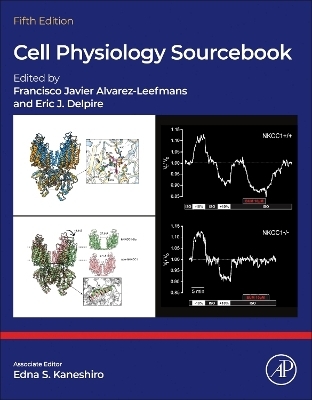
Cell Physiology Sourcebook
Academic Press Inc (Verlag)
978-0-12-811114-7 (ISBN)
The history of this book goes back to Hugh Davson’s classic A Textbook of General Physiology, which reached its fourth and last edition in 1970. The successor of this influential work was Cell Physiology Sourcebook, first published in 1995 and edited by the late Professor Nicholas Sperelakis, with a foreword written by Davson. At that time, the knowledge of molecular and cell physiology became so vast that a single author's work, like its predecessor, was materially impossible. Professor Sperelakis, for whom we dedicate the present edition, put together an impressive volume with the contribution of various experts in fundamental areas of the field until the 4th edition, published in 2012, one year before his death. This book's success and the gap it fills motivated the present editors to continue this project, updating the entire book to reflect new developments.
Francisco Javier Alvarez-Leefmans, MD, PhD, is a Professor Emeritus in the Department of Pharmacology and Toxicology at Boonshoft School of Medicine, Wright State University, Dayton, OH. He earned his MD from the National University of Mexico (UNAM) and his PhD in Physiology from University College London, where he also completed postdoctoral training under the guidance of Professors Sir Bernard Katz and Ricardo Miledi. In 1997, he received the Guggenheim Fellowship in Natural Sciences (Neuroscience) for his research on chloride transport mechanisms in primary sensory neurons. He was the first to describe and functionally characterize the Na+–K+−2Cl− cotransporter (NKCC1) in the vertebrate nervous system. His findings demonstrated that this cotransporter maintains high intracellular chloride levels in primary sensory neurons, which explains the depolarizing effect of GABA, a key process in presynaptic inhibition in the spinal cord. These are crucial mechanisms regulating the transmission of sensory information, including nociceptive signals. To study the functional dynamics of electroneutral chloride transport proteins, he developed the "calcein method," a fluorescent live-cell imaging technique that measures real-time changes in water volume within single cells. He and his team have conducted influential research on water cotransport via NKCC1, and the role of this transporter in the choroid plexus epithelium, where it helps regulate cell water volume and potassium ion concentration in the cerebrospinal fluid (CSF). Besides his research, Alvarez-Leefmans is highly regarded for his dedication to medical student education. He is committed to teaching and mentoring, inspiring students to develop critical thinking skills. In 2019, he received the inaugural Wright State Medical Student Educator Award. Dr. Alvarez-Leefmans has authored four books and over 75 peer-reviewed journal articles and book chapters. He is a member of the American Physiological Society, The Physiological Society (UK), the National Academy of Medicine (Mexico), and the Latin American Academy of Sciences (ALAS). Eric Delpire, PhD, is a Professor of Anesthesiology and Molecular Physiology and Biophysics in the Department of Anesthesiology at Vanderbilt University Medical Center in Nashville, TN. He earned his PhD in Physiology from the University of Liège, Belgium. He completed postdoctoral training at Wright State University in Dayton, OH, and at Brigham and Women’s Hospital in Boston, MA. He is a recognized expert in cell volume regulation and ion transport mechanisms across biological membranes. He is credited with discovering the regulatory pathway involving WNK and SPAK/OSR1 kinases, as well as their interaction with cation-chloride cotransporters. Dr. Delpire has developed numerous genetically modified mouse models of cation-chloride transporters, kinases, and other regulatory molecules, including traditional global and conditional knockouts and knock-ins, as well as CRISPR/Cas9-generated knockout and knock-in models. These models are crucial tools for understanding how genetic mutations in these proteins affect various cellular functions and medical conditions such as hypertension, neurological disorders, and gastrointestinal diseases. For his groundbreaking research, Dr. Delpire has received numerous awards, including the Hugh Davson Distinguished Lectureship (2023) from the Cell and Molecular Physiology Section of the American Physiological Society. He has been elected a fellow of the American Association for the Advancement of Science and the American Physiological Society. He has published over 230 peer-reviewed papers and several book chapters.
SECTION I. BIOLOGICAL MEMBRANES AND CELL STRUCTURE
1. Biophysical Chemistry of Physiological Solutions
2. Physiological Structure and Function of Proteins
3. Carbohydrates - The Glycocalyx, and its Biological Roles
4. Cell Membranes
5. Bacterial and Archaeal Cells
6. Nucleic Acids and the Cell Nucleus
7. Structural and Biophysical Properties of Tight Junctions
8. Biology of Gap Junctions
9. Biophysics of Intracellular and Extracellular Diffusion
10. Membrane Diffusion and Permeability
11. Osmotic Pressure and Water Movement across Cell Membranes
12. Origin of Resting Membrane Potential
13. Energy Transduction in Biological Membranes
14. The F-ATP Synthase
15. Calcium Transport and Signaling
16. Intracellular Chloride Regulation
17. Intracellular pH Regulation
18. Trans-Epithelial Transport Mechanisms
19. Aquaporin Channels
20. Generation and Conduction of Electrical Signals
21. Structure and Mechanism of Voltage-Gated Channels
22. Mechanosensitive Channels: What Are They and Why Are They Important
23. Cell Volume Regulation
24. Ligand-Gated Channels
25. Signal Transduction
26. Synaptic Transmission
27. Pancreas and Insulin Secretion
28. Bioluminescence: Cell Physiology, Diversity and New Evolutionary Insights
29. Evolution and Physiology of Animal Visual Systems
30. Taste and Smell Chemoreceptors
31. Microtubules, Dynein and Eukaryotic Cilia
32. Motion by Rotary Flagella and Archaella, Twitching, Gliding Springs and Catapults
33. Cell Migration, Taxis, Kinesis, Quorum Sensing, and Tropism
34. Cell locomotion driven by actin gelation waves and actin-microtubule crosstalk
35. Chronobiology of Single-Cell Organisms
36. Smooth Muscle Excitability
37. Excitation-Contraction Coupling in Skeletal Muscle
| Erscheinungsdatum | 02.09.2020 |
|---|---|
| Verlagsort | San Diego |
| Sprache | englisch |
| Maße | 216 x 276 mm |
| Gewicht | 450 g |
| Themenwelt | Studium ► 1. Studienabschnitt (Vorklinik) ► Physiologie |
| Naturwissenschaften ► Biologie ► Genetik / Molekularbiologie | |
| Naturwissenschaften ► Biologie ► Zellbiologie | |
| ISBN-10 | 0-12-811114-3 / 0128111143 |
| ISBN-13 | 978-0-12-811114-7 / 9780128111147 |
| Zustand | Neuware |
| Informationen gemäß Produktsicherheitsverordnung (GPSR) | |
| Haben Sie eine Frage zum Produkt? |
aus dem Bereich