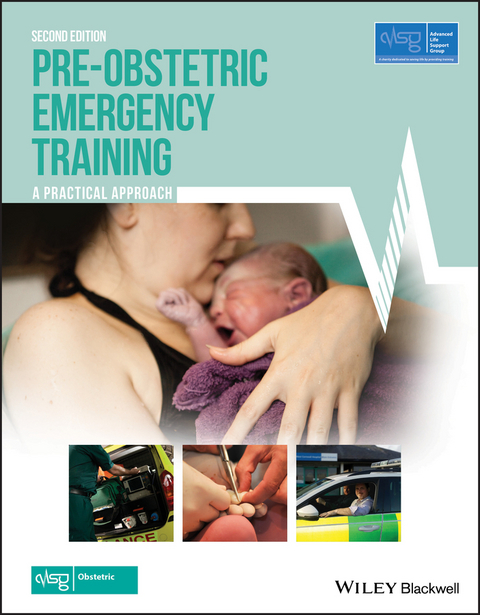
Pre-Obstetric Emergency Training (eBook)
495 Seiten
John Wiley & Sons (Verlag)
978-1-119-34851-1 (ISBN)
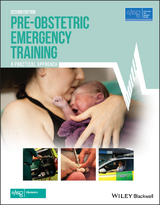
Fully revised and now in full colour, the new edition of Pre-Obstetric Emergency Training (POET) will help practitioners identify and manage a range of time-critical obstetric emergencies, specifically in the pre-obstetric department setting.
Providing structured examination and assessment techniques as an aid to determine what treatment should be provided before transport, this practical manual equips the practitioner with the knowledge necessary to save the mother and fetus in life-threatening circumstances before admission to the hospital. New to the second edition are chapters covering non-technical skills and communication, as well as complicated labour and delivery.
Designed to accompany the associated Advanced Life Support Group training course, Pre-Obstetric Emergency Training serves as an authoritative guide for a range of pre-hospital practitioners dealing with specialist situations.
The Advanced Life Support Group (ALSG), Manchester UK, began life in 1990 and became a registered medical education charity in 1993. The organisation exists to 'preserve life by providing training and education to the general public and in particular but not exclusively to doctors, nurses and other members of the medical profession, in life saving techniques'.
The book is written and edited by Emergency Medicine specialists who are Advanced Life Support Group (ALSG) trainers.
The Advanced Life Support Group (ALSG), Manchester UK, began life in 1990 and became a registered medical education charity in 1993. The organisation exists to "preserve life by providing training and education to the general public and in particular but not exclusively to doctors, nurses and other members of the medical profession, in life saving techniques". The book is written and edited by Emergency Medicine specialists who are Advanced Life Support Group (ALSG) trainers.
Working group vii
Contributors viii
Foreword to second edition ix
Acknowledgements x
Preface to second edition xi
Preface to first edition xii
Contact details and website information xiii
How to use your textbook xiv
1 Obstetric services 1
2 Legal and ethical issues 7
3 When things go wrong 13
4 Getting it right - non-technical skills and communications 23
5 Anatomical and physiological changes in pregnancy 33
6 Structured approach to the obstetric patient 41
7 Collapse, cardiac arrest and shock in pregnancy 55
8 Emergencies in early pregnancy (up to 20 weeks) 67
9 Emergencies in late pregnancy (from 20 weeks) 73
10 Trauma, surgical and medical emergencies 85
11 Normal labour and delivery 101
12 Complicated labour and delivery 111
13 Emergencies after delivery 133
14 Resuscitation of the baby at birth 145
15 Assessment and management of the post-gynaecological surgery patient 161
Abbreviations 167
Glossary 169
References 173
Further reading 177
Index 179
CHAPTER 1
Obstetric services
Learning outcomes
After reading this chapter, you will be able to:
- Discuss the relationship between the different professional groups involved in the management of the obstetric patient
- Describe the function and importance of hand‐held records and how to use them effectively
1.1 Organisation of obstetric services, epidemiology of obstetric emergencies and role of the ambulance service, general practitioner and midwife
Organisation
Around 700 000 women a year use obstetric services. The birth rate in the United Kingdom (UK) has slowed in recent years following a rise throughout the last decade. Multidisciplinary teams provide maternity services with midwifery and obstetric medical staff working together to provide optimal care. Community midwives perform the majority of care in the out‐of‐hospital setting. Inpatient antenatal care is now uncommon and not usually for long periods. Similarly, the postnatal length of stay for all women, including those delivered by caesarean section, has been reduced with the majority of care occurring in the community.
General practitioners (GPs) have in recent years become less and less involved in all aspects of pregnancy care, although there are still a small number who are involved in care in labour.
Place of delivery
The Maternity Matters report confirmed that women should be the central focus of obstetric care, emphasising the need for those providing obstetric services to support women in making informed choices and to provide easy access to care (DoH, 2007). Women undergo a risk assessment prior to delivery to help them choose where to deliver. This assessment is undertaken by their midwife in conjunction with medical staff, if required, and will involve assessment of previous medical history, previous obstetric history and the progress of the current pregnancy. The women will then be offered advice to help them choose the place of birth.
A woman may choose to have a home birth; deliver in a midwife‐led unit, which may be either ‘stand‐alone’ or attached to a consultant‐led unit (co‐located); or deliver in a consultant‐led unit. Women may also choose to ‘free birth’: a growing phenomenon in which the baby is delivered unassisted and unattended by a healthcare professional. Whilst this is perfectly legal, one should note it is illegal for someone without midwifery qualifications to assist in the birth unless in an emergency.
The 2011 Birthplace in England study identified that nulliparous women (those having their first baby) were more at risk for adverse perinatal outcomes (stillbirth, neonatal encephalopathy, brachial plexus injury, clavicle fracture, etc.) with a planned home birth than multiparous women (BECG, 2011). There was no statistical increase in risk for adverse outcomes for nulliparous women delivering in a midwife‐led unit. It was found that for multiparous women, there is no increased risk for adverse outcomes between each planned place of delivery. It was also found that women who plan to deliver at home or in a midwife‐led unit are more likely to have a ‘natural’ birth with reduced interventions compared with those who deliver in an obstetric unit. Choosing an appropriate place of delivery relies on effective communication between healthcare professionals and women regarding any specific risk factors.
In the majority of cases, women choose the appropriate place to deliver their baby. Midwives have a duty of care to support the woman’s final choice of place for delivery even if there are factors that make this a high‐risk decision. Occasionally this causes difficulties, for example, in home delivery where access is poor, there is no phone signal or the home environment is less than ideal. Some women with a high‐risk pregnancy also request home delivery. As long as the woman has capacity (see Chapter 2), is informed of the risks to herself and her baby and is not under duress, she is entitled to make that decision.
Mode of delivery
The majority of deliveries are uncomplicated, however the national caesarean section rate is 26.2% of births. In contrast, the rate in 1990 was only 12%. Caesarean section delivery requires major surgery and can have significant associated risks for both mother and baby.
Common pre‐hospital emergencies
- Labour +/− delivery (term or preterm)
- Bleeding antenatally or postnatally (including miscarriage) and postoperative vaginal haemorrhage
- Abdominal pain other than labour
- Pre‐eclampsia and eclampsia (this is now less common: 2:10 000 cases due to the use of magnesium sulphate in hospital in at‐risk cases; however, this does mean that one of the more common places to have a convulsion will be in the community)
- Prolapsed umbilical cord
Transfer
Transfer may be necessary where risk factors develop before or during labour and after birth that necessitate moving the woman or baby from one location to another. Transfer may be required from all places of delivery.
In the 2011 Birthplace in England study, it was found that for the three non‐obstetric unit settings (home, stand‐alone midwifery unit and co‐located midwifery unit), transfer rates were much higher for nulliparous women (36–45%) than for multiparous women (9–13%).
Common reasons for transfer from home or from a midwife‐led unit are concerns about the progress of labour, fetal or maternal well‐being, or neonatal well‐being. A common reason for transfer between consultant‐led obstetric units is the need to access a neonatal cot for the baby either because the unit they are in does not have the appropriate neonatal facilities or all the cots are full. In these situations, the outcome is better for the baby if they are transferred while still in utero rather than after delivery. Occasionally, women need to be moved to other units for maternal specialist care.
Generally, a midwife (or medical staff) will accompany the woman and will be an invaluable source of advice and knowledge if problems occur during transfer. See Table 1.1 for the roles undertaken by clinical staff.
Table 1.1 Roles of healthcare staff
| Paramedic | Midwife | GP (if on scene) | Obstetrician (via telephone) |
| Clinical condition | Assess | Assess | Assess |
| Initiate holding treatment | Advanced life support (ALS) Obstetric support | Assist with ALS Obstetric expertise | Assist with ALS Obstetric support* | Advise on treatment |
| Transfer | Provide transportation Liaise with receiving unit Confirm exact location of receiving obstetric unit within hospital | Advise on most appropriate receiving unit Liaise with receiving unit Advise on timing/need for transfer | Advise on most appropriate receiving unit Liaise with referring crew Advise on timing/need for transfer |
| Advice | Transportation options/positioning in the ambulance | Obstetric expertise | General issues | Obstetric expertise |
*Some GPs have specific expertise in obstetrics.
TOP TIP
Many features of the clinical management of an obstetric patient during secondary transfer are similar to that required in the home or during primary hospital admission. For example, remember to transport the patient who is unable to maintain their own position in the 15–30° left lateral tilt position or manually displace the uterus.
Further information on the management of inter‐hospital transfers generally and neonatal transfers specifically can be found in the Neonatal Adult Paediatric Safe Transfer and Retrieval (NAPSTaR) manual (Fortune et al., 2019).
Admissions procedures
These depend on local policies. Obstetric patients are usually admitted directly to the obstetric service via a triage assessment unit or delivery suite. In the case of major trauma, obstetric patients should be transferred to the emergency department or major trauma centre depending on the systems in place locally. In the case of medical problems admit via urgent care pathways.
In many units, women with problems in early pregnancy will be admitted to the gynaecology department via an early pregnancy assessment unit.
1.2 Using patient hand‐held notes
Most maternity units in the UK provide women with their own maternity hand‐held notes. Figure 1.1 shows an example of the national pregnancy notes that are currently used by approximately 60% of obstetric units in England (produced by the Perinatal Institute www.preg.info; accessed February 2018).
Figure 1.1 Example of national patient hand‐held records.
(Reproduced with kind permission of the Perinatal Institute)
The pregnancy notes...
| Erscheint lt. Verlag | 22.8.2018 |
|---|---|
| Reihe/Serie | Advanced Life Support Group |
| Advanced Life Support Group | Advanced Life Support Group |
| Sprache | englisch |
| Themenwelt | Medizin / Pharmazie ► Allgemeines / Lexika |
| Medizin / Pharmazie ► Medizinische Fachgebiete ► Gynäkologie / Geburtshilfe | |
| Medizin / Pharmazie ► Medizinische Fachgebiete ► Notfallmedizin | |
| Schlagworte | Emergency Medicine & Trauma • Geburtshilfe • Medical Science • Medizin • Notfallmedizin • Notfallmedizin u. Traumatologie • Obstetrics |
| ISBN-10 | 1-119-34851-X / 111934851X |
| ISBN-13 | 978-1-119-34851-1 / 9781119348511 |
| Informationen gemäß Produktsicherheitsverordnung (GPSR) | |
| Haben Sie eine Frage zum Produkt? |
 EPUB (Adobe DRM)
Kopierschutz: Adobe-DRM
Adobe-DRM ist ein Kopierschutz, der das eBook vor Mißbrauch schützen soll. Dabei wird das eBook bereits beim Download auf Ihre persönliche Adobe-ID autorisiert. Lesen können Sie das eBook dann nur auf den Geräten, welche ebenfalls auf Ihre Adobe-ID registriert sind.
Details zum Adobe-DRM
Dateiformat: EPUB (Electronic Publication)
EPUB ist ein offener Standard für eBooks und eignet sich besonders zur Darstellung von Belletristik und Sachbüchern. Der Fließtext wird dynamisch an die Display- und Schriftgröße angepasst. Auch für mobile Lesegeräte ist EPUB daher gut geeignet.
Systemvoraussetzungen:
PC/Mac: Mit einem PC oder Mac können Sie dieses eBook lesen. Sie benötigen eine
eReader: Dieses eBook kann mit (fast) allen eBook-Readern gelesen werden. Mit dem amazon-Kindle ist es aber nicht kompatibel.
Smartphone/Tablet: Egal ob Apple oder Android, dieses eBook können Sie lesen. Sie benötigen eine
Geräteliste und zusätzliche Hinweise
Buying eBooks from abroad
For tax law reasons we can sell eBooks just within Germany and Switzerland. Regrettably we cannot fulfill eBook-orders from other countries.
aus dem Bereich