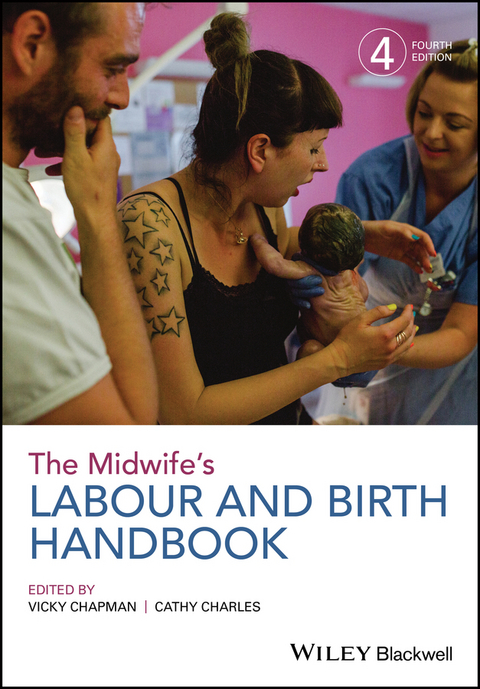
The Midwife's Labour and Birth Handbook (eBook)
John Wiley & Sons (Verlag)
9781119235095 (ISBN)
Praise for the previous edition:
'...An outstanding handbook. It will be a familiar volume on most midwifery bookshelves, providing an excellent guide to midwifery focused care of both woman and child in the birthing setting.'
- Nursing Times Online
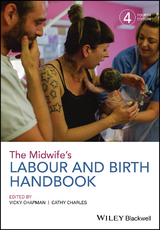
Providing a practical and comprehensive guide to midwifery care, The Midwife's Labour and Birth Handbook continues to promote best practice and a safe, satisfying birthing experience with a focus on women-centred care.
Covering all aspects of care during labour and birth, from obstetric emergencies to the practicalities of perineal repair (including left-hand suturing), the fourth edition has been fully revised and updated to include:
- Full colour photographs of kneeling extended breech and footling breech births
- New water birth and breech water birth photographs
- Female genital mutilation
- Sepsis
- Group B streptococcus
- Care of the woman with diabetes /Neonatal hypoglycaemia
- Mental health
- Seeding/microbirthing
It also addresses important issues such as:
- Why are the numbers of UK women giving birth in stirrups RISING rather than falling?
- Why are so few preterm babies given bedside resuscitation with the cord intact?
- Would the creation of midwife breech practitioners/specialists enable more women to choose vaginal breech birth and is breech water birth safe?
- What is the legal position for women who choose to free birth - and their birth partners?
- Why are midwives challenging the OASI care bundle?
Incorporating research, evidence and anecdotal observations, The Midwife's Labour and Birth Handbook remains an essential resource for both student midwives and experienced practising midwives.
VICKY CHAPMAN has worked as a midwife in a variety of hospital settings and as a caseload midwife and visiting lecturer. She has a particular interest in normal birth, as well as the politics of childbirth and their impact on women's birth experiences. Vicky has four children; three were born at home, including twins.
CATHY CHARLES is a midwife and ventouse practitioner, practising in acute and community settings. She has been a clinical audit/risk management co-ordinator, a visiting lecturer and a supervisor of midwives. She also teaches aquanatal classes.
Praise for the previous edition: An outstanding handbook. It will be a familiar volume on most midwifery bookshelves, providing an excellent guide to midwifery focused care of both woman and child in the birthing setting. - Nursing Times Online Providing a practical and comprehensive guide to midwifery care, The Midwife s Labour and Birth Handbook continues to promote best practice and a safe, satisfying birthing experience with a focus on women-centred care. Covering all aspects of care during labour and birth, from obstetric emergencies to the practicalities of perineal repair (including left-hand suturing), the fourth edition has been fully revised and updated to include: Full colour photographs of kneeling extended breech and footling breech births New water birth and breech water birth photographs Female genital mutilation Sepsis Group B streptococcus Care of the woman with diabetes /Neonatal hypoglycaemia Mental health Seeding/microbirthing It also addresses important issues such as: Why are the numbers of UK women giving birth in stirrups RISING rather than falling? Why are so few preterm babies given bedside resuscitation with the cord intact? Would the creation of midwife breech practitioners/specialists enable more women to choose vaginal breech birth and is breech water birth safe? What is the legal position for women who choose to free birth and their birth partners? Why are midwives challenging the OASI care bundle? Incorporating research, evidence and anecdotal observations, The Midwife s Labour and Birth Handbook remains an essential resource for both student midwives and experienced practising midwives.
VICKY CHAPMAN has worked as a midwife in a variety of hospital settings and as a caseload midwife and visiting lecturer. She has a particular interest in normal birth, as well as the politics of childbirth and their impact on women's birth experiences. Vicky has four children; three were born at home, including twins. CATHY CHARLES is a midwife and ventouse practitioner, practising in acute and community settings. She has been a clinical audit/risk management co-ordinator, a visiting lecturer and a supervisor of midwives. She also teaches aquanatal classes.
Preface vii
Contributors ix
1 Labour and normal birth 1
Cathy Charles
2 Vaginal examinations and amniotomy 49
Vicky Chapman
3 Fetal heart rate monitoring in labour 61
Bryony Read
4 Perineal trauma and suturing 75
Vicky Chapman
5 Examination of the newborn baby at birth 105
Caroline Rutter
6 Home birth 123
Cathy Charles
7 Water for labour and birth 139
Cathy Charles
8 Malpositions and malpresentations in Labour 155
Vicky Chapman
9 Slow progress in labour 171
Vicky Chapman
10 Assisted birth: ventouse and forceps 189
Cathy Charles
11 Caesarean section 211
Cathy Charles
12 Vaginal birth after caesarean section 227
Vicky Chapman
13 Preterm birth 239
Charlise Adams
14 Breech birth 257
Lesley Shuttler
15 Twins and higher order births 285
Jo Coggins
16 Obstetric haemorrhage 297
Hannah Bailey
17 Emergencies in labour and birth 315
Hannah Bailey
18 Neonatal and maternal resuscitation 339
Nick Castle
19 Induction of labour 353
Cathy Charles
20 Pre?]eclampsia and diabetes 367
Annette Briley
21 Stillbirth and neonatal death 385
Cathy Charles
22 Risk management, litigation and complaints 407
Cathy Charles
23 Intrapartum blood tests 417
Vicky Chapman
24 Medicines and the midwife 433
Vicky Chapman
Index 441
1
Labour and normal birth
Cathy Charles
- The birth environment
- Signs that precede labour
- First stage of labour
- Analgesia
- Regional anaesthesia
- Mobility and positions
- Transition
- Second stage of labour
- Pushing
- The birth
- Third stage of labour
- After the birth
- Mental health/safeguarding
- Early discharge home
- Appendix 1.1: Group B Streptococcus
Introduction
Undisturbed birth … is the balance and involvement of an exquisitely complex and finely tuned orchestra of hormones.
(Buckley, 2004a)
The most exciting activity of a midwife is assisting a woman in labour. The care and support of a midwife may well have a direct result on a woman’s ability to labour and birth her baby. Every woman and each birthing experience is unique.
Many midwives manage excessive workloads and, particularly in hospitals, may be pressured by colleagues and policies into offering medicalised care. Yet the midwifery philosophy of helping women to work with their amazing bodies enables many women to have a safe pleasurable birth. Most good midwives find ways to provide good care, whatever the environment, and their example will be passed on to the colleagues and students with whom they work.
Some labours are inherently harder than others, despite all the best efforts of woman and midwife. A midwife should be flexible and adaptable, accepting that it may be neither the midwife’s nor the mother’s fault if things do not go to plan. The aim is a healthy happy outcome, whatever the means.
This chapter aims to give an overview of the process of labour, but it is recognised that labour does not simplistically divide into distinct stages. It is a complex phenomenon of interdependent physical, hormonal and emotional changes, which can vary enormously between individual women. The limitation of the medical model undermines the importance of the midwife’s observation and interpretation of a woman’s behaviour.
Facts and recommendations for care
- Women should have as normal a labour and birth as possible, and medical intervention should be used only when beneficial to mother and/or baby (DoH, 2007; NICE, 2016).
- Midwife‐led care gives the best outcomes worldwide: more spontaneous births, fewer episiotomies and epidurals, better breastfeeding rates. Women report that they feel more in control of their labour (Sandall et al., 2016).
- Although 88% of women give birth in an obstetric unit many would not choose to: low‐risk women (i.e. around 60%) should also be offered the choice of birth either at home or in a midwife‐led unit; a woman has a right to choose her place of birth (DoH, 2007; NICE, 2014; NHS England, 2016).
- Women should be offered one‐to‐one care in labour (NICE, 2014). The presence of a caring and supportive caregiver has been proved to shorten labour, reduce intervention and improve maternal and neonatal outcomes (Green et al., 2000; Hodnett et al., 2013).
- The UK birth rate continues to rise, while England alone is short of 3500 midwives (RCM, 2016).
- 1–2% of mothers develop birth‐related post‐traumatic stress disorder (Andersen et al. 2012) and midwives can too (Sheen et al., 2015).
- The attitude of the caregiver seems to be the most powerful influence on women’s satisfaction in labour (NICE, 2014).
- 89% of fathers attend the birth (Redshaw and Heikkila, 2010); other relationships, e.g. same‐sex couples, have been less closely studied.
- The birth rate for women aged >40 rose above that for women <20 for the first time since 1947 (ONS, 2016).
- 27.5% of births in England and Wales are to women born overseas (ONS, 2016).
- 20% of pregnant women in England are clinically obese (Health and Social Care Information Centre, 2016), increasing the risk of complications.
Mode of delivery
- The UK normal birth rate is around 60% (ONS, 2016; NHSD, 2017).
- The instrumental delivery rate is around 10–15% (ONS, 2016; NHSD, 2017).
- The episiotomy rate for England is around 20% (see Chapter 4).
- The caesarean section (CS) rate is around 26% (NHSD, 2017).
The birth environment
In what kind of surroundings do people like to make love? A brightly lit bare room with a high metal bed in the centre? Lots of background noise, with a series of strangers popping in and out to see how things are going? The answers to these questions may seem obvious. If we accept that oxytocin levels for sexual intercourse are directly affected by mood and environment, why is it that women in labour receive less consideration? The intensely complex relationship between birth and sexuality is an increasing source of study and reflection by birth writers.
Once women gave birth where and when they chose, adopting the position they wanted, using their instinctive knowledge to help themselves and each other. Recently birth has become more medicalised, and the place of birth often restricted. No one would deny that appropriate intervention saves lives. For some women an obstetric unit is the safest choice, and for others it feels like the safest, so that makes them feel happier. But does it have to be the choice for everyone?
The clinical environment and increased medicalisation of many birth settings directly affect a woman’s privacy and sense of control (Walsh, 2010a). Home‐like birthing rooms (‘alternative settings’), even within an obstetric unit, increase the likelihood of spontaneous vaginal birth, labour/birth without analgesia/anaesthesia, breastfeeding at 6–8 weeks postpartum and satisfaction with care; these rooms also result in a reduction in oxytocin augmentation, assisted vaginal/CS birth and episiotomy (Hodnett et al., 2012). This may be due partly to the fact that women simply feel more relaxed at home, or in a home‐like setting. However, simply changing the curtains and hiding the suction machine does not always mean a change of philosophy of care. A more telling factor may be that the type of midwives who choose to work in the community or birth centre, or who gravitate towards more home‐like rooms, are those with a less interventionist approach.
Women should be able to choose where to give birth; it would be still more wonderful if women could simply decide in labour whether they wish to stay at home or go to a birth centre or an obstetric unit, and indeed if they could change their mind during labour. Such choices do exist, but UK service provision is patchy. The Better Births report (NHS England, 2016) and the Best Start report (Scottish Government, 2017) may influence change in this respect. It is also heartening to see midwife‐led units opening in Northern Ireland: there are now eight, whereas in 2000 there were none at all (Healy and Gillen, 2016). In many other countries women have little or no choice.
Although it has been estimated that at least two‐thirds of women are suitable for labour at home or in a midwife‐led birthing centre (DoH, 2007), and 87% of women believe that birth in a stand‐alone birth centre is a safe option (Rogers et al., 2011), for many reasons most mothers and midwives in the UK will still meet in labour in an acute unit. It is incumbent on all midwives to make the environment, irrespective of its location, warm, welcoming and safe. Always remember that the quality of the caregiver is the thing that most strongly influences a woman’s satisfaction with her labour.
Midwives who are asked by family or friends, or perhaps a previous client, to deliver them outside normal working conditions may refer to the guidance produced by the Royal College of Midwives (RCM, 2017a). Most things are possible with good communication and flexibility.
The RCM Campaign for Normal Birth http://www.midwives.org.hk/doc/resources/RCMTopTipsenglish.pdf) suggests ‘ten top tips’ to promote normal birth (Box 1.1). The Association for Improvements in the Maternity Services (AIMS, 2012) has also produced ‘ten top tips for what women want from their midwives’, which include compassion, courage, respect and positivity: ‘Women appreciate midwives who are genuinely confident and upbeat when … women are flagging … and who are able to … encourage: “you’re doing so, so well”, “you’re amazing”, “you’re so strong”, “well done, that’s another one gone”.’
Box 1.1 Ten top tips for normal birth (RCM, 2017b).
(1) Wait and see
The single practice most likely to help a woman have a normal birth is patience. In order to be able to let natural physiology take its own time, we have to be very confident of our own knowledge and experience … of normal birth – and know when the time is right to take action.
(2) Build her a nest
Mammals try to find warm, secure, dark places to give birth – and human beings are no...
| Erscheint lt. Verlag | 15.11.2017 |
|---|---|
| Sprache | englisch |
| Themenwelt | Medizin / Pharmazie ► Gesundheitsfachberufe ► Hebamme / Entbindungspfleger |
| Medizin / Pharmazie ► Pflege | |
| Schlagworte | Baby • Birth • breech birth • Caesarean • Clinical Skills • Communication • C-Section • Doula • Emergency • fetal • foetal • Gynäkologie u. Geburtshilfe • Handbook • Hebammenpraxis • home birth • intrapartum care • Krankenpflege • Krankenpflege i. d. Frauenheilkunde • Labor • Labour • maternal • Medical Science • Medicines • Medizin • midwife • Midwifery • midwifey • Neonatal • newborn • nursing • Obstetrics & Gynecology • postnatal • preganacy • Prenatal • Stillbirth • Student • TWINS • water labour • woman-centred care • Women's Health Nursing |
| ISBN-13 | 9781119235095 / 9781119235095 |
| Informationen gemäß Produktsicherheitsverordnung (GPSR) | |
| Haben Sie eine Frage zum Produkt? |
 EPUB (Adobe DRM)
Kopierschutz: Adobe-DRM
Adobe-DRM ist ein Kopierschutz, der das eBook vor Mißbrauch schützen soll. Dabei wird das eBook bereits beim Download auf Ihre persönliche Adobe-ID autorisiert. Lesen können Sie das eBook dann nur auf den Geräten, welche ebenfalls auf Ihre Adobe-ID registriert sind.
Details zum Adobe-DRM
Dateiformat: EPUB (Electronic Publication)
EPUB ist ein offener Standard für eBooks und eignet sich besonders zur Darstellung von Belletristik und Sachbüchern. Der Fließtext wird dynamisch an die Display- und Schriftgröße angepasst. Auch für mobile Lesegeräte ist EPUB daher gut geeignet.
Systemvoraussetzungen:
PC/Mac: Mit einem PC oder Mac können Sie dieses eBook lesen. Sie benötigen eine
eReader: Dieses eBook kann mit (fast) allen eBook-Readern gelesen werden. Mit dem amazon-Kindle ist es aber nicht kompatibel.
Smartphone/Tablet: Egal ob Apple oder Android, dieses eBook können Sie lesen. Sie benötigen eine
Geräteliste und zusätzliche Hinweise
Buying eBooks from abroad
For tax law reasons we can sell eBooks just within Germany and Switzerland. Regrettably we cannot fulfill eBook-orders from other countries.
aus dem Bereich