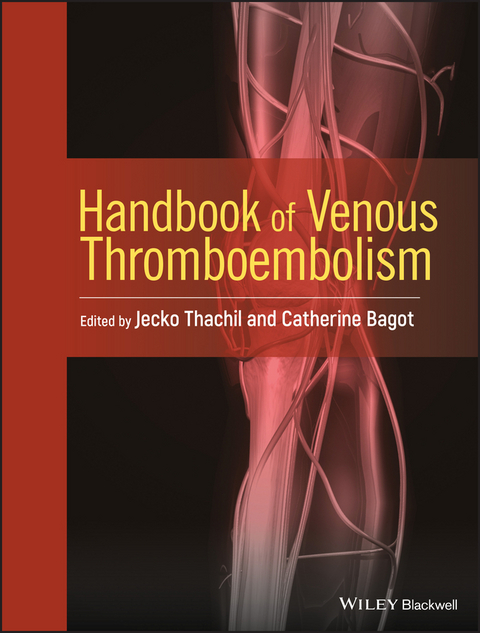
A clinically oriented handbook providing up-to-date recommendations for mastering the practical aspects of patient management for venous thromboembolism
Venous thromboembolism (VTE) is associated with high morbidity and mortality both in and out of the hospital setting, and is one of the commonest reasons for hospital attendances and admissions. Designed as a practical resource, the Handbook of Venous Thromboembolism covers the practical aspects of venous thromboembolism management in short and easily followed algorithms and tables. This important text helps physicians keep up-to-date with the latest recommendations for treating venous thromboembolism in clinic-oriented settings. Experts in fields such as the radiological diagnosis of pulmonary embolism and thrombophilia testing, give a succinct summary of the investigation, diagnosis and treatment of venous thromboembolism and include evidence-based guidelines.
With contributions from a team on internationally recognized experts, Handbook of Venous Thromboembolism is a source of information that specialists in the field can recommend to non-specialists and which the latter will be able to review to assist in their education and management of this wide-spread condition. This vital resource:
- Comprises of a clinically focused handbook, useful as a daily resource for the busy physician
- Offers a handbook written by an international team of specialists offering their experience on the practical aspects of venous thromboembolism management
- Addresses venous thrombosis prevention, a major focus for healthcare providers
- Includes coverage on controversies in the management of venous thromboembolism so clinicians can understand how experts are practicing in real scenarios
Written for hematology trainees, emergency and acute medicine physicians, junior doctors, and primary care physicians, Handbook of Venous Thromboembolism covers the basics for treating patients with venous thromboembolism and offers guidelines from noted experts in the field.
JECKO THACHIL, MBBS, MD, MRCP, FRCPath is a consultant haematologist at Department of Haematology, Manchester Royal Infirmary in Manchester, UK. He has a special clinical interest in blood coagulation disorders and the prevention and treatment of venous thrombosis. He is the editor of the Wiley-Blackwell publication Haematology in Critical Care.
CATHERINE BAGOT, BSc, MBBS, MD, MRCP, FRCPath is a consultant haematologist at Department of Haematology, Glasgow Royal Infirmary in Glasgow, UK. He specializes in haemostasis and thrombosis at Glasgow Royal Infirmary and who is mainly interested in the role of thrombin generation in thrombosis risk stratification.
A clinically oriented handbook providing up-to-date recommendations for mastering the practical aspects of patient management for venous thromboembolism Venous thromboembolism (VTE) is associated with high morbidity and mortality both in and out of the hospital setting, and is one of the commonest reasons for hospital attendances and admissions. Designed as a practical resource, the Handbook of Venous Thromboembolism covers the practical aspects of venous thromboembolism management in short and easily followed algorithms and tables. This important text helps physicians keep up-to-date with the latest recommendations for treating venous thromboembolism in clinic-oriented settings. Experts in fields such as the radiological diagnosis of pulmonary embolism and thrombophilia testing, give a succinct summary of the investigation, diagnosis and treatment of venous thromboembolism and include evidence-based guidelines. With contributions from a team on internationally recognized experts, Handbook of Venous Thromboembolism is a source of information that specialists in the field can recommend to non-specialists and which the latter will be able to review to assist in their education and management of this wide-spread condition. This vital resource: Comprises of a clinically focused handbook, useful as a daily resource for the busy physician Offers a handbook written by an international team of specialists offering their experience on the practical aspects of venous thromboembolism management Addresses venous thrombosis prevention, a major focus for healthcare providers Includes coverage on controversies in the management of venous thromboembolism so clinicians can understand how experts are practicing in real scenarios Written for hematology trainees, emergency and acute medicine physicians, junior doctors, and primary care physicians, Handbook of Venous Thromboembolism covers the basics for treating patients with venous thromboembolism and offers guidelines from noted experts in the field.
JECKO THACHIL, MBBS, MD, MRCP, FRCPath is a consultant haematologist at Department of Haematology, Manchester Royal Infirmary in Manchester, UK. He has a special clinical interest in blood coagulation disorders and the prevention and treatment of venous thrombosis. He is the editor of the Wiley-Blackwell publication Haematology in Critical Care. CATHERINE BAGOT, BSc, MBBS, MD, MRCP, FRCPath is a consultant haematologist at Department of Haematology, Glasgow Royal Infirmary in Glasgow, UK. He specializes in haemostasis and thrombosis at Glasgow Royal Infirmary and who is mainly interested in the role of thrombin generation in thrombosis risk stratification.
List of Contributors viii
Foreword xi
Section I Clinical Overview 1
1 Risk Factors for Venous Thromboembolism 3
Peter E. Rose
2 Management of Venous Thrombosis in the Lower Limbs 13
Dan Horner
3 Clinical Presentation of Acute Pulmonary Embolism 21
C.E.A. Dronkers, M.V. Huisman and F.A. Klok
Section II Diagnosis 27
4 Clinical Prediction Scores 29
Kerstin de Wit and Lana A. Castellucci
5 Laboratory Aspects in Diagnosis and Management of Venous Thromboembolism 35
Giuseppe Lippi and Emmanuel J. Favaloro
6 Thrombophilia Testing 49
Massimo Franchini
7 Radiological Diagnosis of Pulmonary Embolism 55
Joachim E. Wildberger and Marco Das
8 The Antiphospholipid Syndrome 60
Karen Breen
Section III Treatment 67
9 Inpatient or Outpatient Anticoagulation 69
Lauren Floyd and Jecko Thachil
10 An Anticoagulant Service in Practice 73
Kathy Macintosh, Dawn Kyle and Linda Smith
11 Point of Care Testing 86
Dianne Patricia Kitchen
12 Direct Oral Anticoagulants in the Prevention and Management of Venous Thromboembolism 94
Yen?]Lin Chee and Henry G. Watson
13 The Role of Thrombolysis in the Management of Venous Thromboembolism 102
Carlos J. Guevara and Suresh Vedantham
14 Inferior Vena Cava Filters in the Management of Venous Thromboembolism 114
Anita Rajasekhar and Molly W. Mandernach
Section IV Special Situations 129
15 VTE in Pregnancy 131
Catherine Nelson Piercy
16 Paediatric Venous Thromboembolism 145
Paul Monagle and Rebecca Barton
17 Cancer?]associated Thrombosis 153
Simon Noble
18 Venous Thromboembolism Management in Obese Patients 161
Kathryn Lang and Jignesh Patel
19 Venous Thromboembolism in Intensive Care 169
Gill Parmilan and Jecko Thachil
20 Venous Thromboembolism; a Primary Care Perspective 174
David Fitzmaurice
Section V Unusual Site Thrombosis 181
21 Cerebral Venous Thrombosis 183
Christian Weimar
22 Upper Extremity Thrombosis 192
Scott M. Stevens and Scott C. Woller
23 Management of Intra?]abdominal Thrombosis 205
Serena M. Passamonti, Francesca Gianniello and Ida Martinelli
24 Thrombosis in the Retinal Circulation 216
Wenlan Zhang and Paul Hahn
Section VI Long?]term Sequelae of VTE 229
25 Post?]thrombotic Syndrome 231
Andrew Busuttil and Alun H. Davies
26 Chronic Thromboembolic Pulmonary Hypertension 240
Demosthenes G. Papamatheakis and William R. Auger
27 Predicting Recurrent VTE 255
R. Campbell Tait
Section VII Controversies 263
28 Cancer Screening in Unprovoked Venous Thromboembolism 265
David Keeling
29 Sub?]segmental and Incidental PE - to Treat or Not? 269
Jecko Thachil
30 Management of Distal Vein Thrombosis 273
Giuseppe Camporese and Enrico Bernardi
Section VIII Prevention 281
31 A Summary of the Evidence for VTE Prevention, with a Focus on the Controversies 283
Catherine Bagot
32 VTE Prevention: Real World Practice 293
Emma Gee
33 VTE Root Cause Analysis - How To Do It 301
Alison Moughton, Francesca Jones and Will Lester
Index
1
Risk Factors for Venous Thromboembolism
Peter E. Rose
Consultant Haematologist, Warwick Hospital, South Warwickshire Foundation Trust, UK
Introduction
There are many risk factors reported to increase the risk of venous thromboembolism (VTE), as shown in Table 1.1.
Table 1.1 Risk factors for venous thromboembolic disease.
| Patient Related | Additional factors |
| Increasing age | Surgery within 90 days |
| Previous history VTE | Lower limb cast |
| Family history 1st degree relative | Hospital stay > 3 days |
| Thrombophilia | Cancer in past six months/ongoing disease |
| Pregnancy | Medical comorbidities |
| Obesity > 30 kg/m2 | Extended travel |
| Smoking/alcohol/substance abuse | Medication related |
Large national registries for VTE patients have helped to elucidate and quantify the relative risk of individual factors. The risk factors for deep vein thrombosis (DVT) and pulmonary embolism (PE) are largely similar, as DVT and PE represent a spectrum of the same disease process. There is also some overlap between venous and arterial thrombotic risk, with age, smoking and obesity common to both, although they are much more important factors in arterial disease. Part of this may be an indirect association – for example, smoking increases cancer risk, and hence VTE, while medical in‐patients with heart failure have a marked increase in risk for pulmonary embolism. Figure 1.1 shows the increasing rate of VTE with age, from the UK VTE registry, VERITY. Overall, the risk for VTE is increasing, with an ever aging population, receiving multiple medications many of which increase thrombotic risk, particularly in the field of cancer medicine.
Figure 1.1 VTE risk increases with age. Taken from UK VERITY (Venous Thromboembolism registry).
The most important risk factors for VTE are a history of previous VTE, recent surgery, hospital in‐patient stay and cancer. While there is much comment around factors such as long‐haul travel and inherited risk factors for VTE, these represent less common and less important factors. In general the more risk factors present, the greater will be the cumulative risk for VTE.
Previous VTE
For patients with a known history of VTE, it is important to identify if the previous event was provoked, in association with temporary risk factors, or unprovoked. The risk of recurrence is less than 3% if provoked, but is near 10% in unprovoked VTE within 12 months of discontinuing anticoagulant therapy. It can be difficult to determine what is and is not provoked; for example, a DVT post orthopaedic surgery is clearly provoked, while a female on the combined pill preparation for three years without previous thrombosis is not necessarily a provoked event. A VTE within three months of starting the pill however, would be provoked.
Provoking factors can be further divided into surgical, with a recurrence rate of 1% within 12 months of treatment, and non‐surgical factors, with a 6% risk in this time period. For patients with unprovoked VTE, the risk persists with time, with 40% recurrence within ten years. For a cohort of young male patients presenting with unprovoked PE, there is a 20% risk of recurrence of PE within 12 months which persists, making recurrence almost inevitable.
Surgery
Pulmonary embolism remains the most widely reported preventable cause of death in patients undergoing surgery. It is the most common cause of death within 30 days of surgery, with 40% of VTE events occurring later than three weeks post operatively. Even for low‐risk general gynaecological abdominal surgery for non‐malignant disease, the risk for VTE extends up to at least 90 days post‐surgery. Previous autopsy studies in surgical patients report VTE to be present in 5–10% of cases. Surgery, therefore, requiring general anaesthesia for over one hour, is a major risk factor for VTE. Surgical risk is compounded by many concomitant medical risk factors – for example, a further doubling of risk in cancer surgery. See Table 1.2.
Table 1.2 Surgical risk factors for VTE.
| Personal | Surgical |
| Age > 60 | Prolonged anaesthesia |
| Medical comorbidities | Major trauma |
| Previous VTE | Lower limb surgery |
| Thrombophilia | Major abdominal surgery |
| Obesity | Cancer surgery |
| Post‐operative admission to ITU |
| Bariatric surgery |
Orthopaedic Surgery
Patients undergoing lower limb surgery are among the highest risk patients (odds ratio > 10), and this includes total hip and knee arthroplasty, hip/leg fractures, major orthopaedic trauma and spinal surgery. With improved surgical procedures and shorter time for anaesthesia, there is some recent risk reduction. The risk for VTE partly relates to prolonged stasis associated with immobility, and the release of tissue fragments of collagen and fat, which can directly activate coagulation factors. Furthermore, direct blood vessel damage during retraction of soft tissues can act as a nidus for thrombus formation.
Lower limb immobilisation in casts, with or without surgery, increases the risk of VTE. The prevalence of lower limb injury‐related DVT with cast immobilisation is reported to occur in 4–40% of cases. Further confirmation of the importance comes from studies using chemical thromboprophylaxis, which results in a 50% reduction in DVT rate. On this basis, NICE guidance recommends that all patients with lower limb immobilisation should be assessed for chemical thromboprophylaxis.
Other Surgeries
Other high‐risk surgery includes major abdominal procedures, particularly in cancer patients. Evidence confirming the importance of general surgery as a major risk factor for VTE is provided from studies evaluating the efficacy of thromboprophylaxis. For example, a systematic review of cancer patients undergoing surgery showed a reduction in VTE events from 35% to 13% in patients receiving pharmacological thromboprophylaxis.
Additional risk factors for thrombus and surgery include the increasing use of indwelling venous catheters and filters for prolonged periods of time in the post‐operative period. It is estimated that 14% of patients undergoing cardiac surgery without thromboprophylaxis develop VTE. As many of these patients are already on antiplatelet or anticoagulant therapy, the true risk associated with surgery is difficult to assess. Similarly, the risk with vascular surgery, while increased, is difficult to quantify in a largely elderly group with reduced mobility, on anti‐platelet therapy and often with comorbidities. A careful VTE risk assessment is needed for all patients undergoing surgery, particularly where this involves general anaesthesia and prolonged hospital admission, evaluating the bleeding risk due to the procedure against the reduction in thrombotic events.
Hospitalised Medical Patients
Approximately 70–80% of fatal hospital acquired thrombosis (HAT) occurs in medical patients. Venous thrombosis is increased in most acute medical conditions, necessitating hospital admission. The risk of VTE is also increased in a number of chronic medical disorders (see Table 1.3). Medical inpatients are usually elderly, often with several conditions to compound VTE risk.
Table 1.3 Medical conditions with increased risk of VTE.
| Acute | Chronic |
| Congestive heart failure | Disorders of mobility (mechanical/ neurological) |
| Respiratory failure | Nephrotic syndrome |
| Severe infection/ sepsis | Sickle‐cell disease |
| Rheumatological conditions | Paraproteinaemia |
| Inflammatory bowel disorders | Paroxysmal nocturnal haemoglobinuria |
| Stroke | Bechet’s disease |
| Cancer | Porphyria |
Stroke patients, whether due to ischaemic or haemorrhagic events, are at increased risk of VTE, with a wide range of estimates reported, namely, 15–60%. Prevention with chemical thromboprophylaxis is dependent on safety, with haemorrhagic risk often high. In the absence of haemorrhage, the presence of additional factors, such as severity of immobilisation and comorbidities, are important for risk assessment. Acute respiratory infection in hospitalised patients is a particularly high risk for VTE. Other medical conditions included in clinical trials for thromboprophylaxis in medical patients include congestive heart failure, respiratory failure, acute rheumatological and inflammatory bowel disorders.
Clinical studies...
| Erscheint lt. Verlag | 9.11.2017 |
|---|---|
| Sprache | englisch |
| Themenwelt | Medizinische Fachgebiete ► Innere Medizin ► Hämatologie |
| Schlagworte | algorithms for the diagnosis of DVT or PE • Antithrombotic therapies • Catherine Bagot • clinical aspects of venous thromboembolism • clinical judgment when treating venous thromboembolism • Emergency Medicine & Trauma • evidence-based clinical practice guidelines for treating venous thromboembolism • guide to venous thromboembolism • Haemodynamic assessment • Hämatologie • Handbook of Venous Thromboembolism • Hematology • Jecko Thachil • Laboratory diagnostics of venous thromboembolism • Laboratory monitoring of anticoagulant therapy • Laboratory prediction of recurrent venous thromboembolism • management of isolated subsegmental pulmonary embolism • Medical Science • Medizin • Notfallmedizin u. Traumatologie • patient management for venous thromboembolism • Radiological diagnosis of pulmonary embolism • recommendations for treating venous thromboembolism • research of Venous Thromboembolism • Spiral computed tomography pulmonary angiography • therapeutic monitoring of anticoagulation • Thrombose u. Hämostase • Thrombosis & Hemostasis • treating venous thromboembolism • Ventilation-perfusion scanning • VTE recurrence |
| ISBN-10 | 1-119-09558-1 / 1119095581 |
| ISBN-13 | 978-1-119-09558-3 / 9781119095583 |
| Informationen gemäß Produktsicherheitsverordnung (GPSR) | |
| Haben Sie eine Frage zum Produkt? |
 EPUB (Adobe DRM)
Kopierschutz: Adobe-DRM
Adobe-DRM ist ein Kopierschutz, der das eBook vor Mißbrauch schützen soll. Dabei wird das eBook bereits beim Download auf Ihre persönliche Adobe-ID autorisiert. Lesen können Sie das eBook dann nur auf den Geräten, welche ebenfalls auf Ihre Adobe-ID registriert sind.
Details zum Adobe-DRM
Dateiformat: EPUB (Electronic Publication)
EPUB ist ein offener Standard für eBooks und eignet sich besonders zur Darstellung von Belletristik und Sachbüchern. Der Fließtext wird dynamisch an die Display- und Schriftgröße angepasst. Auch für mobile Lesegeräte ist EPUB daher gut geeignet.
Systemvoraussetzungen:
PC/Mac: Mit einem PC oder Mac können Sie dieses eBook lesen. Sie benötigen eine
eReader: Dieses eBook kann mit (fast) allen eBook-Readern gelesen werden. Mit dem amazon-Kindle ist es aber nicht kompatibel.
Smartphone/Tablet: Egal ob Apple oder Android, dieses eBook können Sie lesen. Sie benötigen eine
Geräteliste und zusätzliche Hinweise
Buying eBooks from abroad
For tax law reasons we can sell eBooks just within Germany and Switzerland. Regrettably we cannot fulfill eBook-orders from other countries.
aus dem Bereich