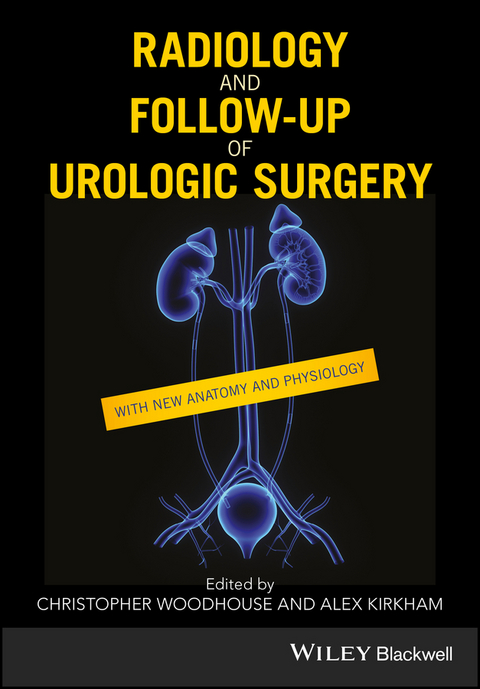
The first guide to identifying and assessing changes following urologic surgery-with follow-up protocols
What is the normal appearance of a kidney after radio frequency ablation of a tumor and what does a local recurrence look like? How does the urine flow down the ureters after a trans-uretero-ureterostomy? What is the normal appearance of the urinary tract after a cystoplasty? Most clinicians would be hard-pressed to provide answers to such fundamental questions concerning post-surgical anatomy and physiology, and equally challenged to find evidence-based information on the subject.
Most of the literature in radiology and urologic surgery is orientated towards diagnosis and disease management. Although this often includes complications and outcomes, the clinician is often in the dark as to the anatomical and physiological changes that follow successful treatment-especially in cases involving conservative or reconstructive surgery. To rectify this, the editors invited colleagues to share insights gleaned during their careers. The results are contained in Radiology and Follow-up of Urologic Surgery.
Extremely well-illustrated throughout with color photographs and line drawings, Radiology and Follow-up of Urologic Surgery:
- Features sections devoted to each of the organs of the genito-urinary tract with chapters covering the major diseases and operations that are used to treat them
- Focuses on the 'new normal' following surgery with an emphasis on the identification of normal changes versus complications
- Covers the radiologic changes and biochemical and histological findings which are found following reconstructions
- Offers guidelines for clinical and radiological follow up after urological surgery in some key areas
Christopher Woodhouse, MB, FRCS, FEBU, is an Emeritus Professor of Adolescent Urology at University College London and previously a consultant at the Royal Marsden Hospital. He trained under Sir David Innes Williams at the Institute of Urology and was made Professor of Adolescent Urology at UCL in 2006. He is widely considered as one of the world's leading experts in reconstructive urology and in particular, adolescent urology and congenital urological anomalies.
Alex Kirkham, MB BCh, FRCS, FRCR, MD, is a consultant uro-radiologist at University College London Hospitals, London, UK.
The first guide to identifying and assessing changes following urologic surgery with follow-up protocols What is the normal appearance of a kidney after radio frequency ablation of a tumor and what does a local recurrence look like? How does the urine flow down the ureters after a trans-uretero-ureterostomy? What is the normal appearance of the urinary tract after a cystoplasty? Most clinicians would be hard-pressed to provide answers to such fundamental questions concerning post-surgical anatomy and physiology, and equally challenged to find evidence-based information on the subject. Most of the literature in radiology and urologic surgery is orientated towards diagnosis and disease management. Although this often includes complications and outcomes, the clinician is often in the dark as to the anatomical and physiological changes that follow successful treatment especially in cases involving conservative or reconstructive surgery. To rectify this, the editors invited colleagues to share insights gleaned during their careers. The results are contained in Radiology and Follow-up of Urologic Surgery. Extremely well-illustrated throughout with color photographs and line drawings, Radiology and Follow-up of Urologic Surgery: Features sections devoted to each of the organs of the genito-urinary tract with chapters covering the major diseases and operations that are used to treat them Focuses on the new normal following surgery with an emphasis on the identification of normal changes versus complications Covers the radiologic changes and biochemical and histological findings which are found following reconstructions Offers guidelines for clinical and radiological follow up after urological surgery in some key areas Radiology and Follow-up of Urologic Surgery is essential reading for surgical residents in urology, as well as radiology residents specializing in urology. It also belongs on the reference shelves of urologists, urological surgeons, obstetric/gynecologic surgeons, and radiologists with an interest in the field, at whatever stage in their career.
Christopher Woodhouse, MB, FRCS, FEBU, is an Emeritus Professor of Adolescent Urology at University College London and previously a consultant at the Royal Marsden Hospital. He trained under Sir David Innes Williams at the Institute of Urology and was made Professor of Adolescent Urology at UCL in 2006. He is widely considered as one of the world's leading experts in reconstructive urology and in particular, adolescent urology and congenital urological anomalies. Alex Kirkham, MB BCh, FRCS, FRCR, MD, is a consultant uro-radiologist at University College London Hospitals, London, UK.
Cover 1
Title Page 5
Copyright 6
Dedication 7
Contents 9
List of Contributors 15
Acknowledgements 17
Introduction 19
Chapter 1 Subtotal Nephrectomy and Tumour Ablation 23
Introduction 23
Procedures 23
Partial Nephrectomy 23
Early Imaging 24
Late Imaging 25
Ablative Therapies 28
Complications 31
Successful Tumour Ablation 32
Treatment Failure 33
Surveillance 36
Follow-up Imaging 36
Partial Nephrectomy 36
Ablative Therapies 37
Surveillance 37
Conclusions 37
References 38
Chapter 2 Renal Transplantation 41
Introduction 41
The Role of Ultrasound Imaging 41
Vascular Complications 41
Transplant Renal Artery Stenosis 41
Transplant Renal Vein Thrombosis 43
Transplant Renal Artery Thrombosis 44
Arteriovenous Fistula 45
Follow-up 45
Urological Complications 45
Ureteric Complications 46
Anastomotic Urinary Leak or Urinoma 46
Missed Duplex Transplant Ureter 47
Ureteric Stenosis 48
Transplant Ureteric Reflux 48
Bladder Complications 48
Urinary Fistulae 48
General Complications 49
Lymphocoeles 49
Renal Transplant Stone Disease 49
Renal Transplant Trauma 50
Oncological Complications 50
Transplant Renal Cell Carcinoma 50
Transplant Ureteric Transitional Cell Carcinoma 51
Conclusions 51
References 52
Chapter 3 Imaging After Endo-urological Stone Treatment 55
Introduction 55
The Procedures 55
Conservative Management 55
Ureteric Stones: Results and Complications 59
Extracorporeal shock wave lithotripsy 59
Ureteroscopy 59
Renal Stones: Results and Complications 62
Flexible Ureterorenoscopy 62
Percutaneous Surgery 64
Complications and Follow-up 66
Residual Fragments After ESWL, URS, FURS and PCNL 66
Radiation Exposure for Patients with Stones 71
References 72
Chapter 4 Pelvi-ureteric Junction Reconstruction 75
Introduction 75
Antenatal Hydronephrosis 75
Pathophysiological Effect of True Pelvi-ureteric Obstruction 76
Physiological and Anatomical Changes in the Kidney Following Pyeloplasty 77
Incidental PUJO in adults 79
Long-term Follow-up 80
Conclusions 81
References 82
Chapter 5 Retroperitoneal Fibrosis 85
Introduction 85
Available Treatments 85
Medical Therapy 85
Surgical Treatment 87
Follow-up 88
Imaging 88
Stent Removal 88
Complications 89
Stent-related Complications 89
Hydrocoeles 91
Long-term Follow-up 91
Recurrent Disease 92
References 93
Chapter 6 Urinary Diversion 95
Introduction 95
The Procedures 95
Clinical Follow-up of Ileal Conduits 96
Postoperative Imaging 96
The 'Loopogram' 96
Ultrasound 99
Nephrostomy and Antegrade Imaging 101
Monitoring of Asymptomatic Patients 101
Management of Bacteriuria and Sepsis 102
References 103
Chapter 7 Ureteric Reconstruction and Replacement 105
Introduction 105
Procedures 105
Stents and Nephrostomies 105
Uretero-pyelostomy 105
Uretero-calycostomy 106
Trans-uretero-ureterostomy 106
Ureteric Re-implantation 106
Autotransplantation 108
Intestine 108
Complex Lower Urinary Tract Reconstruction 108
Other Materials and Experimental Techniques 108
Clinical Follow-up and Complications 109
Stents and Nephrostomies 109
Reconstruction with Urothelium 112
Autotransplantation 113
Intestine 114
References 116
Chapter 8 Conservative and Reconstructive Bladder Surgery 119
Introduction 119
Extravasation 119
Bladder Perforation 119
Reconstruction Following Ureteric Injury and Partial Cystectomy 121
The Irradiated Bladder 124
Complications After Posterior Exenteration 124
Conclusions 125
References 125
Chapter 9 Bladder Augmentation in Children 127
Introduction 127
The Procedures 127
Augmentation with Ileum or Colon 127
Gastrocystoplasty 127
Seromuscular Cystoplasty 127
Auto-augmentation 128
Uretero-cystoplasty 128
Clinical Follow-up 129
Postoperative Imaging 131
Complications of Enterocystoplasty 133
Metabolic and Electrolyte Disorders (see also Chapter 11) 133
Stones 133
Perforation 135
Neoplastic Progression 136
Unique Complications of Gastrocystoplasty 137
Hypochloraemic Metabolic Alkalosis 137
Hypergastrinaemia 137
Haematuria-Dysuria Syndrome 138
Changes Over Time 138
References 139
Chapter 10 Radiology and Follow-up of the Neobladder 143
Introduction 143
The Procedure 143
Radical Cystectomy in Females (Figure 10.1) 143
Radical Cystectomy in Males (Figure 10.2) 143
The Neobladder 143
Postoperative Imaging 144
Clinical Follow-up 145
Clinical Examination 145
Bladder and Urine Investigations 146
Renal Investigations 146
Oncologic Follow-up Specific to the Neobladder 150
Local Recurrence 150
Secondary Tumour Growth in Urinary Diversions for Benign Disease (see also Chapter 11) 152
Complications 153
Complications up to 90 Days 153
Long-term Complications 153
Changes Over Time 154
Reservoir Control 154
Incontinence 154
Voiding Failure (Hypercontinence) 154
Metabolic Changes (see also Chapter 11) 156
References 156
Chapter 11 General Consequences of Lower Urinary Tract Replacement and Reconstruction 159
Introduction 159
Reservoirs 159
The Stomach 159
Ileum 159
Gastrointestinal Consequences 159
Storage Consequences 161
Colon 161
Gastrointestinal Consequences 161
Storage Consequences 161
Rectum 163
Continence (Mainz II) 164
Anastomotic Cancer 165
Urodynamic Findings 167
Stones 167
Renal Function 169
Perforation 169
Histological Changes 171
Infection 173
Neoplasia 174
Urine Testing for Pregnancy 175
The Conduit and Continence 175
References 176
Chapter 12 Surgery on the Benign Prostate 181
Introduction 181
Procedures 181
Outcomes and Complications 183
Postoperative Failure to Void 184
Continued Failure to Void or Unsatisfactory Voiding 184
Sexual Function 186
Incontinence 188
Stricture 188
Unexpected Malignancy 189
Changes Over Time 189
References 190
Chapter 13 Imaging After Treatment of Prostate Cancer 195
Introduction 195
Appearances After Radical Prostatectomy 195
Residual Tumour After Radical Prostatectomy 197
The Prostate After Ablative Therapies 197
Early Appearances 198
Early Complications 199
Appearances at 2-5 Months 200
Appearances at 6 Months: Assessing Residual and Recurrent Tumour 200
Nuclear Medicine Studies 202
A Schedule for Follow-up 202
References 202
Chapter 14 Urethroplasty 207
Introduction 207
Pericatheter Urethrogram 207
Ascending and Descending Urethrography 208
Radiological Appearance After Different Types of Urethroplasty 209
Traumatic Strictures 210
Idiopathic Bulbar Strictures 211
Penile Urethroplasty 211
Use of Ultrasound in Urethroplasty Follow-up 212
Follow-up After Urethroplasty 214
Radiological Appearance and Surgical Management of Recurrent Strictures After Urethroplasty 215
References 216
Chapter 15 The Postoperative Appearance and Follow-up of Urinary Tract Prostheses 219
Introduction 219
Penile Prostheses 219
Normal Appearance and Imaging Techniques 219
Problems of Positioning and Length 221
Artificial Urinary Sphincters 222
Disorders of Function and Position 223
Infection in Implanted Devices 224
Metallic Stents 226
References 226
Index 229
EULA 238
| Erscheint lt. Verlag | 6.9.2017 |
|---|---|
| Sprache | englisch |
| Themenwelt | Medizin / Pharmazie ► Medizinische Fachgebiete ► Chirurgie |
| Medizin / Pharmazie ► Medizinische Fachgebiete ► Urologie | |
| Schlagworte | Chirurgie u. chirurgische Spezialgebiete • conservative urological surgery post-operative anatomy • conservative urological surgery post-operative histology • conservative urological surgery post-operative imaging • conservative urological surgery post-operative malignant changes • conservative urological surgery post-operative physiology • manual of conservative urological surgery follow-up protocols • manual of reconstructive surgery follow-up • Medical Science • Medizin • Radiologie u. Bildgebende Verfahren • Radiology & Imaging • reconstructive urological surgery • reconstructive urological surgery post-surgical abnormal anatomy • reconstructive urological surgery post-surgical biochemistry • reconstructive urological surgery post-surgical follow-up • reconstructive urological surgery post-surgical histology • reconstructive urological surgery post-surgical imaging • reconstructive urological surgery post-surgical malignant changes • reconstructive urological surgery post-surgical normal anatomy • reconstructive urological surgery post-surgical physiology • reconstructive urological surgical manual • Surgery & Surgical Specialities • Urological surgery • urological surgery abnormal anatomy • urological surgery anatomical changes • urological surgery illustrations • urological surgery images • urological surgery manual • urological surgery normal anatomical changes • urological surgery photographs • Urologie • Urology |
| ISBN-13 | 9781119162094 / 9781119162094 |
| Informationen gemäß Produktsicherheitsverordnung (GPSR) | |
| Haben Sie eine Frage zum Produkt? |
 PDF (Adobe DRM)
Kopierschutz: Adobe-DRM
Adobe-DRM ist ein Kopierschutz, der das eBook vor Mißbrauch schützen soll. Dabei wird das eBook bereits beim Download auf Ihre persönliche Adobe-ID autorisiert. Lesen können Sie das eBook dann nur auf den Geräten, welche ebenfalls auf Ihre Adobe-ID registriert sind.
Details zum Adobe-DRM
Dateiformat: PDF (Portable Document Format)
Mit einem festen Seitenlayout eignet sich die PDF besonders für Fachbücher mit Spalten, Tabellen und Abbildungen. Eine PDF kann auf fast allen Geräten angezeigt werden, ist aber für kleine Displays (Smartphone, eReader) nur eingeschränkt geeignet.
Systemvoraussetzungen:
PC/Mac: Mit einem PC oder Mac können Sie dieses eBook lesen. Sie benötigen eine
eReader: Dieses eBook kann mit (fast) allen eBook-Readern gelesen werden. Mit dem amazon-Kindle ist es aber nicht kompatibel.
Smartphone/Tablet: Egal ob Apple oder Android, dieses eBook können Sie lesen. Sie benötigen eine
Geräteliste und zusätzliche Hinweise
Buying eBooks from abroad
For tax law reasons we can sell eBooks just within Germany and Switzerland. Regrettably we cannot fulfill eBook-orders from other countries.
aus dem Bereich