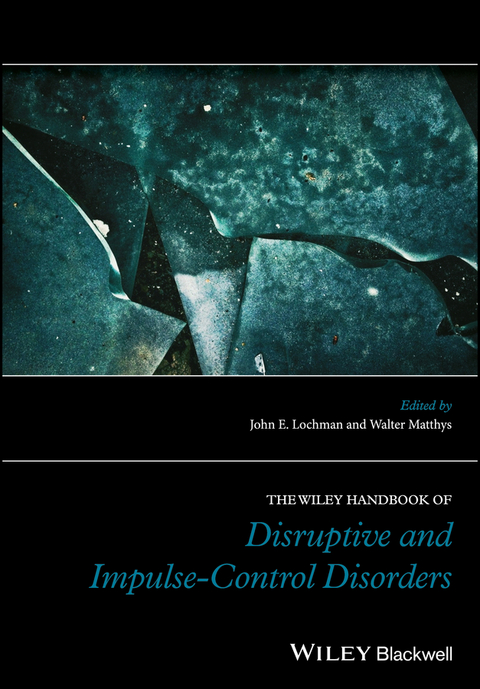
The Wiley Handbook of Disruptive and Impulse-Control Disorders (eBook)
John Wiley & Sons (Verlag)
978-1-119-09223-0 (ISBN)
The definitive reference to the policies and practices for treating disruptive and impulse-control disorders, edited by renowned experts
The Wiley Handbook of Disruptive and Impulse-Control Disorders offers a comprehensive overview that integrates the most recent and important scholarship and research on disruptive and impulse-control disorders in children and adolescents. Each of the chapters includes a summary of the most relevant research and knowledge on the topic and identifies the implications of the findings along with important next directions for research. Designed to be practical in application, the text explores the applied real-world value of the accumulated research findings, and the authors include policy implications and recommendations.
The Handbook address the nature and definition of the disorders, the risk factors associated with the development and maintenance of this cluster of disorders, assessment processes, as well as the evidence-based treatment and prevention practices. The volume incorporates information from the ICD-11, a newly revised classification system, along with the recently published DSM-5. This important resource:
- Contains a definitive survey that integrates the most recent and important research and scholarship on disruptive and impulse-control disorders in children and adolescents
- Emphasizes the applied real-world value of the accumulated research findings
- Explores the policy implications and recommendations to encourage evidence-based practice
- Examines the nature and definition, risk factors, assessment, and evidence-based practice; risk factors are subdivided into child, family, peer group and broader context
- Considers changes, advances and controversies associated with new and revised diagnostic categories
Written for clinicians and professionals in the field, The Wiley Handbook of Disruptive and Impulse-Control Disorders offers an up-to-date review of the most authoritative scholarship and research on disruptive and impulse-control disorders in children and adolescents as well as offering recommendations for practice.
John E. Lochman is Professor and Doddridge Saxon Chairholder in Clinical Psychology at the University of Alabama, where he also directs the Center for Prevention of Youth Behavior Programs. He is an Adjunct Professor in the Department of Psychiatry and Behavior Sciences at the Duke University Medical Center. His research centers on risk factors, social cognition, and intervention and prevention in children with aggressive behavioral problems.
Walter Matthys is Emeritus Professor of Aggression in Children in the Department of Child and Adolescent Studies, Utrecht University, The Netherlands. His clinical work as a child and adolescent psychiatrist was based at the University Medical Centre, Utrecht. His research focuses on neurocognitive and social cognitive functions of children with oppositional defiant disorder and conduct disorder, and on interventions to prevent and treat these disorders.
The definitive reference to the policies and practices for treating disruptive and impulse-control disorders, edited by renowned experts The Wiley Handbook of Disruptive and Impulse-Control Disorders offers a comprehensive overview that integrates the most recent and important scholarship and research on disruptive and impulse-control disorders in children and adolescents. Each of the chapters includes a summary of the most relevant research and knowledge on the topic and identifies the implications of the findings along with important next directions for research. Designed to be practical in application, the text explores the applied real-world value of the accumulated research findings, and the authors include policy implications and recommendations. The Handbook address the nature and definition of the disorders, the risk factors associated with the development and maintenance of this cluster of disorders, assessment processes, as well as the evidence-based treatment and prevention practices. The volume incorporates information from the ICD-11, a newly revised classification system, along with the recently published DSM-5. This important resource: Contains a definitive survey that integrates the most recent and important research and scholarship on disruptive and impulse-control disorders in children and adolescents Emphasizes the applied real-world value of the accumulated research findings Explores the policy implications and recommendations to encourage evidence-based practice Examines the nature and definition, risk factors, assessment, and evidence-based practice; risk factors are subdivided into child, family, peer group and broader context Considers changes, advances and controversies associated with new and revised diagnostic categories Written for clinicians and professionals in the field, The Wiley Handbook of Disruptive and Impulse-Control Disorders offers an up-to-date review of the most authoritative scholarship and research on disruptive and impulse-control disorders in children and adolescents as well as offering recommendations for practice.
John E. Lochman is Professor and Doddridge Saxon Chairholder in Clinical Psychology at the University of Alabama, where he also directs the Center for Prevention of Youth Behavior Programs. He is an Adjunct Professor in the Department of Psychiatry and Behavior Sciences at the Duke University Medical Center. His research centers on risk factors, social cognition, and intervention and prevention in children with aggressive behavioral problems. Walter Matthys is Emeritus Professor of Aggression in Children in the Department of Child and Adolescent Studies, Utrecht University, The Netherlands. His clinical work as a child and adolescent psychiatrist was based at the University Medical Centre, Utrecht. His research focuses on neurocognitive and social cognitive functions of children with oppositional defiant disorder and conduct disorder, and on interventions to prevent and treat these disorders.
Cover 1
Title Page 5
Copyright 6
Contents 9
Notes on Contributors 13
Part 1 :Introduction to the Handbook 25
Chapter 1: A Framework for the Handbook’s Exploration of Disruptive Behavior Disorders, Intermittent Explosive Disorder, and Impulse-Control Disorders 27
DBDs, IED, and Impulse-Control Disorders 28
Background on Diagnostic Classification and its Purposes 28
What Are the Purposes of, and Concerns about, Diagnostic Classification of Behavioral Problems? 31
To Facilitate Research on the Causes and Active Mechanisms That Contribute to the Development and Maintenance of Behavioral Disorders 32
Handbook Structure: Key Assumptions about Exploration of Research and Treatment Planning 34
Overview of the Handbook 38
References 39
Part 2: Diagnostic Issues for the Disruptive and Impulse-Control Disorders 43
Chapter 2: Diagnostic Issues in Oppositional Defiant Disorder 45
The History of Oppositional Defiant Disorder 45
Criteria 46
Irritability and Disruptive Mood Dysregulation Disorder 47
An ODD Specifier 48
Exclusionary Issues in the Diagnosis of ODD 48
Prevalence 49
Developmental Issues: Is ODD a Childhood Disorder? 51
Comorbidities 53
Conclusion 55
References 55
Chapter 3: Conduct Disorder and Callous-Unemotional Traits 61
A Brief History of Diagnostic Classification for Conduct Disorder 61
Callous-Unemotional Traits and Developmental Pathways to Conduct Disorder 63
Conclusions 71
References 73
Chapter 4: Diagnostic Issues for ODD/CD with ADHD Comorbidity 79
Overview of ODD/CD with Comorbid ADHD 79
Sociodemographic Factors Affecting Comorbidity Rates and Symptom Trajectory 81
Considerations and Issues for Diagnosing Comorbid ODD/CD with ADHD 85
Intervention Implications of Comorbid ODD/CD with ADHD 90
Conclusion 91
References 91
Chapter 5: Comorbidity with Substance Abuse 97
Associations between DBDs and Substance Abuse 98
Potential Common Pathways to DBDs and Substance Use 100
Potential Moderators of the Association between DBDs and Substance Use 103
Conclusion and Future Directions 105
Acknowledgment 106
References 106
Chapter 6: Intermittent Explosive Disorder and the Impulse-Control Disorders 113
Intermittent Explosive Disorder (IED) 113
Kleptomania 119
Pyromania 120
Conclusions 121
References 121
Chapter 7: Related Personality Disorders Located within an Elaborated Externalizing Psychopathology Spectrum 127
Personality Disorders 127
Disruptive Behavior Disorders, Personality Disorders, and the Externalizing Spectrum 128
Antisocial/Psychopathic Personality Disorder 129
Borderline Personality Disorder 132
Narcissistic Personality Disorder 134
Paranoid Personality Disorder 137
Dimensional Personality Traits: A Developmentally Sounder Way Forward 139
Conclusion 141
References 141
Part 3: Etiological and Maintenance Factors: Child-Level Factors 149
Chapter 8: Genetic and Gene–Environment Influences on Disruptive Behavior Disorders 151
Heritability of DBDs 151
Genetic Studies and DBDs 153
Genome-Environment Interaction Studies 156
Limitations of Approaches 158
Summary and Recommendations 159
Conclusion 160
References 160
Chapter 9: The Neurobiology of Oppositional Defiant Disorder and Conduct Disorder 167
Brain Structure 167
Diffusion Tensor Imaging 170
Functional Brain Imaging 171
Functional Connectivity 174
Neurotransmitters 174
Stress Response System 176
Conclusion 177
References 177
Chapter 10: Cognitive Functions 183
Intellectual Functioning 183
Language 186
Executive Functioning 188
Conclusion 193
References 194
Chapter 11: Temperament 199
Definition of Temperament 199
Theoretical Models of Temperament and Psychopathology 201
Research on Temperament and Disruptive Behavior Disorders 202
Limitations of Current Literature 206
Implications 207
Conclusion 208
References 208
Chapter 12: Prenatal and Perinatal Risk Factors 213
Prenatal Risk Factors 213
Perinatal Risk Factors 219
The Role of Genetics in Prenatal and Perinatal Risk 221
Conclusion 222
References 222
Chapter 13: Attachment and Disruptive Disorders 229
Attachment 230
Future Directions 238
Conclusion 239
References 239
Chapter 14: Emotion Regulation 245
Defining Emotion Regulation 245
Implications for Prevention and Intervention 252
Conclusions 253
References 254
Chapter 15: “It’s Gonna End Up with a Fight Anyway”: Social Cognitive Processes in Children with Disruptive Behavior Disorders 261
A General Model of Social Cognition in Disruptive Behavior Problems 261
Online Social-Cognitive Processing 262
Offline Processes 267
Socialization and the Development of Social-Cognitive Dispositions 270
Clinical Implications 271
Research Directions 272
Conclusion 273
References 273
Etiological and Maintenance Factors: Family Factors 279
Chapter 16: Family Poverty and Structure 281
Interpreting the Evidence 281
Family Poverty 283
Family Structure 288
Conclusions 294
References 294
Chapter 17: Parent Psychopathology 299
Parent Psychopathology 299
Conclusions, Clinical Implications, and Future Directions 307
References 308
Chapter 18: Relationship Discord, Intimate Partner Physical Aggression, and Externalizing Problems of Children 315
Relationship Discord 315
Intimate Partner Aggression 316
The Association of Relationship Discord and Intimate Partner Violence 317
Prevalence of ODD/CD 318
Association of Marital Discord/Conflict and ODD/CD 319
Meta Analyses of the Association of Marital Discord/Conflict and Externalizing Behavior 320
The Relationship between IPA and Externalizing Problems of Children 321
Conclusions and Future Research Directions 324
References 325
Chapter 19: Parenting Practices and the Development of Problem Behavior across the Lifespan 331
History of Parenting Literature 331
Parenting across the Lifespan 332
Parenting Skills as a Target of Interventions 333
Parenting Skills That Affect the Development of Problem Behavior 334
Culture and Parenting 338
Conclusion 339
Acknowledgment 340
References 340
Etiological and Maintenance Factors: Peer Factors 347
Chapter 20: Peer Rejection and Disruptive Behavioral Disorders 349
Operationalization of Peer Acceptance and Rejection 350
The Complex Relationship of Peer Rejection with Externalizing Problems 351
Comorbidity with ADHD 354
The Mechanisms for Peer Rejection’s Effect on CD/ODD 356
Conclusion 358
References 358
Chapter 21: The Role of Deviant Peers in Oppositional Defiant Disorder and Conduct Disorder 363
Conduct Disorder, Oppositional Defiant Disorder, and Deviant Peers 363
A Developmental-Ecological Perspective 364
Risk Factors for Deviant Peer Involvement 365
Mechanisms of Peer Influence 367
Moderators of Deviant Peer Influence 369
Conclusion and Future Directions 371
References 371
Etiological and Maintenance Factors: Broader Social Context 377
Chapter 22: The Broader Context School and Neighborhood Factors Contributing to ODD and CD Symptomatology 379
School Factors 380
Neighborhood Factors 382
Conclusion 386
References 388
Part 4: Assessment Processes 395
Chapter 23: Problem-Solving Structure of Assessment 397
General Issues 397
An Overview of the Assessment Procedure 399
Written Information 399
Initial Interview with the Parents and the Child or Adolescent 400
Hypotheses regarding Possible Diagnoses and Comorbidities 402
Interview and Observation of the Child or Adolescent 403
Additional Assessments 406
DSM-5 Orientated Interview 407
Categorical Diagnosis, Diagnostic Formulation, and the Treatment Plan 408
Discussion of Diagnosis and Treatment Plan with the Parents, and Use of Psychoeducation in Order to Improve Treatment Engagement 410
Conclusion 411
References 411
Part 5: Treatment and Prevention 415
Chapter 24: Engaging Families in Treatment for Child Behavior Disorders: A Synthesis of the Literature 417
Prevalence of Disruptive Behavior Disorders and Families at Risk 417
The Relationship between Poverty and Child Disruptive Behavior Disorders 418
Treatments for DBDs and Parent Engagement 418
Treatment Engagement Difficulties for Poverty-Affected Families 419
The Need to Engage with Support Services 420
Future Directions 423
Conclusion 427
References 427
Chapter 25: Pharmacotherapy of Disruptive and Impulse Control Disorders 435
Pharmacologic Treatment of ODD/CD 436
Pharmacologic Treatment of Maladaptive Aggression and Irritability 444
Strategies for Treatment 447
Conclusions and Future Directions 453
References 454
Chapter 26: Psychosocial Treatment and Prevention of Conduct Problems in Early Childhood 457
The Behavioral Model of Psychosocial Treatment for Early-Onset CPs 458
Treatment Formats for the Psychosocial Treatment of Early-Onset CPs 459
Leading Psychosocial Intervention Protocols for the Treatment of Early-Onset CPs 462
Promising Trends and Innovations in the Psychosocial Treatment of Early-Onset CPs 465
Conclusions 468
References 468
Chapter 27: Psychosocial Treatment and Prevention in Middle Childhood and Early Adolescence 475
Universal Prevention Programs 476
Indicated Prevention and Treatment Programs 479
Conclusions and Future Directions 485
Acknowledgment 485
References 486
Chapter 28: Psychosocial Treatment and Prevention in the Adolescent Years for ODD and CD 491
Interventions That Are Child-Focused 492
Interventions That Are Parent-Focused 494
Interventions Delivered to Youth and their Parents 497
Conclusion 502
References 502
Chapter 29: Factors Influencing Intervention Delivery and Outcomes 509
Dissemination to Real-World Settings 509
Factors at the Intervention Program Level 510
Factors at the Client Level 516
Factors at the Level of the Clinician and the Practice Setting 517
Conclusions and Cost-effectiveness of Programs and Their Adaptations 520
References 521
Part 6: Concluding Comments 525
Chapter 30: Future Directions 527
The Nature of Oppositional Defiant Disorder and Conduct Disorder 527
The Need for Careful and In-Depth Assessment and Reassessment 529
Psychological Interventions 530
References 538
Index 543
EULA 562
| Erscheint lt. Verlag | 21.8.2017 |
|---|---|
| Reihe/Serie | Wiley Clinical Psychology Handbooks | Wiley Clinical Psychology Handbooks |
| Sprache | englisch |
| Themenwelt | Geisteswissenschaften ► Psychologie ► Klinische Psychologie |
| Medizin / Pharmazie ► Medizinische Fachgebiete ► Pädiatrie | |
| Schlagworte | Assessing, Intermittent Explosive Disorder and the Impulse Control Disorders • Clinical psychology • Comorbidity with ADHD • Comorbidity with Internalizing Disorders • Comorbidity with substance abuse • Conduct Disorder and Callous-Unemotional Traits • Disruptive and Impulse-Control Disorders and Attachment • Disruptive and Impulse-Control Disorders and cognitive functions • Disruptive and Impulse-Control Disorders and genetics • Disruptive and Impulse-Control Disorders and prenatal risk factors • Disruptive and Impulse-Control Disorders and temperament • Disruptive and Impulse-Control Disorders child level factors • Disruptive and Impulse-Control Disorders Emotional regulation • disruptive mood dysregulation disorder • Educational & School Psychology • Erziehungs- u. Schulpsychologie • Expansive Verhaltensstörung • Impulskontrollstörung • John E. Lochman • Klinische Psychologie • <p>Oppositional Defiant Disorders • Medical Science • Medizin • Psychiatrie • Psychiatry • Psychologie • Psychology • Related Personality Disorders and Psychopathy • The Wiley Handbook of Disruptive and Impulse-Control Disorders • Walter Matthys</p> |
| ISBN-10 | 1-119-09223-X / 111909223X |
| ISBN-13 | 978-1-119-09223-0 / 9781119092230 |
| Informationen gemäß Produktsicherheitsverordnung (GPSR) | |
| Haben Sie eine Frage zum Produkt? |
 PDF (Adobe DRM)
Kopierschutz: Adobe-DRM
Adobe-DRM ist ein Kopierschutz, der das eBook vor Mißbrauch schützen soll. Dabei wird das eBook bereits beim Download auf Ihre persönliche Adobe-ID autorisiert. Lesen können Sie das eBook dann nur auf den Geräten, welche ebenfalls auf Ihre Adobe-ID registriert sind.
Details zum Adobe-DRM
Dateiformat: PDF (Portable Document Format)
Mit einem festen Seitenlayout eignet sich die PDF besonders für Fachbücher mit Spalten, Tabellen und Abbildungen. Eine PDF kann auf fast allen Geräten angezeigt werden, ist aber für kleine Displays (Smartphone, eReader) nur eingeschränkt geeignet.
Systemvoraussetzungen:
PC/Mac: Mit einem PC oder Mac können Sie dieses eBook lesen. Sie benötigen eine
eReader: Dieses eBook kann mit (fast) allen eBook-Readern gelesen werden. Mit dem amazon-Kindle ist es aber nicht kompatibel.
Smartphone/Tablet: Egal ob Apple oder Android, dieses eBook können Sie lesen. Sie benötigen eine
Geräteliste und zusätzliche Hinweise
Buying eBooks from abroad
For tax law reasons we can sell eBooks just within Germany and Switzerland. Regrettably we cannot fulfill eBook-orders from other countries.
aus dem Bereich