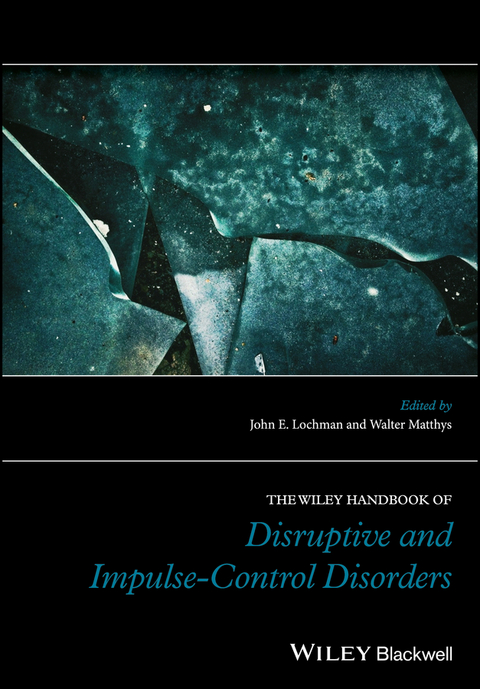
The Wiley Handbook of Disruptive and Impulse-Control Disorders (eBook)
John Wiley & Sons (Verlag)
978-1-119-09222-3 (ISBN)
The definitive reference to the policies and practices for treating disruptive and impulse-control disorders, edited by renowned experts
The Wiley Handbook of Disruptive and Impulse-Control Disorders offers a comprehensive overview that integrates the most recent and important scholarship and research on disruptive and impulse-control disorders in children and adolescents. Each of the chapters includes a summary of the most relevant research and knowledge on the topic and identifies the implications of the findings along with important next directions for research. Designed to be practical in application, the text explores the applied real-world value of the accumulated research findings, and the authors include policy implications and recommendations.
The Handbook address the nature and definition of the disorders, the risk factors associated with the development and maintenance of this cluster of disorders, assessment processes, as well as the evidence-based treatment and prevention practices. The volume incorporates information from the ICD-11, a newly revised classification system, along with the recently published DSM-5. This important resource:
- Contains a definitive survey that integrates the most recent and important research and scholarship on disruptive and impulse-control disorders in children and adolescents
- Emphasizes the applied real-world value of the accumulated research findings
- Explores the policy implications and recommendations to encourage evidence-based practice
- Examines the nature and definition, risk factors, assessment, and evidence-based practice; risk factors are subdivided into child, family, peer group and broader context
- Considers changes, advances and controversies associated with new and revised diagnostic categories
Written for clinicians and professionals in the field, The Wiley Handbook of Disruptive and Impulse-Control Disorders offers an up-to-date review of the most authoritative scholarship and research on disruptive and impulse-control disorders in children and adolescents as well as offering recommendations for practice.
The definitive reference to the policies and practices for treating disruptive and impulse-control disorders, edited by renowned experts The Wiley Handbook of Disruptive and Impulse-Control Disorders offers a comprehensive overview that integrates the most recent and important scholarship and research on disruptive and impulse-control disorders in children and adolescents. Each of the chapters includes a summary of the most relevant research and knowledge on the topic and identifies the implications of the findings along with important next directions for research. Designed to be practical in application, the text explores the applied real-world value of the accumulated research findings, and the authors include policy implications and recommendations. The Handbook address the nature and definition of the disorders, the risk factors associated with the development and maintenance of this cluster of disorders, assessment processes, as well as the evidence-based treatment and prevention practices. The volume incorporates information from the ICD-11, a newly revised classification system, along with the recently published DSM-5. This important resource: Contains a definitive survey that integrates the most recent and important research and scholarship on disruptive and impulse-control disorders in children and adolescents Emphasizes the applied real-world value of the accumulated research findings Explores the policy implications and recommendations to encourage evidence-based practice Examines the nature and definition, risk factors, assessment, and evidence-based practice; risk factors are subdivided into child, family, peer group and broader context Considers changes, advances and controversies associated with new and revised diagnostic categories Written for clinicians and professionals in the field, The Wiley Handbook of Disruptive and Impulse-Control Disorders offers an up-to-date review of the most authoritative scholarship and research on disruptive and impulse-control disorders in children and adolescents as well as offering recommendations for practice.
John E. Lochman is Professor and Doddridge Saxon Chairholder in Clinical Psychology at the University of Alabama, where he also directs the Center for Prevention of Youth Behavior Programs. He is an Adjunct Professor in the Department of Psychiatry and Behavior Sciences at the Duke University Medical Center. His research centers on risk factors, social cognition, and intervention and prevention in children with aggressive behavioral problems. Walter Matthys is Emeritus Professor of Aggression in Children in the Department of Child and Adolescent Studies, Utrecht University, The Netherlands. His clinical work as a child and adolescent psychiatrist was based at the University Medical Centre, Utrecht. His research focuses on neurocognitive and social cognitive functions of children with oppositional defiant disorder and conduct disorder, and on interventions to prevent and treat these disorders.
Notes on Contributors
Mary Acri, PhD, currently holds the titles of Senior Research Scientist at the McSilver Institute for Policy, Poverty, and Research; Research Assistant Professor at New York University School of Medicine's Department of Child and Adolescent Psychiatry; and Adjunct Faculty at The Silver School of Social Work at New York University. She has published over 50 peer‐reviewed journal articles on mental health, peer‐delivered interventions, animal‐assisted therapies, and developing and testing unique models of detection and outreach for families impacted by poverty.
Bo Bach, PhD, is a clinical psychologist and Senior Research Associate at the Psychiatric Research Unit, Slagelse Psychiatric Hospital, Denmark. He is co‐founder of the Center of Excellence on Personality Disorder within the aforementioned hospital. As clinician, he is particularly experienced with assessment and treatment of personality disorders. His research interests are on the utility of diagnostic models of personality disorders, and on how pathological personality dimensions may inform treatment decisions as well as predict treatment benefit and outcome.
Courtney N. Baker, PhD, is an Assistant Professor in the Department of Psychology at Tulane University. Dr. Baker's research program aims to eliminate disparities in health and academic achievement by improving the delivery of high‐quality evidence‐based prevention and intervention programming. Her research focuses on low‐income community settings serving children and their families. In line with best practices when working with underserved communities, Dr. Baker utilizes a community‐based participatory research approach.
Edward D. Barker, PhD, is Associate Professor in the Department of Psychology at the Institute of Psychiatry, Psychology, and Neuroscience, King's College London, where he also directs the Developmental Psychology Lab. His research interests are in examining how stressful environments exacerbate underlying biological vulnerabilities to affect children's development. He is particularly interested in the impact of psychopathology in caregivers (and associated risks) on children's externalizing disorders, and the relative role of prenatal and postnatal risk exposures.
Tammy D. Barry, PhD, is an Associate Professor in the Department of Psychology at Washington State University and the Director of Clinical Training for the clinical psychology doctoral program. She has taught doctoral students at four other institutions. She currently serves on the Board of Directors of the Council of University Directors of Clinical Psychology. Her research focuses on biologically based and contextual correlates of child externalizing behaviors, including ADHD, aggression, and disruptive behaviors associated with autism.
Megan K. Bookhout, MA, is a fifth‐year doctoral student in the Clinical Science Program in the Department of Psychological and Brain Sciences at the University of Delaware. Her research interests focus on the peer relations of children with obesity, particularly in the effects of weight‐related victimization on children's psychosocial outcomes.
Caroline L. Boxmeyer, PhD, is an associate professor in the Department of Psychiatry and Behavioral Medicine at The University of Alabama. She is also a Research Scientist in UA's Center for Prevention of Youth Behavior Problems. Dr. Boxmeyer's federally funded program of research focuses on developing, testing, and disseminating preventive interventions that support children's social and emotional development and family well‐being. She is a master trainer in the Coping Power program and has codeveloped several related interventions.
Patricia A. Brennan, PhD, is a Clinical Psychology Professor at Emory University. She obtained her doctorate from the University of Southern California, and for over two decades has studied the social and biological factors that contribute to aggression. As a Fellow at the Center for Advanced Studies in the Behavioral Sciences at Stanford, she coauthored a book on the prevention of aggression in youth. Her current work incorporates biological variables in treatment outcomes studies of delinquency.
Laura J. Bry, BA, is a doctoral student in the Clinical Science of Child and Adolescent Psychology program at Florida International University. She is a member of the Mental Health Interventions and Technology (MINT) program, where her research focuses broadly on improving access to care for children and families through novel intervention methods and models of care.
Jeffrey D. Burke, PhD, is an Associate Professor in the Department of Psychological Sciences at the University of Connecticut. His research focuses on describing the development of disruptive behavior problems and on improving the characterization of chronic irritability and its outcomes. His work also involves the evaluation of treatments and barriers to treatment engagement for irritability and antisocial behavior.
Lucía E. Cárdenas, BA, is a doctoral student in the Counseling Psychology program at the University of Oregon. Through a NIDA diversity supplement, she currently participates as a doctoral student investigator on a project evaluating the efficacy of a family‐centered web program focused on the prevention of substance use in at‐risk students (PI: Elizabeth Stormshak, PhD). Her research interests are on the implementation of school‐based mental health services and the influence of parenting on emerging adulthood.
Charlotte A. M. Cecil, PhD, is an ESRC FRL Fellow in Developmental Psychopathology at the Institute of Psychology, Psychiatry, and Neuroscience, King's College London. Her work focuses on the impact of early adversity on children's emotions, behavior, and mental health. In particular, her aim is to identify how stressful experiences become biologically embedded, influencing children's development and long‐term health, so as to improve current strategies for prevention and intervention.
Anil Chacko, PhD, is an Associate Professor in Applied Psychology in the Steinhardt School of Culture, Education, and Human Development at New York University. His clinical and research interests are in treatment engagement and the development, evaluation, and dissemination of psychosocial interventions for the prevention and treatment of child behavioral difficulties, primarily ADHD, oppositional and conduct problems in youth.
Emil F. Coccaro, MD, is the Ellen C. Manning Professor of Psychiatry and Behavioral Neuroscience at the Pritzker School of Medicine of the University of Chicago. His work involves neurobiologic and treatment studies of impulsive aggressive behavior in humans, work that led to the DSM‐5 Criteria for Intermittent Explosive Disorder (IED).
Jonathan S. Comer, PhD, is Professor of Psychology at Florida International University, where he serves as Director of the Mental Health Interventions and Technology (MINT) Program. His research is focused on expanding the scope and accessibility of mental healthcare for youth with anxiety, traumatic stress, and/or disruptive behavior problems. Dr Comer is Associate Editor of Behavior Therapy, and has received several early career awards, including from the American Psychological Association and the Association for Behavioral and Cognitive Therapies.
Danielle Cornacchio, MS, is a fourth‐year PhD student in the clinical science program in child and adolescent psychology at Florida International University. Her research interests are related to examining innovative treatment formats for difficult‐to‐treat child populations.
Brian P. Daly, PhD, is Associate Professor and Director of Clinical Training at Drexel University, where he also directs the Pediatric, Child, and Adolescent Psychology lab. He is a Consulting Editor for Professional Psychology: Research and Practice and the Journal of Psychotherapy Integration, and has been President of the Philadelphia Behavior Therapy Association. His areas of interest in research include prevention and resiliency in urban youth, school mental health promotion, and evidence‐based psychosocial interventions for youth.
David DeMatteo, JD, PhD, ABPP (Forensic), is an Associate Professor of Psychology and Law at Drexel University, and Director of Drexel's JD/PhD Program in Law and Psychology. His interests include psychopathy, forensic assessment, and offender diversion. He is a Fellow of the American Psychological Association, a Fellow of the American Academy of Forensic Psychology, board‐certified in forensic psychology by the American Board of Professional Psychology, and currently President of the American Psychology–Law Society (APA Div. 41).
Olivia J. Derella, BA, is a doctoral student in clinical psychology at the University of Connecticut, specializing in child clinical psychology under the mentorship of Dr Jeffrey D. Burke. Her research interests include transactional models of maladaptive parent–child relations and cognitive‐behavioral treatment of childhood irritability and emotional dysregulation.
Elisa DeVargas is currently a fifth‐year counseling psychology doctoral student at the University of Oregon. She will begin her predoctoral internship at the University of New Mexico Health Sciences Center in July 2017. Elisa's dissertation aims to investigate the treatment fidelity of the Family...
| Erscheint lt. Verlag | 21.8.2017 |
|---|---|
| Reihe/Serie | Wiley Clinical Psychology Handbooks |
| Wiley Clinical Psychology Handbooks | Wiley Clinical Psychology Handbooks |
| Sprache | englisch |
| Themenwelt | Geisteswissenschaften ► Psychologie ► Klinische Psychologie |
| Medizin / Pharmazie ► Medizinische Fachgebiete ► Pädiatrie | |
| Schlagworte | Assessing, Intermittent Explosive Disorder and the Impulse Control Disorders • Clinical psychology • Comorbidity with ADHD • Comorbidity with Internalizing Disorders • Comorbidity with substance abuse • Conduct Disorder and Callous-Unemotional Traits • Disruptive and Impulse-Control Disorders and Attachment • Disruptive and Impulse-Control Disorders and cognitive functions • Disruptive and Impulse-Control Disorders and genetics • Disruptive and Impulse-Control Disorders and prenatal risk factors • Disruptive and Impulse-Control Disorders and temperament • Disruptive and Impulse-Control Disorders child level factors • Disruptive and Impulse-Control Disorders Emotional regulation • disruptive mood dysregulation disorder • Educational & School Psychology • Erziehungs- u. Schulpsychologie • Expansive Verhaltensstörung • Impulskontrollstörung • John E. Lochman • Klinische Psychologie • <p>Oppositional Defiant Disorders • Medical Science • Medizin • Psychiatrie • Psychiatry • Psychologie • Psychology • Related Personality Disorders and Psychopathy • The Wiley Handbook of Disruptive and Impulse-Control Disorders • Walter Matthys</p> |
| ISBN-10 | 1-119-09222-1 / 1119092221 |
| ISBN-13 | 978-1-119-09222-3 / 9781119092223 |
| Informationen gemäß Produktsicherheitsverordnung (GPSR) | |
| Haben Sie eine Frage zum Produkt? |
 EPUB (Adobe DRM)
Kopierschutz: Adobe-DRM
Adobe-DRM ist ein Kopierschutz, der das eBook vor Mißbrauch schützen soll. Dabei wird das eBook bereits beim Download auf Ihre persönliche Adobe-ID autorisiert. Lesen können Sie das eBook dann nur auf den Geräten, welche ebenfalls auf Ihre Adobe-ID registriert sind.
Details zum Adobe-DRM
Dateiformat: EPUB (Electronic Publication)
EPUB ist ein offener Standard für eBooks und eignet sich besonders zur Darstellung von Belletristik und Sachbüchern. Der Fließtext wird dynamisch an die Display- und Schriftgröße angepasst. Auch für mobile Lesegeräte ist EPUB daher gut geeignet.
Systemvoraussetzungen:
PC/Mac: Mit einem PC oder Mac können Sie dieses eBook lesen. Sie benötigen eine
eReader: Dieses eBook kann mit (fast) allen eBook-Readern gelesen werden. Mit dem amazon-Kindle ist es aber nicht kompatibel.
Smartphone/Tablet: Egal ob Apple oder Android, dieses eBook können Sie lesen. Sie benötigen eine
Geräteliste und zusätzliche Hinweise
Buying eBooks from abroad
For tax law reasons we can sell eBooks just within Germany and Switzerland. Regrettably we cannot fulfill eBook-orders from other countries.
aus dem Bereich