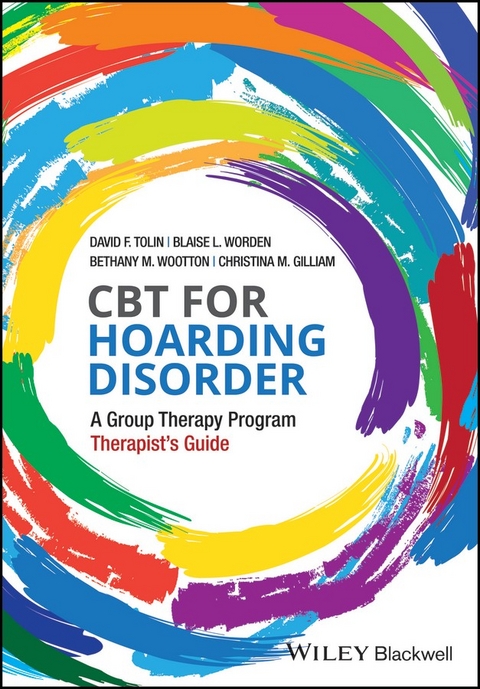
CBT for Hoarding Disorder (eBook)
John Wiley & Sons (Verlag)
978-1-119-15925-4 (ISBN)
David F. Tolin is Founder and Director of the Anxiety Disorders Center at the Institute of Living, USA, and an Adjunct Professor of Psychiatry at Yale University School of Medicine. He was the 2014 President of the Clinical Psychology division of the American Psychological Association, and is a recipient of the Award for Lifetime Contribution to Psychology from the Connecticut Psychological Association. An internationally recognized expert in the study and treatment of hoarding disorder, Dr. Tolin is the author of over 150 scientific journal articles and several books. He was a featured expert on the A&E series Hoarders, hosted the VH-1 series The OCD Project, and has been a recurrent guest on programs such as The Dr. Oz Show and The Oprah Winfrey Show.
Blaise L. Worden is a clinical psychologist at the Anxiety Disorders Center at the Institute of Living, USA, where she runs and directs cognitive-behavioral treatment groups for hoarding disorder. She has co-authored book chapters on the phenomenology of both hoarding and obsessive-compulsive disorder, and provides educational talks to community organizations about HD treatment.
Bethany M. Wootton is a clinical psychologist and Senior Lecturer in Clinical Psychology at the University of New England, Australia. She has an interest in the treatment of anxiety and related disorders. Her research focuses on the development and evaluation of remote treatments in order to improve access to evidence-based treatments for these conditions.
Christina M. Gilliam is a clinical psychologist and Director of Educational Programs at the Anxiety Disorders Center at the Institute of Living, USA. She is an expert in providing and training others in cognitive behavioral therapy for anxiety disorders, obsessive compulsive and related disorders, and she has published journal articles and book chapters in these areas.
Part of a two-component product with a companion client workbook, CBT for Hoarding Disorder: Therapist's Guide guides group leaders through a comprehensive CBT group program for patients struggling with hoarding disorder. Provides step-by-step, evidence-based guidance for treating hoarding disorder (HD) with a focus on proven methods for behavior change rather than complex cognitive interventions Contains the latest research on HD and emphasizes the cognitive, emotional, and motivational factors involved in discarding and decision-making Features an accessible, straightforward client workbook with coping cards that summarize key lessons, homework assignments, motivational tools, and practice exercises for decision-making and emotion regulation skills Easy to implement without home visits for professionals and group leaders of all educational backgrounds across a wide variety of treatment settings and disciplines
David F. Tolin is Founder and Director of the Anxiety Disorders Center at the Institute of Living, USA, and an Adjunct Professor of Psychiatry at Yale University School of Medicine. He was the 2014 President of the Clinical Psychology division of the American Psychological Association, and is a recipient of the Award for Lifetime Contribution to Psychology from the Connecticut Psychological Association. An internationally recognized expert in the study and treatment of hoarding disorder, Dr. Tolin is the author of over 150 scientific journal articles and several books. He was a featured expert on the A&E series Hoarders, hosted the VH-1 series The OCD Project, and has been a recurrent guest on programs such as The Dr. Oz Show and The Oprah Winfrey Show. Blaise L. Worden is a clinical psychologist at the Anxiety Disorders Center at the Institute of Living, USA, where she runs and directs cognitive-behavioral treatment groups for hoarding disorder. She has co-authored book chapters on the phenomenology of both hoarding and obsessive-compulsive disorder, and provides educational talks to community organizations about HD treatment. Bethany M. Wootton is a clinical psychologist and Senior Lecturer in Clinical Psychology at the University of New England, Australia. She has an interest in the treatment of anxiety and related disorders. Her research focuses on the development and evaluation of remote treatments in order to improve access to evidence-based treatments for these conditions. Christina M. Gilliam is a clinical psychologist and Director of Educational Programs at the Anxiety Disorders Center at the Institute of Living, USA. She is an expert in providing and training others in cognitive behavioral therapy for anxiety disorders, obsessive compulsive and related disorders, and she has published journal articles and book chapters in these areas.
Part I Introductory Information for Clinicians 1
What is Hoarding Disorder? 3
Diagnosing Hoarding Disorder 3
What Causes Hoarding Disorder? 7
How Do We Target These Factors in Treatment? 12
Implementing Group CBT for Hoarding Disorder 18
Does This Treatment Work? 18
What Does the Group Look Like? 20
Who Is This Group Designed For? 24
Use of the Manual 25
Troubleshooting Common Problems 26
Measuring Outcomes 31
Part II Treatment Manual 33
1 Welcome to the Class 35
1. Welcome to the Declutter Class 38
2. Class Rules and Guidelines 42
3. What is Hoarding Disorder? 46
4. What Will I Learn in This Class? 47
5. How Well Does the Declutter Class Work? 48
6. Homework 49
2 Why Do I Have So Much Stuff? 54
1. Homework Review 57
2. Rewards 58
3. Meet the "Bad Guys" 60
4. Setting Goals 66
5. Homework 68
3 Making Decisions and Solving Problems: Part 1 71
1. Homework Review 73
2. Making Decisions and Solving Problems 74
3. Making Decisions and Minimizing Distractions 75
4. Making Decisions and Improving Organization 81
5. Putting Skills Together to Discard Better 84
6. Homework 85
4 Making Decisions and Solving Problems: Part 2 86
1. Homework Review 87
2. Making Decisions: Acquiring 88
3. Solving Problems 92
4. Discarding Practice 96
5. "Bad Guy" Re?]evaluation 96
6. Homework 97
5 Intense Emotions: Part 1 98
1. Homework Review 99
2. About Intense Emotions 100
3. Tackling Intense Emotions That Lead to Acquiring 104
4. Homework 106
6 Intense Emotions: Part 2 108
1. Homework Review 109
2. Tackling Intense Emotions That Get in the Way of Discarding 109
3. "Bad Guy" Re?]evaluation 114
4. Homework 115
7 Unhelpful Thinking: Part 1 118
1. Homework Review 119
2. How Thoughts Influence Emotions 119
3. Identifying Unhelpful Thoughts 121
4. Homework 124
8 Unhelpful Thinking: Part 2 126
1. Homework Review 127
2. Tackling Unhelpful Thoughts 128
3. "Bad Guy" Re?]evaluation 131
4. Homework 132
9 Waxing and Waning Motivation: Part 1 133
1. Homework Review 134
2. Improving Motivation 134
3. Acting on Your Top Goals and Values 136
4. Homework 139
10 Waxing and Waning Motivation: Part 2 142
1. Homework Review 143
2. Improving Motivation to Discard 144
3. Being Motivated By Your Values 145
4. Checking In on Long?]Term SMART Goals 146
5. "Bad Guy" Re?]evaluation 146
6. Homework 147
11 Putting It All Together: Part 1 148
1. Homework Review 149
2. Troubleshooting Common Barriers 150
3. Putting It All Together 151
4. Homework 153
12 Putting It All Together: Part 2 154
1. Homework Review 155
2. Troubleshooting Common Barriers 155
3. Putting It All Together 158
4. Homework 159
13 Putting It All Together: Part 3 160
1. Homework Review 161
2. Troubleshooting Common Barriers 162
3. Putting It All Together 163
4. Homework 164
14 Putting It All Together: Part 4 165
1. Homework Review 166
2. Troubleshooting Common Barriers 167
3. Putting It All Together 168
4. Homework 169
15 Staying Clutter Free in the Future: Part 1 170
1. Homework Review 171
2. Reviewing Progress 172
3. Practice Discarding 174
4. Homework 174
16 Staying Clutter Free in the Future: Part 2 176
1. Homework Review 177
2. Maintaining Motivation 177
3. Wrap?]Up and Questions 179
Appendix A: Clock Sign 180
Appendix B: "Bad Guy" Reminder Cards for Participants 181
References 183
Index 190
What is Hoarding Disorder?
Diagnosing Hoarding Disorder
Hoarding Disorder (HD) was first afforded diagnostic status in the Diagnostic and Statistical Manual of Mental Disorders, 5th Edition (DSM‐5; American Psychiatric Association, 2013). The DSM‐5 diagnostic criteria for HD include:
- Difficulty discarding or parting with possessions due to strong urges to save items and/or distress associated with discarding.
- Clutter that precludes activities for which living spaces were designed.
- Significant distress or impairment in functioning caused by the hoarding.
Prior to the publication of the DSM‐5, hoarding behaviors were informally considered to be a syndrome or subtype of obsessive‐compulsive disorder (OCD). However, as evidence mounted about the differences between hoarding and OCD (Pertusa et al., 2010), it became increasingly clear that hoarding represented a unique syndrome that had not been adequately categorized. Epidemiological research has suggested that the prevalence rate of HD is between 2 and 5% (Frost, Steketee, & Williams, 2000; Iervolino et al., 2009; Mueller, Mitchell, Crosby, Glaesmer, & de Zwaan, 2009; Samuels et al., 2008), making HD a very common condition.
Understanding the Symptoms of Hoarding Disorder
Difficulty discarding.
The hallmark symptom of HD is reluctance to discard personal possessions, including objects that non‐hoarding individuals might consider to be worthless or having little intrinsic value. Although the reasons for saving objects tend to be similar to those described by non‐hoarding individuals (Frost & Gross, 1993), for individuals with HD these beliefs are more intense and rigid, and applied to a greater number of possessions. Attempts to discard usually cause substantial emotional distress, and therefore are frequently avoided.
Excessive clutter.
Excessive clutter is the most visible feature of compulsive hoarding. Unlike normatively “messy” or disorganized individuals, those with HD commonly describe significant difficulty using the living spaces of their homes due to clutter. For example, individuals with HD often have clutter that may cover beds, chairs, or tables, rendering them unusable. In severe cases, the clutter prohibits movement through the house or access to certain parts of the home.
Excessive acquiring.
Although acquiring is not a DSM‐5 diagnostic criterion for HD, research suggests that most individuals with HD do engage in excessive acquiring (Frost, Tolin, Steketee, Fitch, & Selbo‐Bruns, 2009). Excessive acquisition can include compulsive buying, collection of free items, inheritance of items, and rarely, stealing. Many report spending many hours each week searching for and acquiring objects (e.g., excessive shopping, rummaging through trash bins). Individuals with HD therefore may also present with distress related to overspending or debt as a result of compulsive shopping behaviors.
Understanding Hoarding‐Related Impairment
Health risks.
Clutter can lead to substantial personal impairment or injury, and has the potential for fatal consequences. Clutter’s interference with basic home functions such as cooking, cleaning, moving through the house, and even sleeping can make hoarding dangerous, increasing the likelihood of fire, falling, poor sanitation, and pest infestation (Steketee, Frost, & Kim, 2001).
Clutter poses a major fire risk both to those who live in the home and to neighbors. A study analyzing residential fires over a 10‐year period indicated that hoarding accounted for 24% of all preventable fire fatalities (Harris, 2010). Blocked egress, such as doors and windows, may prevent individuals from escaping home fires, and can prevent emergency personnel from entering the home when needed.
Elderly individuals in particular may be injured by falling objects or even trapped by collapse of clutter or other structural elements of the home. Health risks to children who live in the home may include the presence of mold, contributing to respiratory difficulties such as asthma. Children or elderly may become ill from keeping and ingesting expired food. Plumbing or heating may be inoperable; or other repairs may be needed but avoided due to concern about others entering the home.
Due to the potential for harm, clutter may lead to protective removal of children or elderly from the home (Tolin, Frost, Steketee, Gray, & Fitch, 2008). Involvement of government agencies, such as child or elderly protective services, fire marshals, police, or public health departments, is not uncommon. Clutter may also lead to threats of eviction by housing authorities.
Psychological impact.
Individuals with HD are likely to be particularly susceptible to isolation. Embarrassed by their clutter or avoidant of criticism, many individuals with HD avoid inviting friends, family, or repair workers to their homes, contributing to social isolation (Rasmussen, Steketee, Tolin, Frost, & Brown, 2014).
HD may also increase rates of intrafamilial conflict and rejection of the hoarding individual. Family members may be upset by excessive time spent on acquiring or in response to financial debt related to compulsive buying. Family members may become frustrated with the patient’s reluctance or inability to change. In one large survey (Tolin, Frost, Steketee, & Fitch, 2008) of family members of hoarding individuals, scores on a measure of rejection of hoarding individuals were higher than family rejection scores for clients with schizophrenia, especially if the hoarding individual was perceived as having little insight into their problem.
Many individuals with HD describe impaired work and role functioning. Individuals who self‐identified as having HD reported missing more work due to psychiatric reasons than individuals with depression, anxiety disorders, or substance use (Tolin, Frost, Steketee, Gray, et al., 2008).
Hoarding may also have a negative psychological impact on children who are raised in the hoarding environment. In the Tolin, Frost, Steketee, and Fitch (2008) survey, children who identified as having grown up in the home of a parent with HD described lower satisfaction with their childhood than individuals who did not grow up in the cluttered home. Specifically, children raised in the hoarding home reported embarrassment of the home and avoidance of having peers in the home, along with increased conflict within the home.
Financial cost to society.
In addition to the health risks, HD also presents a high financial cost to society. Individuals with HD tend to be high utilizers of services, including medical, mental health, and social welfare services. In one study (Frost, Steketee, & Williams, 2000) approximately 64% of surveyed public health officials reported receiving at least one complaint of hoarding during a five‐year period. The majority (88%) of the cases concerned unsanitary conditions. The City of San Francisco conservatively estimated that HD costs service providers and landlords in that city $6.4 million per year (San Francisco Task Force on Compulsive Hoarding, 2009). The Melbourne Fire Department study found that the average cost of firefighting hoarding‐related fires was eight times greater than that of hoarding‐unrelated fires (Harris, 2010).
Understanding Comorbidity in Hoarding
Management of hoarding cases tends to be complicated by a high presence of co‐occurring mental health and medical concerns. As many as 92% of individuals with HD meet criteria for co‐occurring psychiatric conditions (Frost, Steketee, & Tolin, 2011). As noted previously, the link between hoarding and OCD is not as strong as previously thought, although a significant minority (approximately 18%) of HD clients will also meet diagnostic criteria for OCD (Frost, Steketee, et al., 2011). Depression and anxiety are highly common among those with HD, with Major Depressive Disorder (53%), Social Anxiety Disorder (24%), and Generalized Anxiety Disorder (24%) among the most common co‐occurring diagnoses in treatment‐seeking HD clients (Frost, Steketee, et al., 2011).
Hoarding is also associated with relatively high rates of personality disorders and maladaptive personality traits. Although excessive saving of potentially low‐value items is a criteria for the diagnosis of Obsessive‐Compulsive Personality Disorder (OCPD), most HD clients do not meet criteria for OCPD when the hoarding criterion is removed (Frost, Steketee, et al., 2011). However, Dependent, Avoidant, Paranoid, and Schizotypal Personality Disorders appear fairly common in hoarding samples (Frost, Steketee, Williams, & Warren, 2000; Samuels et al., 2008).
Research increasingly suggests a link between hoarding and Attention‐Deficit/Hyperactivity Disorder (ADHD), or a similar symptom profile. Hoarding clients often report significant problems with attention and executive function that resemble those seen in people with ADHD. Individuals with hoarding symptoms commonly obtain high scores on self‐report ADHD measures, and in one study, 20% of HD clients, compared to 4% of OCD clients and 3% of community controls, met full DSM‐IV‐TR diagnostic criteria for ADHD (Frost, Steketee, et al., 2011). These data comport with those of a study of OCD clients, in which those with hoarding symptoms...
| Erscheint lt. Verlag | 10.7.2017 |
|---|---|
| Sprache | englisch |
| Themenwelt | Geisteswissenschaften ► Psychologie ► Klinische Psychologie |
| Medizin / Pharmazie ► Gesundheitsfachberufe | |
| Medizin / Pharmazie ► Medizinische Fachgebiete ► Psychiatrie / Psychotherapie | |
| Schlagworte | Behavior change • Clinical psychology • Cognitive behavioral therapy (CBT) • Decision Making • Discarding • Emotion Regulation • Gesundheits- u. Sozialwesen • group treatment</p> • Health & Social Care • Hoarders • hoarding behavior • Klinische Psychologie • Kognitive Verhaltenstherapie • <p>cognitive behavioral therapy • Medical Science • Medizin • Messie-Syndrom • motivational problems • OCD • professional organizer • Psychiatrie • Psychiatry • Psychologie • Psychology • sammelzwang |
| ISBN-10 | 1-119-15925-3 / 1119159253 |
| ISBN-13 | 978-1-119-15925-4 / 9781119159254 |
| Informationen gemäß Produktsicherheitsverordnung (GPSR) | |
| Haben Sie eine Frage zum Produkt? |
 EPUB (Adobe DRM)
Kopierschutz: Adobe-DRM
Adobe-DRM ist ein Kopierschutz, der das eBook vor Mißbrauch schützen soll. Dabei wird das eBook bereits beim Download auf Ihre persönliche Adobe-ID autorisiert. Lesen können Sie das eBook dann nur auf den Geräten, welche ebenfalls auf Ihre Adobe-ID registriert sind.
Details zum Adobe-DRM
Dateiformat: EPUB (Electronic Publication)
EPUB ist ein offener Standard für eBooks und eignet sich besonders zur Darstellung von Belletristik und Sachbüchern. Der Fließtext wird dynamisch an die Display- und Schriftgröße angepasst. Auch für mobile Lesegeräte ist EPUB daher gut geeignet.
Systemvoraussetzungen:
PC/Mac: Mit einem PC oder Mac können Sie dieses eBook lesen. Sie benötigen eine
eReader: Dieses eBook kann mit (fast) allen eBook-Readern gelesen werden. Mit dem amazon-Kindle ist es aber nicht kompatibel.
Smartphone/Tablet: Egal ob Apple oder Android, dieses eBook können Sie lesen. Sie benötigen eine
Geräteliste und zusätzliche Hinweise
Buying eBooks from abroad
For tax law reasons we can sell eBooks just within Germany and Switzerland. Regrettably we cannot fulfill eBook-orders from other countries.
aus dem Bereich