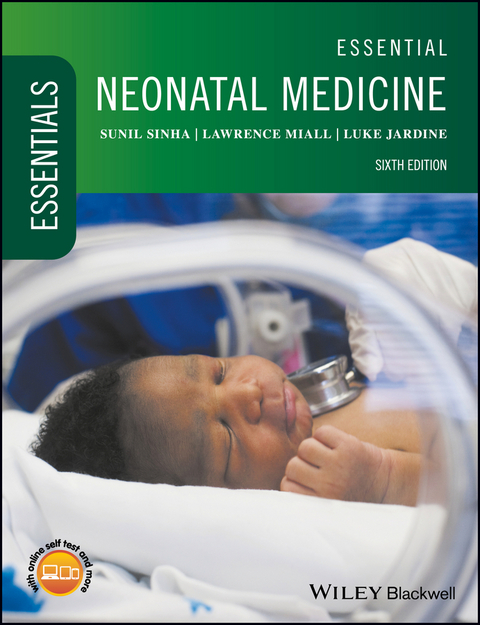
Essential Neonatal Medicine (eBook)
John Wiley & Sons (Verlag)
978-1-119-23577-4 (ISBN)
Providing a comprehensive yet concise guide for trainee doctors, neonatal nurses and midwives, Essential Neonatal Medicine continues to be an indispensable resource that combines the depth and breadth of a textbook with the efficiency of a revision guide.
Extensively updated and full-colour throughout, this edition includes new chapters on neonatal transport and palliative care, as well as further content on pathophysiology and embryology, quality improvement and risk management, infection control, and non-invasive ventilation.
With an improved artwork programme and a new glossary of terms, Essential Neonatal Medicine is ideal for all trainee health professionals new to neonatology, or looking for a comprehensive aid to support them.
Sunil Sinha
Professor of Paediatrics
University of Durham
Consultant Neonatologist
James Cook University Hospital
Middlesbrough, UK
Lawrence Miall
Consultant Neonatologist
Quality Lead, Leeds Children's Hospital
Leeds General Infirmary
Leeds Teaching Hospitals NHS Trust
Leeds, UK
Luke Jardine
Deputy Director Neonatology, Mater Mothers' Hospital
Senior Staff Specialist Neonatology, Mater Mothers' Hospital
Honorary Researcher, Mater Research
Associate Professor, The University of Queensland
Australia
Providing a comprehensive yet concise guide for trainee doctors, neonatal nurses and midwives, Essential Neonatal Medicine continues to be an indispensable resource that combines the depth and breadth of a textbook with the efficiency of a revision guide. Extensively updated and full-colour throughout, this edition includes new chapters on neonatal transport and palliative care, as well as further content on pathophysiology and embryology, quality improvement and risk management, infection control, and non-invasive ventilation. With an improved artwork programme and a new glossary of terms, Essential Neonatal Medicine is ideal for all trainee health professionals new to neonatology, or looking for a comprehensive aid to support them.
Sunil Sinha Professor of Paediatrics University of Durham Consultant Neonatologist James Cook University Hospital Middlesbrough, UK Lawrence Miall Consultant Neonatologist Quality Lead, Leeds Children's Hospital Leeds General Infirmary Leeds Teaching Hospitals NHS Trust Leeds, UK Luke Jardine Deputy Director Neonatology, Mater Mothers' Hospital Senior Staff Specialist Neonatology, Mater Mothers' Hospital Honorary Researcher, Mater Research Associate Professor, The University of Queensland Australia
Essential Neonatal Medicine 3
Contents 7
Preface to the Sixth Edition 9
Acknowledgements 9
Preface to the First Edition 10
Abbreviations 11
How to use your textbook 13
About the companion website 14
CHAPTER 1 The fetus, placenta and changes at birth 15
Introduction 16
Placental function 16
Transport 16
Immunity 16
Metabolism 16
Fetal homeostasis 17
Fetal circulation 17
Umbilical vessels 18
Assessment of fetal well-being 18
Assessment of maturity 18
Assessment of fetal growth and well-being 18
Screening during pregnancy 20
Maternal blood screening 20
Fetal imaging 20
Down’s syndrome screening 21
Amniocentesis 22
Chorionic villus sampling 22
Fetal blood sampling (cordocentesis) 22
Fetal monitoring during labour 22
Intrapartum monitoring 22
Fetal scalp pH 22
Fetal electrocardiogram (ECG) 22
Fetal compromise 25
Physiological changes at birth 26
Acknowledgements 27
Further reading 27
CHAPTER 2 Perinatal epidemiology and audit 28
Introduction 29
Definitions of terms commonly used in perinatal medicine 29
The role of perinatal and neonatal audit 29
Classification of perinatal deaths 30
The role of autopsy 30
Factors affecting perinatal death rates 30
Prevention of perinatal mortality and low birthweight 31
Changing trends 31
Further reading 32
CHAPTER 3 Multiple births 33
Introduction 34
Physiology of fertilization, implantation and placenta formation 34
Fertilization 34
Implantation 34
Placenta 34
Classification of multiple pregnancy 34
Assisted reproductive technology 34
Incidence of multiple pregnancies 35
Parental counselling 35
Complications of multiple pregnancy 35
Discordant growth rates 35
Disappearing twin phenomenon 35
Conjoined twins 36
Prematurity 36
Malpresentation 36
Congenital malformations 36
Postural deformities 36
Twin-to-twin transfusion (TTTS) 36
Twin anaemia polycythaemia sequence (TAPS) 37
Cord entanglement 37
Infection 37
Hypoxic ischaemic encephalopathy 37
Respiratory distress syndrome 37
Neurodevelopmental outcomes 37
Further reading 38
CHAPTER 4 Neonatal consequences of maternal conditions 39
Introduction 40
Congenital anomalies: malformations and deformations 40
Deformations 40
Malformations 40
Causes of congenital malformations 41
Congenital anomalies associated with teratogens 41
Congenital malformation secondary to maternal infections 42
Consequences of maternal substance misuse 43
Fetal alcohol spectrum disorder 43
Smoking in pregnancy 43
Infants of substance-misusing mothers 43
Management of neonatal abstinence syndrome 44
Prognosis 44
Neonatal manifestations of maternal medical diseases 44
Diabetes mellitus 45
Maternal hyperthyroidism (Graves, disease) 45
Maternal idiopathic thrombocytopenia 45
Maternal systemic lupus erythematosus 45
Transient neonatal myaesthenia 45
Maternal epilepsy 45
Further reading 46
CHAPTER 5 Resuscitation at birth 47
Introduction 48
Fetal responses during labour 48
Fetal and neonatal responses to perinatal asphyxia 48
Respiratory activity 48
Cardiovascular activity 48
Perinatal asphyxia 49
Defining perinatal asphyxia 49
Clinical evidence of asphyxia 50
Medico-legal evidence of significant asphyxia 51
Causes of perinatal asphyxia 51
Prevention of perinatal asphyxia 51
Assessment of the infant at birth 53
Stabilization at birth 53
Resuscitation 53
Preparation 53
Initial assessment and delayed cord clamping 54
Establishing an open airway 54
Resuscitation of the infant with moderate depression 54
Ventilation 54
Intubation and positive-pressure ventilation 56
External cardiac massage 57
Drugs in resuscitation 57
Postnatal collapse 57
When to stop resuscitation 58
Post-resuscitation care of the asphyxiated infant 59
Early sequelae 59
Late sequelae 59
Further reading 59
CHAPTER 6 Examination of the newborn 60
Introduction 61
The newborn examination as a screening test 61
Who should perform the newborn examination? 61
Approach to the newborn examination 61
Growth measurement 61
General appearance 61
Colour 61
Posture 62
Skin appearance 62
Head and neck 62
Face 62
Cry 63
Skull shape 63
Eyes (see also Chapter 23) 63
Ears 64
Nose 64
Mouth 64
Neck 65
Chest 65
Respiratory 65
Shape and size 66
Cardiovascular 66
Pulses 66
Apex beat 66
Auscultation 66
Saturation screening 66
Abdomen 67
Liver 67
Spleen 67
Kidney 67
Anus 67
Umbilicus 67
Stump 67
Genitalia 67
Back 68
Spine 68
Scoliosis 68
Sacrum 68
Extremities 68
Posture 69
Movements 69
Assessment of tone 69
Primitive reflexes 69
Upper limbs 69
Lower limbs 70
Congenital abnormalities of the hips and limbs 70
Developmental dysplasia of the hip 70
Limb malformations 72
Arthrogryposis multiplex 72
Neonatal dwarfism 72
Skeletal dysplasia 72
Skin disorders 73
Vascular birthmarks 73
Epidermal naevi 74
Hyperpigmented and hypopigmented birthmarks 74
Ichthyotic disorders 74
Blistering and bullous disorders 75
Miscellaneous 76
Communication with parents 77
Further reading 78
CHAPTER 7 Birth injury 79
Introduction 80
Risk factors for birth injury 80
Injuries to the scalp, skull and brain 80
Caput succedaneum 81
Chignon 81
Erythema, abrasions and lacerations 81
Cephalhaematoma 81
Subaponeurotic haemorrhage (subgaleal haemorrhage) 81
Skull fractures 82
Intracranial haemorrhages 82
Bone and joint injuries 82
Clavicle 82
Humerus 82
Femur 82
Multiple or unusual fractures 83
Dislocation of joints and separation of epiphyses 83
Peripheral nerve injuries 83
Facial nerve palsy 83
Obstetric brachial palsy 83
Radial nerve injury 84
Sciatic nerve injury 84
Phrenic nerve injury 84
Recurrent laryngeal nerve 84
Spinal cord injury 84
Soft-tissue injuries 84
Traumatic petechiae 84
Ecchymoses (bruising) 84
Subcutaneous fat necrosis 85
Sternomastoid tumour 85
Organ injuries 85
Liver and spleen 85
Adrenals 85
Kidneys 85
Testicles 85
Injuries sustained in the neonatal intensive care unit (NICU) 85
Further reading 86
CHAPTER 8 Genetic disorders 87
Introduction 88
Gene structure 88
Commonly used investigations 88
Chromosome analysis 88
Polymerase chain reaction 89
Fluorescence in-situ hybridization 89
Microarrays 89
Indications for investigations 89
Genetic variation 89
Structural changes 90
Changes in DNA sequence 90
Multifactorial inheritance 93
Epigenetics 94
Approach to the dysmorphic neonate 94
Prevention of congenital abnormalities 94
Further reading 95
CHAPTER 9 Infant feeding and nutrition 96
Introduction 97
Specific nutritional requirements 97
Fluids 97
Energy and macronutrients 98
Carbohydrate 98
Fat 98
Protein 98
Minerals 98
Trace elements 98
Iron 99
Vitamins 99
Breastfeeding 99
Physiology of lactation 99
Nutritional aspects 101
Variations in breast milk 101
Anti-infective properties of breast milk 101
Contraindications to breastfeeding 102
Excretion of drugs in breast milk 102
Techniques of breastfeeding 102
Problems with breastfeeding 102
Changing from breast milk to another milk 103
Advice to breastfeeding mothers 103
Iron and multivitamin supplementation 103
Breast milk banks 103
Breast milk and intelligence 103
Artificial feeding/formulas 104
Cows’ milk 104
Major nutrients in milk 104
Elemental or partially elemental formulas 105
Techniques of artificial feeding 105
Volumes 105
Interval between feeds 105
Sterilization 105
Preparation of feeds 106
Feeding the preterm infant 106
Growth 106
Feeding the very-low-birthweight infant 106
Expressed breast milk (EBM) 106
Breast or human milk fortifiers 106
Low-birthweight formulas 106
Trophic feeding 107
Practical management guidelines 107
Parenteral nutrition 107
Indications 107
Methods of delivery 107
Clinical management 108
Laboratory tests 108
Complications 108
Common feeding disorders 108
Vomiting 108
Management of the vomiting baby 109
Organic causes of vomiting 109
Infant colic 109
Constipation 110
Diarrhoea 110
Failure to thrive 110
Further reading 111
CHAPTER 10 Infection in the newborn 112
Introduction 113
The immune system 113
Non-specific immunity 113
Specific immunity 114
Susceptibility of the neonate to infection 114
Congenital infection 114
Cytomegalovirus (CMV) 116
Rubella 116
Toxoplasmosis 116
Syphilis 117
Hepatitis B 117
Hepatitis C 117
HIV 117
Parvovirus B19 118
Varicella 118
Zika virus 118
Intrapartum (early-onset) infection 118
Investigations 119
Management 119
Early-onset group B ?-haemolytic streptococci 119
Herpes simplex virus (HSV) 120
Others 121
Postnatal (late-onset) infection 121
Clinical features 121
Investigations 121
Management 121
Common acute acquired infections 122
Prevention of acquired infections 125
Extravasation injury 126
Adjunctive therapy 126
Further reading 127
CHAPTER 11 The extreme preterm infant 128
Introduction 129
Gestational age 129
Causes and management of preterm labour 129
Risk factors for preterm labour 129
Predicting preterm delivery 130
Clinical management of preterm labour 130
Mode of delivery in preterm labour 130
Survival and outcome for the preterm infant 130
Short-term survival and outcome 131
Long-term outcomes 131
Preterm delivery at the margins of viability 131
Stabilization at birth and management in the ‘golden hour’ 132
Common problems to be expected in the preterm infant 132
Supportive care on the NICU 132
Monitoring 132
Oxygen therapy 132
Respiratory distress syndrome (RDS) 135
Blood pressure 135
Intraventricular haemorrhage (IVH) 135
Periventricular leukomalacia (PVL) 135
Patent ductus arteriosus (PDA) 135
Thermoregulation 136
Feeding 136
Necrotizing enterocolitis (NEC) 136
Intravenous fluids 136
Jaundice 136
Vitamins 136
Anaemia 136
Preparation for discharge home 136
Further reading 137
CHAPTER 12 The low-birthweight infant 138
Introduction 139
The infant who is small for gestational age 139
Classification of small for gestational age infants 139
Causes of intrauterine growth restriction 140
Intrinsic fetal growth restriction 140
Extrinsic fetal growth restriction 140
Placental factors 140
Problems to be expected in the growth-restricted fetus and SGA infant 141
Problems manifesting in the neonatal period 142
Congenital malformations 142
Problems manifesting in infancy and childhood 142
Management of the low-birthweight infant 143
Perinatal management 143
Investigations for IUGR 143
Feeding 143
Supportive care 143
Further reading 144
CHAPTER 13 Respiratory physiology and respiratory support 145
Introduction 146
Fetal lung development 146
Pulmonary surfactants 146
Respiratory physiology 147
Oxygen transport 147
Carbon dioxide transport 147
Acid–base balance 147
Assessment of respiratory function 149
Clinical assessment 149
Blood gas measurements 149
Radiographic evaluation 149
Pulmonary function tests 149
Cardiac assessment 150
Respiratory failure 150
Treatment of respiratory failure 151
Blood oxygen monitoring 151
Continuous positive airway pressure (CPAP) 151
Other forms of non-invasive respiratory support 152
Non-invasive/nasal intermittent positive pressure ventilation (NIPPV) 152
Mechanical ventilation 152
Basic principles of mechanical ventilation 153
Classification of mechanical ventilators 153
Neurally Adjusted Ventilatory Assist (NAVA) 154
Alternative strategies for refractory respiratory failure 155
General management of ventilated infants 155
Troubleshooting 156
Analgesia and sedation 156
Complications of mechanical ventilation 156
Further reading 157
CHAPTER 14 Respiratory disorders 158
Introduction 159
Respiratory distress 159
Diagnosis 159
Treatment of respiratory distress 159
Transient tachypnoea of the newborn 160
Pathogenesis 160
Diagnosis 160
Treatment 160
Respiratory distress syndrome (RDS) 160
Incidence 161
Aetiology and pathogenesis 161
Clinical features 161
Radiology 162
Laboratory abnormalities 162
Treatment 162
Pneumonia 163
Aetiology 163
Clinical features 163
Radiology 163
Treatment 164
Pulmonary air leaks 164
Clinical features 165
Diagnosis 165
Management 165
Meconium aspiration syndrome 166
Clinical features 166
Pathogenesis and aetiology 166
Radiology 166
Prophylactic management 166
Treatment of established meconium aspiration syndrome 167
Pulmonary hypoplasia 168
Clinical features 168
Management and prognosis 168
Pulmonary haemorrhage 168
Pathogenesis 168
Risk factors 168
Treatment 168
Congenital diaphragmatic hernia 168
Diagnosis 169
Treatment 169
Prognosis 169
Oesophageal atresia and tracheo-oesophageal fistula 169
Clinical features 170
Treatment 170
Congenital lobar emphysema 170
Congenital pulmonary airway malformation (CPAM) [formerly known as congenital cystic adenomatous malformation CCAM]
Chronic lung disease and bronchopulmonary dysplasia (BPD) 171
Aetiology 171
Clinical features 171
Radiology 171
Management 171
Prognosis 172
Further reading 173
CHAPTER 15 Apnoea, bradycardia and upper airway obstruction 174
Introduction 175
Physiology 175
Apnoea 176
Types of apnoea 176
Aetiology of apnoea 176
Investigation of apnoea 176
Apnoea monitoring 177
Treatment of apnoea 177
Prognosis 178
Acute life-threatening events (ALTEs) 178
Sudden and unexpected infant death and sudden infant death syndrome 179
Upper airway obstruction 179
Clinical features 180
Laryngomalacia (infantile larynx) 180
Choanal atresia 180
Pharyngeal obstruction 180
Subglottic stenosis 180
Tracheal obstruction 181
Further reading 181
CHAPTER 16 Cardiovascular disorders 182
Introduction 183
Physiology of the cardiovascular system 183
Cardiac output 183
Stroke volume 183
Blood pressure 183
Normal range 183
Hypotension and organ perfusion 183
Management of hypotension 184
Inotropic agents 186
Hypertension 186
Congenital heart disease 186
Aetiology 186
Mode of presentation 186
Investigations 188
Chest radiography 188
Electrocardiograph (ECG) 188
Nitrogen washout test 189
More-specialized investigations 189
Cyanotic heart disease 189
Transposition of the great arteries (TGA) 190
Tricuspid atresia 191
Pulmonary atresia or pulmonary stenosis 192
Tetralogy of Fallot 192
Ebstein’s anomaly 192
Total anomalous pulmonary venous drainage (TAPVD) 193
Prostaglandin treatment in congenital heart disease 193
Congestive heart failure 193
Clinical features 193
Left-to-right shunts 193
Ventricular septal defect 193
Patent ductus arteriosus (PDA) 194
Obstructive lesions 195
Hypoplastic left heart 195
Coarctation of the aorta 195
Aortic stenosis 195
Management of congestive heart failure 196
Dysrrhythmias 196
Supraventricular tachycardia (SVT) 196
Congenital heart block 196
Ventricular tachycardia (VT) and ventricular fibrillation (VF) 196
Cardiomyopathy 196
Circulatory maladaptation at birth 197
Persistent pulmonary hypertension of the newborn (PPHN) 197
Further reading 199
CHAPTER 17 Gastrointestinal and abdominal disorders 200
Introduction 201
Development of the gastrointestinal tract 201
Functional development 201
Malformations 201
Cleft lip and palate 201
Intestinal obstruction 202
Malrotation 204
Pyloric stenosis 204
Duodenal obstruction 204
Jejunal and ileal atresia 205
Colonic atresia 205
Anorectal malformations 205
Hirschsprung’s disease (aganglionosis) 206
Meconium plug syndrome 206
Meconium ileus 206
Abdominal wall defects 207
Omphalocoele or exomphalos 207
Gastroschisis 207
Congenital ascites 208
Necrotizing enterocolitis 208
Pathogenesis 208
Clinical features 209
Investigations 209
Prevention 210
Treatment 211
Complications 211
Short bowel syndrome 212
Rectal bleeding 212
Investigations 212
Hernia 212
Inguinal Hernia 212
Umbilical hernia 213
Hydrocoele 213
Undescended testis 213
Hypospadias 213
Further reading 214
CHAPTER 18 Renal disorders 215
Introduction 216
Role of amniotic fluid 216
Renal physiology 216
Glomerular filtration rate 216
Tubular function 216
Sodium conservation 216
Hormonal function 217
Normal urine output 217
Investigation of renal disease 217
Ultrasound 217
MAG 3 renogram 217
DMSA scan 217
Micturating cystourethrogram 217
Presentation of renal disease 217
Potter’s syndrome 218
Renal pelvis dilatation 218
Obstructive uropathy 218
Acute kidney injury 219
Clinical features 219
Management 220
Urinary tract infection 220
Treatment 221
Renal masses 222
Cystic disease of the kidneys 222
Autosomal dominant polycystic kidney disease 222
Autosomal recessive polycystic kidney disease 222
Cystic dysplastic (multicystic) kidneys 222
Isolated renal cysts 222
Haematuria 222
Ectopia vesicae (bladder exstrophy) 223
Further reading 223
CHAPTER 19 Jaundice 224
Introduction 225
Physiology of bilirubin metabolism 225
Fetal 225
Newborn 225
Clinical assessment of the jaundiced infant 225
Management 226
Unconjugated hyperbilirubinaemia 228
Causes 228
Investigations 229
Management 229
Bilirubin encephalopathy and kernicterus 232
Conjugated hyperbilirubinaemia 233
Causes 233
Investigations 233
Further reading 234
CHAPTER 20 Haematological disorders 235
Introduction 236
Placental transfusion 236
Anaemia 236
Physiological anaemia 236
Haemorrhage 237
Haemolysis 237
Thalassaemia 240
Infantile pyknocytosis 240
Hydrops fetalis 240
Causes 240
Investigations 241
Treatment 241
Aplasia 241
Polycythaemia 241
Clinical features 242
Management 242
Bleeding and coagulation disorders 242
Clinical features 242
Investigations 242
Thrombocytopenia 243
Alloimmune thrombocytopenia 243
Maternal idiopathic thrombocytopenia 243
Haemorrhagic disease of the newborn (Vitamin K-deficient bleeding) 244
Clinical features 244
Investigations 244
Treatment 244
Vitamin K prophylaxis 244
Disseminated intravascular coagulation (DIC) 244
Investigations 244
Treatment 244
Inherited disorders of coagulation 245
Management 245
Congenital deficiency of anticoagulant proteins (hypercoagulable states) 245
Leukocytosis 245
Neonatal leukaemia 245
Neutropenia 245
Further reading 246
CHAPTER 21 Endocrine and metabolic disorders 247
Introduction 248
Glucose homeostasis and its abnormalities 248
Glucose metabolism 248
Measurement of blood glucose 248
Hypoglycaemia 248
Specific causes of hypoglycaemia 251
Congenital hyperinsulinism 252
Beckwith–Wiedemann syndrome 253
Iatrogenic hypoglycaemia 253
Hyperglycaemia 253
Transient neonatal diabetes mellitus 253
Disorders of calcium, phosphate and magnesium metabolism 253
Hypocalcaemia 253
Metabolic bone disease (rickets or osteopenia of prematurity) 254
Hypercalcaemia 255
Disorders of magnesium metabolism 255
Hypomagnesaemia 255
Hypermagnesaemia 255
Disorders of sodium and potassium metabolism 255
Sodium metabolism 255
Potassium metabolism 256
Endocrine gland disorders 257
Disorders of thyroid function 257
Abnormalities of the adrenal gland 258
Congenital adrenal hyperplasia 258
Adrenal hypoplasia 259
Ambiguous genitalia 259
Inborn errors of metabolism 259
Newborn screening 260
Diagnosis 261
Investigations 261
Management 262
Phenylketonuria (PKU) 262
Galactosaemia 262
Further reading 263
CHAPTER 22 The central nervous system 264
Introduction 265
Brain development 265
Neuronogenesis 265
Differentiation 265
Proliferation 265
Neuronal migration 265
Neuronal regression 265
Synapse development 265
Myelination 265
Malformations of the central nervous system 266
Neural tube disorders (NTDs) 266
Anencephaly 266
Encephalocoele 266
Spina bifida 266
Screening for neural tube defects (NTDs) 268
Disorders of ventral induction 268
Disorders of head size and shape 269
Microcephaly 269
Craniostenosis (craniosynostosis) 269
Macrocephaly (large head) 269
Hydrocephalus 270
Hydranencephaly 271
Porencephaly 271
Lissencephaly 272
Intracranial haemorrhage (ICH) 272
Subarachnoid haemorrhage (SAH) 272
Subdural haemorrhage 272
Intraventricular haemorrhage (IVH) 273
Intracerebral haemorrhage 274
Intracerebellar haemorrhage 274
Periventricular leukomalacia 274
Causes 274
Diagnosis 274
Neonatal stroke 274
Hypoxic–ischaemic encephalopathy 275
Clinical features 275
Management of encephalopathy 276
Cerebral neuroprotection 276
Therapeutic hypothermia 276
Prognosis 276
Neonatal convulsions 277
Seizure type 278
Aetiology 278
Treatment 280
Prognosis 281
Neonatal hypotonia (‘floppy infant’) 281
Clinical features 281
Causes 281
Investigations 282
Prognosis 282
Further reading 283
CHAPTER 23 Neurodevelopmental follow-up and assessment of hearing and vision 284
Introduction 285
Neurodevelopmental outcome 285
Cerebral palsy 285
Hearing impairment (deafness) 286
Screening for hearing in the neonatal period 286
Incidence 286
Aetiology 287
Management 288
Visual impairment 288
Retinopathy of prematurity (ROP) 288
Cerebral visual impairment 289
Cataracts 289
Glaucoma (buphthalmos) 290
Further reading 290
CHAPTER 24 Developmental care and the neonatal environment 291
Introduction 292
Thermoregulation 292
Normal physiology 292
Mechanisms of heat loss 292
Physiological mechanisms to conserve heat 292
Why is the newborn prone to heat loss? 292
Prevention of excessive heat loss 292
Neonatal cold injury 295
Skin care on the neonatal intensive care unit 296
Optimizing the neonatal environment 296
Procedural pain and analgesia 296
Developmental care 296
Kangaroo care 298
Positioning 299
Stimulation 299
Newborn Individualized Developmental Care and Assessment Program 299
Family Integrated Care 299
Further reading 300
CHAPTER 25 Organization of perinatal services 301
Introduction 302
Organization of perinatal services 302
Levels of perinatal care 302
Models of care 302
Neonatal networks 303
Further reading 304
CHAPTER 26 Neonatal transport 305
Introduction 306
Transport in utero 306
Preparation for transport 306
Important decisions to be made 307
Transport equipment 307
The role of a neonatal transport service 307
Care of parents 309
Relationships with referring hospital and staff 309
Special considerations 309
Further reading 310
CHAPTER 27 Discharge and follow-up of high-risk infants 311
Introduction 312
Discharge of high-risk infants 312
Rooming in 312
Feeding advice 312
Nutritional supplementation 312
Immunization 312
Special vaccine circumstances 314
Modification to immunization schedule for preterm infants 314
Specialized follow-up clinics 314
Purposes of multidisciplinary follow-up clinics 314
Follow-up of preterm infants 315
Problems encountered in follow-up 315
Further reading 319
CHAPTER 28 Parent–infant attachment and support for parents of critically ill infants 320
Introduction 321
Parent–infant attachment (bonding) 321
Steps in attachment 321
Attachment after birth 321
Factors that promote attachment 321
Risk factors for failure to produce attachment 322
Failure of bonding or attachment 322
Care of parents of critically ill infants 322
Antenatal contact 322
Labour ward 322
Intensive care nursery 323
Parents’ first visit to the intensive care nursery 323
Parents’ subsequent visits to the intensive care nursery 323
Family integrated care 323
Babies as individuals 323
How is my baby doing? 323
The social worker 324
Babies transferred from other hospitals 324
Preparation for discharge 324
Further reading 324
CHAPTER 29 Ethical issues and decision-making process in the treatment of critically ill newborn infants 325
Introduction 326
Principles of ethical reasoning 326
Beneficence (discontinuing futile treatment) 326
Non-malificence (burdensome treatment) 326
Autonomy 326
Equity or distributive justice 326
Decision-making processes 326
‘Wait until certainty’ approach 326
Statistical approach 326
Individualized approach (prognostic decision-making) 326
Antenatal diagnosis 326
The role of the Institutional Ethics Committee 327
Withholding and withdrawing life-sustaining treatment 327
Common neonatal ethical dilemmas 327
Whether to resuscitate at birth 327
‘How small is too small?’: when not to resuscitate on gestational age or birthweight criteria 327
Major congenital malformations 328
Withdrawal of life support 328
Selective withdrawal of neonatal intensive care 328
Parents in the decision-making process 328
Circumstances in which parents’ wishes might be overruled, or when parents are incapable of decision-making 328
Role of the case conference 329
Communication of withdrawal of life support 329
Care of parents 329
Further reading 329
CHAPTER 30 End-of-life care and palliative care 330
Introduction – why babies die 331
Unexpected deaths (including sudden unexpected postnatal collapse) 331
What is palliative care? 331
Expected deaths and care planning 331
Making a care plan 331
Place of death: hospice versus home versus hospital 333
Symptom control 333
Organ donation 333
Autopsy 333
Caring for parents – grief and bereavement 334
Caring for staff 334
Further reading 335
Index 337
EULA 352
| Erscheint lt. Verlag | 23.6.2017 |
|---|---|
| Reihe/Serie | Essentials |
| Essentials | Essentials |
| Sprache | englisch |
| Themenwelt | Medizin / Pharmazie ► Medizinische Fachgebiete ► Pädiatrie |
| Medizin / Pharmazie ► Pflege ► Kinderkrankenpflege | |
| Schlagworte | Birth • Embryology • fetal • Infant • Infection control • Krankenpflege • Maternity • Medical Science • Medizin • midwife • MRCPCH • neonatal medicine • neonatal nurse • Neonatal Nursing • neonatal transport • Neonatologie • Neonatology • newborn • non-invasive ventiliation • nursing • Pädiatrie • Paediatrics • Palliative Care • pathophysiology • Pediatrics • Säuglingspflege • trainee doctor |
| ISBN-10 | 1-119-23577-4 / 1119235774 |
| ISBN-13 | 978-1-119-23577-4 / 9781119235774 |
| Informationen gemäß Produktsicherheitsverordnung (GPSR) | |
| Haben Sie eine Frage zum Produkt? |
 PDF (Adobe DRM)
Kopierschutz: Adobe-DRM
Adobe-DRM ist ein Kopierschutz, der das eBook vor Mißbrauch schützen soll. Dabei wird das eBook bereits beim Download auf Ihre persönliche Adobe-ID autorisiert. Lesen können Sie das eBook dann nur auf den Geräten, welche ebenfalls auf Ihre Adobe-ID registriert sind.
Details zum Adobe-DRM
Dateiformat: PDF (Portable Document Format)
Mit einem festen Seitenlayout eignet sich die PDF besonders für Fachbücher mit Spalten, Tabellen und Abbildungen. Eine PDF kann auf fast allen Geräten angezeigt werden, ist aber für kleine Displays (Smartphone, eReader) nur eingeschränkt geeignet.
Systemvoraussetzungen:
PC/Mac: Mit einem PC oder Mac können Sie dieses eBook lesen. Sie benötigen eine
eReader: Dieses eBook kann mit (fast) allen eBook-Readern gelesen werden. Mit dem amazon-Kindle ist es aber nicht kompatibel.
Smartphone/Tablet: Egal ob Apple oder Android, dieses eBook können Sie lesen. Sie benötigen eine
Geräteliste und zusätzliche Hinweise
Buying eBooks from abroad
For tax law reasons we can sell eBooks just within Germany and Switzerland. Regrettably we cannot fulfill eBook-orders from other countries.
aus dem Bereich