Botulinum Toxins (eBook)
John Wiley & Sons (Verlag)
978-1-118-66186-4 (ISBN)
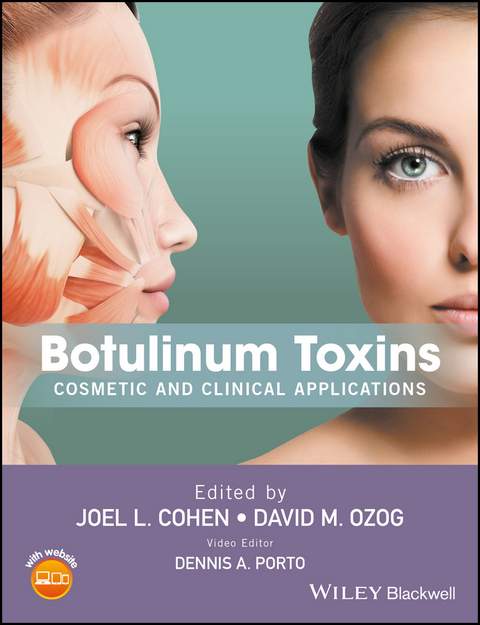
Botulinum Toxins: Cosmetic and Clinical Applications provides a comprehensive and in-depth review of the use of botulinum toxin for aesthetic procedures and medical applications as a stand-alone treatment and as part of combination therapy.
Now a mainstay of cosmetic dermatologic practice, the range of available toxins and their varied applications has grown considerably in recent years requiring the practitioner to carefully consider what approach best suits the needs of their patient. This new book, written by international expert authors, provides guidance to help you refine your technique, add new procedures to your practice, and provide optimal results.
This book:
- Offers guidance on best-practice approaches with botulinum toxin, helping create cutting edge, tailored treatment plans for each patient
- Benefits from a wealth of color images, procedural videos, and expert tips and tricks
- Takes a region oriented approach, providing guidance on treatment of the; glabella, forehead, periocular and perioral areas, and contouring of the lower face and lower leg and calf, and neck rejuvenation
- Contains a thorough review of non-cosmetic treatments such as correction of facial asymmetry, and treatment of axillary hyperhidrosis, plus palm, sole, and craniofacial hyperhidrosis
- Covers exciting new topics, such as future injectables, topical botulinum toxin, and facial contouring including treatment for benign masseter hypertrophy
- Discusses combination therapy of botulinum toxin with other non-surgical procedures such as hyaluronic acid (HA) or filler substances, light and laser sources, and other energy-based therapies
- Includes considerations for darker skin types
Offer your patients the best care, stay on top of cutting edge techniques, and avoid pitfalls with coverage of practical tips and real cases. Botulinum Toxins in Dermatology: Cosmetic and Clinical Applications provides best-practice guidance on the contemporary use of botulinum toxin in isolation and in combination.
Joel L. Cohen MD, Director, AboutSkin Dermatology and DermSurgery (Greenwood Village and Lone Tree, Colorado); Associate Clinical Professor, University of Colorado Department of Dermatology, CO, USA, and; Assistant Clinical Professor, University of California Irvine Department of Dermatology, CA, USA
David M. Ozog MD, Chair, Department of Dermatology, C.S. Livingood Chair of Dermatology, and Director of Cosmetic Dermatology, Henry Ford Hospital; Assistant Professor, Wayne State University, Detroit, MI, USA
Dennis A. Porto MD, (Video Editor), Department of Dermatology, Henry Ford Hospital, Detroit, MI, USA
Botulinum Toxins: Cosmetic and Clinical Applications provides a comprehensive and in-depth review of the use of botulinum toxin for aesthetic procedures and medical applications as a stand-alone treatment and as part of combination therapy. Now a mainstay of cosmetic dermatologic practice, the range of available toxins and their varied applications has grown considerably in recent years requiring the practitioner to carefully consider what approach best suits the needs of their patient. This new book, written by international expert authors, provides guidance to help you refine your technique, add new procedures to your practice, and provide optimal results. This book: Offers guidance on best-practice approaches with botulinum toxin, helping create cutting edge, tailored treatment plans for each patient Benefits from a wealth of color images, procedural videos, and expert tips and tricks Takes a region oriented approach, providing guidance on treatment of the; glabella, forehead, periocular and perioral areas, and contouring of the lower face and lower leg and calf, and neck rejuvenation Contains a thorough review of non-cosmetic treatments such as correction of facial asymmetry, and treatment of axillary hyperhidrosis, plus palm, sole, and craniofacial hyperhidrosis Covers exciting new topics, such as future injectables, topical botulinum toxin, and facial contouring including treatment for benign masseter hypertrophy Discusses combination therapy of botulinum toxin with other non-surgical procedures such as hyaluronic acid (HA) or filler substances, light and laser sources, and other energy-based therapies Includes considerations for darker skin types Offer your patients the best care, stay on top of cutting edge techniques, and avoid pitfalls with coverage of practical tips and real cases. Botulinum Toxins in Dermatology: Cosmetic and Clinical Applications provides best-practice guidance on the contemporary use of botulinum toxin in isolation and in combination.
Joel L. Cohen MD, Director, AboutSkin Dermatology and DermSurgery (Greenwood Village and Lone Tree, Colorado); Associate Clinical Professor, University of Colorado Department of Dermatology, CO, USA, and; Assistant Clinical Professor, University of California Irvine Department of Dermatology, CA, USA David M. Ozog MD, Chair, Department of Dermatology, C.S. Livingood Chair of Dermatology, and Director of Cosmetic Dermatology, Henry Ford Hospital; Assistant Professor, Wayne State University, Detroit, MI, USA Dennis A. Porto MD, (Video Editor), Department of Dermatology, Henry Ford Hospital, Detroit, MI, USA
Botulinum Toxins 3
Contents 7
List of Contributors 9
About the Companion Website 15
Video Table of Contents 17
Patient Cases 17
Foreword: Botulinum Toxins in Dermatology 19
1 History of Botulinum Toxin for Medical and Aesthetic Use 21
Sausage Poisoning 21
Identification of C. botulinum 22
Biological Weapon of Warfare 22
Human Experimentation 22
The Cosmetic Connection 23
Properties, Mechanism of Action, and Clinical Effect 23
A Multitude of Formulations 25
Cosmetic Applications 25
Facial Sculpting 26
Adjunctive Therapy 26
Therapeutic Applications 27
Future Directions 27
References 27
2 Anatomy and Aesthetic Principles 33
Anatomy of Youthful versus Aging Skin 33
Facial Fat Compartments 34
Forehead and Temporal Fat Compartments 34
The Orbital Fat Compartment 35
The Nasolabial Fat Compartment 35
The Cheek Fat Compartment 35
The Jowl Fat Compartment 36
Superficial Musculoaponeurotic System 36
The Facial Nerve 36
Vasculature of the Face 37
Muscles of Facial Expression 37
The Upper Face 38
The Midface 44
The Platysma 52
The Craniofacial Skeleton 53
Acknowledgements 54
References 54
3 Botulinum Toxin: From Molecule to Medicine 57
Introduction 57
Botulinum Toxin 57
Mechanism of Action 58
Sensory Mechanism of Action 62
Retrograde Axonal Transport 63
Immunogenicity 63
Products and Pharmacology 64
Summary 65
References 65
4 Myobloc 73
Pharmacology of Botulinum Toxin B 73
Immunogenicity of Myobloc 75
Liquid Formulation of Myobloc 75
Myobloc in the Aesthetics Practice 76
Treatment Considerations for Myobloc 78
Adverse Events 79
Conclusion 79
References 81
5 Abobotulinumtoxin: Development and Aesthetic Usage 85
Clinical studies 85
Clinical Studies Performed for Abobotulinumtoxin 87
Treatment of the Upper Face 91
Glabellar lines 91
Forehead Lines 92
Lateral Eyebrow Lift 93
Crows Feet 94
Treatment of the Lower Face 94
References 95
6 IncobotulinumtoxinA (Xeomin®/Bocouture®) 99
Introduction 99
Manufacture and production of incobotulinumtoxinA 99
Free from complexing proteins 99
Free from denatured or inactive neurotoxin 100
Implications of Being Free from Complexing Proteins and Inactive Neurotoxin in IncobotulinumtoxinA 100
Dissociation 101
Stability 101
Onset and duration of effect 101
Neurotoxin spread 102
Immunogenicity 103
Evidence for Equipotency between IncobotulinumtoxinA and OnabotulinumtoxinA 104
Aesthetic Applications of IncobotulinumtoxinA 105
Glabellar Frown Lines 105
Crows Feet 109
Upper Facial Lines 109
Platysmal Bands 110
Personal Experience 110
Summary 110
References 111
7 Future Injectable Toxins 117
Introduction 117
Xeomin 118
PurTox 121
Nabota – DWP-450 123
Hugel Botulax – Croma Pharma 123
Neuronox 123
ChinaTox 125
Other Toxins 125
Conclusions 126
References 126
8 Reconstitution, Dilution, Diffusion, and Migration of Botulinum Toxin 129
Introduction 129
Definitions 129
Reconstitution 129
Dilution 129
Diffusion, Migration, and Action Halo 130
Reconstitution 130
Adverse Events 131
Effectiveness of Stored Solution 131
Safety and Sterility of Stored Solution 132
Effect of Vigorous Mixing of Solution 132
Effect of Diluent Type on Injection Pain 132
Dilution Volume 133
Diffusion and Migration 134
Action Halo Measured by Reduction in Facial Rhytides 134
Action Halo Measured by Extent of Hypohidrosis 134
Comparison of Botulinum Toxin A and B 135
Effect of Additives on Migration and Action Halo 136
Conclusions 137
References 137
9 Patient Selection 141
Selecting the Right Patient for BoNTA 142
Contraindications 143
Glabellar Rhytids 144
Forehead 145
Crows Feet 146
Eyelids 147
Temporal Lift 147
Perioral Region 147
Chin 148
Angle of Mouth 148
Jaw/Masseter 148
Neck 149
Summary 149
References 149
10 Treatment of the Glabella 153
Introduction 153
General Information 153
Botulinum Toxin 153
Mechanism of Action 154
Systemic Effects and Immunogenicity 154
Therapeutic Uses 155
Contraindications 155
Toxin Preparation 155
Syringes and Needle for Injection 156
Storage 156
Dosing Recommendations 156
Anatomy 157
Practical Part 159
Pretreatment Preparation 159
Patient Preparation 160
Injection Points and Technique 160
Posttreatment Care 161
Onset of Response 161
Duration 161
Efficacy with Repeated Treatments 161
Treatment Interval 162
Safety Concerns and Adverse Events 162
Therapeutic Failure 162
References 163
11 Treatment of the Forehead 167
Introduction 167
Anatomy 168
Aging and the Forehead 170
Approaching the Patient (Evaluation and Selection) 172
Toxin and Dosage Selection 174
Toxin Administration 178
Key Points of Technique 179
Contraindications and Complications 179
Conclusions 181
References 182
12 Treatment of the Periocular Area – Crows Feet, Brow, and Bunny Lines 185
Introduction 185
Anatomic Considerations 186
Patient Selection/Pretreatment Evaluation 189
Treatment Goals 190
Injection Technique 192
Injection technique 195
References 195
13 Contouring of the Lower Face and of the Lower Leg and Calf 197
Contouring of the Lower Face 197
Introduction 197
Contouring 197
The Anatomy of the Masseter Muscle 198
Preinjection Considerations 198
Injection Technique 199
Reduction in Hypertrophy Measured by Ultrasound and CT 201
Outcomes Measured by Serial Photography 201
Repeat injections 202
Effect on the mandible and other muscles of mastication 204
Side effects 204
Contouring of the Lower Leg 205
Introduction 205
Anatomy 205
Injection Technique 206
Clinical effect 206
Side effects 207
Concluding Remarks: Masseter and Calf Contouring 209
References 209
14 Treatment of the Perioral Area 211
Introduction 211
Lip Area: Vertical Lip Lines 212
Chin Area: Chin Dimpling and Mental Crease 214
Downturned Commissures: Mouth Frown 215
Gummy Smile 216
Summary 217
References 218
15 Neck Rejuvenation 219
The Anatomical and Functional Basis of Aging 219
The Skin of the Neck and Its Subcutaneous Fatty Tissue 219
The Muscles of the Neck 220
Signs of Aging in the Neck 222
Sagging, Ptosis of the Musculocutaneous Integument 222
The Platysmal Bands 222
Horizontal Cervical Wrinkles 222
Neck Rejuvenation 223
Platysmal Bands 225
Loss of Definition of the Mandibular Edge 226
Patient Selection 228
Preventing Complications and Side Effects 229
Conclusion 230
References 230
16 Correction of Facial Asymmetry 233
Introduction 233
Assessment 233
Treatment 233
Synkinesis 235
Asymmetry of Smile 236
Asymmetry of Eyelids 237
Masseter Hypertrophy Reshaping of Face 237
Paresis of the Face 237
Disorders of Lipodystrophy 238
Complications of Facial Botulinum Toxin Injections 238
Case Presentations 238
Case 1 238
Case 2 239
Conclusion 239
References 240
17 Complications and Diffusion 241
Introduction 241
Diffusion 241
Complications and Adverse Reactions 242
Common Minor and Injection Site Reactions 242
Severe and Systemic Complications 243
Site Specific Complications 243
References 248
18 Combination Therapy of Botulinum Toxin with other Nonsurgical Procedures 253
Introduction 253
Fillers and Botulinum Toxin 253
Broadband Light Sources/Nonablative Light-based Treatment and BoNT 258
BoNT and Laser Resurfacing 261
BoNT and Other Modalities – Chemical Peels, Chemabrasion, Cosmeceuticals 264
BoNT and Monopolar Radiofrequency 265
BoNT and Muscle Stimulation (MS) 265
Conclusions 266
References 268
19 Peri-Procedure Botulinum Toxin for Skin Cancer Patients and Scars 273
Introduction 273
Botulinum Toxin for Facial Reconstruction 273
Botulinum Toxin in Keloidal and Hypertrophic Scars 278
Conclusion 280
References 280
20 Achieving a Natural Look 283
Introduction 283
Botulinum Toxin Formulations 283
Storage and Reconstitution 283
Patient Assessment, Preparation, Education, and Recommendations 284
Injection Points, Doses and Techniques 285
Upper Face 285
Mid and Lower Face 288
Neck and Chest 291
Conclusion 291
References 291
21 Special Considerations in Darker Skin 295
Introduction 295
Unique Qualities in Skin of Color and Facial Structure 295
Cosmetic Implications 297
Special Considerations when Using Botulinum Toxin A 297
Conclusion 301
References 301
22 Axillary Hyperhidrosis 305
Introduction 305
Anatomy and Physiology 306
Diagnosis and Severity Documentation 306
Treatment of Axillary Hyperhidrosis 307
Topical 307
Iontophoresis Therapy 308
Systemic Agents 308
Local Procedures 308
Emerging Therapies 309
Endoscopic Thoracic Sympathectomy 309
Botulinum Toxin 310
Botulinum Toxin Injection 311
Transcutaneous Botulinum Toxin 312
References 313
23 Primary Focal Palm, Sole, Craniofacial, and Compensatory Hyperhidrosis 319
Sweating 319
Hyperhidrosis 319
Quality of Life 320
Measuring Hyperhidrosis 321
Therapy 322
Botulinum Toxin Therapy 323
Axillary Hyperhidrosis 323
Palmar Hyperhidrosis 324
Plantar Hyperhidrosis 327
Facial Hyperhidrosis 328
Gustatory Sweating (Freys Syndrome) 328
Other Sweating Disorders 329
Ross Syndrome 330
Localized Unilateral Hyperhidrosis 330
Use of Botulinum Toxin Type B for Hyperhidrosis 330
Future Directions 330
References 331
24 Topical Botulinum Toxin 337
Introduction 337
Current Transepidermal Delivery Mechanisms 337
Investigational Transepidermal Delivery Systems 339
Investigational Studies 341
Future Directions 346
References 347
25 Exciting New Uses of Botulinum Toxin Type A: Dermatology/Dermatologic Surgery and Beyond 349
Introduction 349
Pain 349
Pruritus 352
Role of Hyperhidrosis in Dermatologic Conditions 353
Dyshidrotic Eczema 353
Inverse Psoriasis 353
Granulosis Rubra Nasi 354
Hailey–Hailey, Dariers Disease, Epidermolysis Bullosa Simplex 354
Freys Syndrome and Eccrine Hidrocystomas 355
Compensatory Hyperhidrosis 355
Persistent Facial Flushing 355
Raynauds and Ischemic Digits 356
Pigmentation Disorders 356
Pachydermoperiostosis Pachydermia (PDP) 356
Wound Healing and Hypertrophic Scars 357
Parotid Duct Injury 358
Depression 358
Benign Prostatic Enlargement (BPE) 358
Tinnitus 359
Atrial Fibrillation 359
Penile Retraction and Premature Ejaculation 359
Linear Immunoglobulin A Bullous Dermatosis (LABD) 359
Summary 359
References 360
26 Modulating Affect and Mood with Botulinum Toxin Injections: Psychosocial Implications of Neuromodulators 365
Introduction 365
Indicators of Facial Emotion and their Aesthetic Targets for Neuromodulation 366
Botulinum Toxin in Major Depressive Disorder 368
Proposed Neuropsychiatric Mechanisms of Botulinum Toxin 369
Facial Feedback, Emotional Contagion, and Facial Mimicry Hypotheses 369
Facial Feedback Hypothesis 370
Facial Mimicry and Emotional Contagion 372
BoNTA Migration to the Brain 372
Future Potential Uses of Neuromodulators in Neuropsychiatry Beyond Depression 373
Conclusion 373
References 374
27 OnabotulinumtoxinA (Botox®) in Dermatology 377
Introduction 377
Efficacy 377
Storage and Preparation 378
Treatment 379
Glabella 380
Orbicularis Oculi 381
Hyperhidrosis 382
Safety and Complications 382
Patient Satisfaction 384
Conclusion 384
References 384
Index 389
EULA 403
| Erscheint lt. Verlag | 20.6.2017 |
|---|---|
| Sprache | englisch |
| Themenwelt | Medizin / Pharmazie ► Allgemeines / Lexika |
| Medizin / Pharmazie ► Medizinische Fachgebiete ► Dermatologie | |
| Schlagworte | Abobotulinum Toxin • Anatomy and Aesthetic Principles • Axillary Hyperhidrosis • Bocouture • Botox • botulinum toxins • Brow lines • Bunny Lines • Clinical • Contouring of the Lower Face • Contouring of the Lower Leg and Calf • Cosmetic • Cosmetic / Esthetic Dermatology • Craniofacial Hyperhidrosis • Crows Feet • David M Ozog • Dermatologie • Dermatology • Facial Asymmetry • forehead • Glabella • incobotulinumtoxinA • Joel L Cohen • Kosmetische u. Ästhetische Dermatologie • Kosmetische u. Ãsthetische Dermatologie • Medical Science • Medizin • Myobloc • neck rejuvenation • non-surgical procedures • Palm Hyperhidrosis • Periocular area • Perioral Area • Sole Hyperhidrosis • Topical Botulinum toxin • Xeomin |
| ISBN-10 | 1-118-66186-9 / 1118661869 |
| ISBN-13 | 978-1-118-66186-4 / 9781118661864 |
| Informationen gemäß Produktsicherheitsverordnung (GPSR) | |
| Haben Sie eine Frage zum Produkt? |
 PDF (Adobe DRM)
Kopierschutz: Adobe-DRM
Adobe-DRM ist ein Kopierschutz, der das eBook vor Mißbrauch schützen soll. Dabei wird das eBook bereits beim Download auf Ihre persönliche Adobe-ID autorisiert. Lesen können Sie das eBook dann nur auf den Geräten, welche ebenfalls auf Ihre Adobe-ID registriert sind.
Details zum Adobe-DRM
Dateiformat: PDF (Portable Document Format)
Mit einem festen Seitenlayout eignet sich die PDF besonders für Fachbücher mit Spalten, Tabellen und Abbildungen. Eine PDF kann auf fast allen Geräten angezeigt werden, ist aber für kleine Displays (Smartphone, eReader) nur eingeschränkt geeignet.
Systemvoraussetzungen:
PC/Mac: Mit einem PC oder Mac können Sie dieses eBook lesen. Sie benötigen eine
eReader: Dieses eBook kann mit (fast) allen eBook-Readern gelesen werden. Mit dem amazon-Kindle ist es aber nicht kompatibel.
Smartphone/Tablet: Egal ob Apple oder Android, dieses eBook können Sie lesen. Sie benötigen eine
Geräteliste und zusätzliche Hinweise
Buying eBooks from abroad
For tax law reasons we can sell eBooks just within Germany and Switzerland. Regrettably we cannot fulfill eBook-orders from other countries.
aus dem Bereich