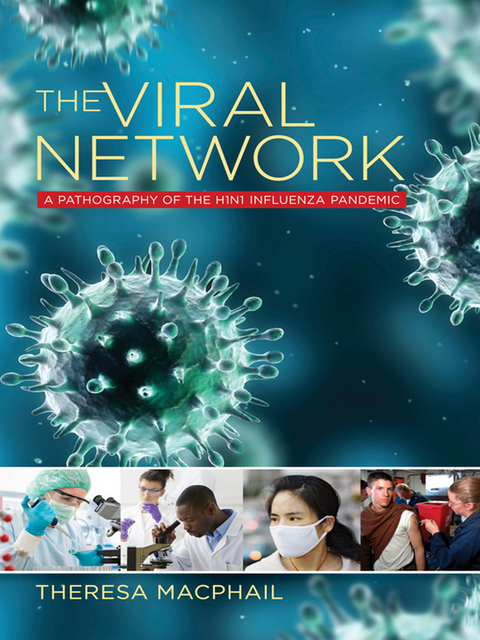
The Viral Network (eBook)
248 Seiten
Cornell University Press (Verlag)
978-0-8014-5488-2 (ISBN)
Theresa MacPhail examines our collective fascination with and fear of viruses through the lens of the 2009 H1N1 pandemic.
In The Viral Network, Theresa MacPhail examines our collective fascination with and fear of viruses through the lens of the 2009 H1N1 pandemic. In April 2009, a novel strain of H1N1 influenza virus resulting from a combination of bird, swine, and human flu viruses emerged in Veracruz, Mexico. The Director-General of the World Health Organization (WHO) announced an official end to the pandemic in August 2010. Experts agree that the global death toll reached 284,500. The public health response to the pandemic was complicated by the simultaneous economic crisis and by the public scrutiny of official response in an atmosphere of widespread connectivity. MacPhail follows the H1N1 influenza virus's trajectory through time and space in order to construct a three-dimensional picture of what happens when global public health comes down with a case of the flu.
The Viral Network affords a rare look inside the U.S. Centers for Disease Control, as well as Hong Kong's virology labs and Centre for Health Protection, during a pandemic. MacPhail looks at the day-to-day practices of virologists and epidemiologists to ask questions about the production of scientific knowledge, the construction of expertise, disease narratives, and the different "cultures" of public health in the United States, Europe, Hong Kong, and China. The chapters of the book move from the micro to the macro, from Hong Kong to Atlanta, from the lab to the WHO, from the pandemic past in 1918 to the future. The various historical, scientific, and cultural narratives about flu recounted in this book show how biological genes and cultural memes become interwoven in the stories we tell during a pandemic. Ultimately, MacPhail argues that the institution of global public health is as viral as the viruses it tracks, studies, and helps to contain or eradicate. The "global" is itself viral in nature.
In The Viral Network, Theresa MacPhail examines our collective fascination with and fear of viruses through the lens of the 2009 H1N1 pandemic. In April 2009, a novel strain of H1N1 influenza virus resulting from a combination of bird, swine, and human flu viruses emerged in Veracruz, Mexico. The Director-General of the World Health Organization (WHO) announced an official end to the pandemic in August 2010. Experts agree that the global death toll reached 284,500. The public health response to the pandemic was complicated by the simultaneous economic crisis and by the public scrutiny of official response in an atmosphere of widespread connectivity. MacPhail follows the H1N1 influenza virus's trajectory through time and space in order to construct a three-dimensional picture of what happens when global public health comes down with a case of the flu.The Viral Network affords a rare look inside the U.S. Centers for Disease Control, as well as Hong Kong’s virology labs and Centre for Health Protection, during a pandemic. MacPhail looks at the day-to-day practices of virologists and epidemiologists to ask questions about the production of scientific knowledge, the construction of expertise, disease narratives, and the different "cultures" of public health in the United States, Europe, Hong Kong, and China. The chapters of the book move from the micro to the macro, from Hong Kong to Atlanta, from the lab to the WHO, from the pandemic past in 1918 to the future. The various historical, scientific, and cultural narratives about flu recounted in this book show how biological genes and cultural memes become interwoven in the stories we tell during a pandemic. Ultimately, MacPhail argues that the institution of global public health is as viral as the viruses it tracks, studies, and helps to contain or eradicate. The "global" is itself viral in nature.
Theresa MacPhail is Assistant Professor/Faculty Fellow in the John W. Draper Interdisciplinary Master’s Program in Humanities and Social Thought at New York University.
Prologue to a Pathography1. Seeing the Past or Telling the Future?: On the Origins of Pandemics and the Phylogeny of Viral Expertise2. The Invisible Chapter (Work in the Lab)3. Quarantine, Epidemiological Knowledge, and Infectious Disease Research in Hong Kong4. The Siren's Song of Avian Influenza: A Brief History of Future Pandemics5. The Predictable Unpredictability of Viruses and the Concept of "Strategic Uncertainty"6. The Anthropology of Good Information: Data Deluge, Knowledge, and Context in Global Public Health7. The Heretics of Microbiology: Charisma, Expertise, Disbelief, and the Production of KnowledgeEpilogue
Notes
References
| Erscheint lt. Verlag | 3.3.2015 |
|---|---|
| Reihe/Serie | Expertise: Cultures and Technologies of Knowledge | Expertise: Cultures and Technologies of Knowledge |
| Zusatzinfo | 13 halftones |
| Verlagsort | Ithaca |
| Sprache | englisch |
| Maße | 150 x 150 mm |
| Gewicht | 28 g |
| Themenwelt | Studium ► 1. Studienabschnitt (Vorklinik) ► Med. Psychologie / Soziologie |
| Studium ► 2. Studienabschnitt (Klinik) ► Pathologie | |
| Studium ► Querschnittsbereiche ► Infektiologie / Immunologie | |
| Sozialwissenschaften ► Ethnologie | |
| Sozialwissenschaften ► Pädagogik | |
| Sozialwissenschaften ► Soziologie | |
| Schlagworte | virus, H1N1, novel coronoavirus, COVID-19, fear and society, fear of pandemics |
| ISBN-10 | 0-8014-5488-3 / 0801454883 |
| ISBN-13 | 978-0-8014-5488-2 / 9780801454882 |
| Informationen gemäß Produktsicherheitsverordnung (GPSR) | |
| Haben Sie eine Frage zum Produkt? |
 EPUB (Adobe DRM)
Kopierschutz: Adobe-DRM
Adobe-DRM ist ein Kopierschutz, der das eBook vor Mißbrauch schützen soll. Dabei wird das eBook bereits beim Download auf Ihre persönliche Adobe-ID autorisiert. Lesen können Sie das eBook dann nur auf den Geräten, welche ebenfalls auf Ihre Adobe-ID registriert sind.
Details zum Adobe-DRM
Dateiformat: EPUB (Electronic Publication)
EPUB ist ein offener Standard für eBooks und eignet sich besonders zur Darstellung von Belletristik und Sachbüchern. Der Fließtext wird dynamisch an die Display- und Schriftgröße angepasst. Auch für mobile Lesegeräte ist EPUB daher gut geeignet.
Systemvoraussetzungen:
PC/Mac: Mit einem PC oder Mac können Sie dieses eBook lesen. Sie benötigen eine
eReader: Dieses eBook kann mit (fast) allen eBook-Readern gelesen werden. Mit dem amazon-Kindle ist es aber nicht kompatibel.
Smartphone/Tablet: Egal ob Apple oder Android, dieses eBook können Sie lesen. Sie benötigen eine
Geräteliste und zusätzliche Hinweise
Buying eBooks from abroad
For tax law reasons we can sell eBooks just within Germany and Switzerland. Regrettably we cannot fulfill eBook-orders from other countries.
aus dem Bereich