Infectious Change (eBook)
272 Seiten
Stanford University Press (Verlag)
978-0-8047-9895-2 (ISBN)
Katherine A. Mason is Assistant Professor of Anthropology at Brown University.
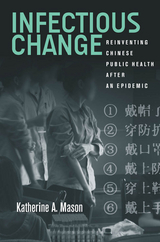
Contents and Abstracts1Introduction chapter abstractThis chapter situates the reader in time and space and lays out the main arguments of the book. The author provides an overview of the recent history of public health in China, and describes the pseudonymous city of Tianmai. The author then suggests that due to key differences between professional responsibility as it is defined in the clinical and public health settings - particularly with regards to the aggregate nature of the public health "client" – a bifurcation of service and governance arose in Tianmai between a "common" being served and local populations being governed. The chapter lays out five "commons" that will be examined in the rest of the book: a civilized immigrant common, a professional common, a transnational scientific common, a global health common, and a global common. It also suggests that the Tianmai case can offer novel insights into the study of global health.2City of Immigrants chapter abstractThis chapter takes a closer look at the immigrant city of Tianmai, and considers how the modern, cosmopolitan urban paradise that Tianmai's elites were trying to build included some and excluded others. In particular, the chapter examines the relationship – or lack thereof – between Tianmai's public health professionals and the city's enormous "floating population" of rural-to-urban migrants. The author shows how her interlocutors – former migrants themselves – refused to engage with migrant individuals, and actively maintained personal, moral, and professional boundaries between themselves and the floating population. This effectively divulged public health professionals of responsibility for the majority of the people who lived in their city and established them as "biological non-citizens" who had to be governed but could not be served. In doing this public health professionals worked to serve a civilized immigrant common of modern urban subjects that did not include the floating population.3Relationships, Trust, and Truths chapter abstractThis chapter illustrates how the power to implement any given public health initiative in China was located within the webs of guanxi, or personal relationships, that public health professionals spun anew at the beginning of each project. Drawing on rich ethnographic description, the chapter takes the reader into the banqueting and other entertainment rituals that public health professionals engaged in almost daily in order to create and maintain these networks of reciprocal obligation and personalistic trust. The author then examines how a group of young, highly educated post-SARS reformers attempted to rid the public health system of guanxi, which they regarded as anti-scientific and akin to corruption. These reformers hoped to build a more transparent and reliable system of disease reporting and governance by establishing a professional common grounded in professionalized trust.4Scientific Imaginaries chapter abstractThis chapter critically examines public health research and science in Tianmai. The author explores the efforts of Chinese public health professionals to advance their careers through scientific research, and discusses how in the wake of SARS, Chinese public health institutions dramatically increased their investments in scientific research – rendering publishable research a major focus of local public health work. Newly hired young people labored to produce the "quality" and "true" data that they associated with good science. They hoped that doing so would give them a chance to "develop themselves" as members of transnational scientific common, and to escape a local moral world that they felt was dominated by mimicry, deception, and instability. The chapter suggests that their approach to research provides a mirror through which public health researchers in other contexts could critically examine their own ethical practices, raising new questions about global research ethics.5Pandemic Betrayals chapter abstractThis chapter provides an ethnographically rich eyewitness account of Tianmai's response to the 2009 H1N1 influenza pandemic, describing how public health professionals in Tianmai drew upon the lessons of SARS to mount what they thought would be an internationally lauded response to H1N1. In attempting to prove their pandemic preparedness capabilities and ensure a place among the global scientific elite, however, Tianmai's public health professionals instead found that their full admittance into a global health common and a global common remained elusive. The chapter discusses the professionals' difficulties in escaping their perceived status as a source, rather than a victim, of dangerous viruses; their use of disease control tactics that were portrayed abroad as excessive and unsophisticated; and their disappointment with the failure of their leaders and guanxi partners to act in the professional fashion that they had been trying to promote since SARS.6Conclusion chapter abstractThe concluding chapter returns to the broader question of what professional responsibility can or should mean in public health and beyond, and asks how public health professionals in China could work to reconcile the "common" with the "population," and population needs with individual needs. The author uses the case of HIV/AIDS to examine the ways in which some public health professionals in Tianmai were experimenting with alternative interpretations of public health that broadened the boundaries of the common to allow in otherwise maligned groups, including rural migrants, gay men, and sex workers. The book ends by considering the implications of this ethnography for the study of public health – both local and global – more broadly.
| Erscheint lt. Verlag | 4.5.2016 |
|---|---|
| Zusatzinfo | 1 figure, 5 halftones |
| Sprache | englisch |
| Themenwelt | Medizin / Pharmazie ► Gesundheitswesen |
| Sozialwissenschaften ► Ethnologie | |
| Sozialwissenschaften ► Pädagogik | |
| Sozialwissenschaften ► Soziologie | |
| Schlagworte | Bioethics • CDC • China • Coronavirus • Global Health • Migration • pandemics • professionalization • Public Health • SARS • urbanization |
| ISBN-10 | 0-8047-9895-8 / 0804798958 |
| ISBN-13 | 978-0-8047-9895-2 / 9780804798952 |
| Informationen gemäß Produktsicherheitsverordnung (GPSR) | |
| Haben Sie eine Frage zum Produkt? |
 EPUB (Adobe DRM)
Kopierschutz: Adobe-DRM
Adobe-DRM ist ein Kopierschutz, der das eBook vor Mißbrauch schützen soll. Dabei wird das eBook bereits beim Download auf Ihre persönliche Adobe-ID autorisiert. Lesen können Sie das eBook dann nur auf den Geräten, welche ebenfalls auf Ihre Adobe-ID registriert sind.
Details zum Adobe-DRM
Dateiformat: EPUB (Electronic Publication)
EPUB ist ein offener Standard für eBooks und eignet sich besonders zur Darstellung von Belletristik und Sachbüchern. Der Fließtext wird dynamisch an die Display- und Schriftgröße angepasst. Auch für mobile Lesegeräte ist EPUB daher gut geeignet.
Systemvoraussetzungen:
PC/Mac: Mit einem PC oder Mac können Sie dieses eBook lesen. Sie benötigen eine
eReader: Dieses eBook kann mit (fast) allen eBook-Readern gelesen werden. Mit dem amazon-Kindle ist es aber nicht kompatibel.
Smartphone/Tablet: Egal ob Apple oder Android, dieses eBook können Sie lesen. Sie benötigen eine
Geräteliste und zusätzliche Hinweise
Buying eBooks from abroad
For tax law reasons we can sell eBooks just within Germany and Switzerland. Regrettably we cannot fulfill eBook-orders from other countries.
aus dem Bereich