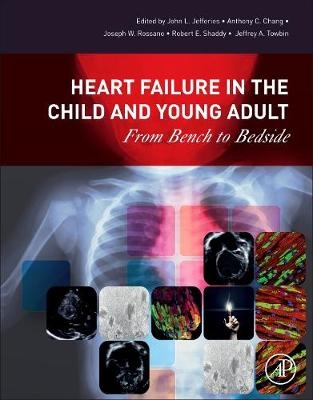
Heart Failure in the Child and Young Adult
Academic Press Inc (Verlag)
978-0-12-802393-8 (ISBN)
- Titel erscheint in neuer Auflage
- Artikel merken
Dr. Rossano is the medical director of Pediatric Heart Transplant and Heart Failure. He is also an attending physician in the Cardiac Center and the Cardiac Intensive Care Unit (CICU) and an assistant professor of Pediatrics at the Perelman School of Medicine at the University of Pennsylvania. Dr. Rossano is principal investigator or co-investigator on several ongoing research studies of the use of ventricular assist devices and artificial hearts in children, studying the effectiveness of post-transplant treatments for children who have received heart transplants, an observational study of children with heart failure, and building a registry of pediatric heart transplant patients that aims to further the knowledge of pediatric heart disease and transplantation. Dr. Jefferies is a recognized international expert in the field of heart muscle disease contributing much of the current literature regarding related genetic mechanisms, clinical investigation, and guideline development. Dr. Chang is the founder and medical director of the Medical Intelligence, Information, Investigation, and Innovation Institute (Mi4) that is supported by the Sharon Disney Lund Foundation. The institute is dedicated to the introduction and implementation of artificial intelligence in medicine and was the first institute of its kind in a hospital. Dr. Chang intends to build a clinician-computer scientist interface with a nascent society (the Medical Intelligence Society) and is the editor-in-chief of Intelligence-based Medicine, the accompanying journal for his book, Intelligence-Based Medicine: Artificial Intelligence and Human Cognition in Clinical Medicine and Healthcare. He is the organizing chair for Artificial Intelligence in Medicine (AIMed) meetings around the world, the largest and most comprehensive clinician-led meetings that focus on applications of artificial intelligence in medicine and the dean of the nascent American Board of Artificial Intelligence in Medicine (ABAIM). He is also the founding president of the Medical Intelligence Society (MIS). Dr. Towbin is a recognized international expert in the field of heart muscle disease contributing much of the current literature regarding related genetic mechanisms, clinical investigation, and guideline development. Dr. Shaddy is Chief of the Division of Cardiology at The Children’s Hospital of Philadelphia and holds the Jennifer Terker Endowed Chair in Pediatric Cardiology. He is Professor of Pediatrics and Vice Chair of the Department of Pediatrics at the Perelman School of Medicine at the University of Pennsylvania. Dr. Shaddy brings more than 25 years of experience as a cardiologist caring for children with heart failure to his role as one of the leaders of the transplant program.
Section I: Basic Science of Heart Failure
1. Molecular and Cellular Mechanisms in Heart Failure
2. Cardiovascular Receptors and Signaling in Heart Failure
3. Inflammatory Mediators in Heart Failure
4. Mechanisms of Hypertrophy in Heart Failure
5. Hemodynamic Adaptive Mechanisms in Heart Failure
6. Neurohormonal Axis and Natriuretic Peptides in Heart Failure
7. The Pressure-Volume Relationship in Heart Failure
8. Systolic and Diastolic Dysfunction Mechanisms and Assessment of Systolic vs Diastolic Heart Failure
9. The Alveolar-Capillary Interface and Pulmonary Edema
10. Echocardiographic Quantitation of Ventricular Function
11. Magnetic Resonance Imaging Assessment of Heart Failure
12. Assessment of Heart Failure by Invasive Methods
Section II: Clinical Diagnosis and Management of Pediatric Heart Failure
13. Epidemiology and Economic Aspects of Pediatric Heart Failure
14. Clinical Recognition of Congestive Heart Failure in Children
15. Classification of Heart Failure
16. Right Ventricular Dysfunction
17. Pediatric Myocarditis
18. Dilated Cardiomyopathy
19. Clinical Features of Restrictive Cardiomyopathy and Constrictive Pericarditis
20. Hypertrophic Cardiomyopathy
21. Left Ventricular Noncompaction
22. Arrhythmogenic Cardiomyopathies
23. Valvular Insufficiency and Heart Failure
24. Valvular Stenosis and Heart Failure
25. Coronary Artery Disease in Children and Young Adults
26. Heart Failure in Congenital Heart Disease Including Single Ventricle Circulation
27. Heart Failure in Adults With Congenital Heart Disease
28. Dysrhythmias and Ventricular Dysfunction and Heart Failure
29. Heart Failure in the Fetus
30. Heart Failure in the Neonate
31. Heart Failure in Pediatric Pulmonary Diseases
32. Heart Failure and the Pediatric Cardiorenal Syndrome
33. Heart Failure in Pediatric Oncologic Disease
34. The Failing Cardiovascular System in Sepsis
35. Outpatient Management of Pediatric Heart Failure
36. Quality of Life and Psychosocial Care in Pediatric Heart Failure
37. Quality Metrics and Quality Improvement in Pediatric Heart Failure
38. Nursing Aspects of Heart Failure
Section III: Medical Treatment for Pediatric Heart Failure
39. Diuretics and Invasive Fluid Management Strategies
40. Inotropic Agents in Heart Failure
41. Phosphodiesterase Inhibitors
42. Use of Vasodilators in Heart Failure
43. Beta-adrenergic Receptor Blockade
44. Low Cardiac Output Syndrome in the Intensive Care Setting
45. New Therapeutic Strategies in Heart Failure
46. Electrophysiologic Devices in Heart Failure
47. Catheter Device Therapy for Heart Failure
Section IV: Cardiac Surgery and Pediatric Heart Failure
48. Post-Transplant Heart Failure
49. Surgical Strategies for the Failing Systemic Ventricle
50. Valve Intervention for Valve Failure
51. General Principles of Mechanical Cardiopulmonary Support
52. Short-Term Mechanical Cardiopulmonary Support Devices
53. Decision Making in Ventricular Assist Device Support in Pediatric Patients
54. Long Term Ventricular Assist Devices in Children
55. The Adult Experience with Long-Term Assist Devices
56. Future of Mechanical Support Devices in Children and Young Adults
Section V: Special Topics
57. Genetics and Genomics
58. Genetic Testing
59. Data Management and Analytics
60. Self-Management and Outpatient Monitoring
61. Regenerative Medicine and Nanomedicine
62. Nanomedicine
63. Nutritional Assessment and Management in Pediatric Heart Failure
| Erscheinungsdatum | 29.01.2018 |
|---|---|
| Verlagsort | San Diego |
| Sprache | englisch |
| Maße | 216 x 276 mm |
| Gewicht | 2130 g |
| Themenwelt | Medizinische Fachgebiete ► Innere Medizin ► Kardiologie / Angiologie |
| Medizin / Pharmazie ► Medizinische Fachgebiete ► Pädiatrie | |
| ISBN-10 | 0-12-802393-7 / 0128023937 |
| ISBN-13 | 978-0-12-802393-8 / 9780128023938 |
| Zustand | Neuware |
| Informationen gemäß Produktsicherheitsverordnung (GPSR) | |
| Haben Sie eine Frage zum Produkt? |
aus dem Bereich