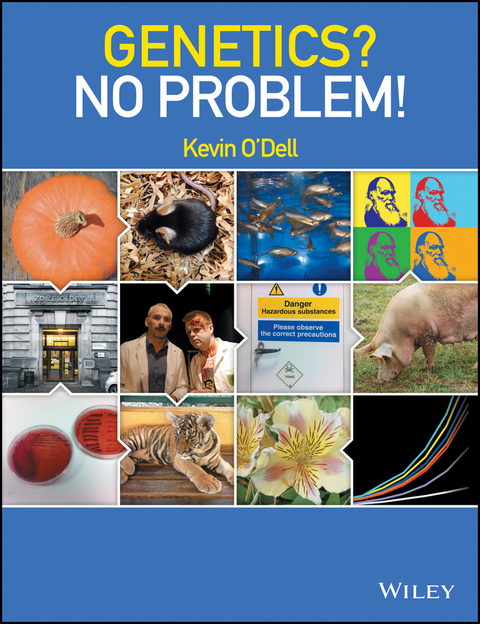
Genetics? No Problem! (eBook)
John Wiley & Sons (Verlag)
978-1-118-83386-5 (ISBN)
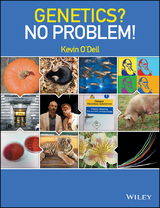
The analysis and interpretation of data is fundamental to the subject of genetics and forms a compulsory part of the undergraduate genetics curriculum. Indeed, the key skills that a genetics student requires are an ability to design and understand experimental strategies and to use problem-solving skills to interpret experimental results and data. Genetics? No Problem! provides students with a graded set of problems that aim to enthuse, challenge and entertain the reader.
The book is divided into three sections - introductory; intermediate and advanced - each with 10 problems. For first level students there will be short genetics problems embedded in a wide range of scenarios, such as murder mysteries. As the book progresses, the stories will get longer and the science will get progressively more complex to challenge final year students and enable the reader to identify genetic disease in obscure organisms as well as designing and testing treatments and cures.
Genetics? No Problem!:
- Takes a unique, innovative approach that provides students with a set of graded problems designed to develop both their skills, and their ability to tackle problems with confidence
- Includes problems embedded in a narrative, written in an interesting, informative and entertaining style by an Author with a proven track record in teaching, research and communication
- Is well illustrated in full colour throughout.
The book will prove invaluable to all students of genetics across a range of disciplines needing to get to grips with the analysis and interpretation of data that is fundamental to the subject.
Kevin O'Dell is Professor of Behavioural Genetcis and his teaching excellence has been recognised through a number of awards including, in 2012, the 'Best Teacher in the College of Medical, Veterinary and Life Sciences' at Glasgow University. He is closely involved in curriculum development and public engagement in science, with grants from the Wellcome Trust to set up the 'Zombie Science Project' - aimed at getting young people enthused about science.
Foreword vii
Preface ix
Acknowledgements xi
How to Use This Book xiii
Section 1: Introductory
1.1 Grandma's Secret 3
1.2 Tiger! Tiger! 7
1.3 Anticipation 13
1.4 Budgie Hell 17
1.5 Friends Reunited 21
1.6 The Footballer, his Wife, their Kids and her Lover 25
1.7 Give Peas a Chance 29
1.8 Noah's ARC 35
1.9 The Mysterious Disappearance of Midnight 39
1.10 Rancid 45
Section 2: Intermediate
2.1 Otto's Finger 51
2.2 The Mystery of Muckle Morag 57
2.3 Drosophila hogwashii 63
2.4 The Curse of Lilyrot 69
2.5 Strawberry Fields Forever 75
2.6 The Mystery of Trypton Fell 81
2.7 Sir Henry's Enormous Chest 89
2.8 Pandemonium 93
2.9 My Imperfect Cousin 101
2.10 The Curse of the WERE Rabbits 107
Section 3: Advanced
3.1 The Legend of Neptune's Cutlass 117
3.2 The Devil's Pumpkin 129
3.3 Gravity 141
3.4 Kate and William, a Love Story 151
3.5 The Titanians 163
3.6 Once Bitten, Twice Shy 175
3.7 Red-Crested Dragons of Mythological Island 185
3.8 I Scream! 197
3.9 The Nuns of Gaborone 209
3.10 Poissons Sans Yeux 221
Answers 233
List of Figures 361
Chapter 2.1
Otto’s Finger
According to your aunt, it was entirely the outcome she’d predicted. ‘Don’t go on a skiing holiday until you’ve finished your degree,’ she’d said. ‘If you break your leg you’ll regret it.’ And you did. And you do. However, your aunt doesn’t know the whole story and it could be the luckiest break you’ve ever had.
It had seemed a particularly good idea at the time, having a New Year skiing trip with friends from the Genetics course at university, especially as you were visiting the fabulous Swiss Canton of Valais (see Fig. 2.1.1). Obviously you wouldn’t have time to go away later in your final year, as you’d be studying. Or at least that was the plan. In fact, the first five days of your holiday had been fantastic and your skiing was coming on in leaps and bounds. Then someone suggested going off‐piste (or at least you think that’s what they said) and it all went horribly wrong. The last thing you remember is the spectacular view of the Otemma Glacier (see Fig. 2.1.2), all be it at a rather peculiar angle.
Figure 2.1.1 The Swiss Alps.
Figure 2.1.2 The Otemma Glacier.
Apparently you were only unconscious for about 15 minutes and, as you slowly opened your eyes, you saw a look of total horror on the faces of your friends. You felt a bit dazed and confused, but assumed everything was fine as you seemed to have landed in a huge pile of snow next to a mountain stream. Your relief was short‐lived, however, as you suddenly realised your leg was at an angle that could best be described as somewhere between unnatural and impossible. And there was an awful lot of pain.
You were beginning to think that your friends were completely and utterly useless, as they’d done little or nothing to help. Then you realised they were pointing at something behind you. You slowly turned your head, expecting to see a rock coated in bits of your leg, only to have the biggest surprise of your life. There, in the snow next to you, was a very hairy man and he was most surely and definitely, dead. You were suddenly gripped by a feeling of panic. Surely you hadn’t landed on him and killed him?
You regained consciousness for the second time in Martigny Regional Hospital. Your leg was now in the traditional position, at an appropriate angle and contained within a cast. Thankfully the intense pain had disappeared. Your friends were nowhere to be seen, but there were two people in your room, a nurse and an extremely serious looking man in the uniform of the Valais Police. Over the next half an hour you discovered how global warming was apparently causing the Otemma Glacier to melt into the stream you’d landed next to. Fortunately, as the body you’d landed on was probably thousands of years old and until recently had been frozen within the glacier, this meant you definitely hadn’t killed anyone. ‘Your friends tell me you’re a genetics student,’ continued the policeman, ‘and you’re very interested in the evolution and migration of human populations in Europe? Would you like to take a small part of the iceman home with you for your studies?’
Once back at university, you immediately contact the head of the Human Evolutionary Research Institute (HER Institute), the independently minded Professor Lauren Towers‐Elf. To your great relief, she was delighted you’d brought an ancient frozen finger from Otto’s left hand to visit her. Having limped carefully into her office, you begin to explain how you had managed to find the Otemma Glacier Iceman. Professor Towers‐Elf has a rather intimidating reputation as one of the greatest intellectuals of your time and you expect her to make a particularly profound statement about the significance of the Otemma Glacier Iceman’s finger. ‘I think we should call him Otto,’ she says.
Professor Towers‐Elf kindly allows you to work for nothing in her laboratory. Her first suggestion is that you try to get a mitochondrial DNA profile from Otto.
Question 1: As Otto was found in Europe, he must have died within the past 40 000 years. How could you determine more precisely when he died? (5%)
Question 2: Why do studies of ancient remains often focus, at least initially, on mitochondrial DNA (which is precisely 16 569 bp long) rather than nuclear DNA (which is approximately 3 billion base pairs long)? (10%)
On hearing of your ‘accidental’ success in acquiring a research placement in the laboratory of Professor Towers‐Elf, your aunt is suddenly interested in a genetic analysis of her, and therefore your, family tree and sends you a copy of her genealogical research effort. The document is quite impressive in its detail. Indeed, it contains complete and apparently accurate information on the previous six generations of your ancestors.
Question 3: From how many different people who were alive six generations ago have you acquired (a) your nuclear DNA and (b) your mitochondrial DNA? Are there any circumstances under which these theoretical estimates could be larger or smaller? (10%)
Having acquired a full mitochondrial DNA sequence from Otto’s finger, you compare his 16 569 bp mtDNA sequence to the many tens of thousands of sequences in the vast Mitochondrial Eve Project database. Initial indications are that Otto belongs to haplogroup K, a mitochondrial haplogroup prevalent in Eurasia, North Africa and South Asia that is thought to have arisen about 12 000 years ago. By a remarkable stroke of luck, Professor Towers‐Elf has just initiated a study of haplogroup K and that very morning has 18 new haplogroup K mitochondrial sequences to analyse (see Fig. 2.1.3).
Figure 2.1.3 Liquid Nitrogen Facility in HER institute where Otto’s finger and the remains of other ancient humans are stored under perfect laboratory conditions.
Professor Towers‐Elf asks you to establish the evolutionary relationship between Otto and the 18 new sequences. She also suggests that you compare their mitochondrial DNA sequences to that of Oetzi, the 5300‐year‐old Iceman found on the Austrian–Italian border in 1991. These data, presented as a list of mitochondrial nucleotide differences between the progenitor K1 haplogroup and each of the 20 new mitochondrial DNA sequences, are shown in Table 2.1.1.
Table 2.1.1 Nucleotide differences between the mtDNA sequences of twenty K haplogroup individuals relative to the established definitive historical progenitor K1 haplogroup. The position of the affected nucleotide is shown. Note that within this analysis any nucleotide change (mutation) arises only once within the lineage and is therefore a unique mutational event.
| Name | Nucleotide changes from K1 |
| Adelina | 1819, 5090, 6413, 8251, 10478, 12810, 14142, 16093, 16274, 16362 |
| Aldric | 498, 3738, 9006, 14002, 14040, 16320 |
| Baldomar | 5913, 7521, 8709, 12738, 12771 |
| Berhta | 709, 1189, 4561, 9716, 10398, 14305 |
| Bruno | 1819, 5090, 6413, 8251, 10478, 12810, 14142, 16093, 16274, 16362 |
| Chlothar | 497, 3394, 5093, 6260, 11485, 11840, 13740 |
| Egilhard | 497, 13117 |
| Ermingard | 709, 1189, 4561, 8618, 9716, 10398 |
| Frida | 497, 6260, 11485, 11840, 13740, 16311 |
| Gasto | 497, 7118, 11485, 12017, 12399 |
| Hengist | 1819, 5090, 6413, 8251, 10478, 12810, 14142, 16093, 16274, 16362 |
| Hrolf | 709, 1189, 4561, 9716, 10398, 11549 |
| Odila | 498, 9006, 12358, 14002, 14040, 14506, 15244, 16320 |
| Oetzi | 3513, 8137, 16362 |
| Otto | 3243, 8137, 16362 |
| Radulf | 5913, 7521, 8709, 12738, 12771 |
| Rosmunda | 5237, 5913, 6845, 10154, 12738, 15301 |
| Saxa | 498, 9006, 12358, 14002, 14040, 14506, 15244, 16320 |
| Tancred | 498, 508, 9093, 11377 |
| Wido | 709, 1189, 4561, 9716, 10398, 16189 |
Question 4: Use the data in Table 2.1.1 to construct an evolutionary tree showing the relationship between all 20 individuals. (20%)
Question 5: Is the evolutionary tree you have constructed robust and reliable? How could you improve its reliability? (5%)
You look more closely for any functional consequences of changes in Otto’s mitochondrial DNA sequence and focus on his A3243G mutation. This mutation is within the mitochondrial tRNA(Leu) gene and is well established as a cause of a condition called mitochondrial encephalomyopathy, lactic acidosis and stroke‐like episodes (MELAS). According to the extensive literature on the subject, MELAS primarily affects the brain...
| Erscheint lt. Verlag | 27.2.2017 |
|---|---|
| Sprache | englisch |
| Themenwelt | Studium ► 2. Studienabschnitt (Klinik) ► Humangenetik |
| Naturwissenschaften ► Biologie ► Genetik / Molekularbiologie | |
| Technik | |
| Schlagworte | analysis interpretation • Biowissenschaften • designing treatments • experimental results and data • experimental strategies • Genetics • genetics problems • Genetik • Genom • Genomforschung u. Proteomik • Genomics & Proteomics • Life Sciences • medical genetics • Medical Science • Medizin • Medizinische Genetik • Organisms • Problem-Solving • testing cures |
| ISBN-10 | 1-118-83386-4 / 1118833864 |
| ISBN-13 | 978-1-118-83386-5 / 9781118833865 |
| Informationen gemäß Produktsicherheitsverordnung (GPSR) | |
| Haben Sie eine Frage zum Produkt? |
 EPUB (Adobe DRM)
Kopierschutz: Adobe-DRM
Adobe-DRM ist ein Kopierschutz, der das eBook vor Mißbrauch schützen soll. Dabei wird das eBook bereits beim Download auf Ihre persönliche Adobe-ID autorisiert. Lesen können Sie das eBook dann nur auf den Geräten, welche ebenfalls auf Ihre Adobe-ID registriert sind.
Details zum Adobe-DRM
Dateiformat: EPUB (Electronic Publication)
EPUB ist ein offener Standard für eBooks und eignet sich besonders zur Darstellung von Belletristik und Sachbüchern. Der Fließtext wird dynamisch an die Display- und Schriftgröße angepasst. Auch für mobile Lesegeräte ist EPUB daher gut geeignet.
Systemvoraussetzungen:
PC/Mac: Mit einem PC oder Mac können Sie dieses eBook lesen. Sie benötigen eine
eReader: Dieses eBook kann mit (fast) allen eBook-Readern gelesen werden. Mit dem amazon-Kindle ist es aber nicht kompatibel.
Smartphone/Tablet: Egal ob Apple oder Android, dieses eBook können Sie lesen. Sie benötigen eine
Geräteliste und zusätzliche Hinweise
Buying eBooks from abroad
For tax law reasons we can sell eBooks just within Germany and Switzerland. Regrettably we cannot fulfill eBook-orders from other countries.
aus dem Bereich