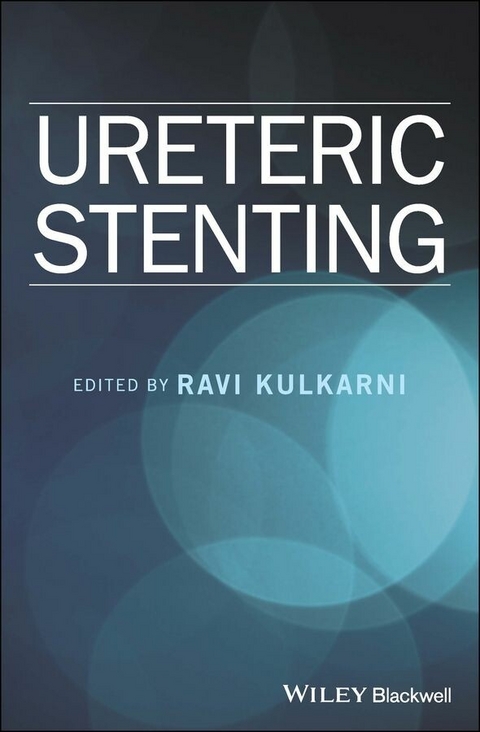
Ureteric Stenting (eBook)
John Wiley & Sons (Verlag)
978-1-119-08569-0 (ISBN)
The only book dedicated to this important area of urology, Ureteric Stenting comprehensively reviews the entire topic, providing highly specialized advice to enable outstanding clinical management of patients. All aspects of ureteric stenting are covered, from basic to complex, giving urologists, nephrologists and trainees an authoritative and up-to-date guide on best clinical practice.
Edited by RAVI KULKARNI MS FRCS, Consultant Urological Surgeon, Ashford
The only book dedicated to this important area of urology, Ureteric Stenting comprehensively reviews the entire topic, providing highly specialized advice to enable outstanding clinical management of patients. All aspects of ureteric stenting are covered, from basic to complex, giving urologists, nephrologists and trainees an authoritative and up-to-date guide on best clinical practice.
Edited by RAVI KULKARNI MS FRCS, Consultant Urological Surgeon, Ashford
Title Page 5
Copyright Page 6
Contents 7
List of Contributors 9
Foreword 12
Preface 13
Chapter 1 Anatomy of the Human Ureter 15
1.1 Structure 17
1.2 Blood Supply 17
1.3 Nerves 18
1.4 Embryology 18
1.5 Congenital Variations 18
1.5.2 Duplex 19
1.5.3 PUJ Obstruction 20
1.5.4 Ectopic Ureteric Orifice 21
1.5.5 Ureterocoeles 22
1.5.6 Mega-Ureter 22
1.5.7 Ureteric Diverticulae 22
1.6 Clinical Significance 22
References 22
Chapter 2 Anatomic Variations of the Ureter 24
2.1 Horseshoe Kidney 24
2.2 Duplex Ureter 25
2.3 Megaureter 25
2.4 Ectopic Ureter 26
2.5 Ureterocele 26
References 27
Chapter 3 The Pathophysiology of Upper Tract Obstruction 30
3.1 Introduction 30
3.2 Aetiology 30
3.3 Presentation 31
3.4 Diagnosis 32
3.4.1 Anatomical Imaging 32
3.4.2 Functional Studies 32
3.5 Consequences of Obstruction 33
3.5.1 Obstructive Uropathy 33
3.5.2 Obstructive Nephropathy 34
3.6 Post-Obstructive Outcomes 38
3.6.1 Parenchymal Damage and Functional Loss 39
3.6.2 Post Obstructive Diuresis 39
3.7 Summary 40
References 40
Chapter 4 Physiology of the Human Ureter 43
4.1 Historical Introduction 43
4.2 The Pain and Myths of Ureteric Colic 45
4.3 Anatomical and Functional Studies 46
4.4 Ureteric Transport Mechanisms 47
4.5 Physiological and Pharmacological Properties of Human Ureteric Muscle 49
4.6 The Effect of Metoclopramide and Glucagon 50
4.7 The Effect of Prostaglandin Synthetase Inhibitors 51
4.8 The Effect of Acid?Base Changes Upon Ureteric Contractility 54
4.9 The Effects of Stents Upon Ureteric Function 56
References 58
Chapter 5 Etiology of Ureteric Obstruction 62
5.1 Congenital Causes 62
5.1.1 Ureterocele and Ureterovesical Reflux 62
5.1.2 Ureteric Valve 63
5.1.3 Ectopic and Retrocaval Kidney 63
5.1.4 Prune Belly Syndrome 63
5.2 Metabolic Causes 63
5.2.1 Ureterolithiasis 63
5.3 Neoplastic Causes 64
5.3.1 Primary Carcinoma of the Ureter 64
5.3.2 Non-Urologic Malignancies 64
5.4 Inflammatory Causes 64
5.4.1 Stricture 64
5.4.2 Endometriosis and Tuberculosis 65
5.5 Miscellaneous Causes 65
5.5.1 Retroperitoneal Fibrosis 65
5.5.2 Pregnancy 66
5.6 Conclusion 66
References 66
Chapter 6 The Role of the Interventional Radiologist in Managing Ureteric Obstruction 69
6.1 Introduction 69
6.2 Indications for Antegrade Stenting 69
6.3 Patient Preparation for Antegrade Stent Insertion 70
6.3.1 Pre-Procedure 70
6.3.2 Contra-Indications 71
6.3.3 Procedure 71
6.3.4 Complications 72
6.4 Stent Design 74
6.5 The One-Stage Antegrade Stent 75
6.6 The Rendezvous Procedure 76
6.7 Summary 78
References 79
Chapter 7 Emergency Management of Ureteric Obstruction 81
7.1 Introduction 81
7.2 Identifying Patients with Obstructive Pyelonephritis 82
7.3 Outcomes by Drainage Modality 82
7.4 Comparative Effectiveness 84
7.5 Quality of Life (QOL) 85
7.6 Conclusions 86
References 86
Chapter 8 The History and Evolution of Ureteral Stents 89
8.1 Introduction 89
8.2 History and Evolution of Stent Nomenclature 89
8.3 Ancient History 90
8.4 Recent History 91
8.5 Further Advances in Ureteral Stent Technology 94
References 95
Chapter 9 Ureteral Stent Materials: Past, Present, and Future 97
9.1 Introduction 97
9.2 Materials 99
9.2.1 Silicone and Silitek 99
9.2.2 Polyurethane 99
9.2.3 Modified Polyurethanes and Proprietary Materials 100
9.2.4 Metallic Stents 101
9.2.5 Coatings 101
9.2.6 Future Directions: Biodegradable Materials and Changes in Design 102
9.2.7 Autologous and Engineered Tissue 102
References 103
Chapter 10 Physical Characteristics of Stents 105
10.1 Introduction 105
10.2 History 105
10.3 Standard 106
10.4 Long-Term Use (Metal) 106
10.5 Comfort/Convenience 108
10.6 Dissolvable Stent 110
10.7 Drainage 110
10.8 Anti-Reflux 110
10.9 Self-Expanding 111
10.10 Thermo-Expanding 111
10.11 Spiral Stent 112
10.12 Film-Anchoring Stent 112
10.12.1 Infection/Biofilm 112
10.13 Future Directions 112
References 113
Chapter 11 Coated and Drug-Eluting Stents 116
11.1 Introduction 116
11.2 Stent Coatings 116
11.2.1 Hydrophilic Coatings 116
11.2.2 Phosphorylcholine 117
11.2.3 Diamond-Like Carbon 117
11.2.4 Glycosaminoglycans 118
11.2.5 Antibiotic Coatings 118
11.2.6 MPEG-DOPA 119
11.3 Drug-Eluting Stents 119
11.3.1 Triclosan 119
11.3.2 Ketorolac 119
11.3.3 Chlorhexidine 119
11.3.4 Metal Drug-Eluting Stents 120
11.4 Conclusion 120
References 120
Chapter 12 Coated and Drug-Eluting Ureteric Stents 124
12.1 Introduction 124
12.2 Drug-Eluting Metal Stents 125
12.2.1 The Concept of Drug-Eluting Stents 125
12.2.2 Design and Structure of Drug-Eluting Stents 125
12.3 Pharmaceutical Substances 125
12.4 Drug-Eluting Stents in Urology 125
12.5 Coated Metallic Stents 127
12.5.1 The Concept of Coated Metal Stents 127
12.5.2 Coated Metal Stents in Urology 127
12.6 Conclusions 129
References 130
Chapter 13 Ureteric Stents: A Perspective from the Developing World 132
13.1 Introduction 132
13.2 Pattern of JJ Stent Usage in India 132
13.2.1 Common Indication of Usage 132
13.2.2 Stent Placement 133
13.3 Stent Types and Economics 133
13.4 Stent Tracking and Removal 134
13.5 Stent Register 134
13.6 Forgotten JJ Stents (Figures 13.1–13.3) 134
13.7 Why the Forgotten Stent is a Major Problem in India? 136
13.8 Trends in Management of Forgotten Stent 136
13.9 JJ Stents Outside the Ureter and Pelvicalyceal System 139
13.10 Tips and Tricks for the Management of Migrated and Misplaced Stents 140
13.11 Recommended Protocol for the Repositioning of Incorrectly Placed Stents 140
References 142
Chapter 14 Ethical Issues in Ureteric Stenting 144
14.1 Clinical Presentation 145
14.2 Salvage Therapy Options 145
14.3 Patient Desire 146
14.4 Patient Status, Family and Social Issues 146
14.5 Ethical Issues in Benign Ureteric Obstruction 146
14.6 Role of Palliative Care Teams 146
14.7 A Multidisciplinary Approach 147
14.8 Other Considerations 147
14.9 Summary 147
References 148
Chapter 15 Equipment and Technical Considerations During Ureteric Stenting 150
15.1 Introduction 150
15.2 Equipment 150
15.2.1 Cystoscope 150
15.2.2 Fluoroscopy Guidance 151
15.2.3 Guidewires 151
15.2.4 Ureteral Catheters 154
15.2.5 Coaxial Dilators 154
15.2.6 Dual?Lumen Catheter 156
15.2.7 Contrast 157
15.2.8 High-Pressure Catheters and Balloon Dilators 157
15.2.9 “Hockey Stick” KMP or Imager II Catheters 158
15.2.10 Ureteral Stent 158
15.3 Tips and Tricks 160
15.4 Conclusion 160
References 160
Chapter 16 Extra-Anatomic Stent Urinary Bypass 163
16.1 Introduction 163
16.2 Indications 164
16.3 Contraindications 165
16.4 The Paterson Forrester Stent 165
16.5 Stent Placement 166
16.6 Top End Aspect of Stent Insertion Procedure (Kidney Aspect) 167
16.7 Tunneling Procedure 168
16.8 Lower Aspect of Stent Insertion Procedure (Bladder Puncture) 169
16.9 The Technique of Stent Changes 169
16.10 Complications and How to Deal With Them 171
16.10.1 Early Issues 171
16.10.2 Late Issues 172
16.11 Future Developments 174
References 174
Chapter 17 Detour Extra-Anatomical Ureteric Stent 175
17.1 Introduction 175
17.2 The Need for an Extra?Anatomic Drainage 178
17.3 Prerequisites for Extra?Anatomic Stenting 180
17.4 Experience with the Extra?Anatomic JJ Stent 180
17.5 Experience With the Detour Stent 183
17.6 Personal Experience with Detour Stent 184
17.7 The Technique 185
17.8 Alternative Techniques 186
17.9 Complications 186
17.9.1 Infection 186
17.9.2 Recurrent Obstruction 186
17.9.3 An Algorithm 186
17.9.4 Summary 187
References 188
Chapter 18 Tandem Ureteral Stents 189
18.1 Introduction 189
18.2 Mechanism of Ureteral Stent Failure and Corrective Measures 189
18.3 Tandem Ureteral Stents 190
18.4 Technique 191
18.5 Limited Evidence 192
18.6 Cost Considerations 193
18.7 Conclusion 194
References 194
Chapter 19 Biodegradable Ureteric Stents 196
19.1 Introduction 196
19.2 Material 197
19.3 Research 197
19.4 Temporary Ureteral Drainage StentTM 199
19.5 UripreneTM 200
19.6 Future Directions 201
19.7 Conclusion 201
References 202
Chapter 20 Metallic Ureteric Stents 206
20.1 Introduction 206
20.2 Which Metal? 206
20.3 Other Metallic Ureteric Stents 208
20.3.1 Memotherm 208
20.3.2 Memokath 051 208
20.3.3 Resonance 210
20.3.4 Allium 210
20.3.5 Uventa 211
20.3.6 Other Metallic Stents 212
20.4 Results 212
20.4.1 Migration of Metallic Stents 213
20.4.2 Encrustation 213
20.4.3 Endothelial Hyperplasia 213
20.4.4 Impacted Metallic Stents 213
20.5 Cost 214
20.6 Current Status 214
References 214
Chapter 21 Removal of Ureteric Stents 217
21.1 Introduction 217
21.2 The Technique of JJ Stent Removal 218
21.3 String on the Stent 218
21.4 Removal of Segmental and Metallic Stents 219
21.4.1 Memokath Stent 219
21.4.2 UVENTA Stent 220
21.4.3 Allium 220
21.4.4 Resonance Stent 220
21.5 Other Stents 222
21.6 Technical Considerations 222
21.7 Removal of Migrated Ureteric Stents 223
21.8 Removal of Encrusted Stents 223
21.9 Ileal Conduit Stents 224
21.10 Antibiotic Prophylaxis 224
21.11 Other Considerations 224
References 225
Chapter 22 Encrustation of Indwelling Urinary Devices 229
22.1 Bacterial-Associated Encrustation 229
22.2 Non-Bacterial Causes of Encrustation 230
22.3 Non-Bacterial Based Indwelling Device Encrustation 231
22.4 Preventing Encrustation of Indwelling Urinary Devices 232
22.5 Stent Coatings 232
22.6 Conclusions 237
References 237
Chapter 23 Stent Migration 241
23.1 Introduction 241
23.2 Why Stents Migrate? 241
23.3 Where Do Stents Migrate? 243
23.4 Stent Length and Migration 245
23.5 Which Stents Migrate? 245
23.5.1 Stent Diameter, Material and Risk of Migration 245
23.5.2 Segmental Stents and Migration 245
23.6 Etiology of Ureteric Stricture and Migration 245
23.7 Detection of Stent Migration 246
23.8 Management of Migrated Stents 246
23.9 Special Situations 247
23.9.1 Migrated Memokath Stents 247
23.9.2 Other Metallic Stents 248
23.10 Conclusions 248
References 248
Chapter 24 Health-Related Quality of Life and Ureteric Stents 252
24.1 Introduction 252
24.2 Development of the Ureteric Stent Symptom Questionnaire (USSQ) 253
24.3 Data on HRQoL with Stents from Clinical Studies 254
24.3.1 Studies Involving Different Ureteric Stent Designs – Engineering Methods 254
24.4 Studies Comparing Pharmacological Interventions 255
24.4.1 Pharmacological Agents 255
24.5 Other Aspects of Ureteric Stents and HRQoL 256
24.5.1 Position of the Distal End of the Stent and BMI 256
24.5.2 Other Clinical Scenarios 256
24.6 Conclusions 256
References 276
Chapter 25 Evidence Base for Stenting 278
25.1 Contemporary Use of Ureteric Stents in Endourology 278
25.2 Evidence-Based Medicine Primer 278
25.3 Randomized Controlled Trials 279
25.4 Meta-Analysis and Systematic Reviews 281
25.5 The Evidence for Treatment of Acute Infectious Obstruction 281
25.6 Ureteroscopy and Post?Procedure Stent Insertion 285
25.7 Tubeless Percutaneous Nephrolithotomy 288
25.8 Conclusion 289
References 289
Chapter 26 Robotic Ureteric Reconstruction 292
26.1 Introduction 292
26.2 General Considerations 292
26.3 Ureteroneocystostomy 293
26.3.1 Patient Positioning and Port Placement 294
26.3.2 Procedure 294
26.3.3 Literature 295
26.4 Psoas Hitch 295
26.4.1 Patient Positioning and Port Placement 296
26.4.2 Procedure 296
26.4.3 Literature 296
26.5 Boari Flap 296
26.5.1 Patient Positioning and Port Placement 297
26.5.2 Procedure 297
26.5.3 Literature 297
26.6 Ureteroureterostomy 298
26.6.1 Patient Positioning and Port Placement 298
26.6.2 Procedure 298
26.6.3 Literature 298
26.7 Conclusion 299
References 299
Chapter 27 Indwelling Ureteric Stents – Health Economics Considerations 301
27.1 Introduction 301
27.2 Health Economic Evaluations 301
27.3 Short-Term Application 302
27.4 Medium- to Long-Term Application: Chronic Obstructive Uropathy 303
27.5 Comparator Assessment: Nephrostomy and Stenting 304
27.6 Other/Miscellaneous Considerations 305
27.6.1 Methods of Ureteric Stent Extraction, Post-Procedural Considerations and Cost 306
27.6.2 Renal Transplant 307
27.7 Conclusion 308
References 308
Chapter 28 Ureteric Stents: The Future 310
Index 312
EULA 320
| Erscheint lt. Verlag | 10.2.2017 |
|---|---|
| Sprache | englisch |
| Themenwelt | Medizin / Pharmazie ► Gesundheitsfachberufe |
| Medizin / Pharmazie ► Medizinische Fachgebiete ► Chirurgie | |
| Medizin / Pharmazie ► Medizinische Fachgebiete ► Urologie | |
| Schlagworte | Chirurgie • Chirurgie u. chirurgische Spezialgebiete • Medical Science • Medizin • Nephrology Urology Ureteric Stents Stenting Surgery Renal • Stent • Surgery & Surgical Specialities • Urologie • Urology |
| ISBN-10 | 1-119-08569-1 / 1119085691 |
| ISBN-13 | 978-1-119-08569-0 / 9781119085690 |
| Informationen gemäß Produktsicherheitsverordnung (GPSR) | |
| Haben Sie eine Frage zum Produkt? |
 PDF (Adobe DRM)
Kopierschutz: Adobe-DRM
Adobe-DRM ist ein Kopierschutz, der das eBook vor Mißbrauch schützen soll. Dabei wird das eBook bereits beim Download auf Ihre persönliche Adobe-ID autorisiert. Lesen können Sie das eBook dann nur auf den Geräten, welche ebenfalls auf Ihre Adobe-ID registriert sind.
Details zum Adobe-DRM
Dateiformat: PDF (Portable Document Format)
Mit einem festen Seitenlayout eignet sich die PDF besonders für Fachbücher mit Spalten, Tabellen und Abbildungen. Eine PDF kann auf fast allen Geräten angezeigt werden, ist aber für kleine Displays (Smartphone, eReader) nur eingeschränkt geeignet.
Systemvoraussetzungen:
PC/Mac: Mit einem PC oder Mac können Sie dieses eBook lesen. Sie benötigen eine
eReader: Dieses eBook kann mit (fast) allen eBook-Readern gelesen werden. Mit dem amazon-Kindle ist es aber nicht kompatibel.
Smartphone/Tablet: Egal ob Apple oder Android, dieses eBook können Sie lesen. Sie benötigen eine
Geräteliste und zusätzliche Hinweise
Buying eBooks from abroad
For tax law reasons we can sell eBooks just within Germany and Switzerland. Regrettably we cannot fulfill eBook-orders from other countries.
aus dem Bereich