Pancreatitis (eBook)
John Wiley & Sons (Verlag)
978-1-118-92492-1 (ISBN)
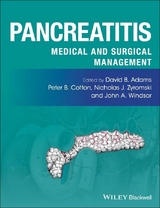
Pancreatitis: medical and surgical management provides gastroenterologists and GI surgeons, both fully qualified and in training, with a focused, evidence-based approach to the most exciting developments in the diagnosis and clinical management of pancreatitis.
Focusing mainly on the rapidly changing and innovative medical and surgical strategies to manage the disease, new surgical procedures such as endoscopic biliary intervention and minimally invasive necrosectomy to exciting new medical therapies like Antiprotease, Lexipafant, probiotics and enzyme treatment are all discussed.
Full colour throughout, with over 250 colour illustrations and with reference to the latest clinical guidelines from the AGA, ACG and UEGW at all times, it is an essential consultation tool for all those managing patients with this increasingly common condition.
David B. Adams, M.D. is Professor and Chief of Gastrointestinal and Laparoscopic Surgery and Co-Director of the Digestive Disease Center at the Medical University of South Carolina, Charleston, South Carolina. He is the author of over 100 manuscripts and book chapters which deal with his academic and clinical research interests in chronic pancreatitis.
Peter B. Cotton, M.D. is a British Gastroenterologist best known for his advancement in digestive disease, pioneering and naming the ERCP procedure and creating the Digestive Disease Center at the Medical University of South Carolina where he is Professor of Medicine. He has been active in National and International organizations, and has given invited lectures and demonstrations in more than 50 countries His bibliography includes over 900 medical publications, including more than 300 original contributions in peer reviewed journals, and 10 books.
Nicholas J. Zyromski, M.D. is Associate Professor of Surgery at Indiana University. He served as an NIH research fellow at the Mayo Clinic in Rochester, Minnesota, and is currently the Indiana University HPB Surgery Fellowship Program Director. Dr. Zyromski's principal clinical interest is in pancreatic disease; his basic and translational research interest focuses on the inflammatory response of acute pancreatitis as well as the influence of obesity and adipose tissue on pancreatic diseases - pancreatic cancer and acute pancreatitis.
John Windsor, M.D. holds a personal chair in surgery at the University of New Zealand, Auckland. He is Director of Surgical Research, Director of Surgical Research Network , Co-Director of Applied Surgery and Metabolism Laboratory and Surgical Centre for Outcomes Research and Evaluation, Principle Investigator Pancreas Research Group, and Associate Investigator Maurice Wilkins Centre of Biodiscovery. His primary research is in the pathophysiology and clinical management of acute and chronic pancreatitis. He is Associate Editor of the journal Pancreatology and the World Journal of Surgery.
Pancreatitis: medical and surgical management provides gastroenterologists and GI surgeons, both fully qualified and in training, with a focused, evidence-based approach to the most exciting developments in the diagnosis and clinical management of pancreatitis. Focusing mainly on the rapidly changing and innovative medical and surgical strategies to manage the disease, new surgical procedures such as endoscopic biliary intervention and minimally invasive necrosectomy to exciting new medical therapies like Antiprotease, Lexipafant, probiotics and enzyme treatment are all discussed. Full colour throughout, with over 250 colour illustrations and with reference to the latest clinical guidelines from the AGA, ACG and UEGW at all times, it is an essential consultation tool for all those managing patients with this increasingly common condition.
David B. Adams, M.D. is Professor and Chief of Gastrointestinal and Laparoscopic Surgery and Co-Director of the Digestive Disease Center at the Medical University of South Carolina, Charleston, South Carolina. He is the author of over 100 manuscripts and book chapters which deal with his academic and clinical research interests in chronic pancreatitis. Peter B. Cotton, M.D. is a British Gastroenterologist best known for his advancement in digestive disease, pioneering and naming the ERCP procedure and creating the Digestive Disease Center at the Medical University of South Carolina where he is Professor of Medicine. He has been active in National and International organizations, and has given invited lectures and demonstrations in more than 50 countries His bibliography includes over 900 medical publications, including more than 300 original contributions in peer reviewed journals, and 10 books. Nicholas J. Zyromski, M.D. is Associate Professor of Surgery at Indiana University. He served as an NIH research fellow at the Mayo Clinic in Rochester, Minnesota, and is currently the Indiana University HPB Surgery Fellowship Program Director. Dr. Zyromski's principal clinical interest is in pancreatic disease; his basic and translational research interest focuses on the inflammatory response of acute pancreatitis as well as the influence of obesity and adipose tissue on pancreatic diseases -- pancreatic cancer and acute pancreatitis. John Windsor, M.D. holds a personal chair in surgery at the University of New Zealand, Auckland. He is Director of Surgical Research, Director of Surgical Research Network , Co-Director of Applied Surgery and Metabolism Laboratory and Surgical Centre for Outcomes Research and Evaluation, Principle Investigator Pancreas Research Group, and Associate Investigator Maurice Wilkins Centre of Biodiscovery. His primary research is in the pathophysiology and clinical management of acute and chronic pancreatitis. He is Associate Editor of the journal Pancreatology and the World Journal of Surgery.
Cover 1
Title Page 5
Copyright 6
Contents 7
List of contributors 9
Chapter 1 Epidemiology and genetics of chronic pancreatitis 13
Definition 13
Burden of disease 13
Clinical features 14
Diagnosis 14
Animal models of early CP 14
Genetic risk factors for CP 15
Mendelian genetic syndromes 15
Hereditary pancreatitis 15
Cystic fibrosis 16
A new paradigm of personalized medicine 17
References 18
Chapter 2A Pathobiology of the acinar cell in acute pancreatitis 22
Overview of the acinar cell morphology and function 22
Environmental and genetic stressors and the exocrine pancreatic unfolded protein response (UPR) 23
Calcium signaling and pancreatitis 24
Mitochondrial function in pancreatitis 25
Inflammatory signaling of pancreatitis 25
Summary and potential therapeutic targets 26
References 26
Chapter 2B Locoregional pathophysiology in acute pancreatitis: pancreas and intestine 31
Introduction 31
Pancreatic pathophysiology 31
Morphology and local complications of acute pancreatitis 31
Pancreatic microcirculation 32
Pancreatic inflammation and interstitial edema 33
Pancreatic hypoperfusion 34
Pancreatic necrosis 34
Infection of pancreatic necrosis 34
Intestinal pathophysiology 35
Intestinal morphology and local complications in acute pancreatitis 35
Intestinal barrier 35
Intestinal mucus 35
Intestinal blood flow 36
Intestinal ischemia-reperfusion injury 36
Intestinal microbiome 36
Intestinal lymph 37
Conclusion 37
References 38
Chapter 2C Pathophysiology of systemic inflammatory response syndrome and multiorgan dysfunction syndrome in acute pancreatitis 41
Systemic inflammatory response syndrome 41
Multiple organ dysfunction syndrome (MODS) 41
Activation of innate immune system 42
DAMPs, inflammation, and acute pancreatitis 42
Escalation of systemic inflammation 43
Inflammatory mediators in AP 44
Circulatory disturbances 44
Coagulopathy and systemic inflammation 44
Visceral adipose tissue and systemic inflammation 45
Inflammation and organ dysfunction 45
Mitochondrial dysfunction in MODS 46
Areas for future research 46
References 46
Chapter 3 Diagnosis, prediction, and classification 50
Introduction 50
Diagnosis 50
Prediction 51
Classification 55
Conclusion 55
References 56
Chapter 4 Medical treatment 59
Introduction 59
The importance of underlying etiology 59
The pancreatic microcirculation 60
Fluid resuscitation 60
Targeted pharmacologic therapy 62
Antibiotics 62
Enteral feeding 64
Conclusion 64
References 64
Chapter 5 Nutritional treatment in acute pancreatitis 67
Introduction 67
Type of nutrition 67
Route of enteral nutrition 68
Enteral nutrition formulations 71
Conclusion 73
References 73
Chapter 6 Gallstone pancreatitis: diagnosis and treatment 76
Summary 76
Introduction 76
How is gallstone pancreatitis diagnosed? 77
Laboratories 77
Cross-sectional imaging 77
What tests are available to evaluate for common bile duct stones? 78
ERCP 79
Intraoperative cholangiography (IOC) 79
MRCP 80
EUS 80
For patients with acute gallstone pancreatitis, what is the role for ERCP in the acute setting? 81
What is the impact of cholecystectomy on the prevention of recurrent gallstone pancreatitis, and when should it be performed? 82
What is the benefit of ERCP for patients who are poor candidates for cholecystectomy? 83
Summary 83
References 83
Chapter 7 Treatment of local complications 87
Introduction 87
Invasive treatment 88
Open necrosectomy 88
Minimally invasive intervention 88
Percutaneous catheter drainage and video-assisted retroperitoneal debridement 89
Sinus tract necrosectomy 91
Laparoscopic necrosectomy 91
Endoscopic drainage and necrosectomy 91
Combined techniques 93
Which technique to choose? 93
IAP/APA guideline 93
References 94
Chapter 8 Treatment of systemic complications and organ failure 97
Introduction 97
Respiratory dysfunction 98
Cardiovascular dysfunction 99
Acute kidney injury 99
Coagulation abnormalities 100
Gut barrier dysfunction 100
Conclusion 101
References 101
Chapter 9 Specific treatment for acute pancreatitis 103
Introduction 103
Pathogenesis of acute pancreatitis 103
Lessons from animal experiments 104
Potential novel therapeutic targets 105
Store-operated Ca2+ entry (SOCE) channels 105
Mitochondrial permeability transition pore (MPTP) 107
Immune signaling pathways 107
Lessons from clinical trials 108
Future clinical trial design 109
References 109
Chapter 10 Sequelae of acute pancreatitis 113
Introduction 113
Sequelae of mild acute pancreatitis 113
Sequelae of severe acute pancreatitis/necrotizing pancreatitis (SAP/NP) 113
Disconnected pancreatic duct syndrome 114
Pseudocyst/pancreatic duct stricture 114
Recurrent retroperitoneal collection/abscess 115
Ischemic colon 116
Enteric fistula 117
Biliary stricture 117
Duodenal stricture 118
Venous thrombosis 119
Visceral arterial pseudoaneurysm 120
Endocrine and exocrine insufficiency 120
Ventral hernia 121
Intra-abdominal catastrophe/multivisceral transplant 121
Palliative care 121
Recurrent acute pancreatitis 121
Quality of life 121
Summary 122
References 122
Chapter 11 History of chronic pancreatitis 125
Chapter 12A Epidemiology and pathophysiology: epidemiology and risk factors 130
Introduction 130
Changing epidemiology of chronic pancreatitis 130
Disease burden 131
Risk factors 132
Alcohol consumption 132
Cigarette smoking 132
Genetic factors 133
Anatomic abnormalities 133
Other risk factors 134
Etiology of chronic pancreatitis 134
Natural history 134
Evolution of chronic pancreatitis 135
Future directions 135
Conflict of interest 135
References 135
Chapter 12B Epidemiology and pathophysiology: genetic insights into pathogenesis 138
Introduction 138
Overview of genetics 139
Complex genetics 140
Mutations associated with failed trypsin regulation 140
Mutations associated with activation of the unfolded protein response 141
Alcohol- and smoking-associated risks of CP 142
Complex gene-environment interactions with alcohol and smoking 142
Other genetic variants associated with CP 143
Framework for understanding genetics of pancreatitis 143
Models of pancreatitis 143
Susceptibility to AP and RAP 144
Acinar cells biology and risk of AP 144
Alcohol as a risk for AP 145
Duct biology 145
Genetic risk of duct cell dysfunction and AP 146
Progression from RAP to CP 146
SAPE hypothesis - second hit 147
Trypsin activation and progression from RAP to CP 147
Alcoholic pancreatitis and progression from RAP to CP 148
Relation between developing fibrosis, diabetes, pain, and cancer 148
Future directions 149
References 149
Chapter 12C Pancreatic stellate cells: what do they tell us about chronic pancreatitis? 155
Introduction 155
PSCs and chronic pancreatitis 158
Animal models 159
Reversal of pancreatic fibrosis in chronic pancreatitis 160
References 161
Chapter 12D Autoimmune pancreatitis: an update 164
Introduction 164
Consensus definition and subtypes 164
Type 1 AIP 164
Type 2 AIP 164
Epidemiology 165
Pathogenesis 166
Clinical profile of AIP 166
Diagnosis of AIP 167
Histology 167
Parenchymal imaging 167
Ductal imaging 167
Diagnostic strategy 167
Management and long-term outcomes 168
Lessons learnt from AIP experience 168
Recognition of an uncommon disease 168
An example of controversies and collaboration 169
Is neuritis the cause of chronic pain in CP? 169
Do other forms of CP have distinct histologies? 169
Recognition of IgG4-related disease 169
Is serum IgG4 a good marker for AIP? 170
Is response to steroids diagnostic of AIP? 170
Summary 170
References 170
Chapter 12E Etiology and pathophysiology: tropical pancreatitis 173
Definition 173
Etiology 173
Malnutrition 174
Cassava toxicity (cyanogen toxicity) 174
Xenobiotics and micronutrients 175
Familial aggregation 175
Genetic factors 175
Pathology of tropical pancreatitis 176
Pathophysiology 177
Pancreatic calculi 177
Maldigestion/steatorrhea 177
Pancreatic diabetes 177
Complications related to diabetes 178
Changing scenario 178
References 178
Chapter 12F Mechanisms and pathways of pain in chronic pancreatitis 181
Introduction 181
Manifestations and treatment of pancreatic pain 181
Chronic pain syndrome: a downward spiral 181
Pain theories 181
Models 181
Components of pancreatic pain 182
Nociceptive neurons 182
Uncontrolled proteolysis 182
Sensory neuron receptors 182
Vanilloid receptors 182
Protease-activated receptor 2 (PAR2) 184
Nerve growth factor (NGF) and receptor tyrosine kinase A (TrkA) 185
Neurokinin receptor 1 (NK-1R) 185
Central sensitization 185
Nervous system support cells 185
Conclusion 187
Acknowledgment 187
References 187
Chapter 13A Imaging of chronic pancreatitis 191
Introduction 191
Imaging modalities 191
Ultrasound 191
Computed tomography 192
MRI 192
MRI features of chronic pancreatitis 193
Normal pancreas 193
Chronic pancreatitis 193
Novel MRI techniques 194
T1 mapping 194
Perfusion 194
T2 mapping 195
Dixon method 196
MR spectroscopy 196
Elastography 196
Conclusion 198
References 198
Chapter 13B Endoscopic ultrasonography in chronic pancreatitis 200
Introduction 200
Endoscopic ultrasound features of the normal pancreas 200
Endoscopic ultrasound features of chronic pancreatitis 200
Inter- and intraobserver variability in chronic pancreatitis 201
EUS in comparison with ERCP 203
EUS versus pancreatic function testing 204
EUS in comparison to other imaging modalities 204
Therapeutic EUS 205
References 205
Chapter 14A Pancreatic enzyme replacement therapy (PERT) 207
Pancreatic enzyme replacement therapy 207
Diagnosis of pancreatic exocrine insufficiency 208
Consequences of pancreatic exocrine insufficiency 211
Pancreatic enzymes 211
References 214
Chapter 14B Nutritional treatment: antioxidant treatment 217
Introduction 217
Basis of the "oxidative stress-micronutrient antioxidant" hypothesis 217
Modern re-appraisal of the "oxidative stress-micronutrient antioxidant" hypothesis 218
Clinical trials of antioxidant therapy in chronic pancreatitis 218
Modern randomized controlled clinical trials of antioxidant therapy in chronic pancreatitis 219
Comparing and contrasting the Delhi and Manchester clinical trials 220
Risks associated with high-dose selenium therapy 220
Current recommendation for antioxidant therapy in chronic pancreatitis 221
Declaration 221
References 221
Chapter 14C Pancreatogenic diabetes: etiology, implications, and management 223
Introduction 223
Etiology of T3cD 223
Classification of T3cD by ADA 223
Clinical characteristics and prevalence of T3cD 223
Pathophysiology of T3cD 225
Diagnosis of T3cD 226
Pancreatic polypeptide (PP) - a marker for T3cD? 226
PP physiology and pathophysiology 226
Clinical studies of PP deficiency and PP replacement 227
Role of PP measurement in differentiating T3cD from T2D 228
Implications for risk for other diseases in T3cD 229
Metabolic disorders associated with exocrine insufficiency 229
Association of T3cD with pancreatic ductal adenocarcinoma (PDAC) 230
Management of T3cD 231
Summary 233
References 233
Chapter 14D Nutrition without a pancreas: how does the gut do it? 237
Introduction 237
Pancreatic function in normal digestion 237
Exocrine pancreatic insufficiency 238
Carbohydrate digestion 238
Protein digestion 238
Lipid digestion 239
Vitamin malabsorption 239
Nutritional issues 239
Nutritional assessment 240
Dietary recommendations 240
Pancreatic enzyme replacement therapy 242
Summary 242
References 242
Chapter 15A Endoscopic management of chronic pancreatitis 245
Introduction 245
Endotherapy in chronic pancreatitis 245
Pancreatic duct strictures 246
Role of endotherapy in PD strictures 246
Results of endotherapy in PD strictures 246
Chronic pancreatitis-induced common bile duct strictures 248
Role of endotherapy in CP-induced CBD strictures 248
Pancreatic pseudocysts 250
Role of endotherapy in pancreatic pseudocysts 250
Results of endotherapy in pancreatic pseudocysts 251
Conclusion 252
References 253
Chapter 15B Shocking and fragmenting pancreatic ductal stones 257
Introduction 257
Modalities for stone fragmentation 257
ERCP methods 257
Extracorporeal shockwave lithotripsy (ESWL) 258
Conclusion 259
References 259
Chapter 15C Endoscopic management: celiac plexus blockade 261
Introduction 261
Technique 261
Complications 261
Outcomes 262
Limitations of celiac plexus blockade 264
Indications 265
Conclusion 265
References 265
Chapter 16A A brief history of modern surgery for chronic pancreatitis 268
Pancreatic denervation 268
Pancreatic resection 269
Ductal drainage (± partial, nonanatomic resection) 269
Islet cell autotransplantation 270
Summary 271
References 271
Chapter 16B Surgery for chronic pancreatitis: indications and timing of surgery 273
Introduction 273
Indications for surgery 273
Failure of conservative treatment measures to control intractable pain in uncomplicated disease 273
Complications 274
Timing of surgery 274
Summary and conclusion 275
References 275
Chapter 16C Chronic pancreatitis: surgical strategy in complicated diseases 277
Introduction 277
Pancreatic fluid collections 277
Pathogenesis and pathology 277
Management 277
Asymptomatic PFCs 278
Symptomatic PFCs 278
Pancreatic ascites and pleural effusions 279
Bile duct obstruction 280
Pathogenesis and pathology 280
Management 280
Endoscopic treatment 281
Summary 281
Duodenal obstruction 281
Hemorrhage 283
Overall summary 283
References 283
Chapter 16D Surgery for chronic pancreatitis: pancreatic duct drainage procedures 285
Introduction 285
Patient selection 285
Pancreaticojejunostomy (Partington-Rochelle procedure) 286
Results of lateral pancreaticojejunostomy (LPJ) 286
Surgical versus endoscopic drainage procedures 287
Timing for surgical drainage in relation to other procedures 288
Summary and conclusion 288
References 289
Chapter 16E Surgical management: resection and drainage procedures 291
Introduction 291
Indications for surgery 291
Duodenum preservation or no duodenum preservation - is that the question? 291
Beger operation - duodenum-preserving pancreatic head resection 293
Frey operation - duodenum-preserving pancreatic head resection 293
Berne operation - duodenum-preserving pancreatic head resection 294
Comparison of hybrid procedures and PPPD/Whipple operation 294
References 295
Chapter 16F The role of pancreatoduodenectomy in the management of chronic pancreatitis 298
Introduction 298
Surgical options for management of chronic pancreatitis 298
Duodenum-preserving pancreatic head resection (Beger procedure) and local head resection of the pancreatic head and longitudinal pancreaticojejunostomy (Frey procedure) 299
Long-term follow-up of PPPD versus Beger operation for chronic pancreatitis 300
Long-term follow-up of PPPD versus Frey procedure for chronic pancreatitis 300
Differences in patient populations 300
Mayo Clinic experience with pancreatoduodenectomy for chronic pancreatitis 301
Preoperative considerations 302
Pancreatoduodenectomy for chronic pancreatitis in perspective 303
Summary 305
References 305
Chapter 17A Total pancreatectomy and islet cell autotransplantation: patient selection 307
Introduction 307
Correct diagnosis 307
Failure of medical and surgical therapy 308
Disability 309
Preoperative evaluation 309
Contraindications 309
References 310
Chapter 17B Total pancreatectomy and islet cell autotransplantation: the science of islet cell preservation, from pancreas to liver 311
Introduction 311
Islet isolation techniques for maximizing islet yield 311
Pancreas transport and pancreas trimming 312
Pancreas cannulation 313
Pancreas distention with collagenase enzymes 313
Pancreas digestion using semi-automated method 313
Tissue recombination 315
Tissue purification 315
Transplant product preparation 315
Islet infusion, from pancreas to liver 316
Islet physiology and function following TPIAT 316
Conclusions 317
References 317
Chapter 17C Total pancreatectomy and islet cell autotransplantation: long-term assessment of graft function 320
Introduction 320
Diabetes and chronic pancreatitis 320
Diabetes following total pancreatectomy 320
Quality of life 320
Quality of life in patients with chronic pancreatitis 320
Quality of life following total pancreatectomy with and without islet transplantation 321
Assessment of graft function 322
Clinical outcomes following total pancreatectomy and islet autotransplantation 324
The Minneapolis program 324
The Leicester program 325
Reproducible clinical success 327
What should be monitored postoperatively? 327
The future of TPIAT 328
References 329
Index 333
EULA 339
"Overall, this is an excellent book on all aspects of acute and chronic pancreatitis. It is concise yet comprehensive, written by well-known and well-published, credible authorities. It will be useful not just to the intended audience of gastroenterologists and GI surgeons, but also to all physicians involved in the care of patients with pancreatitis. Most books try to cover all aspects of this complex condition in a summary fashion, which is not possible. This book fills in the gaps by providing a focused, comprehensive review including latest evidence and guidelines. 5 Stars!" (Doody Enterprises July 2017)
"This is a definitive and authoritative work that is quite manageable to read, understand and process.
Because of that, a reader will return to it often, extending its benefits. Pancreatitis is challenging
enough without having what this book provides. This excellent contribution has indeed refreshed and
advanced my own knowledge-base by performing this review. Even the most seasoned practitioner can
garner value in its pages, and again, return to it often" Charles M. Vollmer, Jr, MD, Professor of Surgery, University of Pennsylvania Perelman School of Medicine on behalf of HPB, Summer 2017
| Erscheint lt. Verlag | 2.2.2017 |
|---|---|
| Sprache | englisch |
| Themenwelt | Medizin / Pharmazie ► Allgemeines / Lexika |
| Medizin / Pharmazie ► Medizinische Fachgebiete ► Chirurgie | |
| Medizinische Fachgebiete ► Innere Medizin ► Gastroenterologie | |
| Schlagworte | Bauchspeicheldrüsenentzündung • Bauchspeicheldrüsenentzündung • Chirurgie • Chirurgie u. chirurgische Spezialgebiete • Gastroenterologie • Gastroenterologie u. Hepatologie • Gastroenterology & Hepatology • Medical Science • Medizin • pancreatitis, gastroenterologist, GI surgeon, clinical, endoscopic, biliary,necrosectomy, Antiprotease, Lexipafant, AGA, ACG, UEGW • Pankreatitis • Surgery & Surgical Specialities |
| ISBN-10 | 1-118-92492-4 / 1118924924 |
| ISBN-13 | 978-1-118-92492-1 / 9781118924921 |
| Informationen gemäß Produktsicherheitsverordnung (GPSR) | |
| Haben Sie eine Frage zum Produkt? |
 PDF (Adobe DRM)
Kopierschutz: Adobe-DRM
Adobe-DRM ist ein Kopierschutz, der das eBook vor Mißbrauch schützen soll. Dabei wird das eBook bereits beim Download auf Ihre persönliche Adobe-ID autorisiert. Lesen können Sie das eBook dann nur auf den Geräten, welche ebenfalls auf Ihre Adobe-ID registriert sind.
Details zum Adobe-DRM
Dateiformat: PDF (Portable Document Format)
Mit einem festen Seitenlayout eignet sich die PDF besonders für Fachbücher mit Spalten, Tabellen und Abbildungen. Eine PDF kann auf fast allen Geräten angezeigt werden, ist aber für kleine Displays (Smartphone, eReader) nur eingeschränkt geeignet.
Systemvoraussetzungen:
PC/Mac: Mit einem PC oder Mac können Sie dieses eBook lesen. Sie benötigen eine
eReader: Dieses eBook kann mit (fast) allen eBook-Readern gelesen werden. Mit dem amazon-Kindle ist es aber nicht kompatibel.
Smartphone/Tablet: Egal ob Apple oder Android, dieses eBook können Sie lesen. Sie benötigen eine
Geräteliste und zusätzliche Hinweise
Buying eBooks from abroad
For tax law reasons we can sell eBooks just within Germany and Switzerland. Regrettably we cannot fulfill eBook-orders from other countries.
aus dem Bereich