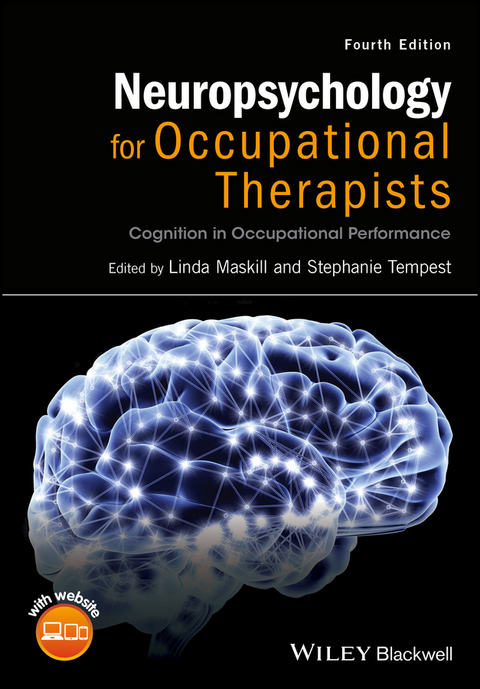
Neuropsychology for Occupational Therapists (eBook)
John Wiley & Sons (Verlag)
978-1-118-71131-6 (ISBN)
Neuropsychology for Occupational Therapists is a bestselling, comprehensive guide to the assessment and rehabilitation of impaired cognitive function and brain damage. Divided into two parts, the first introduces the fundamental role cognition has in occupational performance, before moving on to examine the theoretical frameworks behind cognitive rehabilitation. The second part covers the key components of each cognitive function, including attention, visual perception, movement, memory, and executive functions, and the disorders associated with them.
Revised throughout, this invaluable new edition includes:
- Updated theory and evidence base of neuropsychology
- Frameworks and guidelines for assessment and intervention in practice
- Updated content on attention, memory and executive functions
- A new chapter on cognitive function in later years, and working with people to maintain cognitive health.
Linda Maskill is a Lecturer in Occupational Therapy and the Departmental Director for Learning and Teaching, in the Department of Clinical Sciences at Brunel University London, UK.
Stephanie Tempest is the Education Manager for Professional Development at the College of Occupational Therapists, London, UK.
Neuropsychology for Occupational Therapists is a bestselling, comprehensive guide to the assessment and rehabilitation of impaired cognitive function and brain damage. Divided into two parts, the first introduces the fundamental role cognition has in occupational performance, before moving on to examine the theoretical frameworks behind cognitive rehabilitation. The second part covers the key components of each cognitive function, including attention, visual perception, movement, memory, and executive functions, and the disorders associated with them. Revised throughout, this invaluable new edition includes: Updated theory and evidence base of neuropsychology Frameworks and guidelines for assessment and intervention in practice Updated content on attention, memory and executive functions A new chapter on cognitive function in later years, and working with people to maintain cognitive health. Written in a clear and engaging style by an experienced author team of academic occupational therapists, with contributions from expert practising clinicians, it is full of a range of learning features, including case studies, summaries, and reflective activities, as well as for the first time narratives of the lived experience of cognitive impairment. Neuropsychology for Occupational Therapists is essential reading for students, newly qualified practitioners, and all those who work within neuropsychology and cognitive rehabilitation.
Linda Maskill is a Lecturer in Occupational Therapy and the Departmental Director for Learning and Teaching, in the Department of Clinical Sciences at Brunel University London, UK. Stephanie Tempest is the Education Manager for Professional Development at the College of Occupational Therapists, London, UK.
Title Page 5
Copyright Page 6
Contents 7
About the Editors 9
About the Contributors 11
Preface 13
Acknowledgements 15
About the Companion Website 17
Part 1 Cognition and the Occupational Therapy Process 19
Chapter 1 Occupation and Cognitive Rehabilitation 21
What is Cognition? 21
The Functional and Social Impact of Cognitive Impairments 22
The Scope of Cognitive Rehabilitation 22
Cognitive Rehabilitation and the Role of Occupational Therapy 23
Cognition, Occupation and the International Classification of Functioning, Disability and Health 24
Applying Theoretical Frameworks 28
Putting Knowledge and Frameworks Together 32
References 33
Chapter 2 Assessment and Measuring Change 35
Introduction to Assessment and Evaluation 35
Good Practice in Assessment and Measurement 36
Initial Assessment 37
Comprehensive Assessment 41
Key Perceptual and Cognitive Assessments Referred to in This Book 47
References 48
Chapter 3 Intervention for Cognitive Impairments and Evaluating Outcomes 51
Factors Influencing the Rehabilitation Process 51
Determining Performance Objectives of Occupational Therapy 54
Selecting and Using Therapeutic Approaches 56
Methods and Techniques in Cognitive Rehabilitation 58
Evaluating the Outcomes of Interventions 64
Methods 64
References 67
Part II Cognition: Understanding Function and Working with People with Impairments 69
Chapter 4 Cognition: Methods and Processes 71
What is Cognition? 71
Methods in Neuropsychology 75
Overview of Brain Structure and Function 79
The Cognitive System 85
References 87
Chapter 5 Attention 89
Components of Everyday Attention 90
Attention Systems 96
Impairments of Attention 98
Suggestions for Assessment and Intervention 100
References 102
Chapter 6 Visual Perception, Recognition and Agnosia 107
Introduction 107
Basic Visual Functions 108
Early Visual Processing 112
Perceptual Constancy 114
Motion 114
Visual Object Recognition 116
What and Where Pathways 118
Visual Agnosia 119
Face Recognition 121
Prosopagnosia 123
Stereognosis: Tactile Gnosis 124
Tactile Agnosia: Astereognosis 124
Functional Consequences of Agnosias 125
Suggestions for Assessment and Intervention 125
References 128
Chapter 7 Complex Perceptual Functions: Body Scheme and Agnosia, Constructional Skills and Neglect 131
Body Scheme 132
Constructional Skills 134
Neglect 135
Suggestions for Assessment and Intervention 138
References 139
Chapter 8 Memory 141
Introduction 141
Short-Term Memory 142
Long-Term Memory 146
Metamemory 150
Memory Processes 152
Impairment of Long-Term Memory 156
Suggestions for Assessment and Intervention 159
References 163
Chapter 9 Purposeful Movement and Apraxia 167
Introduction 167
Terminology in the Apraxia Literature 169
Models of Praxis 170
Understanding Apraxia 173
Suggestions for Assessment and Intervention 177
References 179
Chapter 10 Executive Functions 183
What are Executive Functions? 183
Categories of Executive Functions 184
Neuroanatomy 185
Models of Executive Function 186
Routine and Non-Routine Behaviour 188
Metacognition 189
Living with Executive Dysfunction 189
Suggestions for Assessment and Intervention 191
References 193
Chapter 11 Cognitive Function in the General Population: Maintaining Cognitive Health in Later Years 195
Introduction and Rationale 195
Mild Cognitive Impairment 197
Risk Factors for MCI and Associated Conditions 198
The Impact of MCI on Function 201
Maintaining Cognitive Health and Preventing Decline: The Role of Occupations 202
Evidence for Preventive Action 203
Is There a Need for Occupational Therapy? 205
Making Every Contact Count – Promoting Good Physical and Mental Health 206
Interventions for MCI 207
Occupational Therapy – Assessment and Intervention in MCI 208
References 210
Index 213
EULA 217
| Erscheint lt. Verlag | 2.2.2017 |
|---|---|
| Sprache | englisch |
| Themenwelt | Geisteswissenschaften ► Psychologie ► Allgemeine Psychologie |
| Geisteswissenschaften ► Psychologie ► Biopsychologie / Neurowissenschaften | |
| Geisteswissenschaften ► Psychologie ► Klinische Psychologie | |
| Geisteswissenschaften ► Psychologie ► Verhaltenstherapie | |
| Medizin / Pharmazie ► Allgemeines / Lexika | |
| Medizin / Pharmazie ► Naturheilkunde | |
| Medizin / Pharmazie ► Physiotherapie / Ergotherapie ► Ergotherapie | |
| Schlagworte | Assessment • attention • brain • Cognitive • Cognitive Neuropsychology & Cognitive Neuroscience • damage • disorder • disorders • Ergotherapie • Ergotherapie / Berufe • Executive • Function • Functions • Gesundheits- u. Sozialwesen • Health & Social Care • health</p> • Kognitive Neuropsychologie u. Neurowissenschaft • <p>Neuropsychology • Memory • Movement • Neuropsychologie • Occupational • occupational therapy • perception • Professional Issues in Occupational Therapy • Psychologie • Psychology • Rehabilitation • Therapists • Visual |
| ISBN-10 | 1-118-71131-9 / 1118711319 |
| ISBN-13 | 978-1-118-71131-6 / 9781118711316 |
| Informationen gemäß Produktsicherheitsverordnung (GPSR) | |
| Haben Sie eine Frage zum Produkt? |
 PDF (Adobe DRM)
Kopierschutz: Adobe-DRM
Adobe-DRM ist ein Kopierschutz, der das eBook vor Mißbrauch schützen soll. Dabei wird das eBook bereits beim Download auf Ihre persönliche Adobe-ID autorisiert. Lesen können Sie das eBook dann nur auf den Geräten, welche ebenfalls auf Ihre Adobe-ID registriert sind.
Details zum Adobe-DRM
Dateiformat: PDF (Portable Document Format)
Mit einem festen Seitenlayout eignet sich die PDF besonders für Fachbücher mit Spalten, Tabellen und Abbildungen. Eine PDF kann auf fast allen Geräten angezeigt werden, ist aber für kleine Displays (Smartphone, eReader) nur eingeschränkt geeignet.
Systemvoraussetzungen:
PC/Mac: Mit einem PC oder Mac können Sie dieses eBook lesen. Sie benötigen eine
eReader: Dieses eBook kann mit (fast) allen eBook-Readern gelesen werden. Mit dem amazon-Kindle ist es aber nicht kompatibel.
Smartphone/Tablet: Egal ob Apple oder Android, dieses eBook können Sie lesen. Sie benötigen eine
Geräteliste und zusätzliche Hinweise
Buying eBooks from abroad
For tax law reasons we can sell eBooks just within Germany and Switzerland. Regrettably we cannot fulfill eBook-orders from other countries.
aus dem Bereich