Endodontic Microbiology (eBook)
John Wiley & Sons (Verlag)
978-1-118-97549-7 (ISBN)
- Provides a major revision to the first book to focus on the problems related to microbes in the root canal and periapical tissues
- Updates current knowledge in endodontic pathosis, especially regarding next generation sequencing and microbial virulence
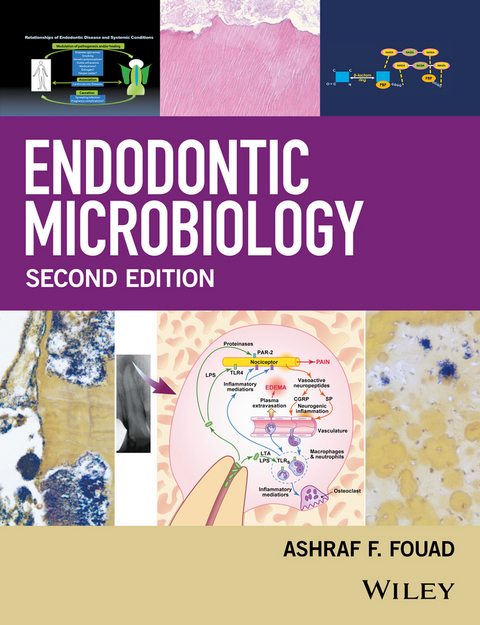
- Presents useful diagrams, images, radiographs, and annotated histological images to illustrate the concepts
- Emphasizes the importance of biological science in understanding and managing endodontic disease
- Includes contributions from the leading researchers and educators in the field
Ashraf F. Fouad, DDS, MS, is Freedland Distinguished Professor and Chair in the Department of Endodontics at the University of North Carolina, Chapel Hill, North Carolina, USA.
Endodontic Microbiology, Second Edition presents a comprehensive reference to the microbiology, pathogenesis, management, and healing of endodontic pathosis, emphasizing the importance of biological sciences in understanding and managing endodontic disease and its interaction with systemic health. Provides a major revision to the first book to focus on the problems related to microbes in the root canal and periapical tissues Updates current knowledge in endodontic pathosis, especially regarding next generation sequencing and microbial virulence Presents useful diagrams, images, radiographs, and annotated histological images to illustrate the concepts Emphasizes the importance of biological science in understanding and managing endodontic disease Includes contributions from the leading researchers and educators in the field
Ashraf F. Fouad, DDS, MS, is Freedland Distinguished Professor and Chair in the Department of Endodontics at the University of North Carolina, Chapel Hill, North Carolina, USA.
Endodontic Microbiology 3
Dedication 7
Contents 9
Contributors 11
Preface 13
Preface to the First Edition 15
1 Microbial Perspectives in the Twenty-First Century 17
1.1 Introduction 17
1.2 Genomics 18
1.3 Molecular microbial ecology and the study of uncultivable bacteria 19
1.4 Intraspecies variation 20
1.5 Metagenomics and metatranscriptomics 21
1.6 Bacterial–bacterial communication 22
1.7 Host–bacterial interactions 24
1.8 Complex infectious diseases 24
1.9 The future 25
2 Diagnosis, Epidemiology, and Global Impact of Endodontic Infections 27
2.1 Endodontic disease: irritation, inflammation, and infection of the pulp and periapical tissues 27
2.2 Primary diagnostic criteria: subjective symptoms and radiographic changes 28
2.2.1 Pulpal involvement 28
2.2.2 Periapical diagnosis 29
2.3 Pulpal inflammation and infection: public health consequences 29
2.4 Epidemiology of endodontic diseases 32
2.4.1 Basic principles of epidemiologic approaches to dental disease 32
2.4.2 Infections with pulpal involvement 32
2.4.3 Infections with periapical involvement 33
2.4.4 Radiographic surveys of asymptomatic apical periodontitis: methodology 33
2.4.5 Results of epidemiologic surveys of asymptomatic apical periodontitis 34
2.5 Quality of root canal treatment and the development and persistence of apical periodontitis 35
2.6 Treatment strategies: prevention, treatment, and extraction 35
2.7 General oral health, oral health strategies, and tooth preservation as risk factors for oral infections 36
2.8 Conclusions 36
3 Microbiology of Dental Caries and Dentinal Tubule Infection 41
3.1 Introduction 41
3.2 Oral biofilms associated with dental caries 42
3.3 Microbiota of dental caries 44
3.3.1 Microbiota of initial caries including white spot lesions 45
3.3.2 Microbiota of early childhood caries 47
3.3.3 Microbiota of root caries 51
3.3.4 Microbiota of dentinal caries and dentinal tubules 51
3.4 Microbial invasion of dentinal tubules 53
3.4.1 Colonization of dentinal tubules 53
3.5 Clinical aspects of dental caries microbiota and dentinal tubule infection 57
3.5.1 Invasion of coronal dentin: influence on the progression and management of pulp disease 58
3.5.2 Invasion of radicular dentin: influence on the progression and management of periapical disease 58
3.5.3 Invasion of radicular dentin: influence on the progression and management of periodontal disease 60
3.6 Conclusions 61
4 Culture-Based Analysis of Endodontic Infections 67
4.1 Introduction 67
4.2 Historical perspectives 68
4.3 Culture-based analysis in clinical practice 71
4.3.1 Sampling 71
4.3.2 Transportation 73
4.3.3 Laboratory considerations 73
4.3.4 Sensitivity and specificity 74
4.4 Clinical interpretations 77
4.4.1 How to interpret the primary infection 77
4.4.2 Interpretation of growth during treatment 77
4.4.3 Use of specific antiseptics and antibiotics 77
4.5 Route of infection in vital and necrotic pulp 79
4.5.1 Root canals with vital pulps 79
4.5.2 Root canals with necrotic pulps 79
4.6 Apical periodontitis 80
4.6.1 Acute symptomatic infection 80
4.6.2 Bacteria and symptoms 81
4.6.3 Abscess and fistula formation 84
4.6.4 Chronic infection 85
4.6.5 The microflora of the root canal versus the deep periodontal pocket 86
4.7 Treatment aspects 88
4.7.1 Why is it so difficult to eliminate root canal microorganisms? 89
4.8 Persisting infections at root-filled teeth 89
4.9 Culture versus molecular biology methods 92
4.10 Conclusions 92
5 Molecular Analysis of Endodontic Infections 97
5.1 Introduction 98
5.2 Limitations of culture methods 98
5.2.1 Difficulties in culturing: the as-yet-uncultivated majority 98
5.2.2 Difficulties in identification: species with uncommon phenotypes 100
5.3 Molecular biology techniques 101
5.3.1 Impact in medical microbiology 101
5.4 Gene targets for microbial identification 102
5.5 PCR and its derivatives 103
5.5.1 Species-specific PCR 104
5.5.2 Multiplex PCR 104
5.5.3 Nested PCR 105
5.5.4 Reverse transcriptase PCR 105
5.5.5 Quantitative PCR 105
5.5.6 PCR-based microbial typing 106
5.5.7 Broad-range PCR and clone library analysis 106
5.5.8 Phylogenetic tree 107
5.6 Denaturing gradient gel electrophoresis 109
5.7 Terminal restriction fragment length polymorphism 109
5.8 DNA–DNA hybridization assays 110
5.8.1 Checkerboard DNA–DNA hybridization 110
5.8.2 DNA microarrays 110
5.9 Fluorescence in situ hybridization 111
5.10 Next-generation DNA sequencing technologies 111
5.11 Metagenomics 113
5.12 Advantages and limitations of molecular methods 113
5.12.1 The too-high sensitivity issue 113
5.12.2 The dead-cell issue 115
5.13 Unraveling the endodontic microbiome with molecular biology methods 116
5.13.1 The five generations of endodontic microbiology studies 117
5.13.2 Impact of molecular methods in endodontic microbiology 119
5.14 Microbial diversity in endodontic infections 120
5.14.1 Primary intraradicular infections 120
5.14.2 Uncultivated bacteria 124
5.14.3 Newly cultivated and characterized species 124
5.14.4 Geographic influence 126
5.15 Persistent and secondary intraradicular infections 128
5.15.1 Bacteria at the root canal-filling stage 128
5.15.2 Microbiome in root canal-treated teeth 129
5.16 Extraradicular infections 132
5.17 Other microorganisms in endodontic infections 132
5.17.1 Archaea 132
5.17.2 Fungi 132
5.17.3 Viral infections 132
5.18 Next-generation DNA sequencing analyses of the endodontic microbiome 132
5.19 Conclusions 134
6 Extraradicular Endodontic Infections 145
6.1 Introduction 145
6.2 Brief review of the endodontic microorganisms in infected root canals 146
6.3 Pathways of microbial access to the dental pulp 147
6.4 Infection of the root canal space 147
6.5 Sequelae of pulp infection 147
6.6 Bacterial invasion of the periapical tissues 149
6.7 Microbial factors in periapical lesions 149
6.8 Bacterial evasion of host defense 150
6.9 Extraradicular endodontic infections 150
6.9.1 Acute apical abscesses 151
6.9.2 Biofilms on the external root surface (extraradicular biofilms) 151
6.9.3 Periapical biofilms 155
6.10 Treatment of endodontic infections 158
6.11 Conclusions 160
6.12 Acknowledgments 160
7 Virulence of Endodontic Bacterial Pathogens 165
7.1 Introduction 165
7.1.1 Virulence and pathogenicity 165
7.1.2 Biofilms 166
7.2 Genetic aspects of bacterial virulence 168
7.2.1 Horizontal gene transfer 168
7.2.2 Accessory genetic elements 169
7.2.3 Quorum sensing 173
7.3 Virulence factors 174
7.3.1 Lipopolysaccharide 174
7.3.2 Peptidoglycan 175
7.3.3 Lipoteichoic acids 175
7.3.4 Fimbriae 175
7.3.5 Capsules 177
7.3.6 Extracellular vesicles 177
7.3.7 Exotoxins 177
7.3.8 Extracellular proteins 178
7.3.9 Metabolic by-products 178
7.4 Virulence associated with endodontic microorganisms 178
7.4.1 Porphyromonas and Prevotella 180
7.4.2 Fusobacterium 180
7.4.3 Parvimonas 180
7.4.4 Streptococcus 181
7.4.5 Lactobacillus 181
7.4.6 Enterococcus 181
7.4.7 Actinomyces 183
7.4.8 Propionibacterium 183
7.4.9 Combinations of microorganisms 185
7.5 Conclusions and future directions 186
8 Viruses in Endodontic Pathosis 195
8.1 Introduction 195
8.2 General description of herpesviruses 197
8.3 Human cytomegalovirus 198
8.4 Epstein–Barr virus 199
8.5 Herpes simplex virus types 1 and 2 199
8.6 Varicella-zoster virus 199
8.7 Human herpesvirus-6 199
8.8 Human herpesvirus-7 and -8 200
8.9 Association between herpesviruses and apical disease 200
8.10 Pathogenesis of herpesvirus-associated apical disease 204
8.11 Model for herpesvirus-mediated apical disease 205
9 Fungi in Endodontic Infections 213
9.1 General characteristics of fungi 213
9.2 Oral yeasts and carriage 213
9.3 Oral candidosis 214
9.4 Virulence factors and pathogenicity 214
9.4.1 Morphogenesis and morphologic transition 214
9.4.2 Adherence 215
9.4.3 Enzymes 216
9.4.4 Biofilm formation 217
9.4.5 Phenotypic switching 218
9.5 Presence and pathogenicity of yeasts in different dental tissues 219
9.5.1 Yeasts and dental caries 219
9.5.2 Dentin colonization and infection by yeasts 221
9.5.3 Yeast infection of periodontal tissues 224
9.5.4 Yeasts in root canals 225
9.5.5 Extraradicular yeast infections 229
9.6 Antifungal activity of endodontic irrigating solutions and disinfectants 230
9.6.1 Sodium hypochlorite 230
9.6.2 Ethylene diamine tetraacetic acid 231
9.6.3 Chlorhexidine 232
9.6.4 MTAD 234
9.6.5 Calcium hydroxide 234
9.6.6 Other antifungal measures 235
9.7 Conclusions 236
10 Severe Head and Neck Infections 247
10.1 Introduction 247
10.2 Etiology and epidemiology 248
10.3 Microbiology 248
10.4 Anatomy and pathogenesis of spread 249
10.4.1 Submandibular space 251
10.4.2 Sublingual space 251
10.4.3 Submental space 251
10.4.4 Buccal space 251
10.4.5 Lateral pharyngeal space 252
10.4.6 Masticator space 252
10.4.7 Canine space 256
10.5 Diagnosis 256
10.5.1 History 256
10.5.2 Systemic examination 257
10.5.3 Head and neck examination 257
10.5.4 Laboratory investigations 257
10.5.5 Imaging 258
10.6 Airway management 258
10.7 Medical and surgical management 260
10.8 References 265
11 Endodontic Infections and Pain 267
11.1 Introduction 267
11.2 Biology of the pain system 268
11.3 Central sensitization 270
11.4 Persistent pain following endodontic therapy 271
11.5 Mechanisms of pain due to endodontic infections 272
11.6 Clinical strategies for treating pain due to endodontic infections 276
12 Systemic Antibiotics in Endodontic Infections 285
12.1 Introduction 285
12.2 General principles of antibiotic prescribing 286
12.3 Efficacy of antibiotics 286
12.4 Classification and mode of action of antibiotics 287
12.4.1 Cell wall and cell membrane disruption 287
12.4.2 Interference with protein production 289
12.4.3 Interference with DNA structure and replication 291
12.5 Host factors 291
12.6 Antibiotic effectiveness and bacterial resistance in endodontics 291
12.7 Antibiotic toxicities, allergies, and superinfections 292
12.8 Role of antibiotics in clinical management of endodontic infections 295
12.9 Indications for prophylactic antibiotic therapy 296
13 Topical Antimicrobials in Endodontics 303
13.1 Introduction 303
13.1.1 Targeting biofilm in endodontic disinfection 304
13.1.2 Therapeutic strategies against root canal biofilm 304
13.2 Challenges for topical antimicrobials in root canal disinfection 305
13.2.1 Root canal anatomy 305
13.2.2 Structure and composition of dentin 305
13.2.3 Fluid (irrigation) dynamics in root canal 306
13.3 Requirements of endodontic topical antimicrobials 306
13.4 Classification of topical antimicrobials in root canal therapy 306
13.4.1 Chemical-based antimicrobials 307
13.4.2 Nonchemical-based antimicrobials 312
13.4.3 Antimicrobial photodynamic therapy 313
13.4.4 Laser-assisted root canal disinfection 316
13.4.5 Ozone 317
13.5 Conclusions 318
14 Endodontic Infections in Incompletely Developed Teeth 327
14.1 Introduction 327
14.2 Review of tooth development as it relates to endodontic pathosis 328
14.3 Etiology, prevalence, and pathogenesis of pulp disease in incompletely developed teeth 330
14.4 Microbiology of endodontic infections in teeth from pediatric patients 332
14.5 Management of immature teeth 332
14.5.1 Diagnosis 332
14.5.2 Clinical management 333
14.6 Orthodontic considerations in pathologically involved incompletely formed teeth 343
14.7 Stem cells for pulp and periodontal tissue regeneration 346
14.8 Recent innovations on the regeneration of tooth form 349
14.9 Conclusions and prospects 349
14.10 References 349
15 Prognosis of Healing in Treated Teeth with Endodontic Infections 357
15.1 Introduction: The critical importance of prognosis 357
15.2 Outcome measures and criteria in assessment of endodontic prognosis 358
15.2.1 Clinical outcome measures 358
15.2.2 Radiographic outcome measures 358
15.2.3 Outcome criteria 366
15.3 Levels of evidence in assessment of endodontic prognosis 368
15.3.1 Study designs 368
15.3.2 Methodologic rigor 369
15.3.3 “Current best evidence” for the prognosis of endodontic treatment 370
15.4 Prognosis of primary apical periodontitis after initial treatment 372
15.4.1 Potential for healing 372
15.4.2 Time-course of healing 373
15.4.3 Prognostic variables 374
15.5 Prognosis of posttreatment apical periodontitis after orthograde retreatment 376
15.5.1 Potential for healing 376
15.5.2 Time-course of healing 376
15.5.3 Prognostic variables 377
15.6 Prognosis of posttreatment apical periodontitis after apical surgery 378
15.6.1 Potential for healing 380
15.6.2 Time-course of healing 380
15.6.3 Prognostic variables 380
15.7 Prognosis of posttreatment apical periodontitis after intentional replantation 384
15.7.1 Dynamics of external root resorption 386
15.8 Etiology of persistent apical periodontitis after endodontic treatment 386
15.8.1 Persistent infection after nonsurgical treatment 386
15.8.2 Persistent infection after apical surgery 387
15.9 Conclusions 387
16 Endodontic Infections and Systemic Disease 401
16.1 Introduction 401
16.2 Systemic pain syndromes that mimic endodontic pathosis 402
16.2.1 Myofacial pain 402
16.2.2 Maxillary sinus mucosal pain 402
16.2.3 Neurovascular pain 402
16.2.4 Neuropathic pain 402
16.2.5 Angina pectoris 402
16.3 Jawbone radiolucencies that mimic endodontic pathosis 403
16.4 Systemic diseases or conditions that may influence the pathogenesis or course of endodontic pathosis 404
16.4.1 Diabetes mellitus 404
16.4.2 Smoking 407
16.5 Systemic viral infections 407
16.5.1 HIV/AIDS 407
16.5.2 Herpes zoster 408
16.5.3 Other viral infections 408
16.6 Sickle cell anemia 410
16.7 Malignant neoplasms 411
16.8 Other systemic disease or abnormalities 411
16.9 Hormonal variation and pregnancy 411
16.10 Patients on systemic medications 412
16.11 Genetic and epigenetic variations 412
16.12 Can endodontic infections contribute to the pathogenesis of systemic disease? 413
16.12.1 Severe spreading endodontic infections 413
16.12.2 Bacteremia as a result of endodontic pathosis and/or treatment 414
16.12.3 Endodontic pathosis and cardiovascular disease 415
Glossary 425
Index 429
EULA 469
| Erscheint lt. Verlag | 24.1.2017 |
|---|---|
| Sprache | englisch |
| Themenwelt | Medizin / Pharmazie ► Allgemeines / Lexika |
| Medizin / Pharmazie ► Gesundheitsfachberufe | |
| Medizin / Pharmazie ► Medizinische Fachgebiete ► Mikrobiologie / Infektologie / Reisemedizin | |
| Medizin / Pharmazie ► Zahnmedizin | |
| Schlagworte | Antibiotics • antimicrobials • biological sciences • caries • culture-based analysis • Dental • Dental Traumatology • dentinal tubule infection • dentistry • endodontic disease • Endodontic infections • Endodontic Microbiology • endodontic pathosis • Endodontics • Endodontie • Endodontik • Endodontology • fascial space infections • Fungi • intracanal infection • microbial virulence • microbiological • Microbiology • Mikrobiologie • Molecular analysis • Mundheilkunde / Biologie • Next generation sequencing • Oral Biology • periapical microbiology • Systemic Disease • Traumatologie i. d. Zahnheilkunde • Virulence • Viruses • Zahnmedizin |
| ISBN-10 | 1-118-97549-9 / 1118975499 |
| ISBN-13 | 978-1-118-97549-7 / 9781118975497 |
| Informationen gemäß Produktsicherheitsverordnung (GPSR) | |
| Haben Sie eine Frage zum Produkt? |
 PDF (Adobe DRM)
Kopierschutz: Adobe-DRM
Adobe-DRM ist ein Kopierschutz, der das eBook vor Mißbrauch schützen soll. Dabei wird das eBook bereits beim Download auf Ihre persönliche Adobe-ID autorisiert. Lesen können Sie das eBook dann nur auf den Geräten, welche ebenfalls auf Ihre Adobe-ID registriert sind.
Details zum Adobe-DRM
Dateiformat: PDF (Portable Document Format)
Mit einem festen Seitenlayout eignet sich die PDF besonders für Fachbücher mit Spalten, Tabellen und Abbildungen. Eine PDF kann auf fast allen Geräten angezeigt werden, ist aber für kleine Displays (Smartphone, eReader) nur eingeschränkt geeignet.
Systemvoraussetzungen:
PC/Mac: Mit einem PC oder Mac können Sie dieses eBook lesen. Sie benötigen eine
eReader: Dieses eBook kann mit (fast) allen eBook-Readern gelesen werden. Mit dem amazon-Kindle ist es aber nicht kompatibel.
Smartphone/Tablet: Egal ob Apple oder Android, dieses eBook können Sie lesen. Sie benötigen eine
Geräteliste und zusätzliche Hinweise
Buying eBooks from abroad
For tax law reasons we can sell eBooks just within Germany and Switzerland. Regrettably we cannot fulfill eBook-orders from other countries.
aus dem Bereich