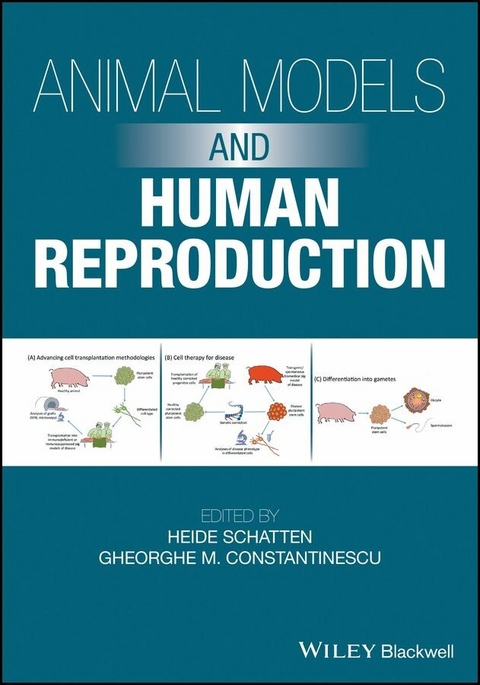
Animal Models and Human Reproduction (eBook)
600 Seiten
Wiley-Blackwell (Verlag)
978-1-118-88142-2 (ISBN)
Our knowledge of reproductive biology has increased enormously in recent years on cellular, molecular, and genetic levels, leading to significant breakthroughs that have directly benefitted in vitro fertilization (IVF) and other assisted reproductive technologies (ART) in humans and animal systems.
Animal Models and Human Reproduction presents a comprehensive reference that reflects the latest scientific research being done in human reproductive biology utilizing domestic animal models. Chapters on canine, equine, cow, pig, frog, and mouse models of reproduction reflect frontier research in placental biology, ovarian function and fertility, non-coding RNAs in gametogenesis, oocyte and embryo metabolism, fertilization, cryopreservation, signal transduction pathways, chromatin dynamics, epigenetics, reproductive aging, and inflammation. Chapters on non-human primate models also highlight recent advancements into such issues as human in vitro fertilization (IVF) and assisted reproductive technologies (ART).
This book offers animal scientists, reproductive biology scientists, clinicians and practitioners, invaluable insights into a wide range of issues at the forefront of human reproductive health.
About the Editors
Heide Schatten Department of Veterinary Pathobiology, University of Missouri-Columbia, Columbia, USA
Gheorghe M. Constantinescu Department of Biomedical Sciences, University of Missouri-Columbia, Columbia, USA
About the Editors Heide Schatten Department of Veterinary Pathobiology, University of Missouri-Columbia, Columbia, USA Gheorghe M. Constantinescu Department of Biomedical Sciences, University of Missouri-Columbia, Columbia, USA
Animal Models and Human Reproduction 1
Contents 7
List of Contributors 17
1: Anatomy of the Reproductive System 21
1.1 Male Genital Organs in Domestic Mammals 21
1.1.1 The Testicle 21
1.1.2 The Epididymis, Ductus Deferens, and Spermatic Cord 22
1.1.3 The Descent of the Testicle 23
1.1.4 The Tunics of the Spermatic Cord and the Testicle 24
1.1.5 The Accessory Genital Glands 24
1.1.6 The Penis and the Prepuce 24
1.2 Female Genital Organs in Domestic Mammals 25
1.2.1 The Ovary 25
1.2.2 The Uterine Tube: Salpinx, Fallopian Tube 27
1.2.3 The Uterus 27
1.2.4 The Vagina and the Vestibule 28
1.2.5 The Vulva and the Clitoris 28
1.2.6 The Mammary Gland 29
1.3 The Genital System in Domestic Mammals Species by Species 29
1.3.1 The Genital System in the Carnivores: Cat and Dog (Constantinescu, 2002) 29
1.3.2 The Genital System in the Pig 35
1.3.3 The Genital System in the Ruminants (Constantinescu, 2001, 2004a) 40
1.3.4 The Genital System in the Horse 50
1.4 Genital Organs in Laboratory Mammals 55
1.4.1 The Genital System in the Rabbit (Barone et al., 1973 Barone, 1978
1.4.2 The Genital System in the Mouse (Constantinescu, 2006) 62
1.4.3 The Genital System in the Rat (Constantinescu, 2007) 67
1.4.4 The Mammary Glands in Laboratory Animals (Figures 1.68-1.70) 70
1.4.5 The Genital System in the Xenopus laevis: African Clawed Frog (Constantinescu, 2005a) 71
1.4.6 The Genital System in the Brachidanio rerio (Zebrafish) (Constantinescu, 2005b) 76
References 76
2: Anatomy of Mammalian (Endocrine) Glands Controlling the Reproduction 79
2.1 The Hypothalamus Including the Hypophysis (Figures 2.1 and 2.2) 79
2.2 The Cerebral Epiphysis (see Figure 2.1) 81
2.3 The Thyroid Gland (Figure 2.3) 81
2.4 The Adrenal Glands (Figure 2.4) 82
2.5 The Sexual Glands 83
2.6 The Liver 83
References 83
3: Models for Investigating Placental Biology 85
3.1 Introduction 85
3.2 Classification of Placenta 86
3.3 Development of Human Placenta 89
3.3.1 Trophoblast Subtypes and Development of Functional Placenta 89
3.3.2 Placental Development 91
3.3.3 Development of Fetal Membranes 91
3.4 Modeling Placental Development and Diseases of Placental Origin 93
3.4.1 In Vitro Cell Models 93
3.4.2 Animal Models 96
3.4.3 Alternative Animal Models 99
3.5 Summary 102
References 102
4: Early Developmental Programming of the Ovarian Reserve, Ovarian Function, and Fertility 111
4.1 Introduction 111
4.2 Impact of Prenatal Environmental Challenges on Fetal Oogonia (Germ Cells) 112
4.2.1 Farm Animal Models 112
4.3 Impact of Prenatal Environmental Challenges on Fetal Follicle/Oocyte Numbers (Healthy versus Atretic) and Oocyte Quality 114
4.3.1 Farm Animal Models 114
4.3.2 Humans/Primates 114
4.4 Impact of Prenatal Environmental Challenges on the Ovarian Reserve (Total Number of Morphologically Healthy Follicles/Oocytes in Ovaries) in Offspring 115
4.4.1 Farm Animal Models 115
4.4.2 Rodent Models 117
4.4.3 Humans/Primates 117
4.5 Impact of Prenatal Environmental Challenges on Ovarian Function (e.g., Pituitary Gonadotropin Secretion, Ovarian Hormone/Growth Factor Production, Response to Gonadotropins, Follicle Development, Irregular Reproductive Cycles, and Ovulation Rate) in Offspring 118
4.5.1 Farm Animal Models 118
4.5.2 Rodent Models 119
4.5.3 Humans/Primates 119
4.6 Impact of Prenatal Environmental Challenges on Fertility (as Measured by Conception Rates, Fecundity, or Age at Puberty or Menopause) in Offspring 120
4.6.1 Farm Animal Models 120
4.6.2 Rodent Models 120
4.6.3 Humans/Primates 121
4.7 Summary and Conclusion 121
References 122
5: Small Non-Coding RNAS in Gametogenesis 129
5.1 Small Non-Coding RNAs 129
5.2 Function of sncRNAs in Gametogenesis 129
5.2.1 miRNAs Biogenesis 130
5.2.2 Function of miRNAs in the Process of Spermatogenesis 132
5.2.3 endo-siRNAs Biogenesis 135
5.2.4 endo-siRNAs in the Process of Spermatogenesis 135
5.2.5 pi-RNAs Biogenesis 137
5.2.6 Role of piRNAs in Male Germ Cell Development 137
Acknowledgment 139
References 139
6: The Ovarian Follicle of Cows as a Model for Human 147
6.1 Introduction 147
6.1.1 Why We Know More About Cow Than Human Reproduction 147
6.2 A Similar Physiology of Folliculogenesis 148
6.2.1 Basic Physiology of Reproduction 148
6.2.2 Time from Primordial Follicle to Ovulation 149
6.2.3 Follicular Waves 150
6.2.4 Characteristics of the Dominant Follicle 151
6.3 Assisted Reproduction 151
6.3.1 Response to Ovarian Stimulation 152
6.3.2 Response to FSH Coasting 153
6.3.3 Response to IVM 154
6.3.4 Biomarker Analysis 154
6.4 Testing the Competence Hypothesis 156
6.5 Conclusion 156
References 156
7: Production of Energy and Determination of Competence: Past Knowledge, Present Research, and Future Opportunities in Oocyte and Embryo Metabolism 165
7.1 Introduction 165
7.2 Measuring Metabolism 165
7.2.1 Approaches 165
7.2.2 Limitations 167
7.3 The Relationship Between Oocyte Metabolism and Quality 168
7.3.1 Energy Substrates During Oocyte Maturation 168
7.3.2 Oocyte Metabolic Pathways 169
7.3.3 Oocyte Metabolism of Fatty Acids 171
7.4 Embryo Metabolism 172
7.4.1 Precompaction: More Than Just Pyruvate 173
7.4.2 Postcompaction: More Than Just Glucose 174
7.4.3 Lactate: The Other Carbohydrate 175
7.4.4 Noncarbohydrates 176
7.5 Metabolic Biomarkers 177
7.5.1 The Oocyte 177
7.5.2 The Embryo 178
7.6 Toward Personalized Culture Media: Formulating Media for Specific Maternal Conditions 178
7.6.1 Maternal Impact on Embryo Development 178
7.6.2 Impaired Embryo Metabolism 179
7.6.3 Mitochondrial Dysfunction 179
7.6.4 Endoplasmic Reticulum Stress 180
7.7 Summary 181
References 182
8: Signal Transduction Pathways in Oocyte Maturation 197
8.1 Introduction 197
8.1.1 Oocyte Maturation 198
8.1.2 Oocyte Nuclear Maturation 198
8.1.3 Cumulus Cell Expansion 199
8.1.4 The Impact of FSH During In Vitro Maturation 199
8.2 Phosphodiesterase 201
8.2.1 Overview 201
8.2.2 Cyclic Nucleotide Signaling 202
8.2.3 Phosphodiesterase Superfamily 202
8.2.4 Oocyte Meiosis and cAMP 203
8.2.5 PDE3A 204
8.2.6 PDE8A 206
8.2.7 Cyclic GMP and PDE5/6 207
8.2.8 Cellular Compartmentalization of Cyclic Nucleotide Signaling 208
8.2.9 C-Type Natriuretic Peptide (CNP) and cGMP 209
8.3 Gap Junction Communications 212
8.3.1 Connexin, Connexon, and Gap Junctions 212
8.3.2 Gap Junction Communications and Oocyte Maturation 213
8.4 Metabolic Switch (AMPK) 213
8.4.1 Overview 213
8.4.2 Structure and Regulation of AMPK 214
8.4.3 Activators of AMPK 214
8.4.4 Downstream Targets of AMPK 215
8.4.5 AMPK in Reproductive Function 215
8.4.6 AMPK in Oocyte Function 216
8.5 Conclusion 218
References 218
9: Pig Models of Reproduction 233
9.1 Introduction 233
9.2 Early Embryonic Development 233
9.3 Oocyte Maturation 235
9.4 Fertilization 236
9.5 Tubouterine Contractility 236
9.6 Development to the Blastocyst Stage 236
9.7 Pregnancy and Developmental Programming 237
9.8 Puberty 242
9.9 Reproductive Disease 243
9.10 Summary 243
Acknowledgments 243
References 243
10: The Mare as an Animal Model for Reproductive Aging in the Woman 255
10.1 Introduction 255
10.2 Ovarian Activity and Reproductive Cycles 256
10.2.1 Ovarian Reserve 256
10.2.2 Assessment of Antral Follicles 256
10.2.3 Reproductive Cycles 257
10.2.4 Reproductive Senescence 258
10.3 The Follicle 258
10.3.1 Follicle Growth and Selection 258
10.3.2 Follicular Environment 258
10.4 Fertility 259
10.4.1 Natural Decline in Fertility with Aging 259
10.4.2 Assisted Reproductive Procedures 259
10.4.3 Maternal Age and Pregnancy Failure 260
10.5 The Oocyte 260
10.5.1 Oocyte Donation 260
10.5.2 Oocyte Morphology and Viability 261
10.6 Conclusions 262
References 262
11: Spotlight on Reproduction in Domestic Dogs as a Model for Human Reproduction 267
11.1 Introduction 267
11.1.1 Scope of the Chapter 267
11.1.2 Dog's Importance to Modern Human Society 267
11.1.3 Dog Taxonomy 268
11.1.4 Dog Origin 268
11.1.5 Dog Breeds 270
11.1.6 Dog Genome 271
11.1.7 Dog as a Model for Human Genetic Disorders 274
11.1.8 Dog Life Span 275
11.2 Dog Reproduction 275
11.2.1 Dog Onset of Puberty 275
11.2.2 Dog Fertility 276
11.2.3 Reproductive Anatomy of the Male Dog 276
11.2.4 Reproductive Physiology of the Male Dog 280
11.2.5 Reproductive Anatomy of the Female Dog 300
11.2.6 Reproductive Physiology of the Female Dog 307
11.2.7 Dog Fertilization 318
11.2.8 Dog Pregnancy, Development and Birth 338
11.3 Dog-Assisted Reproductive Technology 341
11.3.1 Artificial Insemination 341
11.3.2 Superovulation 342
11.3.3 Oocyte In Vitro Maturation 342
11.3.4 In Vitro Fertilization 343
11.3.5 Intracytoplasmic Sperm Injection 344
11.3.6 Embryo Transfer 345
11.3.7 Cryopreservation 345
11.3.8 Sperm Sexing 346
11.3.9 Somatic Cell Nuclear Transfer in Dogs 347
11.3.10 Dog Embryonic Stem Cells and Induced Pluripotent Stem Cells 347
11.3.11 Genetically Modified Dogs 348
11.4 Dog Contraception 348
11.5 The Dog as a Model for Human Reproduction 348
11.5.1 Disorders of Sexual Development 349
11.5.2 Cancer 350
11.5.3 Obesity 351
11.5.4 Dog Infertility 351
11.5.5 Aneuploidy 351
11.6 Concluding Statements 352
Acknowledgments 353
References 353
12: Animal Models of Inflammation During Pregnancy 379
12.1 Introduction 379
12.2 Local Inflammation of the Pregnant Female Reproductive Tract 380
12.2.1 Introduction 380
12.2.2 In Utero Inflammation and Adverse Pregnancy Outcomes 380
12.2.3 Ascending Infections and Adverse Pregnancy Outcomes 381
12.3 Systemic Inflammation During Pregnancy 381
12.3.1 Introduction 381
12.3.2 Systemic Viral or Bacterial Infection 383
12.3.3 Maternal Stress: Chronic Sterile Inflammation 384
12.3.4 Preeclampsia-Related Inflammation Models 384
12.3.5 Models of Antiphospholipid Antibody Syndrome (APS) 385
12.4 Genetic Models and Cellular Manipulation to Study Inflammation During Pregnancy 385
12.4.1 Introduction 385
12.4.2 Breeding Cross Models of Induced Inflammation 385
12.4.3 Genetically Modified Models of Inflammation and Pregnancy 387
12.4.4 Immune Cell Manipulation to Study Inflammation 387
12.5 Inflammation During Pregnancy and Offspring Disease 390
12.5.1 Introduction 390
12.5.2 Models of Inflammation During Pregnancy Resulting in Offspring Disease 391
12.6 Perspectives and Conclusions 392
Acknowledgments 393
References 393
13: Practical Approaches, Achievements, and Perspectives in the Study on Signal Transduction in Oocyte Maturation and Fertilization: Focusing on the African Clawed Frog Xenopus laevis as an Animal Model 403
13.1 Introduction to Reproductive Biology of Frog Oocytes and Eggs 403
13.2 Practical Approaches 403
13.2.1 Maintenance of Adult Frogs 403
13.2.2 Collection of Immature Oocytes and Unfertilized Eggs 404
13.2.3 Preparation of Sperm 405
13.2.4 In Vitro Oocyte Maturation and Fertilization 406
13.2.5 Microinjection and Other Pharmacological Treatments 406
13.2.6 Biochemical Fractionations of Oocytes and Eggs 410
13.2.7 Biochemical and Cell Biological Assays 411
13.2.8 Indirect Immunofluorescent Study 413
13.2.9 Protein Identification by Mass Spectrometry Analysis 414
13.2.10 Emerging Approaches: Live-Cell Imaging and Genome Manipulations 414
13.3 Achievements and Perspectives 415
Acknowledgments 416
Appendix 416
References 419
14: Prezygotic Chromosomal Examination of Mouse Spermatozoa 421
14.1 Introduction 421
14.2 Procedure of Sperm Chromosome Screening 422
14.2.1 Sperm Genome Cloning Using an Androgenic Embryo (Step (a)) 422
14.2.2 Induction of PCC for Rapid Chromosome Visualization (Step (b)) 423
14.2.3 Production of Diploid Embryos by Fusion of Blastomere with MII Oocytes (Step (c)) 423
14.3 Practical Use of SCS Before Fertilization 424
14.4 Conclusion 426
Acknowledgments 426
Addendum 426
References 426
15: Molecular and Cellular Aspects of Mammalian Sperm Acrosomal Exocytosis 429
15.1 Introduction 429
15.2 Structure of the Acrosome 429
15.3 Intermediate Stages of Exocytosis 432
15.4 Sperm Capacitation Prepare the Sperm to Undergo Acrosomal Exocytosis 432
15.5 Physiological Site for the Occurrence of Acrosomal Exocytosis 434
15.6 SNARES and Other Proteins from the Fusion Machinery 436
15.7 Hyperpolarization 437
15.8 Actin Cytoskeleton 437
15.9 Calcium 438
References 439
16: Sperm Chromatin Dynamics Associated with Male Fertility in Mammals 447
16.1 Introduction 447
16.2 Sperm Chromatin Structure Modulates Sperm Nuclear Shape and Function 449
16.3 The Bull Is a Suitable Model for the Study of Male Fertility in Humans 450
16.4 Conclusions and Prospects 450
Acknowledgments 451
References 451
17: Epigenome Modification and Ubiquitin-Dependent Proteolysis During Pronuclear Development of the Mammalian Zygote: Animal Models to Study Pronuclear Development 455
17.1 Introduction 455
17.2 Milestones of Pronuclear Development 456
17.3 Nuclear Envelope, Nuclear Pore Complexes, and Nuclear Lamina Changes During Pronuclear Development 458
17.4 Molecular Mechanism of Paternal and Maternal Pronucleus Biogenesis 460
17.5 Role of UPS in Pronuclear Biogenesis 462
17.6 Posttranslational Modifications of Pronuclear Histones 463
17.7 Sirtuin Family Histone Deacetylases in Gametogenesis and Development 466
17.8 Clinical and Technological Considerations 467
17.9 Conclusions 470
Acknowledgments 470
References 470
18: Alterations of the Epigenome Induced by the Environment in Reproduction 487
18.1 Introduction 487
18.2 Epigenetic Reprogramming 487
18.2.1 The Epigenetic Reprogramming in Germ Lines 489
18.2.2 The Epigenetic Reprogramming in the Early Embryo 490
18.3 Environment and Epigenetic Alterations 490
18.4 Animal Models Used in Reproduction to Research Epigenetic Alterations Induced by the Environment 492
18.4.1 Viable Yellow (A) Mouse Model 492
18.4.2 Axin 1 Mouse (Fu) Model 492
18.4.3 Micronutrient Animal Models 492
18.4.4 The Protein-Restricted Diet Model 493
18.4.5 The Caloric Restriction Model 493
18.4.6 The Animal Model of Zinc Deficiency 493
18.4.7 Undernutrition Models 493
18.4.8 The Obese Model 493
18.4.9 The Diabetes Mellitus Model 494
18.4.10 Polycystic Ovary Syndrome (PCOS) 494
18.4.11 The Aging Model 494
18.4.12 Other Models 494
18.5 Effects of Environment on Epigenetic Modifications in Humans 495
18.6 Epigenetics and Assisted Reproductive Technology (ART) 495
18.7 Priorities for the Future 496
Acknowledgments 496
References 496
19: Toward Development of Pluripotent Porcine Stem Cells by Road Mapping Early Embryonic Development 505
19.1 Introduction 505
19.2 Current Status on the Pluripotent State in the Pig Embryo 509
19.3 Current Status of the Establishment of Porcine Embryonic Stem Cells (pESCs) 511
19.4 Current Status in Establishment of Porcine-Induced Pluripotent Stem Cells 514
19.5 Future Perspectives: Use of Global Profiling on Pluripotent Cells from Pig Embryo and Pluripotent Stem Cells 519
19.6 Discussion and Conclusions 521
Acknowledgments 522
References 522
20: Applications of Metabolomics in Reproductive Biology 529
20.1 Introduction 529
20.2 Metabolomics and Reproductive Biology 530
20.3 Metabolomics Studies in Large Animals as Models for Humans 533
20.4 Conclusions and Future Prospects 533
Acknowledgments 534
Conflict of Interest 534
References 534
21: Cryopreservation of Mammalian Oocytes 539
21.1 Principles of Cryopreservation 539
21.1.1 Water and Cell Cryopreservation 539
21.1.2 Cryoprotectants 540
21.1.3 Cooling Rate 542
21.2 Cryopreservation of Mammalian Oocytes 542
21.2.1 History 542
21.2.2 Mammalian Oocyte 549
21.2.3 Cryopreservation Methods 550
Acknowledgments 562
Abbreviations 563
References 563
Index 577
Supplemental Images 599
End User License Agreement 611
| Erscheint lt. Verlag | 12.1.2017 |
|---|---|
| Sprache | englisch |
| Themenwelt | Studium ► 1. Studienabschnitt (Vorklinik) ► Histologie / Embryologie |
| Naturwissenschaften ► Biologie ► Zoologie | |
| Technik | |
| Schlagworte | animal • ART • benefitted • Biowissenschaften • breakthroughs • cellular • Chapters • Comprehensive • Developmental Biology • directly • endocrinology • Endokrinologie • enormously • Entwicklungsbiologie • Human • humans • IVF • Knowledge • latest scientific • Life Sciences • Medical Science • Medizin • Models • Mouse • recent years • Reference • Reproductive • Research • significant • Tiermodell • Veterinäranatomie • Veterinäranatomie u. -physiologie • Veterinärmedizin • Veterinäranatomie • Veterinäranatomie u. -physiologie • Veterinärmedizin • Veterinary Anatomy & Physiology • Veterinary Medicine • vitro fertilization |
| ISBN-10 | 1-118-88142-7 / 1118881427 |
| ISBN-13 | 978-1-118-88142-2 / 9781118881422 |
| Informationen gemäß Produktsicherheitsverordnung (GPSR) | |
| Haben Sie eine Frage zum Produkt? |
 PDF (Ohne DRM)
Digital Rights Management: ohne DRM
Dieses eBook enthält kein DRM oder Kopierschutz. Eine Weitergabe an Dritte ist jedoch rechtlich nicht zulässig, weil Sie beim Kauf nur die Rechte an der persönlichen Nutzung erwerben.
Dateiformat: PDF (Portable Document Format)
Mit einem festen Seitenlayout eignet sich die PDF besonders für Fachbücher mit Spalten, Tabellen und Abbildungen. Eine PDF kann auf fast allen Geräten angezeigt werden, ist aber für kleine Displays (Smartphone, eReader) nur eingeschränkt geeignet.
Systemvoraussetzungen:
PC/Mac: Mit einem PC oder Mac können Sie dieses eBook lesen. Sie benötigen dafür einen PDF-Viewer - z.B. den Adobe Reader oder Adobe Digital Editions.
eReader: Dieses eBook kann mit (fast) allen eBook-Readern gelesen werden. Mit dem amazon-Kindle ist es aber nicht kompatibel.
Smartphone/Tablet: Egal ob Apple oder Android, dieses eBook können Sie lesen. Sie benötigen dafür einen PDF-Viewer - z.B. die kostenlose Adobe Digital Editions-App.
Buying eBooks from abroad
For tax law reasons we can sell eBooks just within Germany and Switzerland. Regrettably we cannot fulfill eBook-orders from other countries.
aus dem Bereich