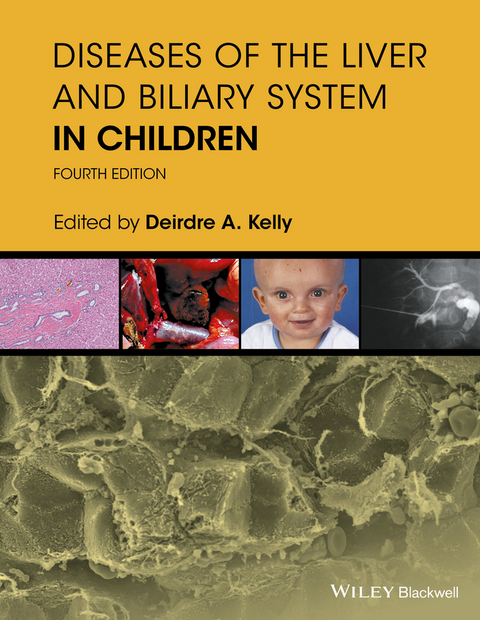
Diseases of the Liver and Biliary System in Children (eBook)
John Wiley & Sons (Verlag)
978-1-119-04691-2 (ISBN)
This market-leading book, with comprehensive coverage of the entire spectrum of liver disease in children, returns with 12 brand new chapters covering key areas in liver transplantation, viral hepatitis, and liver disease in infancy.
Authored by the world's leading hepatologists and pediatricians and expertly edited by Deirdre Kelly, it covers the entire topic from pathology to diagnosis and clinical management, and in all stages of childhood from the unborn baby through to infancy, and from childhood to the transition into adolescence. Hepatologists, pediatricians and gastroenterologists of all levels will find it an essential tool to consult time and time again
Prof Deirdre Kelly is one of the world's leading pediatric hepatologists, and was responsible for helping create the Paediatric Liver Unit at Birmingham Children's Hospital, a leading national and international institution for children with liver disease and undergoing liver transplantation.
She runs an active research programme focussing on viral hepatitis in children, molecular genetics of inherited liver disease, and quality/outcome of life following liver/intestinal transplantation.
She's a former President of the European Society of Paediatric Gastroenterology, Hepatology and Nutrition (ESPGHAN), the British Society for Paediatric Gastroenterology, Hepatology and Nutrition and the International Paediatric Transplant Association. She has been on the editorial boards of the Journal of Liver Transplantation and Surgery, Pediatric Transplantation and Alimentary Pharmacology & Therapeutics, and has had 250 papers published, as well as 7 books and 26 book chapters.
This market-leading book, with comprehensive coverage of the entire spectrum of liver disease in children, returns with 12 brand new chapters covering key areas in liver transplantation, viral hepatitis, and liver disease in infancy. Authored by the world s leading hepatologists and pediatricians and expertly edited by Deirdre Kelly, it covers the entire topic from pathology to diagnosis and clinical management, and in all stages of childhood from the unborn baby through to infancy, and from childhood to the transition into adolescence. Hepatologists, pediatricians and gastroenterologists of all levels will find it an essential tool to consult time and time again
Prof Deirdre Kelly is one of the world's leading pediatric hepatologists, and was responsible for helping create the Paediatric Liver Unit at Birmingham Children's Hospital, a leading national and international institution for children with liver disease and undergoing liver transplantation. She runs an active research programme focussing on viral hepatitis in children, molecular genetics of inherited liver disease, and quality/outcome of life following liver/intestinal transplantation. She's a former President of the European Society of Paediatric Gastroenterology, Hepatology and Nutrition (ESPGHAN), the British Society for Paediatric Gastroenterology, Hepatology and Nutrition and the International Paediatric Transplant Association. She has been on the editorial boards of the Journal of Liver Transplantation and Surgery, Pediatric Transplantation and Alimentary Pharmacology & Therapeutics, and has had 250 papers published, as well as 7 books and 26 book chapters.
Title Page 5
Copyright Page 6
Contents 7
Contributors 9
Foreword to the First Edition 12
Preface 13
Acknowledgments 14
Section 1 Understanding the Liver 15
Chapter 1 Structure, Function, and Repair of the Liver 17
Structure 17
Function 26
Liver growth and regeneration 30
Liver fibrosis 30
References 31
Chapter 2 Liver Pathology in Children 32
What should you expect from your pathologist? 32
Approach to biopsy interpretation 32
Special stains 35
Conclusions after assessment and patterns of liver disease 36
References 37
Chapter 3 Liver Immunology and Its Application in Diseases 38
The liver as a lymphoid organ 38
Hepatic tolerance 38
Immune response by the liver 39
Intrahepatic microenvironment milieu 45
Hepatocellular carcinoma 45
Gut and liver link 45
Applications of immunological based therapies in liver diseases 46
Conclusion 46
References 47
Chapter 4 Molecular Genetics and Liver Disease 48
Basic terms in molecular genetics and clinical interpretation of mutations 48
Basic principles for the interpretation of molecular genetic tests 49
Advancing the understanding of liver biology and pathobiology 49
Genetic diagnosis in the clinic 50
Genetics and complex liver disorders 51
Successes and future challenges 51
References 52
Section 2 Investigating the Liver 53
Chapter 5 Useful Investigations in the Assessment of Liver Disease 55
Functions of the liver 55
Clinical chemistry and hematology 56
Common clinical presentations of liver disease in infants and children 59
Investigating the liver 62
References 70
Section 3 Supporting the Child and Family 71
Chapter 6 Multidisciplinary Approach to Liver Disease 73
Chapter 6.1 The Role of the Multidisciplinary Team 74
Living with liver disease 74
Effective team working 74
Consent to treatment 75
Members of the multidisciplinary team 75
Roles within the multidisciplinary team 76
Shared care protocols for patient management 81
Chapter 6.2 The Role of the Dietitian 82
Prevalence of malnutrition 82
Reduced energy intake 83
Increased energy expenditure 83
Consequences of malnutrition 83
Nutritional assessment 85
Nutritional therapy (Figure 6.5) 85
Acute liver disease 89
Cystic fibrosis related liver disease 89
Conclusion 89
Chapter 6.3 The Role of the Psychologist 90
Child development and psychosocial functioning 90
Behavior problems 90
Cognitive functioning 90
Hepatic encephalopathy 91
Developmental, intellectual, and neuropsychological assessment 91
Attachment 91
Pain 91
Post-traumatic stress symptoms and post?traumatic stress disorder 92
Family functioning and adjustment to chronic illness 92
Altered physical appearance 93
Liver transplantation 93
Treatment adherence 93
End-of-life and palliative care 94
References 94
Section 4 Liver Disease in Pregnancy 95
Chapter 7 The Effects of Liver Disease in Pregnancy on Mother and Child 97
Physiological changes to the liver and biliary system during normal pregnancy 97
Hepatic conditions specific to pregnancy 97
Neonatal liver pathology secondary to maternal disease 105
Contraception 107
Pregnancy 108
Pregnancy following liver transplantation 109
References 110
Section 5 Liver Disease in Infancy 111
Chapter 8 The Jaundiced Baby 113
Disorders of bilirubin conjugation 113
Neonatal conjugated hyperbilirubinemia 115
Jaundice in multisystem disorders 130
Standard therapy for conjugated hyperbilirubinemia 139
References 140
Chapter 9 The Acutely Ill Baby 141
Approach to diagnosis and management 141
Infection 142
Fetal and neonatal ascites 142
Investigation 142
Treatment 143
Galactosemia 143
Infantile liver failure 145
Neonatal hemochromatosis 145
Disorders of mitochondrial energy metabolism 145
Deficiencies of the electron transport chain enzymes 146
Mitochondrial DNA depletion syndrome 146
Alpers syndrome 146
Tyrosinemia type I 147
Familial hemophagocytic lymphohistiocytosis 149
Recurrent acute liver failure syndrome 149
Inborn errors of metabolism associated with hepatic enzyme deficiency 150
Urea cycle disorders 150
Defects in fatty acid oxidation 151
Carnitine palmitoyl transferase 1 deficiency 152
Medium-chain acyl-coenzyme dehydrogenase deficiency 153
Multiple acyl-coenzyme A dehydrogenase defect (glutaric acidemia type 2) 153
Long-chain 3-hydroxyacyl-CoA dehydrogenase deficiency 153
Organic acidemias 154
Propionic acidemia 154
Methylmalonic acidemia 154
Maple syrup urine disease 154
Other organic acidemias 155
Transaldolase deficiency 156
Hepatocyte transplantation 156
Screening for inborn errors of metabolism 156
References 156
Chapter 10 Neonatal Hemochromatosis 158
Etiology of neonatal hemochromatosis 158
Pathogenesis of gestational alloimmune liver disease 159
Liver pathology 160
Extrahepatic manifestations 161
Clinical presentation 162
Clinical and laboratory findings 162
Diagnosis and differential diagnosis 163
Treatment 165
Prevention in future pregnancies 165
Conclusion 165
References 166
Section 6 Liver Disease in Older Children 167
Chapter 11 Autoimmune Liver Disease 169
Definition 169
Autoimmune hepatitis 170
Autoimmune hepatitis/sclerosing cholangitis overlap syndrome 178
Recurrence of autoimmune liver disease after transplantation 181
De novo autoimmune hepatitis after transplantation 181
Conclusion 182
References 182
Chapter 12 Drug-Induced Liver Disease 183
Role of the liver in drug metabolism 183
Mechanisms of drug-induced liver injury 184
Pathogenesis 184
Epidemiology 184
Host factors affecting enzyme activity 184
Host factors affecting glutathione cytoprotection 185
Clinicopathological spectrum of drug-induced liver injury 185
Diagnosis of suspected drug-induced liver injury 188
Analgesic medications 190
Antimycobacterial medications 193
Anesthetic agents 200
Immunosuppressive medications 201
Cytotoxic therapy 202
Propylthiouracil 202
H2-antagonists and proton-pump inhibitors 202
Treatment for attention deficit hyperactivity disorder: atomoxetine 202
Recreational drugs 202
Herbal medications 203
Acknowledgments 204
References 204
Chapter 13 Viral Hepatitis 205
Enteric transmitted viral hepatitis 205
Parenterally transmitted viral hepatitis 208
Herpesviruses 220
Common childhood viral infection which may be associated with hepatitis 223
Viral hemorrhagic fever viruses 224
References 224
Chapter 14 Congenital and Structural Abnormalities of the Liver 225
Fibrocystic disorders 225
Autosomal recessive polycystic kidney disease 230
Meckel–Gruber syndrome 232
Nephronophthisis 232
Joubert syndrome 232
Renal–hepatic–pancreatic dysplasia 233
Skeletal ciliopathies 233
Bardet–Biedl syndrome 234
Alström syndrome 234
Autosomal dominant polycystic kidney disease 234
Future therapies 235
Vascular disorders of the liver 235
Other hepatic cysts 238
References 239
Chapter 15 Non-Alcoholic Steatohepatitis in Childhood 241
Epidemiology 241
Pathogenesis 242
Risk factors: role of gene and environment 244
Associated co-morbidities 244
Clinical features 246
Clinical evaluation 247
Scoring systems 251
Natural history 251
Treatment 251
Conclusion 253
References 253
Chapter 16 Hepatobiliary Disease in Cystic Fibrosis 255
Spectrum of hepatobiliary manifestation of cystic fibrosis 257
Clinical features 260
Diagnosis of cystic fibrosis?associated liver disease 263
Hepatic follow-up of cystic fibrosis patients 266
Treatment options for cystic fibrosis-associated liver disease 266
References 269
Section 7 Acute Liver Disease 271
Chapter 17 Non-Viral Infectious Liver Disease 273
Systemic acute bacterial infection 273
Chronic/granulomatous bacterial infection 275
Localized bacterial infection 277
Infective cholangitis (see Chapters 8, 11, 25, and 27) 278
Spirochetes 279
Rickettsia 280
Parasites 281
Fungi 282
References 283
Chapter 18 Acute Liver Failure 285
Etiology 285
Pathology 289
Biochemistry 290
Pathogenesis 290
Clinical manifestations 291
Management 291
Prevention and management of complications 293
Prognosis 299
Outcomes 300
References 300
Section 8 Metabolic Liver Disease 303
Chapter 19 Metabolic Liver Disease in the Infant and Older Child 305
Pathophysiology of liver dysfunction in inborn errors of metabolism 305
Clinical presentation of liver metabolic disease [1, 2] 306
Clinical evaluation 306
Initial investigations for metabolic liver disease 306
Disorders of carbohydrate metabolism 307
Lysosomal storage disorders [9–11] 315
Congenital disorders of glycosylation [12] 325
Mitochondrial respiratory chain disorders [13, 14] 326
Alpers–Huttenlocher syndrome (progressive infantile poliodystrophy, progressive neuronal degeneration of childhood) [17] 328
MEGDEL syndrome (3-methylglutaconic aciduria, deafness, encephalopathy, Leigh-like syndrome) [18] 328
Peroxisomal disorders [19] 329
Reye syndrome [20] 330
Disorders of intermediary metabolism 331
The porphyrias [21] 333
Abetalipoproteinemia [22] 334
References 335
Chapter 20 Disorders of Copper Metabolism 337
Copper – essential but toxic 337
Copper metabolism 338
Normal values 341
Wilson disease (OMIM277900) 342
Non-wilsonian copper-related cirrhosis in childhood 351
References 352
Section 9 Management of Chronic Liver Disease 355
Chapter 21 Complications and Management of Chronic Liver Disease 357
Etiology and pathophysiology of chronic liver disease 357
Clinical presentation and diagnosis of chronic liver disease 358
Complications of chronic liver disease 360
Coagulopathy 376
Malnutrition 377
Conclusion 378
References 378
Section 10 The Liver and Other Organs 381
Chapter 22 The Liver in Systemic Illness 383
Interpretation of abnormal liver function tests in systemic illness 383
Liver dysfunction according to prevailing pathophysiology 384
Principles of management of liver disease in systemic illness 399
Conclusion 401
References 401
Chapter 23 Skin Disorders in Liver Disease 403
Structure and function of normal skin 403
Dermatological manifestations of liver disease 404
Skin manifestations of malnutrition 406
Dermatological complications of liver transplantation 406
Cutaneous malignancies 414
Graft-versus-host disease 415
Non-specific skin rashes 416
Liver disease induced by treatment of dermatological conditions 416
Approach to diagnosis of dermatological lesions 416
References 417
Chapter 24 Dental Care of Children with Liver Disease 419
Formation and composition of enamel and dentine 419
Dental disease 419
Dental caries (tooth decay) 419
Periodontal disease 420
Prevention of dental disease 420
Managing active oral infection 421
Intrinsic dental pigmentation 421
Treatment of discolored teeth 421
Enamel hypoplasia in children with liver disease 422
Dental treatment of teeth with enamel defects 422
Guidelines for the dental management of children with liver disease 422
Oral care of transplant recipients 423
Delayed eruption in pediatric liver transplantation 423
Immunosuppressive therapy and delayed eruption 423
Teething troubles and the management of delayed eruption 423
Ciclosporin-induced gingival overgrowth in transplant recipients 424
Pathogenesis of gingival overgrowth 424
Plaque and ciclosporin?induced gingival overgrowth 425
Gingival overgrowth, Neoral®, tacrolimus, and nifedipine 425
Prophylactic antibiotic therapy 425
Guidelines for the dental management of pediatric liver-graft recipients 425
References 426
Section 11 Surgical Disorders of the Liver and Bile Ducts 427
Chapter 25 Biliary Atresia and Other Causes of Surgical Jaundice in Infancy 429
Biliary atresia 429
Choledochal malformation 438
Spontaneous biliary perforation 441
Chapter 26 Liver Trauma in Children 444
History 444
Pathophysiology of liver injury 445
Presentation and investigation 445
Acute management 446
Early and late complications and treatment 447
The Red Cross War Memorial Children’s Hospital experience 450
Outcome and prognosis 451
Conclusion 451
References 452
Chapter 27 Surgical Management of Portal Hypertension 453
Surgically relevant pathophysiological aspects and clinical presentations of portal hypertension 454
Anatomical basis for portal hypertension surgery 462
Surgical techniques 464
Strategies in the 21st century 469
Results and complications of portal hypertension surgery 470
Conclusion 471
References 471
Chapter 28 Primary Hepatic Tumors 473
Epidemiology 473
Etiology 473
Malignant tumors 475
Benign tumors 488
References 492
Chapter 29 Disorders of the Pancreas 493
Anatomy and physiology 493
Laboratory investigations of the pancreas 496
Imaging of the pancreas 496
Etiopathology of pancreatic disorders 497
Anatomical anomalies 497
Pancreatitis 500
Inherited pancreatic disorders of the exocrine pancreas 506
Pancreatic trauma 508
Pancreatic tumors 508
Conclusion 511
References 511
Section 12 Transplantation 513
Chapter 30 Anesthesia and Intensive Care in Pediatric Liver Disease 515
Anesthesia in liver disease 515
Anesthesia for liver transplantation 518
Anesthesia after liver transplantation 521
Anesthesia for hepatobiliary surgery 521
Critical care support 522
Conclusion 525
References 525
Chapter 31 Liver Transplantation 526
Indications for liver transplantation 526
Pre-transplant evaluation (Box 31.2) 530
Pre-transplant assessment of severity of liver disease 531
Contraindications for transplantation 532
Preparation for transplantation 532
Liver transplant surgery 534
Postoperative management 539
Postoperative complications 540
Complications after the first postoperative week 541
Late complications post-liver transplant 543
Survival following liver transplantation 545
Factors affecting survival 545
Quality of life post-transplant 548
Growth post-transplant 548
Endocrine development 548
Psychosocial development 548
Outpatient monitoring 549
References 550
Chapter 32 Small-Bowel Transplantation in Children 552
Intestinal failure 552
Complications of total parenteral nutrition 554
Timing of referral for transplantation 555
Assessment for intestinal transplantation 557
Key areas in intestinal transplant assessment 557
Preoperative management 558
Transplant procedure 558
Postoperative management 561
Assessment of the graft 563
Intestinal grafts 563
Complications after transplantation 563
Causes of graft loss 566
Long-term outcomes and quality of life 567
Recent advances in the field of intestinal transplantation 568
Future status 568
References 568
Chapter 33 Combined Liver and Kidney Transplantation 570
Conditions requiring combined liver and kidney transplant 570
Patient selection 571
Patient preparation 574
Surgical and medical operative management 575
Postoperative management 577
Follow-up 578
Transfer to adult services 580
References 580
Section 13 Liver Disease Around the World 583
Chapter 34 Liver Disease in the Developing World 585
Neonatal liver disease 585
Chronic liver disease 586
Metabolic liver disease 589
Infectious diseases 592
Orthotopic liver transplantation 602
References 605
Section 14 Pediatric Liver Disease in Adult Life 607
Chapter 35 Transition to Adult Care 609
Understanding adolescence 610
Transition 611
Equipping young people for transition 612
Adherence 614
Transition readiness 615
Knowledge and skills training for pediatric and adult health-care professionals 615
Parents/carers and transition 616
Key components of transitional care programs 616
Evidence to support transition 616
Conclusion 619
Case studies 619
References 620
Chapter 36 Pediatric Liver Disease: Surviving to Adult Life 622
Biliary atresia 622
Autoimmune liver disease 623
Alagille syndrome 623
Progressive familial intrahepatic cholestasis 624
Congenital hepatic fibrosis and Caroli disease/syndrome 624
Cystic fibrosis 624
Tyrosinemia type I 625
Wilson disease 625
Liver disease and the Fontan circulation 625
Impact of liver disease on adulthood 625
Long-term outcomes after liver transplantation in childhood 626
Conclusion 627
References 627
Index 629
EULA 651
| Erscheint lt. Verlag | 4.1.2017 |
|---|---|
| Sprache | englisch |
| Themenwelt | Medizin / Pharmazie ► Allgemeines / Lexika |
| Medizinische Fachgebiete ► Innere Medizin ► Gastroenterologie | |
| Medizinische Fachgebiete ► Innere Medizin ► Hepatologie | |
| Medizin / Pharmazie ► Medizinische Fachgebiete ► Pädiatrie | |
| Schlagworte | Gastroenterologie u. Hepatologie • Gastroenterology & Hepatology • Medical Science • Medizin • Pädiatrie • Pädiatrie • pediatric, paediatric, gastroenterology, liver, pancreas, bile, biliary, children, disease, intestine. • Pediatrics |
| ISBN-10 | 1-119-04691-2 / 1119046912 |
| ISBN-13 | 978-1-119-04691-2 / 9781119046912 |
| Informationen gemäß Produktsicherheitsverordnung (GPSR) | |
| Haben Sie eine Frage zum Produkt? |
 PDF (Adobe DRM)
Kopierschutz: Adobe-DRM
Adobe-DRM ist ein Kopierschutz, der das eBook vor Mißbrauch schützen soll. Dabei wird das eBook bereits beim Download auf Ihre persönliche Adobe-ID autorisiert. Lesen können Sie das eBook dann nur auf den Geräten, welche ebenfalls auf Ihre Adobe-ID registriert sind.
Details zum Adobe-DRM
Dateiformat: PDF (Portable Document Format)
Mit einem festen Seitenlayout eignet sich die PDF besonders für Fachbücher mit Spalten, Tabellen und Abbildungen. Eine PDF kann auf fast allen Geräten angezeigt werden, ist aber für kleine Displays (Smartphone, eReader) nur eingeschränkt geeignet.
Systemvoraussetzungen:
PC/Mac: Mit einem PC oder Mac können Sie dieses eBook lesen. Sie benötigen eine
eReader: Dieses eBook kann mit (fast) allen eBook-Readern gelesen werden. Mit dem amazon-Kindle ist es aber nicht kompatibel.
Smartphone/Tablet: Egal ob Apple oder Android, dieses eBook können Sie lesen. Sie benötigen eine
Geräteliste und zusätzliche Hinweise
Buying eBooks from abroad
For tax law reasons we can sell eBooks just within Germany and Switzerland. Regrettably we cannot fulfill eBook-orders from other countries.
aus dem Bereich