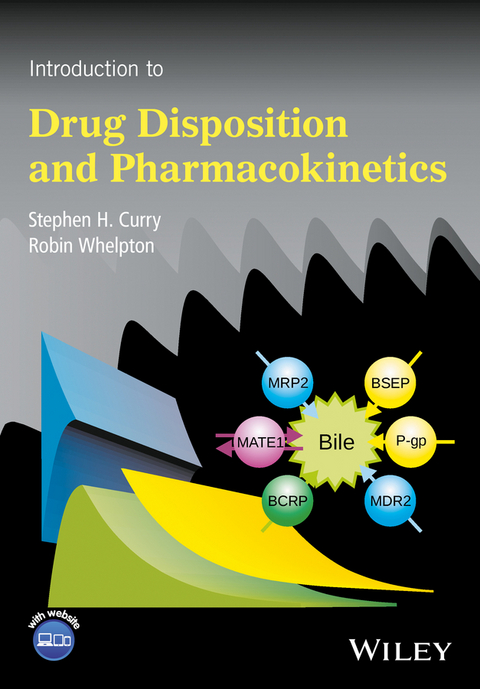
Introduction to Drug Disposition and Pharmacokinetics (eBook)
John Wiley & Sons (Verlag)
978-1-119-26105-6 (ISBN)
The book will be of benefit to students of medicine, pharmacy, pharmacology, biomedical sciences and veterinary science, including those who have elected to study the topic in more detail, such as via electives and special study modules. It will be of benefit to those involved in drug discovery and development, pharmaceutical and medicinal chemists, as well as budding toxicologists and forensic scientists who require the appropriate knowledge to interpret their findings and as an introductory text for clinical pharmacologists. Early chapters describe the basic principles of the topic while the later ones illustrate the application of those principles to modern approaches to drug development and clinical use. Full colour illustrations facilitate the learning experience and supporting material for course leaders and students can be found on the Companion Web Site
The application of knowledge of drug disposition, and skills in pharmacokinetics, are crucial to the development of new drugs and to a better understanding of how to achieve maximum benefit from existing ones. The book takes the reader from basic concepts to a point where those who wish to will be able to perform pharmacokinetic calculations and be ready to read more advanced texts and research papers. The book will be of benefit to students of medicine, pharmacy, pharmacology, biomedical sciences and veterinary science, including those who have elected to study the topic in more detail, such as via electives and special study modules. It will be of benefit to those involved in drug discovery and development, pharmaceutical and medicinal chemists, as well as budding toxicologists and forensic scientists who require the appropriate knowledge to interpret their findings and as an introductory text for clinical pharmacologists. Early chapters describe the basic principles of the topic while the later ones illustrate the application of those principles to modern approaches to drug development and clinical use. Full colour illustrations facilitate the learning experience and supporting material for course leaders and students can be found on the Companion Web Site "e;Another book on PK? Yes and there should be and it should be DD & PK. It is good, unique, and does fill a currently unmet need for those working in the xenobiotic arena. DD & PK is just like the perfect mystery novel the one you just can t put down. However, unlike a mystery novel which requires only one reading to find the answer, the reader of DD & PK will learn more than an answer to a single question. The reader will find many solutions to a wide variety of mysterious problems associated with the time course and actions of xenobiotics."e; International Journal of Toxicology, John A. Budny, PhD, President, PharmaCal, Ltd, 2018"e;This book has many innovations that make a welcome addition to the bookshelves of a wide range of pharmaceutical scientists. The effective use of gures and tables to summarize and clarify a wide range of issues is to be commended, as are the learning objectives at the start of the chapter coupled with the summary at the end providing a succinct way in understanding the objectives of the chapter and together with links to a website provides accessibility for all from the neophyte pharmacokineticist to the consultant physician. A book all in the Pharma industry should be aware of."e; Int. J. of Pharmacokinetics, Howard M. Hill, ResolvPharma, 2018"e;Overall, Introduction to Drug Disposition and Pharmacokinetics o ers its readership an in-depth view of classic pharmacokinetic concepts. This book would be an excellent choice for a pharmacokinetics elective or as an adjunctive text for an introductory course. This book reviews a wide array of clinically relevant topics and encourages the reader to apply the knowledge gained to all medi-cations. A robust and varied amount of online material is provided to enhance understanding and encourage discussion. It is likely that all readers, novice or experienced pharmacists, would nd value in this textbook."e; Currents in Pharmacy Teaching and Learning, Milena McLaughlin, Midwestern University Chicago College of Pharmacy, 2018"e;In summary, this is an excellent textbook for students new to the field of pharmaceutics and medical, pharmacy, and veterinary students, particularly those who envision a career in drug development research in either academia or industry."e; Veterinary Pathology Review, John K. Amory, University of Washington, 2018
Stephen Curry was Professor of Pharmacology at The London Hospital Medical College, Professor of Pharmaceutical Sciences at the University of Florida, and Professor of Pharmacology and Physiology at the University of Rochester before founding ADispell. He also spent ten years with AstraZeneca and predecessor companies. A graduate of De Montfort University and King's College London, he was honoured by the Faculty of Medicine of London University with the award of the Doctor of Medical Science Degree and is a Fellow of the Royal Pharmaceutical Society. As CEO of ADispell, he currently works in the field of technology transfer and translational science with early stage companies based on discoveries at The University of Rochester and Cornell University. Robin Whelpton, after obtaining his first degree in Applied Chemistry, joined the Department of Pharmacology and Therapeutics, The London Hospital Medical College, University of London as research assist to Professor Curry. Having obtained his PhD in Pharmacology, he became Lecturer and then Senior Lecturer before transferring to Queen Mary University of London to teach pharmacology to preclinical medical and dental students. His last post before retiring was Senior Lecturer in Pharmaceutical Chemistry in the School of Biological and Chemical Sciences. He has wealth of experience teaching drug distribution and pharmacokinetics to undergraduate and postgraduate students of medicine, dentistry, pharmacology, pharmacy, biomedical sciences, pharmaceutical chemistry and forensic science.
"Another book on PK? Yes and there should be and it should be DD & PK. It is good, unique, and does fill a currently unmet need for those working in the xenobiotic arena. DD & PK is just like the perfect mystery novel--the one "you just can't put down." However, unlike a mystery novel which requires only one reading to find the answer, the reader of DD & PK will learn more than an answer to a single question. The reader will find many solutions to a wide variety of mysterious problems associated with the time course and actions of xenobiotics." International Journal of Toxicology, September 2018, Reviewed by John A. Budny, PhD, President, PharmaCal, Ltd
"This book has many innovations that make a welcome addition to the bookshelves of a wide range of pharmaceutical scientists. The effective use of figures and tables to summarize and clarify a wide range of issues is to be commended, as are the learning objectives at the start of the chapter coupled with the summary at the end providing a succinct way in understanding the objectives of the chapter and together with links to a website provides accessibility for all from the neophyte pharmacokineticist to the consultant physician. A book all in the Pharma industry should be aware of." Int. J. of Pharmacokinetics
"Overall, the book is written in a professional manner, the explanations are clear and simple, and the authors use drug-specific PK data to reinforce the critical concepts of each chapter..." One particular strength of this book is its excellent use of full color figures/pictures, as well as clinically relevant drug examples, both of which reinforce the concepts described throughout"...."
In conclusion, the principles reviewed in this book and companion website provide a strong introductory knowledge base in PK, which should prepare readers to perform PK calculations, interpret PK literature, and consider PK properties when studying the clinical use of drugs." CPT, Aug 17
"In summary, this is an excellent textbook for students new to the field of pharmaceutics and medical, pharmacy, and veterinary students, particularly those who envision a career in drug development research in either academia or industry." Veterinary Pathology Review, 2018
1
Introduction: Basic Concepts
Learning objectives
This chapter was written for those unfamiliar with certain aspects of pharmacology and chemistry, including physical chemistry, and for those who feel a little revision would be helpful. By the end of the chapter the reader should be able to:
- use the Henderson–Hasselbalch equation to calculate the ionization of weak acids and bases
- plot concentration–time data to determine first‐order and zero‐order rate constants
- explain the effect of ionization on the partitioning of weak electrolytes between buffers and octanol.
1.1 Introduction
Pharmacology can be divided into two major areas, pharmacodynamics (PD) – the study of what a drug does to the body – and pharmacokinetics (PK) – the study of what the body does to the drug; hardly rigorous definitions but they suffice. Drug disposition is a collective term used to describe drug absorption, distribution, metabolism and excretion whilst pharmacokinetics is the study of the rates of these processes. By subjecting the observed changes, for example in plasma concentrations as a function of time, to mathematical equations (models) pharmacokinetic parameters such as elimination half‐life (t½), volume of distribution (V) and plasma clearance (CL) can be derived. Pharmacokinetic modelling is important for the:
- selection of the right drug for pharmaceutical development
- evaluation of drug delivery systems
- design of drug dosage regimens
- appropriate choice and use of drugs in the clinic.
A detailed knowledge of mathematics is not required to understand pharmacokinetics and it is certainly not necessary to be able to differentiate or integrate complex equations. The few examples in this book are standard differentials or integrals that can be quickly learnt if they are not known already. To understand the equations in this book requires little more than a basic knowledge of algebra, laws of indices and logarithms, a brief explanation of which can be found in Appendix 1. Furthermore, the astute reader will quickly realize that, although seemingly different, many equations take the same form, making learning easier. For example, drug binding to macromolecules, whether they be receptors, plasma proteins, transporters or enzymes, can be described using the same basic equation. Similarly, the equation describing the time course of formation and excretion of a drug metabolite is very much like that describing the plasma concentrations during the absorption and elimination of a drug.
The role of pharmacokinetics is illustrated in Figure 1.1. There is an optimum range of concentrations over which a drug has beneficial effects, but little or no toxicity – this range is the therapeutic range, sometimes referred to as the therapeutic window. There is a threshold concentration below which the drug in ineffective and a higher threshold above which adverse effects become problematic. If a single dose of a drug, for example aspirin taken to relieve a headache, is consumed, the concentration in the plasma will rise until the aspirin becomes effective. After a period of time the processes which remove aspirin from the body will reduce the concentration until the drug is no longer effective (Figure 1.1, curve (a)). The short duration of action may be fine for treating a headache but if the aspirin is to treat rheumatoid arthritis a much longer duration of action is required. Simply increasing the size of the dose is not the answer because eventually the plasma concentrations will enter the toxic region (Figure 1.1, curve (b)). However, by giving the aspirin as smaller divided doses at regular intervals the plasma concentrations can be maintained within the therapeutic window (Figure 1.1, curve (c)). The three curves depicted in Figure 1.1 were produced using relatively simple pharmacokinetic equations which will be explained later.
Figure 1.1 Typical concentration–time curves after oral administration of a drug: (a) single dose of drug; (b) a single dose twice the size of the previous one; (c) the same drug given as divided doses. The dose and frequency of dosing for (c) were calculated to ensure the concentrations remained in the therapeutic window.
1.2 Drugs and drug nomenclature
A drug is a substance that is taken, or administered, to produce an effect, usually a desirable one. These effects are assessed as physiological, biochemical or behavioural changes. There are two major groups of chemicals studied and used as drugs. First, there is a group of pharmacologically interesting endogenous substances, for example epinephrine, insulin and oxytocin. Second, there are the non‐endogenous or ‘foreign’ chemicals (xenobiotics), which are mostly products of the laboratories of the pharmaceutical industry. Early medicines, some of which have been used for at least 5000 years, relied heavily on a variety of mixtures prepared from botanical and inorganic materials. Amongst the plant materials, the alkaloids, morphine from opium, cocaine from coca leaves and atropine from the deadly nightshade (belladonna) are still used today. Insulin, once obtained from pigs (porcine insulin), is more usually genetically engineered using a laboratory strain of Escherichia coli bacteria to produce human insulin. A few inorganic chemicals are used as drugs, including lithium carbonate (Li2CO3) and sodium hydrogen carbonate (sodium bicarbonate, NaHCO3).
1.2.1 Drug nomenclature
Wherever possible specific drug examples are given throughout this book, but unfortunately drug names can lead to confusion. Generally a drug will have at least three names: a full chemical name, a proprietary name, i.e. a trade name registered to a pharmaceutical company, and a non‐proprietary name (INN) and/or an approved or adopted name. Names that may be encountered include the British Approved Name (BAN), the European Pharmacopoeia (EuP) name, the United States Adopted Name (USAN), the United States Pharmacopoeia (USP) name and the Japanese Approved Name (JAN). The World Health Organization (WHO) is introducing a system of recommended INNs and it is hoped that this will became the norm for naming drugs, replacing alternative systems (http://www.who.int/medicines/services/inn/innguidance/en/, accessed 17 February 2016). For example, lidocaine is classed as a rINN, USAN and JAN, replacing the name lignocaine that was once a BAN. Generally, the alternatives obviously refer to the same drug, e.g. ciclosporin, cyclosporin and cyclosporine. There are some notable exceptions, for example pethidine is known as meperidine in the US and paracetamol as acetaminophen. Even a simple molecule like paracetamol may have several chemical names but the number of proprietary names or products containing paracetamol is even greater, including Panadol, Calpol, Tylenol and Anadin Extra. It is therefore necessary to use an unequivocal approved name whenever possible, but alternative names and spellings are likely to be encountered, some examples of which are given in Table 1.1. Useful sites for checking, names, synonyms, chemical properties and the like include http://chem.sis.nlm.nih.gov/chemidplus/and www.chemicalize.org/ (accessed 17 February 2016).
Table 1.1 Differences in rINN and USAN nomenclature
| rINN:BAN | USAN:USP | Alternative spellings* |
| Aciclovir | Acyclovir | Acyclovir |
| Amfetamine | Amphetamine | Amphetamine |
| Bendroflumethiazide | Bendroflumethiazide | Bendrofluazide |
| Benzylpenicillin | Penicillin G | Benzyl penicillin |
| Cefalexin | Cephalexin | Cephalexin |
| Ciclosporin | Cyclosporine | Cyclosporin |
| Epinephrine | Epinephrine | Adrenaline |
| Furosemide | Furosemide | Frusemide |
| Glycerol | Glycerin |
| Glyceryl trinitrate | Nitroglycerin |
| Indometacin | Indomethacin | Indomethacin |
| Isoprenaline | Isoproterenol |
| Lidocaine | Lidocaine | Lignocaine |
| Metamfetamine | Methamphetamine | Methamphetamine |
| Norepinephrine | Norepinephrine | Noradrenaline |
| Paracetamol | Acetaminophen |
| Pethidine | Meperidine |
| Phenoxymethylpenicillin | Penicillin V | Phenoxymethyl penicillin |
| Rifampicin | Rifampin |
| Salbutamol | Albuterol |
| Sulfadimidine | Sulfamethazine | Sulphadimidine |
* Chiefly previous BAN entries.
1.3 Law of mass action
The reversible binding of drugs to macromolecules such as receptors and plasma...
| Erscheint lt. Verlag | 2.12.2016 |
|---|---|
| Sprache | englisch |
| Themenwelt | Medizin / Pharmazie ► Gesundheitsfachberufe |
| Medizin / Pharmazie ► Medizinische Fachgebiete ► Pharmakologie / Pharmakotherapie | |
| Naturwissenschaften ► Chemie ► Organische Chemie | |
| Technik | |
| Schlagworte | Apparent volume of distribution • Biochemie • biochemistry • Biowissenschaften • Chemie • Chemistry • Clearance • drug elimination • Drug Formulation & Delivery • drug interactions • Drug toxicity • Life Sciences • Pharmacodynamics • Pharmacogenetics • Pharmakokinetik • Physiologically based pharmacokinetics • Routes of administration • Special populations • Toxicology • Toxikologie • Wirkstoffformulierung, Wirkstofftransport |
| ISBN-10 | 1-119-26105-8 / 1119261058 |
| ISBN-13 | 978-1-119-26105-6 / 9781119261056 |
| Informationen gemäß Produktsicherheitsverordnung (GPSR) | |
| Haben Sie eine Frage zum Produkt? |
 EPUB (Adobe DRM)
Kopierschutz: Adobe-DRM
Adobe-DRM ist ein Kopierschutz, der das eBook vor Mißbrauch schützen soll. Dabei wird das eBook bereits beim Download auf Ihre persönliche Adobe-ID autorisiert. Lesen können Sie das eBook dann nur auf den Geräten, welche ebenfalls auf Ihre Adobe-ID registriert sind.
Details zum Adobe-DRM
Dateiformat: EPUB (Electronic Publication)
EPUB ist ein offener Standard für eBooks und eignet sich besonders zur Darstellung von Belletristik und Sachbüchern. Der Fließtext wird dynamisch an die Display- und Schriftgröße angepasst. Auch für mobile Lesegeräte ist EPUB daher gut geeignet.
Systemvoraussetzungen:
PC/Mac: Mit einem PC oder Mac können Sie dieses eBook lesen. Sie benötigen eine
eReader: Dieses eBook kann mit (fast) allen eBook-Readern gelesen werden. Mit dem amazon-Kindle ist es aber nicht kompatibel.
Smartphone/Tablet: Egal ob Apple oder Android, dieses eBook können Sie lesen. Sie benötigen eine
Geräteliste und zusätzliche Hinweise
Buying eBooks from abroad
For tax law reasons we can sell eBooks just within Germany and Switzerland. Regrettably we cannot fulfill eBook-orders from other countries.
aus dem Bereich