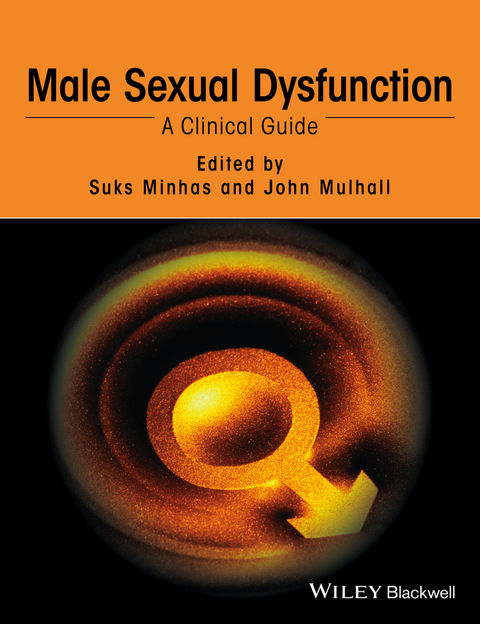
Male Sexual Dysfunction (eBook)
John Wiley & Sons (Verlag)
978-1-118-74644-8 (ISBN)
Sexual dysfunction affects men of all ages and incidence rates are expected to double by 2025 resulting in a major health burden. Though normal sexual function is an important aspect of health and well-being, sadly, this common condition still carries an associated stigma. As a result, affected men are often reluctant to approach their doctor and, instead, may live for many years with sexual dysfunction, often to the detriment of their personal lives.
Male Sexual Dysfunction: A Clinical Guide covers all the common problems encountered by the clinician in this rapidly expanding and developing field. With full color throughout, this easy to read guide provides a comprehensive and systematic approach to patient management. Packed with key features, every chapter will contain flow diagrams and algorithms, key points, clinical pearls, “what to avoid” boxes, and numerous tables, graphs and photographs . This book provides:
- Comprehensive focus on the core clinical areas of physiology/pharmacology, investigation, diagnosis, management and surgical options
- Coverage of all treatment pathways, including psychological, pharmacologic and surgical
- A straightforward, logical approach to clinical management
- An experienced and international editor and contributor team
Expertly-written, this book is the perfect resource for urologists and general practitioners with an interest in this highly topical area, as well as those about to undergo their urology trainee examinations.
Suks Minhas MD, Consultant Urologist, Institute of Urology, University College London, United Kingdom
Suks Minhas is a Consultant Urologist at UCL's Institute of Urology specialising in andrological surgery. He is supra-regional chairman for penile cancer services at university College Hospital London and has contributed to over 200 published abstracts, papers and book chapters. Dr Minhas is Editor-in-Chief of the Journal of Sexual Medicine. Dr Minhas was chairman of the British Association of Urological Surgeons Section of Andrology and 2011 was awarded the Karl Storz Telescope award in 2011 for his outstanding contribution to the field. Positions held include: Chairman BAUS Section of Andrology; Chairman (Sub-section) International Consultation of Urological Diseases, Penile Cancer; Editor in chief, European Society of Sexual Medicine newsletter and website; Chairman Scientific Sessions at European Association of Urology and European and International Society of Sexual Medicine.
John P. Mulhall, MD is Director, Male Sexual and Reproductive Medicine Program , Memorial Sloan-Kettering Cancer Center, New York, USA
Dr Mulhall is a board-certified urologist and micro-surgeon who specializes in sexual and reproductive medicine and surgery. As part of Memorial Sloan-Kettering Cancer Center's Survivorship Initiative, he has helped to establish a Male Sexual and Reproductive Medicine Program, which is devoted entirely to the care of men who have suffered sexual difficulties or fertility problems as a result of cancer. He also directs the sexual and reproductive medicine team, which includes a nurse practitioner, a nurse, and a psychologist.
Sexual dysfunction affects men of all ages and incidence rates are expected to double by 2025 resulting in a major health burden. Though normal sexual function is an important aspect of health and well-being, sadly, this common condition still carries an associated stigma. As a result, affected men are often reluctant to approach their doctor and, instead, may live for many years with sexual dysfunction, often to the detriment of their personal lives. Male Sexual Dysfunction: A Clinical Guide covers all the common problems encountered by the clinician in this rapidly expanding and developing field. With full color throughout, this easy to read guide provides a comprehensive and systematic approach to patient management. Packed with key features, every chapter will contain flow diagrams and algorithms, key points, clinical pearls, 'what to avoid' boxes, and numerous tables, graphs and photographs . This book provides: Comprehensive focus on the core clinical areas of physiology/pharmacology, investigation, diagnosis, management and surgical options Coverage of all treatment pathways, including psychological, pharmacologic and surgical A straightforward, logical approach to clinical management An experienced and international editor and contributor team Expertly-written, this book is the perfect resource for urologists and general practitioners with an interest in this highly topical area, as well as those about to undergo their urology trainee examinations.
Suks Minhas MD, Consultant Urologist, Institute of Urology, University College London, United Kingdom Suks Minhas is a Consultant Urologist at UCL's Institute of Urology specialising in andrological surgery. He is supra-regional chairman for penile cancer services at university College Hospital London and has contributed to over 200 published abstracts, papers and book chapters. Dr Minhas is Editor-in-Chief of the Journal of Sexual Medicine. Dr Minhas was chairman of the British Association of Urological Surgeons Section of Andrology and 2011 was awarded the Karl Storz Telescope award in 2011 for his outstanding contribution to the field. Positions held include: Chairman BAUS Section of Andrology; Chairman (Sub-section) International Consultation of Urological Diseases, Penile Cancer; Editor in chief, European Society of Sexual Medicine newsletter and website; Chairman Scientific Sessions at European Association of Urology and European and International Society of Sexual Medicine. John P. Mulhall, MD is Director, Male Sexual and Reproductive Medicine Program , Memorial Sloan-Kettering Cancer Center, New York, USA Dr Mulhall is a board-certified urologist and micro-surgeon who specializes in sexual and reproductive medicine and surgery. As part of Memorial Sloan-Kettering Cancer Center's Survivorship Initiative, he has helped to establish a Male Sexual and Reproductive Medicine Program, which is devoted entirely to the care of men who have suffered sexual difficulties or fertility problems as a result of cancer. He also directs the sexual and reproductive medicine team, which includes a nurse practitioner, a nurse, and a psychologist.
Title Page 5
Copyright Page 6
Contents 7
List of contributors 9
Foreword 12
Chapter 1 Epidemiology of male sexual dysfunction 13
Erectile dysfunction 14
Premature ejaculation 14
Peyronie’s disease 15
Hypogonadism 16
References 17
Chapter 2 Physiology of ejaculation 20
Introduction 20
The spinal cord and the brain of male rats 20
The spinal cord and the SGE 20
The brain and the SGE 21
Peripheral nerves and ejaculation 21
Afferent neurons 21
Efferent neurons 21
Emission and the autonomic nervous system 22
The emission phase 22
Expulsion and the somatic nervous system 23
The central nervous system and ejaculation 23
Orgasm 24
References 24
Chapter 3 Physiology of penile erection 26
Functional anatomy 26
Tunica albuginea 26
Erectile tissues 26
Penile vasculature 27
Neuroanatomy 27
Central pathways 28
Hemodynamics of penile erection and detumescence 28
Corpora cavernosa 28
Corpus spongiosum and glans penis 29
Neurophysiology of erections 29
Smooth muscle contraction and detumescence 29
Smooth muscle relaxation and tumescence 29
Other neurotransmitters 30
Smooth muscle physiology 30
Smooth muscle contraction: penile flaccidity (Figure 3.1) 30
Smooth muscle relaxation: penile erection (Figure 3.2) 31
Summary 32
Further reading 33
Chapter 4 Anatomy of penile erection 34
Introduction 34
Penile anatomy 34
Vascular anatomy 34
Neuroanatomy of penile erection 35
Autonomic nervous system regulation of erection 35
Somatic nervous system regulation of erection 37
Supraspinal regulation of erection 37
Hemodynamics and physiology of male erection 37
Molecular mechanisms of penile erection 38
Smooth muscle activity and calcium metabolism 38
Nitric oxide/cyclic GMP 38
Phosphodiesterase type 5 39
Rho/Rho-kinase pathway 40
Other mediators 40
Conclusions 40
References 40
Chapter 5 Endocrinology of male sexual dysfunction 42
Introduction 42
Central organization of sexual function 42
The kisspeptin-GPR54-neurokinin B pathway and regulation of GnRH release 43
Effect of gonadotropins at testicular level 44
Testosterone action in male sexual function 45
Endocrine disorders 45
Clinical evaluation 47
Physical examination 49
Investigations 49
Androgen deficiency 50
Late-onset hypogonadism 50
Hyperprolactinemia 51
Type 2 diabetes mellitus (T2DM) 51
Thyroid dysfunction 52
Pharmacotherapy 52
Treatment of sexual dysfunction associated with endocrinopathy 53
General considerations 53
Testosterone therapy 54
Other medical therapies 56
References 56
Chapter 6 Pharmacology of drugs used for the treatment of erectile dysfunction 60
Introduction 60
Oral agents 60
Phosphodiesterase type 5 (PDE5) inhibitors 60
Apomorphine 63
Other oral agents 63
Intracavernosal agents 64
Alprostadil (prostaglandin E1/PGE1) 64
Papaverine 64
Phentolamine 64
Vasoactive intestinal polypeptide (VIP) 64
Combination therapy 65
Other agents 65
Intraurethral therapy 65
Topical therapy 65
Summary 65
References 66
Chapter 7 Pharmacology of drugs used in premature ejaculation 68
“Selective” neurotransmitter reuptake inhibitors 68
Use of locally active agents 70
Rationale for use of base forms of prilocaine and lidocaine 71
Other potential “broad spectrum” approaches 72
Coming next? 72
Summary 72
References 73
Chapter 8 Cardiovascular risk and erectile dysfunction 74
Erectile dysfunction and cardiovascular disease: examining the link 74
The temporal relationship 76
Prediction of CVD events and mortality 77
Methods of evaluating the risk 78
Conclusion 79
A final thought… 79
References 79
Chapter 9 The evaluation of the patient with erectile dysfunction 81
Introduction 81
Using the right language 81
Sexual history 81
The physical examination 82
Questionnaires 82
Current guidelines 82
Laboratory investigations in the man presenting with ED: the key role of the GP 83
Specialist investigations 84
Nocturnal penile tumescence and rigidity (NPTR) 84
Intracavernous injection (ICI) test 84
Colour duplex ultrasound (CDU) of penile arteries 84
Arteriography 85
Dynamic infusion cavernosometry or cavernosography 85
Radionuclide scanning 85
Neurophysiological testing 85
Penile abnormalities 85
Patient/partner education – consultation and referrals 86
Indications for secondary referral 86
Problems associated with prescribed drugs 86
The role of lifestyle modification 87
Current prescribing issues in ED 88
The role of testosterone replacement in ED 88
Conclusion 89
References 89
Chapter 10 Endocrinological investigation of men with erectile dysfunction 91
Introduction 91
Hypogonadism 91
Medical history 93
Physical examination 94
Biochemical evaluation 94
Prolactin 95
Prolactin modification and erectile function 95
Determination of prolactin 96
Thyroid hormones 96
Thyroid hormones and erectile function 97
Determination of thyroid hormones 97
Other hormones 97
Adrenal hormones 97
Growth hormone 98
Obesity 98
Definition 98
Type 2 diabetes mellitus 99
Laboratory criteria 99
Conclusion 100
References 100
Chapter 11 Duplex ultrasonography and its role in the assessment of male sexual dysfunction 103
Introduction 103
Uses of penile Doppler 103
Erectile dysfunction 103
Priapism 103
Penile ultrasonographic anatomy 104
Standard operating technique 104
Pre-test 104
How to scan 106
Acute priapism 107
Findings 107
B-mode ultrasound 107
Vascular findings in the normal penis and in ED 108
Vascular findings in priapism 109
References 112
Chapter 12 MRI in men with sexual dysfunction 114
Introduction 114
Scanning protocol and radiological anatomy 114
Pharmacological stimulation 114
Positioning 114
Sequences (Table 12.1) 115
Penile fracture 116
Priapism 117
Fibrosis and Peyronie’s disease 117
Penile implants 118
Other conditions 119
References 119
Chapter 13 The metabolic syndrome and ED 121
Introduction 121
The metabolic syndrome: a cluster of findings increasing the risk of type 2 DM and CVD: its relationship to ED 122
Novel biomarkers (metabolic and imaging) to clarify CVS risk in the ED patient 124
Waist circumference (intra-abdominal adiposity) (IAA) in men with ED: level of evidence?=?1a 124
Testosterone levels and cardiometabolic risk: level of evidence?=?2a 125
CAC potential role in ED management: level of evidence?=?1b 125
The role for peripheral arterial tonometry (PAT) assessment, asymmetric dimethylarginine (ADMA) as markers of endothelial cell function in men with ED: level of evidence?=?2a 126
Vitamin D and cardiovascular health: level of evidence?=?2b 126
The use of biomarkers to define risk 127
Conclusion 128
References 128
Chapter 14 Psychological assessment of patients with ED 132
Introduction 132
Psychosocial impact of ED 132
Anxiety and depression 132
Partner and relationship difficulties 133
Avoidance 133
Psychological assessment of patients with ED 134
Background information and sex history 135
Assessing for ED-related anxiety and depression 136
Assessing for partner and relationship difficulties 136
General psychopathology 137
Making referrals 138
Questionnaires 139
References 139
Chapter 15 Nocturnal penile tumescence study 141
Introduction 141
Investigation 141
Stamp test 141
Snap gauges 142
Sleep laboratory nocturnal penile tumescence and rigidity 142
RigiScan® 142
NPT electrobioimpedence volumetric assessment (NEVA™) 144
Conclusion 144
References 144
Chapter 16 Psychosexual therapy for male sexual dysfunction 145
Introduction 145
Psychosexual therapy 145
Assessment/history 146
Education 147
Formulation 148
Treatments 148
Sensate focus 148
Erectile dysfunction: case examples using sex therapy techniques 148
Psychogenic erectile dysfunction 148
Organic erectile dysfunction 149
Pelvic floor exercises in treating sexual dysfunction 150
Ejaculatory dysfunction 151
Premature (early) ejaculation (PE) 151
Delayed ejaculation (DE) 151
PLISSIT: a sexuality assessment and intervention tool 152
Conclusion 153
References 153
Chapter 17 Treatment of premature ejaculation and ejaculatory disorders 155
Introduction 155
Definition of premature ejaculation 155
Epidemiology and etiology of premature ejaculation 157
Treatment of premature ejaculation 157
Anejaculation 160
Delayed ejaculation 160
Retrograde ejaculation 161
Painful ejaculation 161
References 161
Chapter 18 Erectile dysfunction and infertility 164
Differences and common links between male infertility and erectile dysfunction 166
The impact of infertility on erectile dysfunction 170
Overview of the evaluation of erectile dysfunction 171
Treatment considerations for erectile dysfunction 173
Erectile dysfunction treatment for infertile men 176
Conclusion 177
References 177
Chapter 19 Drug therapy for erectile dysfunction 184
General approach to drug therapy 184
Medication effects 184
Testosterone replacement 185
Pharmacological therapies 185
Oral phosphodiesterase-5 (PDE5) inhibitors 185
Alpha-adrenoreceptor antagonists 188
Dopaminergic agonists 189
Melanocortin receptor agonists 189
Serotonin receptor effectors 189
Others 189
Intracavernosal injection therapy 190
Intraurethral therapy 193
Topical therapies 194
Future therapies for erectile dysfunction 195
RhoA/Rho-kinase 195
Soluble guanylase cyclase (sGC) activators 196
Hydrogen sulfide (H2S) 197
Smooth muscle inhibitors 197
Drug-eluting stents 197
Conclusion 198
References 198
Chapter 20 Priapism 206
Epidemiology and pathophysiology of priapism 206
Non-ischemic priapism 206
Ischemic priapism 206
Stuttering (recurrent) priapism 207
Malignant priapism 208
Clinical assessment of the patient with priapism 208
History 208
Examination 208
Investigations 208
Imaging 208
Management of priapism 209
Management of non-ischemic priapism 209
Management of ischemic priapism 209
Management of stuttering priapism 211
Hormone treatment 211
PDE5 inhibitors 212
Other pharmacological treatments 212
Conclusions 212
References 213
Chapter 21 Management of erectile dysfunction after pelvic surgery 215
Introduction 215
Mechanisms of erectile dysfunction 215
Neurogenic ED 215
Vasculogenic ED 216
Treatment of erectile dysfunction 217
Oral therapy 217
Intracavernosal injection (ICI) 218
Intraurethral suppository (IUS) 218
Vacuum erection device (VED) 218
Penile implant 218
Conclusion 220
References 221
Chapter 22 Management of erectile dysfunction in men with diabetes 222
Introduction 222
Pathophysiology 222
Assessment and investigation 223
Treatment 224
Lifestyle 225
Phosphodiesterase-5 inhibitors 225
Intraurethral suppositories 226
Intracavernosal injection 226
Vacuum devices 227
Penile prostheses 227
Future treatments 228
Conclusion 228
References 228
Chapter 23 Management of erectile dysfunction in neurological patients 232
Neurological disorders and sexual dysfunction 232
Primary brain tumors 232
Traumatic brain injury (TBI) 233
Stroke 233
Migraine and tension type headache 234
Epilepsy and antiepileptic drugs 234
Parkinson’s disease 234
Multiple system atrophy 235
Multiple sclerosis 235
Spinal cord injury 235
Polyneuropathy 236
Guillain–Barré syndrome 236
Familial amyloid polyneuropathy 236
Muscular dystrophy 236
Management of ED in the neurological patient 236
Conclusion 238
Acknowlegdements 238
References 238
Chapter 24 Non-surgical therapy for Peyronie’s disease 241
Oral therapies in Peyronie’s disease 242
Potassium para-aminobenzoate (Potaba) 242
Vitamin E (tocopherol) 242
Tamoxifen 243
Colchicine 243
Acetyl esters of carnitine 243
Phosphodiesterase type 5 inhibitors (PDE5i) 244
Pentoxifylline (PTX) 244
Coenzyme Q10 (CoQ10) 244
Omega-3 245
Topical agents 245
Injectable agents 245
Steroids 245
Interferon 245
Verapamil 245
Collagenase 245
Mechanical devices 245
Conclusion 245
References 246
Chapter 25 Micropenis and penile dysmorphobia: diagnosis, management, outcomes, and future developments in the field 248
Introduction 248
Causes of micropenis 248
Congenital micropenis 248
Assessment 250
Acquired micropenis 251
Treating micropenis 251
Non-invasive and medical treatments 252
Surgical treatment 252
Techniques for the future 254
Tissue engineering 254
Penile transplant 255
Penile dysmorphobia 255
References 256
Chapter 26 Surgical treatment of Peyronie’s disease 258
Introduction 258
Etiology and pathogenesis 258
Course of the disease 259
Diagnosis and evaluation 259
Medical treatment 260
Surgical treatment 260
Reconstructive surgery 261
Graft materials 263
Penile prosthesis implantation 265
Conclusion 266
References 267
Chapter 27 Penile implant surgery 270
Introduction 270
Indications 270
Types of prostheses 271
Preoperative counseling and surgical planning 273
Surgical technique 274
Complications 275
Mechanical failure 275
Infection 276
Erosion or perforation 276
“SST-” and “S-”shaped deformity 277
Autoinflation 277
Pump migration 277
Vascular complications 278
Outcomes 278
Conclusion 278
References 278
Chapter 28 Vascular surgery for erectile dysfunction 282
Introduction 282
Penile vascular anatomy 282
Arterial revascularization 282
Direct anastomosis of an artery to the corpora cavernosa 283
Revascularization 283
Arterio-venous shunt 283
Venous arterialization 283
Selection and investigation of patients with suspected arteriogenic ED 284
Outcomes and complications from penile revascularization surgery 284
Surgery for corporal veno-occlusive dysfunction (CVOD) 284
Endovascular techniques 285
Conclusion 286
References 286
Chapter 29 Penile cancer 288
Introduction 288
Penile preserving surgery (PPS) 288
Carcinoma in situ (Tis) and non?invasive verrucous carcinoma (Ta) 289
Topical therapies 289
Laser therapy 290
Surgery 290
Tumor invading the subepithelium (T1) or corpus spongiosum (T2) 291
Tumor invading the corpus cavernosum (T2) or the urethra (T3) 292
Total penectomy 292
Total phallic reconstruction 292
Tumor invading adjacent structures (T4) 293
Summary 293
References 293
Chapter 30 Penile reconstruction and trauma 295
Introduction 295
Surgical principles 295
Skin grafting 295
Glans resurfacing of the penis 296
Male genital lichen sclerosus (LS)/balanitis xerotica obliterans (BXO) 296
Technique of glans resurfacing and SSG 297
Buried penis 298
Male genital lymphedema 300
Peyronie’s disease 301
Reconstruction following trauma 301
Fractured penis 301
Genital skin loss 302
Amputation 303
Reconstruction of the male genitals after total/subtotal penile loss 304
Summary 304
References 304
Chapter 31 Disorders of sex development 306
Introduction 306
Presentation 306
Common concerns 306
Gonadal dysgenesis 308
Failure of androgen synthesis or receptors 308
Congenital adrenal hyperplasia 308
Receptor defects 308
5?-Reductase deficiency 309
Anti-müllerian syndrome 309
Other anatomical disorders 309
Hypospadias 309
Micropenis 310
Testicular regression syndromes 310
Other chromosomal anomalies 310
Klinefelter’s syndrome 310
Kallmann’s syndrome 311
Smith–Lemli–Opitz syndrome 311
Opitz syndrome 311
References 312
Chapter 32 Sexual dysfunction and prostate cancer therapy 314
Introduction 314
Sexual dysfunction 314
Preoperative sexual function and treatment – can outcome be predicted? 315
Radical prostatectomy 315
Penile rehabilitation after radical prostatectomy 318
Radiotherapy and brachytherapy 318
Androgen deprivation therapy (ADT) 320
Active surveillance 321
Ablative therapy 322
High-intensity focused ultrasound (HIFU) 322
Cryotherapy 322
Conclusion 323
References 323
Chapter 33 Assessment and management of the male to female transgender patient 326
Background 326
Terminology 326
Incidence 326
History 326
Nature or nurture? 327
Legislation and guidelines 327
The UK pathway 327
Social transition (ST) 328
Speech therapy 328
Hair removal 328
Hormones 328
Male-to-female genital reconstructive surgery 329
Penectomy and orchidectomy 330
Formation of the vaginal cavity 330
Lining the vaginal cavity 330
Clitoroplasty 331
Labioplasty 331
Urethrostomy 331
Surgical complications 331
Thromboembolic complications 331
Perineal nerve damage 331
Bleeding and labial hematoma 331
Rectovaginal fistula 331
Lower urinary tract complications 332
Vaginal complications 332
Non-genital surgery 332
Follow-up and patient satisfaction 332
References 333
Index 335
EULA 343
| Erscheint lt. Verlag | 30.11.2016 |
|---|---|
| Sprache | englisch |
| Themenwelt | Medizin / Pharmazie ► Gesundheitsfachberufe |
| Medizin / Pharmazie ► Medizinische Fachgebiete ► Chirurgie | |
| Schlagworte | AGEs • Aspect • burden • Chirurgie • Chirurgie u. chirurgische Spezialgebiete • Clinical • Clinician • common condition • Detriment • Double • Dysfunction • Function • Guide • Health • important • Lives • major health • many • Medical Science • Medizin • Men • Normal • Personal • rapidly • rates • reluctant • result • sexual • Sexual Medicine • Sexualmedizin • Sexuelle Dysfunktion • Surgery & Surgical Specialities • Urologie • Urology • years |
| ISBN-10 | 1-118-74644-9 / 1118746449 |
| ISBN-13 | 978-1-118-74644-8 / 9781118746448 |
| Informationen gemäß Produktsicherheitsverordnung (GPSR) | |
| Haben Sie eine Frage zum Produkt? |
 PDF (Adobe DRM)
Kopierschutz: Adobe-DRM
Adobe-DRM ist ein Kopierschutz, der das eBook vor Mißbrauch schützen soll. Dabei wird das eBook bereits beim Download auf Ihre persönliche Adobe-ID autorisiert. Lesen können Sie das eBook dann nur auf den Geräten, welche ebenfalls auf Ihre Adobe-ID registriert sind.
Details zum Adobe-DRM
Dateiformat: PDF (Portable Document Format)
Mit einem festen Seitenlayout eignet sich die PDF besonders für Fachbücher mit Spalten, Tabellen und Abbildungen. Eine PDF kann auf fast allen Geräten angezeigt werden, ist aber für kleine Displays (Smartphone, eReader) nur eingeschränkt geeignet.
Systemvoraussetzungen:
PC/Mac: Mit einem PC oder Mac können Sie dieses eBook lesen. Sie benötigen eine
eReader: Dieses eBook kann mit (fast) allen eBook-Readern gelesen werden. Mit dem amazon-Kindle ist es aber nicht kompatibel.
Smartphone/Tablet: Egal ob Apple oder Android, dieses eBook können Sie lesen. Sie benötigen eine
Geräteliste und zusätzliche Hinweise
Buying eBooks from abroad
For tax law reasons we can sell eBooks just within Germany and Switzerland. Regrettably we cannot fulfill eBook-orders from other countries.
aus dem Bereich