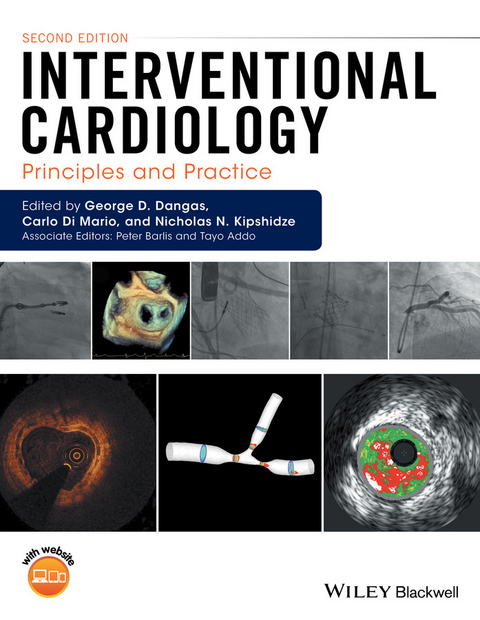
Interventional Cardiology (eBook)
John Wiley & Sons (Verlag)
978-1-118-97593-0 (ISBN)
- Contains a radically expanded chapter contents list presented in four clear sections; coronary interventions, interventional pharmacology, structural heart interventions, and endovascular therapy
- Includes 46 new chapters, including the latest advances in bioresorbable coronary stents, advanced transcatheter aortic valve replacement, MitraClip, new transcatheter mitral valve interventions, and more
- Chapters are templated for rapid referral, beginning with pathophysiological background and relevant pathology, moving to mechanisms of treatment, device description, procedural techniques, follow-up care, and ending with risks, contraindications and complications
- Multiple choice questions at the end of each chapter for self-assessment, a total of more than 400 MCQs in the book
- Features 19 procedural videos, hosted on a companion website
GEORGE D. DANGAS, MD, PhD, Professor of Medicine, Mount Sinai School of Medicine, Mount Sinai Hospital, New York, USA and Center for Interventional Vascular Therapy, Division of Cardiology, Columbia University Medical Center, New York, USA
CARLO DI MARIO, MD, PhD, Professor of Cardiology, National Heart and Lung Institute, Imperial College, London and Consultant Cardiologist, Department of Invasive Cardiology, Royal Brompton Hospital, London, UK
Nicholas Kipshidze, MD, PHD, Director, Endoluminal and Molecular Interventions, Lenox Hill Heart and Vascular Institute, New York, USA
Expert guidance from internationally recognized authorities, who provide clear and current updates on all aspects of interventional cardiology. This new edition; Contains a radically expanded chapter contents list presented in four clear sections; coronary interventions, interventional pharmacology, structural heart interventions, and endovascular therapy Includes 46 new chapters, including the latest advances in bioresorbable coronary stents, advanced transcatheter aortic valve replacement, MitraClip, new transcatheter mitral valve interventions, and more Chapters are templated for rapid referral, beginning with pathophysiological background and relevant pathology, moving to mechanisms of treatment, device description, procedural techniques, follow-up care, and ending with risks, contraindications and complications Multiple choice questions at the end of each chapter for self-assessment, a total of more than 400 MCQs in the book Features 19 procedural videos, hosted on a companion website
GEORGE D. DANGAS, MD, PhD, Professor of Medicine, Mount Sinai School of Medicine, Mount Sinai Hospital, New York, USA and Center for Interventional Vascular Therapy, Division of Cardiology, Columbia University Medical Center, New York, USA CARLO DI MARIO, MD, PhD, Professor of Cardiology, National Heart and Lung Institute, Imperial College, London and Consultant Cardiologist, Department of Invasive Cardiology, Royal Brompton Hospital, London, UK Nicholas Kipshidze, MD, PHD, Director, Endoluminal and Molecular Interventions, Lenox Hill Heart and Vascular Institute, New York, USA
Title Page 3
Copyright Page 4
Contents 5
About the Companion Website 8
Contributors 9
Foreword 18
Preface 19
Acknowledgments 20
Part I Principles and Techniques 21
Section I Basic Knowledge 23
Chapter 1 Atherogenesis and Inflammation 23
Pathogenesis of atherosclerosis 23
Clinical features 23
Consequences of atherosclerosis 23
Insights from coronary imaging 25
The vulnerable plaque 25
Role of inflammation in the natural history of atherosclerosis 27
Role of inflammation as vulnerability factor 28
Serum markers correlated to plaque inflammation 29
Future challenges in the treatment of vulnerable plaques 32
Conclusions 32
References 33
Chapter 2 The Essentials of Femoral Vascular Access and Closure 37
Femoral access 37
Ultrasound guided femoral access 39
Femoral access closure 39
Conclusions 45
References 46
Chapter 3 Radial Artery, Alternative Arm Access, and Related Techniques 47
Rationale for transradial access 47
Radial anatomy 47
Preprocedural considerations 47
Complications of transradial access 50
Conclusions 52
References 52
Chapter 4 Optimal Angiographic Views for Coronary Angioplasty 54
Catheter selection 54
Coronary intubation 55
Diagnostic angiography 55
Lesion-specific approach 55
Ventriculography 63
References 63
Chapter 5 Material Selection 64
Guide catheter selection 64
Support 66
Guidewire selection 70
Balloon catheters 75
Conclusions 78
References 78
Section II Imaging and Physiology 79
Chapter 6 Physiologic Assessment in the Cardiac Catheterization Laboratory: CFR, FFR, iFR, and Beyond 79
Impact of a stenosis upon coronary flow 79
Fundamentals of practical physiologic assessment 80
Coronary flow reserve and relative CFR 81
Hyperemic stenosis resistance and basal stenosis resistance 82
Fractional flow reserve 83
Instantaneous wave-free ratio 86
Assessment of coronary microvascular function 87
References 89
Chapter 7 Intravascular Ultrasound and Virtual Histology: Principles, Image Interpretation, and Clinical Applications 91
Principles of IVUS imaging 91
Equipment for IVUS examination 91
Imaging artifacts 92
Image acquisition and presentation 92
Normal artery morphology 93
Quantitative analysis 94
Qualitative analysis 94
Comparison of IVUS and angiography 95
Guidance for stent implantation 99
Serial IVUS studies of restenosis 102
Conclusions 107
References 107
Chapter 8 Optical Coherence Tomography, Near-Infrared Spectroscopy, and Near-Infrared Fluorescence Molecular Imaging 111
Optical coherence tomography 111
OCT system 111
Normal coronary vessel anatomy 113
Percutaneous coronary intervention 115
Near-infrared spectroscopy 118
Near-infrared fluorescence molecular imaging 120
References 124
Chapter 9 Complementary Imaging Techniques: Multislice Computed Tomography of Coronary Arteries 127
Coronary MSCT angiography—technique 127
Coronary MSCT angiography—clinical applications 129
Recent clinical trials of CT coronary angiography 137
References 144
Chapter 10 Cardiovascular Magnetic Resonance Imaging 146
CMR technical concepts 146
Patient preparation and MRI safety 148
Applications of CMR 148
Pericardial disease 151
Congenital heart disease 151
Valvular heart disease 152
Vascular disease 152
CMR for interventional cardiac procedures 153
Emerging uses for CMR 154
Conclusions 154
References 155
Section III PCI in Different Clinical Settings 158
Chapter 11 Stable Coronary Artery Disease 158
Guidelines on the management of stable angina 158
Indications for coronary angiography 158
Percutaneous coronary intervention for stable angina 158
Comparison of percutaneous and surgical revascularization 163
Recommendations for revascularization in stable angina 165
Conclusions 165
References 166
Chapter 12 PCI Strategies in Acute Coronary Syndromes without ST Segment Elevation (NSTEACS) 168
Risk stratification 168
Invasive versus ischemia-guided approach 168
Coronary revascularization in NSTEACS 169
PCI: adjunctive pharmacologic treatment 170
Conclusion 173
References 173
Chapter 13 Primary and Rescue PCI in Acute Myocardial Infarction and Elements of Myocardial Conditioning 175
Primary PCI 175
Salvage and rescue PCI 178
Pharmacologic support before and during primary PCI 179
Myocardial conditioning 180
References 180
Chapter 14 The Management of Cardiogenic Shock and Hemodynamic Support Devices and Techniques 183
Definition of shock 183
Epidemiology 183
Management of cardiogenic shock 183
Conclusions 186
References 186
Section IV PCI in Different Lesion Types 188
Chapter 15 Percutaneous Coronary Intervention in Unprotected Left Main 188
Current evidence for ULMCA revascularization 188
Current guidelines for ULMCA revascularization 189
Multidisciplinary assessment and the use of risk scores 190
Imaging and lesion assessment 190
Interventional approach 190
Pharmacotherapy in ULMCA intervention 191
Hemodynamic support 192
Conclusions 192
References 193
Chapter 16 Bifurcation Lesion Stenting 195
Anatomy and function of a coronary bifurcation 195
Coronary bifurcation: a pro-atherogenic anatomy 195
Stent behavior in bifurcations 197
Coronary bifurcation stenosis 197
Stenting techniques 197
Non-left main and left main stenosis clinical trials 198
Bifurcation stenting general principles 200
Provisional side branch stenting strategy 200
Beginning with SB stenting 201
Dedicated stent implantation 202
Bifurcation stenting with bioresorbable stents 203
Role of imaging in bifurcation stenting 203
Conclusions 203
Acknowledgment 203
References 203
Chapter 17 Risk Stratification Approach to Multivessel Coronary Artery Disease 205
Revascularization strategy 205
Assessment of non-culprit or intermediate lesion 206
High risk patients and risk stratification 206
Revascularization in the era of drug-eluting stents 208
Medical therapy 208
Conclusions 208
References 209
Chapter 18 Chronic Total Coronary Occlusion 210
Morphology of the occlusion 210
Indications for treatment 210
Basic rules of engagement 211
Guidewire selection and handling 212
Advanced antegrade recanalization techniques 215
Antegrade dissection and re-entry 215
Retrograde approach 216
Hybrid approach for intervention of chronic total occlusions 217
Balloon dilatation 218
Stent placement 218
Intravascular ultrasound in CTOs 218
When to stop a procedure 218
Complications 218
References 219
Chapter 19 Percutaneous Coronary Intervention of Arterial and Vein Grafts 221
Scope of the problem 221
Secondary revascularization after CABG surgery: PCI or repeat surgery? 221
PCI for acute postoperative graft failure 222
PCI in degenerated saphenous vein grafts 222
PCI in arterial conduits 223
Conclusions 223
References 223
Chapter 20 Interventional Approach in Small Vessel, Diffuse, and Tortuous Coronary Artery Disease 225
Small vessel disease 225
Diffuse vessel disease 227
Tortuous vessel disease 229
References 231
Chapter 21 In-Stent Restenosis in New Generation DES Era 233
Definition 233
Incidence 233
Clinical presentation 233
Pathophysiologic mechanisms 233
Morphologic pattern of DES restenosis 239
Predictors of DES restenosis 239
Role of intravascular imaging 240
Approach to DES restenosis 240
References 241
Section V Special Techniques and Complications 244
Chapter 22 Laser, Rotational, and Orbital Coronary Atherectomy 244
Background 244
Rotational atherectomy 245
Excimer laser coronary atherectomy 247
Orbital atherectomy 249
Conclusions 250
References 250
Chapter 23 Thrombus-Containing Lesions 253
How to deal with thrombus-containing lesions 253
Conclusions 261
References 262
Chapter 24 Specialized Balloons in Percutaneous Coronary Intervention: Cutting, Scoring, Gliding, and Drug-Eluting Balloons 264
Cutting and scoring balloons 264
The Glider balloon in coronary bifurcation lesions 265
Clearway catheter for intracoronary drug delivery 265
Flash Ostial dual balloon angioplasty catheter 265
Drug-eluting balloons 265
Conclusions 266
References 266
Chapter 25 Coronary Artery Dissections, Perforations, and the No-Reflow Phenomenon 268
Coronary artery dissection 268
Coronary artery perforation 272
Classification 273
The no-reflow phenomenon 278
Conclusions 283
References 283
Chapter 26 Access Site Complications 287
Femoral vascular access complications 287
Upper extremity vascular access complications 290
Complications related to vascular closure devices 290
Complications related to compression devices 292
References 292
Chapter 27 Renal Insufficiency and the Impact of Contrast Agents 294
Contrast-induced acute kidney injury 294
Conclusions 298
References 299
Chapter 28 Radiation Management in Interventional Cardiology 302
Measurements of radiation 302
Radiobiology 302
Patient radiation management 303
Staff radiation safety 306
Specific radiation safety considerations 307
Pediatric patients 308
Training and education 308
Conclusions 308
References 309
Chapter 29 Concepts of Cell Therapy and Myocardial Regeneration 310
Origin of concept 310
Myocardial regeneration 310
Mobilization of stem/progenitor cells 311
Mechanism of action 311
Choice of cell type for cardiac cell therapy 311
Cell therapy following acute myocardial infarction 311
Cell therapy in chronic ischemic heart disease 312
National and international task forces 313
Conclusions 313
References 313
Section VI Clinical Trials in Coronary Heart Disease 316
Chapter 30 Statistical Essentials in the Design and Analysisof Clinical Trials 316
The fundamentals 316
Trial design: the fundamentals 318
Additional topics in clinical design and analysis 319
Chapter 31 Historical Perspective of Sirolimus and Paclitaxel-Eluting Stent Clinical Studies 321
Initial studies of first-generation DES 321
Paclitaxel-eluting stent 321
Sirolimus-eluting stent 323
Acute myocardial infarction 324
Multivessel disease 324
Left main coronary artery disease 328
Randomized trials, meta-analyses, and registries 328
Safety concerns with?DES?and the introduction of novel generation?DES 330
Conclusions 331
References 331
Chapter 32 Cobalt-Chromium Everolimus-Eluting Stents 333
Material and chemical properties of cobalt-chromium alloys 333
Cobalt-chromium everolimus-eluting stents: technical overview 337
Xience stents: clinical trials 339
References 343
Chapter 33 Platinum-Chromium Everolimus-Eluting Stents 346
Material properties and biomechanics of the platinum-chromium alloy 346
Biocompatibility: surface characteristics and resistance to corrosion 346
Longitudinal stent deformation and the role of stent architecture 347
Promus?Element and?Premier EES 348
Synergy EES 351
Conclusions 351
References 353
Chapter 34 Bioresorbable Stents 355
ABSORB bioresorbable vascular scaffold 355
Intracoronary imaging guidance 359
Clinically tested bioresorbable vascular scaffolds 359
References 361
Chapter 35 The Biolimus Stent Family 364
Biolimus 364
The Biosensor stent family 364
The Nobori stent 374
The Xtent 377
Evidence from pooled data 377
References 378
Chapter 36 The Biotronik Stent Family 380
Cobalt chromium platform 380
Passive coating 380
PRO-Kinetic Energy 380
Orsiro 381
Absorbable metal scaffolds 382
PK Papyrus stent 387
References 387
Chapter 37 Novel Drug-Eluting Stent Systems 388
Metallic platforms 388
Antiproliferative agents 389
Polymer coatings and alternative drug release technologies 389
Future perspectives 393
Conclusions 395
References 395
Part II Interventional Pharmacology 397
Section I Fundamentals of Interventional Pharmacology 399
Chapter 38 Basics of Antiplatelet and Anticoagulant Therapy for Cardiovascular Disease 399
Role of platelets and coagulation factors in thrombus formation 399
Overview of antiplatelet agents for atherosclerotic diseases 401
Phosphodiesterase inhibitors 403
PAR-1 antagonists 403
Other novel antiplatelet agents 404
Overview of anticoagulant agents for atherosclerotic diseases 404
Thrombin inhibitors 404
Factor Xa inhibitors 405
Other anticoagulants under clinical development 406
Conclusions 406
Disclosures 406
References 406
Chapter 39 Balance of Ischemia and Bleeding in Selecting Antithrombotic Regimens 409
Definitions of the most common ischemic and bleeding outcomes 409
Outcomes after ischemic or bleeding complications 409
Methods to assess the risk of ischemic and bleeding complications 411
Pharmacologic strategies to reduce ischemic and bleeding complications 411
Conclusions and recommendations for clinical practice 415
References 415
Section II Pharmacological Agents 417
Chapter 40 Oral Antiplatelet Agents in PCI 417
Methods 417
Background 417
Oral antiplatelet therapy and PCI 418
Clinical guidelines: oral antiplatelet therapy in PCI 422
Future perspectives 425
Conclusions 425
References 425
Chapter 41 Parenteral Anticoagulant Agents in PCI 428
Heparin 428
Low molecular weight heparin 430
Direct thrombin inhibitors 431
Factor Xa inhibitors 433
References 433
Chapter 42 Parenteral Antiplatelet Agents in PCI 435
Glycoprotein IIb/IIIa inhibitors 435
Cangrelor 438
References 439
Chapter 43 Role of Parenteral Agents in PCI for Stable Patients 441
Antiplatelet therapy using glycoprotein IIb/IIIa inhibition 441
Comparisons between agents 443
Unfractionated heparin 443
Low molecular weight heparins 446
Dalteparin 447
Fondaparinux 447
Direct antithrombin agents 447
Other agents 449
Intravenous antiplatelet therapy 449
Conclusions 449
References 450
Chapter 44 Vasoactive and Antiarrhythmic Drugs During PCI 452
Vasodilators during PCI 452
Antiarrhythmic drugs in PCI 453
Peri-procedural sedation 453
Which drugs should be discontinued before PCI? 453
High-dose statin treatment to reduce the risk of peri-procedural MI 454
Vasopressors and inotropes during PCI 454
Conclusions 454
References 455
Chapter 45 The Optimal Duration of Dual Antiplatelet Therapy After PCI 456
Rationale and evolution behind dual antiplatelet therapy after stent implantation 456
International guidelines on the duration of dual antiplatelet therapy 457
Trials behind the guidelines for best evidence?based clinical practice 457
Parallels of stent technology evolution and shorter DAPT regimen 457
High risk patients 458
DAPT duration in patients in need of surgery 459
Atrial fibrillation 459
Future directives 460
References 460
Chapter 46 Triple Antiplatelet Therapy and Combinations with Oral Anticoagulants After PCI 463
Methods 463
Platelet activation and the pathophysiology of arterial thrombosis 463
Mechanisms of antithrombotic pharmacotherapy 464
Triple antiplatelet therapy following PCI 464
Antiplatelet combinations with oral anticoagulants following PCI 464
Non-vitamin K antagonist oral anticoagulants 465
Achieving improved outcomes following PCI: a role for a third agent? 466
Triple antithrombotic therapy following PCI with prior indications for OAC 466
Clinical guidelines: DAPT in combination with OAC in AF 468
Unanswered questions and future perspectives 468
Conclusions 470
References 470
Section III Pharmacological Testing 473
Chapter 47 Peri-procedural Platelet Function Testing in Risk Stratification and Clinical Decision Making 473
Initial evidence for HPR to ADP as a risk factor 473
HPR cut-off values defined by receiver operating characteristic curve analysis 474
Randomized trials of platelet function testing 474
Relation between low on-treatment platelet reactivity and bleeding: the therapeutic window concept 475
HPR in patients with STEMI during prasugrel and ticagrelor therapy 475
Conclusions 476
Disclosures 477
References 477
Chapter 48 Genetics and Pharmacogenetics in Interventional Cardiology 479
Initial focus on human genetics: rare single?gene disorders 479
Realm of GWAS: understanding the genetics of common complex disorders 480
Identification and characterization of genetic risk variants for CAD and MI 481
Relevance of CAD pathogenesis and clinical manifestations from a genetics perspective 481
Specific limitations of GWAS and presently identified CAD risk loci 484
Integration of GWAS findings into future models of disease: systems genetics to identify networks mediating pathogenesis of disease and key regulatory pathways 485
Pharmacogenomics and interventional cardiology 486
Conclusions 487
References 487
Chapter 49 Monitoring and Reversal of Anticoagulation and Antiplatelet Agents 489
Anticoagulants 489
Unfractionated heparin 489
Low molecular weight heparin (enoxaparin) 491
Pentasaccharides (fondaparinux) 492
Direct thrombin inhibitors (bivalirudin, argatroban) 493
Antiplatelets 494
Aspirin 494
P2Y12 inhibitors (clopidogrel, prasugrel, ticagrelor, cangrelor) 496
Glycoprotein IIb/IIIa inhibitors (abciximab, eptifibatide, tirofiban) 497
Conclusions 499
References 499
Part III Hypertension and Structural Heart Disease 505
Section I Systemic and Pulmonary Hypertension 507
Chapter 50 Right Heart Catheterization and Pulmonary Hemodynamics 507
Balloon flotation catheters 507
Technique 507
Pulmonary hemodynamics 508
Pharmacologic drug testing 509
Chapter 51 Treatment of Pulmonary Embolism: Medical, Surgical, and Percutaneous 511
Risk stratification and patient selection 511
Therapies for acute PE 512
Medical therapy 512
Conclusions 517
References 517
Chapter 52 Renal Denervation for Resistant Hypertension 519
Resistant hypertension 519
Rationale of targeting the renal sympathetic nervous system 519
Surgical sympathetic denervation 520
Percutaneous denervation 520
The procedure 523
The future 525
References 525
Section II Structural Heart Interventions 527
Chapter 53 Antithrombotic Strategies in Valvular and Structural Heart Disease Interventions 527
Embolism and thrombosis in valvular and structural transcatheter interventions 527
Pathophysiology of stroke and systemic embolism in valvular and structural transcatheter interventions 528
Antithrombotic strategies in patients undergoing valvular and structural percutaneous interventions 531
Future directions and conclusions 533
References 534
Chapter 54 Alcohol Septal Ablation for Hypertrophic Obstructive Cardiomyopathy 537
Selection of patients 537
Mechanisms of treatment efficacy 537
The technique 538
Treatment efficacy 541
Adverse events 541
Future directions 542
Conclusions 542
References 543
Chapter 55 Left Atrial Appendage Exclusion 545
Indication for LAA exclusion 545
Endocardial devices: design and technical details 545
Procedural aspects for implantation 546
The Lariat system: a combined endocardial–epicardial approach 548
Post-implantation consideration and follow-up 548
Areas for future research 549
References 549
Chapter 56 Cryptogenic Stroke, Patent Foramen Ovale, and ASD Closure 550
Types of ASD and PFO 550
Cryptogenic stroke and its relation to PFO 550
Atrial septal defect 551
Closure of ASD and PFO 552
Contraindications to ASD and PFO closure 552
Technique 552
ASD and PFO closure precedure 556
ASD sizing 556
ASD device selection 556
PFO device selection 556
Device delivery 557
Completing the procedure 558
Adverse events 558
Aftercare 559
Future directions 559
References 559
Chapter 57 Paravalvular Leak Closure and Ventricular Septal Defect Closure 560
Transcatheter paravalvular leak closure 560
Transcatheter VSD closure 563
References 565
Section III Valvular Heart Disease Interventions 566
Chapter 58 Aortic Valvuloplasty and Large-Bore Percutaneous Arterial Access 566
Basic principles and mechanisms of action 566
Indications and evidence for use 567
Patient selection and contraindications to BAV 567
Approach to the procedure 568
Large-bore arterial access 568
Performing balloon aortic valvuloplasty 572
Arteriotomy closure and troubleshooting 573
Complications of BAV and their management 574
Conclusions, recommendations, and future directions 575
References 575
Chapter 59 Transfemoral Aortic Valve Implantation: Preparation, Implantation, and Complications 578
Indications and candidacy for TAVR 578
Contraindications to TAVR 579
Evaluating the patient for transfemoral TAVR 579
Management of cardiovascular comorbidities pre-TAVR 581
Interventional technique for TF-TAVR 581
Complications of TF-TAVR 583
Conclusions 586
References 587
Chapter 60 Transthoracic Aortic Valve Implantation 589
Indications for transaortic access 589
Patient selection 589
TAo TAVI approaches 589
Procedural considerations 590
Edwards SAPIEN XT and SAPIEN 3 591
CoreValve 591
Engager 592
Direct Flow 592
Lotus 592
TAo: comparison with other approaches 592
Contraindications 592
Rare types of access for high risk inoperable TAVI 593
Conclusions 593
Disclosure 593
References 593
Chapter 61 New Aortic Valve Technologies 595
SAPIEN 3 595
CoreValve Evolut R 596
Lotus™ valve system 597
ACURATE valve system 597
Direct Flow 597
Engager 599
Portico 600
JenaValve 600
Conclusions 601
References 601
Chapter 62 Transseptal Puncture 602
Training 602
Echocardiographic guidance 602
Equipment 603
Procedure 603
Specificities in transseptal puncture 606
Electrophysiology 608
Circulatory support 608
Complications 609
Contraindications 610
Conclusions 610
References 610
Chapter 63 Principles of Carpentier’s Reconstructive Surgery in Degenerative Mitral Valve Disease 612
Pathophysiology and functional classification 612
Surgical indications 614
Principles of mitral valve surgery 615
Results 618
References 618
Chapter 64 Mitral Valve Repair: MitraClip and Emerging Techniques 619
Percutaneous mitral leaflet repair with MitraClip 619
Percutaneous indirect and direct annuloplasty 622
Transcatheter mitral valve replacement 624
References 625
Chapter 65 Balloon Mitral Valvuloplasty 626
Anatomic considerations 626
Balloon mitral valvuloplasty 626
Indications and recommendations for percutaneous balloon mitral valvuloplasty 626
Contraindications 627
Peri-procedural care 627
Patient preparation 628
Techniques 628
BMV in difficult scenarios 631
Complications of BMV 635
Results of BMV 636
Conclusions 637
References 637
Chapter 66 Pulmonary Artery and Valve Catheter-Based Interventions 639
Balloon pulmonary artery angioplasty 639
Pulmonary artery endovascular stenting 640
Balloon pulmonary valvuloplasty 641
Right ventricular outflow tract stenting 641
Transcatheter pulmonary valve implantation 642
The future 645
References 646
Chapter 67 Imaging for Planning and Guidance for Structural Heart Interventions 649
Transcatheter aortic valve replacement 649
Percutaneous mitral valve repair 654
Conclusions 658
References 658
Part IV Vascular Disease for the Interventionalist 661
Section I Cerebrovascular Disease 663
Chapter 68 Acute Stroke Intervention 663
Background and evidence 663
Acute stroke therapy: practical aspects 666
Complications 671
Conclusions 671
References 671
Chapter 69 Carotid Artery Angioplasty and Stenting 673
Background 673
Important concepts and considerations 673
Indications and contraindications 674
Carotid plaque characteristics 674
Vascular anatomy 675
Cerebral protection devices 675
Self-expanding carotid stents 679
Step-by-step technique of carotid stenting 681
Case histories 682
Carotid stenting complications 684
Tailored approach to CAS: scientific evidence 688
Future directions 688
Acknowledgments 689
References 689
Chapter 70 Cerebral Aneurysms: Diagnosis, Indications, and Strategies for Endovascular Treatment 691
Diagnosis 691
Indications for endovascular treatment 692
Strategies for endovascular treatment 693
References 696
Section II Aorta and Branch Diseases 697
Epidemiology 697
Conditions in the context of AAS 697
Genetics and clinical manifestations of AAS 698
Diagnostic pathways 699
Initial medical management of aortic dissection 700
Intramural hematoma 703
Penetrating aortic ulcer 704
Outlook and conclusions 704
References 704
Chapter 72 Thoracic Endovascular Aortic Aneurysm Repair 707
Demographics 707
Etiology 707
Indications 708
Diagnostic imaging 708
Anatomic requirements 708
Evidence to support TEVAR 709
Conclusions 710
References 710
Chapter 73 Endovascular Aortic Aneurysm Repair 712
Demographics 712
Etiology 712
Indications 713
Ruptured AAA 713
Diagnostic imaging 713
Anatomic requirements 713
EVAR devices 714
Endoleaks 714
Evidence to support EVAR 715
Conclusions 715
References 717
Chapter 74 Acute and Chronic Mesenteric Ischemia 718
Acute mesenteric ischemia 718
Chronic mesenteric ischemia 720
Technical considerations 722
Post-procedure follow-up 722
Complications 723
Conclusions 723
References 723
Chapter 75 Renal Artery Interventions 725
Renal artery stenosis 725
Natural history and clinical outcomes 725
Indications for screening 726
Diagnosis 726
Treatment options for ARAS 727
Technical aspects of renal endovascular intervention for renal artery stenosis 729
References 731
Chapter 76 Revascularization for Arteries in the Pelvis 733
Penile arterial blood supply and anatomy 733
Angiographic studies in erectile dysfunction 734
Penile arterial revascularization: surgical and endovascular approaches 735
Patient selection and work-up 738
Angiographic technique 739
Conclusions 740
References 740
Chapter 77 Iliac Interventions 741
Clinical presentation and diagnosis 741
Percutaneous intervention 742
Complications 744
Conclusions 744
References 744
Chapter 78 Superficial Femoral Artery Interventions 746
Endovascular interventions 746
Balloon angioplasty 746
Bare metal stents 748
Drug-eluting stents 748
Drug-eluting balloons 748
Cryotherapy 749
Atherectomy 750
The future 751
References 751
Chapter 79 Popliteal Artery Interventions 753
Interventions for popliteal artery disease 753
Balloon angioplasty 753
Stenting 753
Adjunctive endovascular technologies 754
Atherectomy 754
Popliteal aneurysms 754
Conclusions 756
References 756
Chapter 80 Below the Knee Interventions in Critical Limb Ischemia 758
Background 758
Evaluation of the lower extremity arterial system 758
Approach to BTK intervention 758
Endovascular management of below the knee critical limb ischemia 759
Percutaneous transluminal angioplasty 760
Modified angioplasty techniques 762
Complications of endovascular procedures 765
Conclusions 766
References 766
Chapter 81 Subclavian, Vertebral, and Upper Extremity Vascular Disease 768
Subclavian and upper extremity arterial disease 768
Vertebral artery disease 772
References 773
Section IV Venous Disease/Interventions 774
Chapter 82 Antithrombotic Strategies in Endovascular Interventions: Current Status and Future Directions 774
Pathophysiology 774
Aspirin 774
Ticlopidine 775
Clopidogrel 775
Other ADP receptor antagonists 776
Dipyridamole 776
Vorapaxar 776
Low molecular weight heparins 776
Glycoprotein IIb/IIIa receptor antagonists 776
Vitamin K antagonist 776
Cilostazol 777
Bivalirudin 777
Conclusions 777
References 777
Chapter 83 Chronic Venous Insufficiency 779
Predisposing factors 779
Pathogenesis 780
Clinical manifestations 780
QOL and economic impact 782
Diagnosis 783
Treatment 783
Non-invasive study: venous reflux disease 784
Non-invasive study: chronic venous flow obstruction 785
Non-invasive study: muscle pump dysfunction 786
References 786
Chapter 84 Cardiac Vein Anatomy and Transcoronary Sinus Catheter Interventions in Myocardial Ischemia 788
Aims of transcoronary sinus interventions 788
Anatomy of cardiac veins 788
Pathophysiologic background of transcoronary sinus interventions 789
How to access jeopardized myocardium 790
Current transcoronary sinus catheter interventions 790
Conclusions and future directions 793
References 794
Index 796
EULA 819
In Interventional Cardiology "the authors have created a consummate reference delineating the principles and practice for catheter-based treatment of heart disease...This second edition is remarkable for the way it captures the relevant advancements that have taken place in this area of medicine over he last decade. Readers will note the depth of information that Dangas and co-authors present, forsaking cursory and superficial mention in favor of radical and deep analysis. In sum, this book is meant to serve the practicing clinician on a continuing basis...In addition to use in the clinical and classroom settings, Interventional Cardiology is recommended to all health science libraries for its reference value as a benchmark in cardiac-based literature." (The Electric Review 23/03/2017)
"This will be an excellent reference for both interventional and general cardiologists and trainees. It is a broad overview representing all current topics in interventional cardiology." (Doody Enterprises 24/03/2017)
| Erscheint lt. Verlag | 23.11.2016 |
|---|---|
| Mitarbeit |
Stellvertretende Herausgeber: Peter Barlis, Tayo Addo |
| Sprache | englisch |
| Themenwelt | Medizin / Pharmazie ► Allgemeines / Lexika |
| Medizinische Fachgebiete ► Innere Medizin ► Kardiologie / Angiologie | |
| Schlagworte | ABIM interventional cardiology board • Aorta and Branch Diseases • Cardiovascular Disease • Cardiovascular surgery • cerebrovascular disease • Clinical Trials • devices • Heart disorders • Herz- u. GefäÃchirurgie • Herz- u. Gefäßchirurgie • Interventional cardiology • Interventional Cardiology: Principles and Practice • Interventional Heart Failure • intra-procedural imaging • Invasive Kardiologie • Kardiovaskuläre Erkrankung • Kardiovaskuläre Erkrankungen • Kardiovaskuläre Erkrankung • Kardiovaskuläre Erkrankungen • Medical Science • Medizin • PCI • PCI Pharmacology • Peripheral Arterial Disease • Peter Barlis • Post PCI Hospitalization • Procedures • Renal Denervation for Resistant Hypertension • Stent • Structural Heart Interventions • Tayo Addo • techniques • transcatheter aortic valve implantation (TAVI) • Valvular heart disease interventions |
| ISBN-10 | 1-118-97593-6 / 1118975936 |
| ISBN-13 | 978-1-118-97593-0 / 9781118975930 |
| Informationen gemäß Produktsicherheitsverordnung (GPSR) | |
| Haben Sie eine Frage zum Produkt? |
 PDF (Adobe DRM)
Kopierschutz: Adobe-DRM
Adobe-DRM ist ein Kopierschutz, der das eBook vor Mißbrauch schützen soll. Dabei wird das eBook bereits beim Download auf Ihre persönliche Adobe-ID autorisiert. Lesen können Sie das eBook dann nur auf den Geräten, welche ebenfalls auf Ihre Adobe-ID registriert sind.
Details zum Adobe-DRM
Dateiformat: PDF (Portable Document Format)
Mit einem festen Seitenlayout eignet sich die PDF besonders für Fachbücher mit Spalten, Tabellen und Abbildungen. Eine PDF kann auf fast allen Geräten angezeigt werden, ist aber für kleine Displays (Smartphone, eReader) nur eingeschränkt geeignet.
Systemvoraussetzungen:
PC/Mac: Mit einem PC oder Mac können Sie dieses eBook lesen. Sie benötigen eine
eReader: Dieses eBook kann mit (fast) allen eBook-Readern gelesen werden. Mit dem amazon-Kindle ist es aber nicht kompatibel.
Smartphone/Tablet: Egal ob Apple oder Android, dieses eBook können Sie lesen. Sie benötigen eine
Geräteliste und zusätzliche Hinweise
Buying eBooks from abroad
For tax law reasons we can sell eBooks just within Germany and Switzerland. Regrettably we cannot fulfill eBook-orders from other countries.
aus dem Bereich