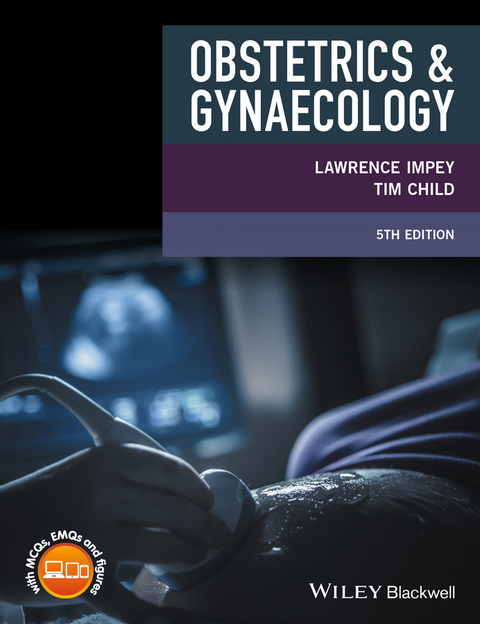
Obstetrics and Gynaecology (eBook)
John Wiley & Sons (Verlag)
978-1-119-01080-7 (ISBN)
Praise for the previous edition:
'...this textbook is a useful resource for medical students ... it will provide them with the basic information they need to survive clinics and to pass exams ... Clear, concise and colourful; perfect for easy learning and revision.'
-Times Higher Education
Obstetrics and Gynaecology by Impey and Child continues to be an invaluable and authoritative resource for healthcare and medical students. This comprehensive guide provides the perfect level of detail on history and examination, investigations and diagnosis, as well as common diseases, abnormalities, and complications in gynaecology and obstetrics.
Fully updated in accordance with NICE and other national guidelines, this fifth edition now includes:
- New sections on FGM and influenza
- Expanded areas in medical disorders in pregnancy and mental illness
- Improvements to the popular 'management' section along with a new section on sepsis
- Colour coded sections on obstetrics and gynaecology for ease of use
This new edition of Obstetrics and Gynaecology will be an indispensable support to help not only students to revise for exams, especially OSCEs, but also healthcare practitioners and practising doctors to structure their knowledge and improve their practice.
Lawrence Impey is Consultant in Obstetrics and Fetal Medicine, The John Radcliffe Hospital, Headington, Oxford, UK.
Tim Child is Senior Fellow in Reproductive Medicine and Surgery at the University of Oxford and Honorary Consultant Gynaecologist, The John Radcliffe Hospital, Headington, Oxford, UK.
Lawrence Impey is Consultant in Obstetrics and Fetal Medicine, The John Radcliffe Hospital, Headington, Oxford, UK. Tim Child is Senior Fellow in Reproductive Medicine and Surgery at the University of Oxford and Honorary Consultant Gynaecologist, The John Radcliffe Hospital, Headington, Oxford, UK.
Obstetrics & Gynaecology
Contents 7
Preface to the fifth edition 9
Preface to the first edition 9
Acknowledgements 11
List of abbreviations 12
About the companion website 15
Gynaecology 17
Chapter 1 The history and examination in gynaecology 19
The gynaecological history 19
Personal details 19
Presenting complaint(s) 19
Specific gynaecological questions 19
Other history 20
Other questions 20
Summarizing the history 21
The gynaecological examination 21
General examination 21
Breast and axillary examination 21
Abdominal examination 21
Vaginal examination 22
Rectal examination 23
Chapter 2 The menstrual cycle and its disorders 25
Physiology 25
Puberty 25
The menstrual cycle 25
Abnormal uterine bleeding (AUB) 26
Definition 26
Causes of AUB 26
Heavy menstrual bleeding (HMB) 28
Definition 28
Epidemiology 28
Aetiology 29
Clinical features 29
Investigations 29
Management 30
Irregular menstruation and intermenstrual bleeding 32
Epidemiology 32
Causes 32
Clinical features 32
Investigations 32
Management 32
Absent and infrequent menstrual bleeding (amenorrhoea and oligomenorrhoea) 33
Definitions 33
Classification of causes 33
Management 34
Postcoital bleeding 34
Definition 34
Aetiology 35
Management 35
Dysmenorrhoea 35
Causes and their management 35
Precocious puberty 35
Causes and their management 35
Ambiguous development and intersex 35
Increased androgen function in a genetic female 36
Reduced androgen function in a genetic male 36
Premenstrual syndrome 36
Epidemiology 36
Aetiology 36
Clinical features 36
Management 36
Further reading 37
Chapter 3 The uterus and its abnormalities 38
Anatomy and physiology of the uterus 38
Anatomy and function 38
Blood and lymph 38
The endometrium 39
Fibroids 39
Definition and epidemiology 39
Pathology and sites of fibroids 39
Pathology and sites of fibroids 39
Aetiology 39
Clinical features 39
Natural history/complications of fibroids 40
Fibroids and pregnancy 40
Hormone replacement therapy and fibroids 40
Investigations 40
Treatment 40
Adenomyosis 43
Definition and epidemiology 43
Pathology and aetiology 43
Clinical features 43
Investigations 43
Treatment 43
Other benign conditions of the uterus 43
Endometritis 43
Intrauterine polyps 43
Haematometra 44
Congenital uterine malformations 44
Endometrial carcinoma 44
Epidemiology 44
Pathology 45
Aetiology 45
Spread and staging 45
Investigations 46
Treatment 46
Prognosis 47
Uterine sarcomas 47
Further reading 47
Chapter 4 The cervix and its disorders 49
Anatomy and function of the cervix 49
Anatomy 49
Histology and the transformation zone 49
Blood supply and lymph drainage 49
Benign conditions of the cervix 49
Premalignant conditions of the cervix: cervical intraepithelial neoplasia 50
Definitions 50
Epidemiology 51
Aetiology 51
Pathology 51
Diagnosis: screening for cervical cancer 51
Treatment: prevention of invasive cervical cancer 53
Results and problems with screening for cervical cancer 53
Psychological aspects of cervical screening 53
Malignant disease of the cervix 53
Epidemiology 53
Pathology 53
Aetiology 54
Clinical features 54
Spread and staging 54
Investigations 54
Treatment of cervical malignancies 54
Prognosis 56
Further reading 56
Chapter 5 The ovary and its disorders 58
Anatomy and function of the ovaries 58
Ovarian symptoms 58
Ovarian cyst ‘accidents’ 58
Disorders of ovarian function 58
Classification of ovarian tumours 59
Primary neoplasms 59
Secondary malignancies 60
Tumour-like conditions 60
Ovarian cancer 60
Epidemiology 60
Pathology (see classification of ovarian tumours) 61
Aetiology 61
Screening for ovarian cancer 61
Clinical features 61
Spread and staging 62
Investigations 62
Management of ovarian cancer 63
Follow-up and prognosis 64
Palliative care 65
Definition and aims 65
Organization of palliative care 65
Symptom control 65
Further reading 66
Chapter 6 Disorders of the vulva and vagina 67
Anatomy 67
Vulval symptoms 67
Miscellaneous benign disorders of the vulva and vagina 67
Lichen simplex (or chronic vulvaldermatitis) 67
Lichen planus 68
Lichen sclerosus 68
Vulvar dysaesthesia (vulvodynia) or the vulval pain syndromes 68
Infections of the vulva and vestibule 68
Bartholin’s gland cyst and abscess 69
Introital damage 69
Vaginal cysts 69
Vaginal adenosis 69
Premalignant disease of the vulva: vulval intraepithelial neoplasia 69
Carcinoma of the vulva 70
Epidemiology 70
Pathology 70
Aetiology 70
Clinical features 70
Spread and staging 70
Investigations 70
Treatment 70
Prognosis 71
Malignancies of the vagina 71
Further reading 71
Chapter 7 Prolapse of the uterus and vagina 73
Anatomy and physiology of the pelvic supports 73
Prolapse 73
Types of prolapse 73
Grading of prolapse 73
Epidemiology 74
Aetiology of prolapse 74
Clinical features 74
Investigations 76
Prevention 76
Management 76
Pessaries 76
Surgical treatment 76
Further reading 77
Chapter 8 Disorders of the urinary tract 78
Anatomy and function of the female lower urinary tract system 78
Neural control of the bladder and urethra 78
Continence 78
Micturition 78
Incontinence 78
Investigation of the urinary tract 79
Urinary stress incontinence 80
Definition 80
Epidemiology 80
Aetiology 80
Mechanism of incontinence 80
Clinical features 80
Investigations 81
Management 81
Overactive bladder 83
Definition 83
Epidemiology 83
Aetiology 83
Mechanism of incontinence 83
Clinical features 83
Investigations 83
Management 83
Other urinary disorders 84
‘Mixed’ USI and overactive bladder 84
Acute urinary retention 84
Chronic retention and urinary overflow 84
Painful bladder syndrome and interstitial cystitis 85
Fistulae 85
Further reading 85
Chapter 9 Endometriosis and chronic pelvic pain 86
Endometriosis 86
Definition and epidemiology 86
Pathology 86
Aetiology 86
Clinical features 86
Investigations 87
Management 88
Endometriosis and fertility 90
Chronic pelvic pain 90
Definition 90
Assessment and investigation 90
Possible causes of pain 90
Management 90
Further reading 90
Chapter 10 Genital tract infections 92
Infections of the vulva and vagina 92
Non-sexually transmitted infections 92
Sexually transmitted infections (STIs) 93
Infections of the uterus and pelvis 96
Endometritis 96
Acute pelvic infection and pelvic inflammatory disease 97
Chronic pelvic inflammatory disease 98
Vaginal discharge: causes and treatment 99
Further reading 99
Chapter 11 Fertility and subfertility 101
Definitions 101
Conditions for pregnancy 101
Counselling and support for the subfertile couple 101
Disorders of ovulation 101
Physiology of ovulation 101
Detection of ovulation 103
Causes of anovulation: polycystic ovary syndrome 103
Other causes of anovulation 105
Induction of ovulation 107
Male subfertility 108
Physiology of sperm production 108
Detection of adequate sperm production: semen analysis 108
Common causes of abnormal/absent sperm release 109
Investigations 109
Management of male factor subfertility 110
Disorders of fertilization 110
Physiology of fertilization 110
Causes of failure to fertilize: tubal damage 110
Other causes of failure to fertilize 111
Detection of tubal damage 111
Assisted conception 111
Intrauterine insemination (IUI) 112
Intracytoplasmic sperm injection (ICSI) 112
Oocyte donation 114
Preimplantation genetic diagnosis (PGD) 114
Surrogacy 114
Complications of assisted conception 115
Fertility preservation 115
Further reading 115
Chapter 12 Contraception 118
The ideal contraceptive 118
Efficacy of contraception 118
Safety of contraception 118
Compliance with contraception 118
Special patient groups 118
Hormonal contraception 119
Combined oral contraceptives 119
Other combined hormonal contraception 122
Progestogen-only pill (POP) 122
Long-acting reversible contraceptives (LARCs) 123
Progestogen-impregnated intrauterine system 123
Emergency contraception 123
The ‘morning-after pill’ 123
Intrauterine device 124
Barrier contraception 124
Male condom 124
Female condom 124
Diaphragms and caps 124
Spermicides 124
Intrauterine contraceptive devices (‘the coil’) 124
Types of IUDs 124
Contraceptive efficacy 125
Indications 125
Complications 125
Advantages 126
Female sterilization 126
Contraceptive efficacy 126
Indications 126
Complications 127
Male sterilization 127
Male hormonal contraception 127
Natural contraception 127
Further reading 127
Chapter 13 The menopause andpostre productive health 130
Definitions 130
Postmenopausal bleeding 130
Definition 130
Causes 130
Management 130
Symptoms and consequences of the menopause 131
Cardiovascular disease 131
Vasomotor symptoms 132
Urogenital problems 132
Sexual problems 132
Osteoporosis 132
Investigations of the menopause 133
Follicle-stimulating hormone (FSH) 133
Anti-mullerian hormone 133
Other blood tests 133
Bone density estimation 133
Biochemical markers of bone metabolism 134
Treatment: hormone replacement therapy 134
Oestrogens 134
Progestogens 134
Tibolone 135
Androgens 135
Regimens of HRT 135
Benefits, risks and uncertainties of oestrogen-based HRT 135
Duration of therapy 136
Other treatments for the menopause 137
Non-oestrogen-based therapies 137
Alternative and complementary therapies 137
Further reading 137
Chapter 14 Disorders of early pregnancy 139
Physiology of early pregnancy 139
Spontaneous miscarriage 139
Definition and epidemiology 139
Types of miscarriage 139
Aetiology of sporadic miscarriage 140
Clinical features 140
Investigations 140
Management 141
Complications 142
Counselling after miscarriage 142
Recurrent miscarriage 142
Definition and epidemiology 142
Causes and their management 142
Unwanted pregnancy and therapeutic abortion 143
Definition 143
Methods of abortion 143
Complications of therapeutic abortion 144
Ectopic pregnancy 144
Definition and epidemiology 144
Pathology and sites of ectopic pregnancy 144
Aetiology 144
Clinical features 145
Investigations 145
Management 146
Complications 147
Hyperemesis gravidarum 147
Definition and epidemiology 147
Management 147
Gestational trophoblastic disease 147
Definitions, pathology and epidemiology 147
Clinical features 148
Investigations 148
Management and follow-up 148
Complications 148
Further reading 148
Chapter 15 Gynaecological operations 151
Endoscopy and endoscopic surgery 151
Diagnostic hysteroscopy 151
Hysteroscopic surgery 151
Diagnostic laparoscopy 151
Laparoscopic surgery 151
Hysterectomy 152
Types of hysterectomy 153
Other common gynaecological problems 153
Dilatation and curettage (D& C)
Evacuation of retained products of conception (ERPC) 153
Operations for cervical intraepithelial neoplasia 154
Operations for prolapse 154
Operations for urinary stress incontinence 154
Operations for fibroids 154
Precautions in major gynaecological surgery 155
Thromboembolism 155
Infection 155
Urinary tract 155
Further reading 155
Obstetrics 157
Chapter 16 The history and examination in obstetrics 159
The obstetric history 159
Personal details 159
Presenting complaint/present circumstances 159
History of present pregnancy 159
Past obstetric history 160
Other history 160
Other questions 161
The obstetric examination 161
General examination 161
Abdominal examination 162
Inspection 162
Palpation 162
Auscultation 164
Other features of relevance 164
The postnatal history andexamination 164
History 164
Examination 165
Basic neonatal assessment 166
Further reading 166
Chapter 17 Antenatal care 168
The aims of antenatal care 168
Preconceptual care and counselling 168
The booking visit 168
History 168
Examination 169
Booking visit investigations 169
Health promotion and advice 170
Routine later pregnancy tests 171
Ultrasound for structural abnormalities 171
Ultrasound screening for risk assessment 171
Other routine later pregnancy tests 171
Continuing antenatal care 171
Frequency of antenatal visits 171
Conduct of antenatal visits 172
‘Minor’ conditions of pregnancy 172
Further reading 173
Chapter 18 Congenital abnormalities and their identification 174
Screening and diagnostic tests 174
Terms describing screening tests 174
Performance of screening tests 175
Integration of risk factors 175
Methods of prenatal testing for congenital abnormalities 175
Maternal blood testing 175
Ultrasound 175
Fetal magnetic resonance imaging 176
3-D/4-D ultrasound 177
Invasive testing 177
Preimplantation genetic diagnosis 178
Chromosomal abnormalities 178
Down’s syndrome 178
Other chromosomal abnormalities 178
Deletions, translocations and ‘microarray’ abnormalities 178
Screening for chromosomal abnormalities 179
Diagnosis of chromosomal abnormalities 179
Structural abnormalities 179
Central nervous system abnormalities 179
Cardiac defects and fetal echocardiography 180
Abdominal wall defects 181
Chest defects 182
Gastrointestinal defects 182
Urogenital defects 182
Skeletal defects 182
Facial abnormalities 183
Fetal hydrops 183
Single gene disorders 184
Further reading 184
Chapter 19 Infections in pregnancy 187
Viruses 187
Cytomegalovirus 187
Herpes simplex 187
Herpes zoster 188
Rubella 188
Parvovirus 189
Hepatitis B 189
Hepatitis C 189
Human immunodeficiency virus 189
Influenza 191
ZIKA 191
Bacteria, parasites and others 191
Group A streptococcus 191
Group B streptococcus 191
Syphilis 192
Toxoplasmosis 192
Malaria 193
Listeriosis 193
Bacterial vaginosis 193
Other obstetric infections 193
Further reading 193
Chapter 20 Hypertensive disordersin pregnancy 196
Normal blood pressure changes in pregnancy 196
Classification of hypertensive disorders in pregnancy 196
Pregnancy-induced hypertension 196
Pre-existing or chronic hypertension 196
Pre-eclampsia 196
Definitions and classification 196
Pathophysiology 197
Classification and degrees of pre-eclampsia 198
Epidemiology 198
Aetiology 198
Clinical features 198
Complications of pre-eclampsia 199
Investigations 200
Screening and prevention 201
Management 201
Postnatal care of the pre-eclamptic patient 202
Pre-existing hypertension in pregnancy 203
Definitions and epidemiology 203
Aetiology 203
Clinical features 203
Complications 203
Investigations 203
Management 203
Further reading 203
Chapter 21 Other medical disorders in pregnancy 205
Diabetes and gestational diabetes 205
Physiology 205
Definition and epidemiology 205
Fetal complications 205
Maternal complications 206
Management of pre-existing diabetes in pregnancy 206
Preconceptual care for pre-existing diabetics 206
Monitoring and treating the diabetes 207
Monitoring or treating the complications of diabetes 207
Monitoring the fetus 207
Timing and mode of delivery 208
The neonate and puerperium 208
Detection of and screening for gestational diabetes 208
Management of gestational diabetes 208
Cardiac disease 209
Epidemiology 209
Principles of management 209
Types of cardiac disease and their management 209
Respiratory disease 210
Epilepsy 210
Management of epilepsy in pregnancy 210
Thyroid disease in pregnancy 210
Hypothyroidism 211
Hyperthyroidism 211
Postpartum thyroiditis 211
Liver disease 211
Acute fatty liver 211
Intrahepatic cholestasis of pregnancy 211
Renal disease 212
Chronic kidney disease 212
Urinary infection 212
Thrombophilias and the antiphospholipid syndrome 212
Antiphospholipid syndrome (APS) 212
Other prothrombotic disorders 213
Systemic lupus erythematosus 213
Venous thromboembolic disease 213
Management of VTE in pregnancy 214
Thromboprophylaxis 214
Obesity in pregnancy 215
Risks in pregnancy 215
Management of obesity in pregnancy 215
Mental illness in pregnancy 216
Bipolar affective disorder 216
Postpartum psychosis 216
Depression 216
Anxiety disorders 216
Schizophrenia 217
‘Recreational’ drugs in pregnancy 217
Illegal drugs 217
Legal drugs 217
Anaemias 218
Iron deficiency anaemia 218
Folic acid and vitamin B12 deficiency anaemia 218
Prophylaxis against anaemia 218
Influenza 219
Haemoglobinopathies 219
Sickle cell disease 219
Thalassaemias 219
Female genital mutilation (FGM) 220
Further reading 220
Chapter 22 Red blood cell isoimmunization 225
Definition 225
Pathophysiology 225
Blood groups 225
Sensitization 225
Haemolysis 225
Prevention: using anti-D 225
Epidemiology 226
Manifestations of Rhesus disease 226
Management of isoimmunization 227
Identification 227
Assessing severity of fetal anaemia 227
Treatment of fetal anaemia: in utero transfusion 227
Further reading 228
Chapter 23 Delivery before term 229
Definitions and epidemiology 229
Complications 229
Aetiology of spontaneous preterm labour 229
Prediction of preterm labour 230
Prevention of preterm labour 231
Clinical features 233
Investigations 233
Management 233
Preterm prelabour rupture of the membranes 234
Definition 234
Complications 234
Clinical features 234
Investigations 234
Management 235
Further reading 235
Chapter 24 Antepartum haemorrhage 237
Placenta praevia 237
Definitions and epidemiology 237
Classification 237
Aetiology 237
Complications 237
Clinical features 237
Investigations 238
Management 238
Placental abruption 239
Definition 239
Pathology 239
Complications 240
Aetiology 240
Clinical features 240
Investigations 240
Management 241
Other causes of antepartum haemorrhage 241
Bleeding of undetermined origin 241
Ruptured vasa praevia 241
Uterine rupture 242
Bleeding of gynaecological origin 242
Further reading 242
Chapter 25 Fetal growth, health and surveillance 244
Fetal health and growth: terminology 244
Small for gestational age (SGA) 244
Intrauterine/fetal growth restriction (IUGR or FGR) 244
Fetal distress 244
Fetal compromise 245
Fetal surveillance 245
Aims of fetal surveillance 245
Problems with fetal surveillance 245
Identification of pregnancy risk 245
Methods of fetal surveillance 247
Routine pregnancy care 247
Ultrasound assessment of fetal growth 247
Doppler waveforms of the umbilical artery 248
Doppler waveforms of the fetal cerebral circulation 249
Doppler waveforms of the fetal venous circulation 249
Cardiotocography or non-stress test 249
Kick chart 249
The small for gestational age fetus and the IUGR fetus 250
Epidemiology 250
Aetiology 250
Complications 251
Diagnosis 251
Management of IUGR 251
Stillbirth 252
Definition and epidemiology 252
Aetiology 252
Diagnosis 253
Prevention of stillbirth 253
Potentially beneficial routine interventions 253
Management of stillbirth 253
The prolonged pregnancy 253
Epidemiology and aetiology 253
Risks 254
Management 254
Further reading 254
Chapter 26 Abnormal lie and breech presentation 256
Abnormal (transverse and oblique) lie 256
Definitions and epidemiology 256
Aetiology 256
Complications 256
Management 256
Breech presentation 256
Definitions and epidemiology 256
Aetiology 257
Diagnosis 258
Complications 258
Management 258
Further reading 259
Chapter 27 Multiple pregnancy 261
Epidemiology 261
Types of multiple pregnancy 261
Aetiology 261
Diagnosis 261
Maternal complications 261
Fetal antenatal complications 261
Antepartum management 265
Intrapartum management 266
Further reading 267
Chapter 28 Labour 1: Mechanism – anatomy and physiology 269
Mechanical factors of labour 269
The powers 269
The passage 269
The passenger 270
Cervical dilatation: the ‘stages’ of labour 272
Initiation and diagnosis of labour 272
The first stage 273
The second stage 274
Delivery 274
The third stage 274
Perineal trauma 274
Further reading 274
Chapter 29 Labour 2: Management 276
General care of the woman in labour 276
Physical health in labour 276
Mental health in labour 277
Progress in labour: problems and their treatment 277
Monitoring progress: the partogram 277
The powers 277
The passenger 279
The passage 281
The cervix 282
Care of the fetus 282
Fetal distress and hypoxia 282
Other causes of fetal damage and their treatment 286
Care of the mother 286
Pain relief in labour 287
Anaesthesia for obstetric procedures 288
Conduct of labour 288
Initiation and diagnosis of labour 288
First stage of labour 289
Second stage of labour 290
Third stage of labour 290
Perineal repair 291
Different approaches to delivery 292
Natural approaches to labour 292
Further reading 293
Chapter 30 Labour 3: Special circumstances 295
Induction of labour 295
Methods of induction 295
Induction with prostaglandins 295
Induction with amniotomy ± oxytocin 295
Natural induction 295
Indications for induction 295
Contraindications 296
Management of induced labour 296
Complications 296
Labour/vaginal birth after a previous caesarean section 297
Contraindications 297
Factors influencing vaginal delivery after one caesarean section 297
Safety of vaginal delivery after caesarean section 297
Management of labour after a caesarean section 298
Prelabour, term rupture of theme mbranes 298
Diagnosis of prelabour term rupture of the membranes 298
Risks of prelabour term rupture of the membranes 298
Management 298
Further reading 298
Chapter 31 Instrumental and operative delivery 300
Forceps or ventouse delivery 300
Ventouse 300
Obstetric forceps 300
Safety of ventouse and forceps 300
Indications for instrumental vaginal delivery 301
Prevention of instrumental vaginal delivery 301
Types of instrumental vaginal delivery 301
Low-cavity delivery 302
Mid-cavity delivery 302
Prerequisites for instrumental vaginal delivery 302
Failure of instrumental vaginal delivery 303
Caesarean section 303
Indications 303
Safety and complications of caesarean section 304
Further reading 305
Chapter 32 Obstetric emergencies 307
Shoulder dystocia 307
Definition and consequences 307
Risk factors and prevention 307
Management 307
Cord prolapse 307
Definition and consequences 307
Risk factors and prevention 307
Management 308
Amniotic fluid embolism 308
Definition and consequences 308
Risk factors 308
Management 308
Uterine rupture 308
Definition and consequences 308
Risk factors and prevention 309
Management 309
Other obstetric emergencies 309
Uterine inversion 309
Epileptiform seizures 309
Local anaesthetic toxicity 310
Massive antepartum haemorrhage 310
Massive postpartum haemorrhage 310
Pulmonary embolus 310
Further reading 310
Chapter 33 The puerperium 311
Physiological changes in thepuerperium 311
The genital tract 311
The cardiovascular system 311
The urinary tract 311
The blood 311
General postnatal care 311
Lactation 312
Physiology 312
Management 312
Primary postpartum haemorrhage 312
Definition and epidemiology 312
Aetiology 313
Prevention 313
Clinical features 313
Management 313
Other problems of the puerperium 314
Secondary PPH 314
Postpartum pyrexia 314
Thromboembolic disease 314
Psychiatric problems of the puerperium 315
Hypertensive complications 315
The urinary tract 315
Perineal trauma 316
Bowel problems 316
Further reading 316
Chapter 34 Birth statistics and audit 318
Audit 318
Perinatal mortality 318
Definitions and terms in the UK 318
Perinatal mortality rate 318
Risk factors for perinatal mortality 318
Causes of perinatal mortality 318
Maternal mortality 319
Definitions 319
Maternal death rate 319
Factors affecting maternal death rates 320
Causes of maternal mortality 321
Intervention in pregnancy and labour 321
Reasons why the caesarean rate is high 322
Further reading 322
Chapter 35 Legal (UK) and ethical issues in obstetrics and gynaecology 324
Consent 324
Consent to procedures 324
Refusal of medical treatment 324
Consent by children 324
Clinical negligence 325
Negligence claims in the UK 325
Avoiding litigation 325
Clinical governance 326
Risk management 327
Complaints procedure 327
Confidentiality 327
Regulation of fertility treatment 327
Reducing multiple births 327
Embryo testing 327
Embryo research 327
Regulation of abortion 327
Some ethical issues in obstetrics and gynaecology 328
Is there a right to have children? 328
Choosing embryos 328
Abortion 328
Further reading 329
Gynaecology management 331
Obstetric management 345
Appendix 1 361
Appendix 2 365
Index 367
EULA 379
| Erscheint lt. Verlag | 31.10.2016 |
|---|---|
| Sprache | englisch |
| Themenwelt | Medizin / Pharmazie ► Medizinische Fachgebiete ► Gynäkologie / Geburtshilfe |
| Schlagworte | Gynäkologie u. Geburtshilfe • Gynäkologie u. Geburtshilfe • medical education • Medical Science • Medizin • Medizinstudium • Obstetrics & Gynecology • obstetrics, gynaecology, uterus, ovary, fertility, contraception, pregnancy, foetal, emergency, birth, female reproductive organs, history, examination, undergraduate, postgraduate, medical student, nurse, midwife |
| ISBN-10 | 1-119-01080-2 / 1119010802 |
| ISBN-13 | 978-1-119-01080-7 / 9781119010807 |
| Informationen gemäß Produktsicherheitsverordnung (GPSR) | |
| Haben Sie eine Frage zum Produkt? |
 PDF (Adobe DRM)
Kopierschutz: Adobe-DRM
Adobe-DRM ist ein Kopierschutz, der das eBook vor Mißbrauch schützen soll. Dabei wird das eBook bereits beim Download auf Ihre persönliche Adobe-ID autorisiert. Lesen können Sie das eBook dann nur auf den Geräten, welche ebenfalls auf Ihre Adobe-ID registriert sind.
Details zum Adobe-DRM
Dateiformat: PDF (Portable Document Format)
Mit einem festen Seitenlayout eignet sich die PDF besonders für Fachbücher mit Spalten, Tabellen und Abbildungen. Eine PDF kann auf fast allen Geräten angezeigt werden, ist aber für kleine Displays (Smartphone, eReader) nur eingeschränkt geeignet.
Systemvoraussetzungen:
PC/Mac: Mit einem PC oder Mac können Sie dieses eBook lesen. Sie benötigen eine
eReader: Dieses eBook kann mit (fast) allen eBook-Readern gelesen werden. Mit dem amazon-Kindle ist es aber nicht kompatibel.
Smartphone/Tablet: Egal ob Apple oder Android, dieses eBook können Sie lesen. Sie benötigen eine
Geräteliste und zusätzliche Hinweise
Buying eBooks from abroad
For tax law reasons we can sell eBooks just within Germany and Switzerland. Regrettably we cannot fulfill eBook-orders from other countries.
aus dem Bereich