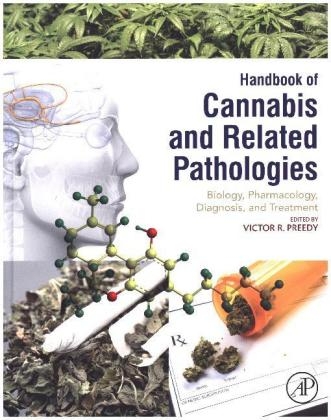
Handbook of Cannabis and Related Pathologies
Academic Press Inc (Verlag)
978-0-12-800756-3 (ISBN)
Cannabis has a wide range of adverse neurological effects, and use and abuse can lead to physical, social, and psychopathological issues that are multifarious and complex. Effective understanding and treatment requires knowledge of the drug’s effects from across scientific disciplines.
This book provides an overview of the biological and pharmacological components of the cannabis plant, outlines its neurological, social, and psychopathological effects, assists in the diagnosis and screening for use and dependency, and aids researchers in developing effective treatments for cannabis-related issues and disorders.
Fully illustrated, with contributions from internationally recognized experts, it is the go-to resource for neuroscientists, pharmacologists, pathologists, public-health workers, and any other researcher who needs an in-depth and cross-disciplinary understanding of cannabis and its effects.
Victor R. Preedy BSc, PhD, DSc, FRSB, FRSPH, FRSC, FRCPath graduated with an Honours Degree in Biology and Physiology with Pharmacology. After gaining his University of London PhD, he received his Membership of the Royal College of Pathologists. He was later awarded his second doctorate (DSc), for his contribution to protein metabolism in health and disease. He is Professor of Clinical Biochemistry (Hon) at King’s College Hospital and Emeritus Professor of Nutritional Biochemistry at King’s College London. He has Honorary Professorships at the University of Hull, and the University of Suffolk. Professor Preedy was the Founding Director and then long-term Director of the Genomics Centre at King’s College London from 2006 to 2020. Professor Preedy has been awarded fellowships of the Royal Society of Biology, the Royal College of Pathologists, the Royal Society for the Promotion of Health, the Royal Institute of Public Health, the Royal Society for Public Health, the Royal Society of Chemistry and the Royal Society of Medicine. He carried out research when attached to the National Heart Hospital (part of Imperial College London), The School of Pharmacy (now part of University College London) and the MRC Centre at Northwick Park Hospital. He has collaborated with international research groups in Finland, Japan, Australia, USA, and Germany. To his credit, Professor Preedy has published over 750 articles, which includes peer-reviewed manuscripts based on original research, abstracts and symposium presentations, reviews and edited books.
1. The Cannabis Plant: Botanical Aspects
2. The biosynthesis of cannabinoids 3. Increasing plant concentrations of THC and implications on health related disorders
3. Age as a Predictor of Cannabis Use
4. Lifetime cannabis use and cognition in psychosis spectrum disorders
5. A Profile of Synthetic Cannabinoid Users
6. Dual disorders in cannabis misuse
7. Cannabis use and cognitive function
8. Cannabis, migration and psychosis onset
9. The global epidemiology and disease burden of cannabis use and dependence
10. International aspects of cannabis use and misuse – the Australian perspective
11. International aspects of cannabis use and misuse: Egypt
12. Cannabis Body Packing – A Caribbean Perspective
13. Gender differences in cannabis use disorders
14. The role of age in the onset and further development of cannabis use disorders
15. Effects of Cannabis Use on Neurocognition in Adolescents and Emerging Adults with Psychiatric Comorbidities
16. Correlates and consequences of prenatal cannabis exposure (PCE): identifying and characterizing vulnerable maternal populations and determining outcomes for exposed offspring
17. Cannabis and clubbing: Relevance of cannabis and polydrug use in the clubbing culture today
18. Cannabis and Sexual Behavior
19. Friendships and Cannabis Use
20. Students’ knowledge of cannabis
21. Childhood trauma and cannabis - risk factors in severe mental disorders
22. Parent’s Influence on Their Children’s Cannabis Use
23. Cannabis Users and Premorbid Intellectual Quotient (IQ)
24. Cannabis and traffic accidents
25. Drug-related pictures, attentional bias, and cannabis use
26. Cannabis use and first-episode psychosis patients (FEP)
27. Cannabis, associative memory, fMRI, and the Implicit Association Test
28. Stress Response in Cannabis Users and Psychosis
29. Motivation in Chronic Cannabis Use
30. Cannabis use and its association to mental illness: a focus on mood and anxiety disorders
31. Cannabis Use and Well-being
32. Craving and cannabis: A potential paradox
33. Delta 9-tetrahydrocannabinol and catalepsy-like immobilization
34. The interactive nature of cannabis and schizophrenia risk genes
35. Neuroimaging findings in Adolescent Cannabis use and Early Phase Psychosis
36. Cannabis smoking in adult schizophrenia: A cognitive and functional magnetic resonance imaging perspective
37. The long-lasting effects of cannabis use on movement and brain regions that control movement
38. Assessment of cannabis acute effects on driving skills: laboratory, simulator and on road studies
39. Chronic cannabis use and axonal fibre connectivity
40. Microglial activation and cannabis exposure
41. Cannabis and psychosis: correlation, causality and consequences
42. Cannabis use and cannabis use disorders in bipolar disorder – causes and consequences
43. Cannabis use in epilepsy – risks and benefits
44. Cannabis, cannabinoids and visceral pain.
45. Cannabis and Post-Operative Analgesia
46. Chronic cannabis abuse and thyroid function
47. Cannabis Hyperemesis Syndrome
48. Cannabis and Cannabinoids and the effects on gastrointestinal function: an overview
49. Cardiovascular Effects of Cannabis Usage
50. Cannabis and Stroke
51. Cannabis Smoking and the Lung
52. Cannabis and hepatic injury
53. Cannabis allergy: more than a bad trip
54. Marijuana and Breastfeeding
55. Hypocretins/orexins and addiction: role in cannabinoid dependence
56. Regulatory role of cannabinoids for skin barrier functions and cutaneous inflammation
57. Cannabinoids and the Cannabinoid Receptors: An Overview
58. Signalling and Regulation of the Cannabinoid CB1 Receptor
59. Allosteric modulation of the Cannabinoid CB1 Receptor
60. The polymorphisms of the CB2 cannabinoid receptor
61. Chemistry of Cannabinoid Receptor Agonists
62. The endocannabinoid system as a target for new antiseizure drugs
63. Pharmacological aspects of anandamide and 2-arachidonoyglycerol as bioactive lipids
64. Pharmacological aspects of NMDA receptors, mGluR5, and endocannabinoids
65. Peripheral CB1 receptors and ghrelin in feeding regulation. Pharmacological implications.
66. Pharmacological aspects of novel antiobesity agents related to cannabinoids
67. Cannabinoid reward and dependence: Focus on the main psychoactive ingredients of marijuana in preclinical studies
68. Peroxisome proliferator activated receptors and cannabinoids VRP suggested Peroxisome proliferator activated receptors (PPARs) and cannabinoids
69. The Protein-Protein interactions of CRIP1a and cannabinoid 1 receptor: the molecular mechanism study through an integrated molecular modeling approach
70. Synthetic cannabinoids: A summary of selected phenomena with respect to behavioral pharmacology and abuse liability
72. The role of 5-HT1A receptor and nausea and vomiting relief by cannabidiol (CBD), cannabidiolic acid (CBDA) and cannabigerol (CBG)
73. Genetic and molecular aspects of addiction with tetrahydrocannabinol
74. Effects of dlta 9-Tetrahydrocannabinol in human breast cancer
75. Δ9-THC and COX-2 Signaling
76. Cannabinoids and the addictive effects of nicotine
77. Cannabinoid Regulation of Intraocular Pressure: Human and Animal Studies, Cellular and Molecular Targets
78. Ocular Delivery of Tetrahydrocannabinol
79. The role of g-aminobutyric acid in the interoceptive effects of oral D9-tetrahydrocannabinol in humans
80. The role of the delta-9-tetrahydrocannabinol in diabetes mellitus
81. Cannabidiol: An Overview of its Antipsychotic Properties
82. Cannabidiol for the treatment of epilepsy: an overview of possible mechanisms of action and preclinical and human studies
83. Cannabidiol and neuroprotection: evidence from preclinical studies
84. Cannabinoids as Potent Inhibitors of Human CYP1 Enzymes
85. Nabilone: Pharmacology and Clinical Applications (Suggest: The Synthetic Analogue of delta 9-tetrahydrocannabinol (THC): Nabilone. Pharmacology and Clinical Application)
86. Synthetic cannabinoids in dementia
87. Synthetic cannabinoid receptor agonists ("Spice") as new recreational psychoactive substances
88. Accidents and synthetic cannabinoids in blood of drivers
89. Cannabis and synthetic cannabinoids for cancer patients: Multiple palliative indications together with promising laboratory anti-neoplastic effects
90. The Use of Medical Marijuana in the Treatment of Psychiatric Disorders
91. Beneficial effects of cannabis and related compounds on sleep
92. Cannabinoids for the treatment of Gilles de la Tourette syndrome
93. Cannabidiol and multiple sclerosis
94. Cannabinoids and Effects on Painful Neuropathy
95. Cannabis for basal ganglia disorders (Parkinson's disease and Huntington's disease)
96. Medical cannabis for the treatment of Inflammatory Bowel Disease
97. Cannabidiol for the treatment of drug use disorders
98. Cannabinoids and the effects on gastrointestinal tract: a focus on motility
99. Potential medical uses of cannabigerol: a brief overview
100. The Cannabis Abuse Screening Test (CAST) and applications
101. Screening of synthetic cannabinoids
102. On-site Drug testing for Cannabis
103. Cannabinoids in Oral Fluid: Identification and Interpretation of Analytical Results
104. Cannabinoids in exhaled breath
105. Barriers to treatment seeking for cannabis dependence
106. Pharmacotherapies for cannabis use disorders
107. Self-Initiated Cannabis Use Cessation in Adolescents and Emerging Adults
108. Treating cannabis dependent adolescents with family therapy
109. Cognitive Behavioral Therapy in Cannabis Use Disorder
110. Cannabis withdrawal symptoms in cannabis and poly drug users
111. School-based cannabis prevention programs
112. The CapOpus trial for cannabis use disorders
113. Treating cannabis use disorders through technology assisted interventions: the telephone and internet
114. Reducing cannabis use with a real-time intervention using mobile technology
115. Further information: Cannabis Neuropathology Resources and Recommended Reading
Online Only Chapters:
1. Tetrahydrocannabinol concentration and genetic characterization of cannabis.
2. Cannabis Use in Youth Subcultures
3. Aggressive Behavior and Cannabis Use
4. COMT genotypes, cannabis use and psychosis: gene-environment interaction evidence from human populations and its methodological concerns
5. Neuroimaging and genetics of acute and chronic cannabis effects
6. Grey matter, lateral ventricle volumes and executive functioning in cannabis users with first-episode psychosis
7. Comorbidity Between Cannabis Use and Attention-Deficit/Hyperactivity Disorder: Potential Moderators
8. Cannabis and Oral Bones: Deleterious Effects on Periodontitis and Dental Implants
9. Does cannabis use increase the risk of developing cancer in humans?
10. Cannabis and the use of amphetamine-like substances
11. Cannabinoid signaling in glioma cells and therapeutic implications
12. Cannabidiol as antioxidants
13. The anxiolytic effects of cannabidiol (CBD).
14. New Ethological and Morphological Perspectives for the Investigation of Panicolytic-Like Effects of Cannabidiol
15. Spice Use amongst United States Military Personnel
16. Cannabis use in fibromyalgia
17. Short instruments to screen for "problematic" cannabis use in general population surveys: a systematic review
18. Self-report of cannabis use
19. CANDIS Program: Modular Treatment of Cannabis Use Disorders
20. Engaging Cannabis Users in Treatment
| Erscheinungsdatum | 08.03.2017 |
|---|---|
| Verlagsort | San Diego |
| Sprache | englisch |
| Maße | 216 x 276 mm |
| Gewicht | 3330 g |
| Themenwelt | Medizin / Pharmazie ► Medizinische Fachgebiete ► Pharmakologie / Pharmakotherapie |
| Medizin / Pharmazie ► Medizinische Fachgebiete ► Psychiatrie / Psychotherapie | |
| Studium ► 2. Studienabschnitt (Klinik) ► Pathologie | |
| Studium ► Querschnittsbereiche ► Prävention / Gesundheitsförderung | |
| Naturwissenschaften ► Biologie ► Zoologie | |
| ISBN-10 | 0-12-800756-7 / 0128007567 |
| ISBN-13 | 978-0-12-800756-3 / 9780128007563 |
| Zustand | Neuware |
| Informationen gemäß Produktsicherheitsverordnung (GPSR) | |
| Haben Sie eine Frage zum Produkt? |
aus dem Bereich