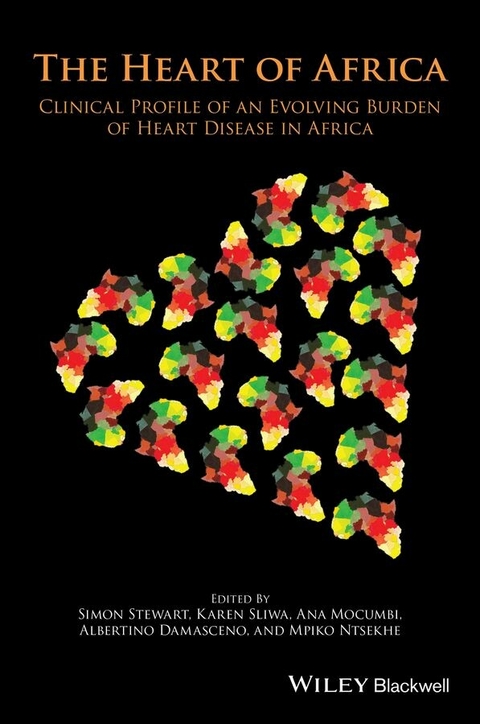
The Heart of Africa (eBook)
John Wiley & Sons (Verlag)
978-1-119-09700-6 (ISBN)
- Designed to provide anyone with an interest in heart disease in Africa with an immediate sense of how the area is progressing from a clinical to research perspective in responding to this evolving epidemic
- Presents salient research uncovering the evolving burden of communicable and non-communicable forms of heart disease,
- Includes content on maternal heart disease, infant and childhood heart disease, risk and prevention, heart failure and other common forms of heart disease in rural and urban communities in Africa.
Simon Stewart PhD, NFESC, FAHA, FCSANZ
Mary MacKillop Institute for Health Research,
Australian Catholic University,
Melbourne, Victoria, Australia
Karen Sliwa MD, PhD, FESC, FACC
Hatter Institute for Cardiovascular Research in Africa, Department of Medicine,
Faculty of Health Sciences, University of Cape Town, South Africa;
Soweto Cardiovascular Research Group, Faculty of Health Sciences, University of the Witwatersrand.
Ana Mocumbi MD, PhD, FESC
Instituto Nacional de Saude Ministerio da Saude Doencas Cronicas
Nao Transmissiveis Instituto
Maputo, Mocambique
Albertino Damasceno MD, PhD
Departamento de Medicina/Faculdade de Medicina
Universidade Eduardo Mondlane
Maputo, Moçambique
Mpiko Ntsekhe MD, PhD, FACC
Division of Cardiology
Department of Medicine,
University of Cape Town,
Groote Schuur Hospital
Cape Town, South Africa
While many high-income countries observe a relative decline in the population impact of heart disease and deal with the problem of an older patient population who readily survive earlier non-fatal encounters with the condition, Africa contends with a typically younger population with frequently advanced and often fatal heart disease. While high-income countries exclusively deal with non-communicable forms of heart disease, Africa contends with both communicable and non-communicable forms of heart disease. Designed to provide anyone with an interest in heart disease in Africa with an immediate sense of how the area is progressing from a clinical to research perspective in responding to this evolving epidemic Presents salient research uncovering the evolving burden of communicable and non-communicable forms of heart disease, Includes content on maternal heart disease, infant and childhood heart disease, risk and prevention, heart failure and other common forms of heart disease in rural and urban communities in Africa.
Simon Stewart PhD, NFESC, FAHA, FCSANZ Mary MacKillop Institute for Health Research, Australian Catholic University, Melbourne, Victoria, Australia Karen Sliwa MD, PhD, FESC, FACC Hatter Institute for Cardiovascular Research in Africa, Department of Medicine, Faculty of Health Sciences, University of Cape Town, South Africa; Soweto Cardiovascular Research Group, Faculty of Health Sciences, University of the Witwatersrand. Ana Mocumbi MD, PhD, FESC Instituto Nacional de Saude Ministerio da Saude Doencas Cronicas Nao Transmissiveis Instituto Maputo, Mocambique Albertino Damasceno MD, PhD Departamento de Medicina/Faculdade de Medicina Universidade Eduardo Mondlane Maputo, Moçambique Mpiko Ntsekhe MD, PhD, FACC Division of Cardiology Department of Medicine, University of Cape Town, Groote Schuur Hospital Cape Town, South Africa
List of contributors vii
Foreword x
Preface xii
Acknowledgments xiv
Sub?-Saharan Africa and The Heart of Africa: A brief introduction 1
Section 1: Maternal heart health
Karen Sliwa
1 Maternal heart health 9
Karen Sliwa, John Anthony, and Denise Hilfiker-Kleiner
References 27
Section 2: Infant and childhood heart disease
Ana Mocumbi
2 Congenital heart disease 35
Ana Mocumbi, Tantchou Tchoumi Jacques Cabral, John Musuku, and Serigne A. Ba
3 Acquired heart disease 44
Ana Mocumbi, Liesl Zühlke, and Peter Zilla
References 63
Section 3: Spectrum of cardiovascular risk and heart disease in sub-Saharan Africa
Simon Stewart
4 Cardiovascular risk in urban and rural African settings 73
Kemi Tibazarwa, Karen Sliwa, Melinda Jane Carrington, Okechukwu Samuel Ogah, and Simon Stewart
5 The African INTERHEART study 89
Krisela Steyn and Karen Sliwa
6 The spectrum of heart disease in urban Africans: The Heart of Soweto Study 96
Melinda Jane Carrington, Karen Sliwa, and Simon Stewart
References 113
Section 4: Infectious heart disease
Mpiko Ntsekhe
7 Rheumatic heart disease 121
Simon Stewart, Melinda Jane Carrington, and Karen Sliwa
8 Pericardial disease 136
Mpiko Ntsekhe
9 Human immunodeficiency virus-related heart disease 145
Friedrich Thienemann, Melinda Jane Carrington, Karen Sliwa, Mpiko Ntsekhe, and Simon Stewart
References 152
Section 5: Noncommunicable disease
Albertino Damasceno
10 Acute coronary syndrome in the African context 159
Anthony Becker
11 Stroke in the African context 176
Albertino Damasceno
References 183
Section 6: Heart failure
Simon Stewart
12 Acute heart failure 193
Mahmoud Sani, Dike Bevis Ojji, Anastase Dzudie, and Okechukwu Samuel Ogah
13 Hypertensive heart failure 212
Dike Bevis Ojji, Mahmoud Sani, Anastase Dzudie, and Okechukwu Samuel Ogah
14 Chronic heart failure 226
Okechukwu Samuel Ogah, Anastase Dzudie, Dike Bevis Ojji, and Mahmoud Sani
15 Pulmonary hypertension and right heart failure 237
Anastase Dzudie, Friedrich Thienemann, Okechukwu Samuel Ogah, Dike Bevis Ojji, and Mahmoud Sani
References 245
Abbreviations 254
Index 256
CHAPTER 1
Maternal heart health
Karen Sliwa1, John Anthony2, and Denise Hilfiker-Kleiner3
1 University of Cape Town, South Africa; University of the Witwatersrand, Johannesburg, South Africa
2 Department of Obstetrics & Gynaecology, Groote Schuur Hospital, Cape Town, South Africa
3 Department of Cardiology and Angiology, Medical School Hannover, Germany
1.0 Introduction
In this chapter, we first report upon a recent single-center prospective cohort study from Groote Schuur Hospital [13] in which the majority of maternal deaths observed were attributable to various forms of cardiomyopathy (CMO), with only two being related to complications of sepsis and thrombosis affecting prosthetic heart valves. Significantly, 8 out of the 9 deaths reported in this patient cohort of 152 patients with 6-month follow-up would not have been reported if the definition of death within 42 days had been applied, thereby underestimating the number of cardiac deaths related to pregnancy as a result of late presentation and deaths occurring among women with familial CMO or PPCMO.
The last decade has seen a steady increase in the institutional maternal mortality rate for cardiac disease in South Africa [14]. While the maternal mortality rate was 3.73 % per 100,000 live births during the period 2005 to 2007, this rose to 5.64 in 2008 to 2010 and further still to 6 % during 2011 to 2013. After nonpregnancy-related infections, cardiac disease is the second most common cause of indirect maternal death, with complications of rheumatic heart disease (RHD) and CMO being the most significant contributors to cardiac deaths. The fact that more than half of those cases occurred postpartum is noteworthy; it implies that the maternal death rate in South Africa—already estimated to be 176/100,000 [1]—is probably grossly underestimated, as death could only be reported until 42 days postpartum.
Valvular heart disease (VHD) in pregnant women, whether due to congenital or acquired etiologies such as RHD, poses a particular challenge to clinicians and their patients. Significant valve disease increases the risks associated with pregnancy to both mother and fetus and requires a careful preconception risk assessment as well as specialised care during gestation to minimize maternal and fetal morbidity and mortality. Ideally, all women with VHD would undergo preconception evaluation, including advice on risk prediction and contraception, by a joint cardiac–obstetric team seeking advice from other specialties [15]. Of note, recent findings from the Global Rheumatic Heart Disease Registry (REMEDY) (see Section 2) indicated that of 1,825 women with RHD in child-bearing age, only 3.6% were using contraception [16].
PPCMO is a disease particularly common in African women. It develops in previously healthy women peripartum and carries a mortality rate of approximately 15%. In a recent publication we summarize the prevalence, clinical presentation, and natural history of PPCMO treated with standard HF medication [17]. Close collaboration with basic scientists from Hannover University, Germany, gave rise to unique translational research involving several animal models and human biological samples, providing breakthrough evidence [18] on the pathogenesis of human PPCMO. Treatment of mice (which serve as a model for human PPCMO) with bromocriptine, a dopamine antagonist inhibiting prolactin, prevented the development of the disease. Figure 1.1 summarizes the possible metabolic events leading to PPCMO.
Figure 1.1 Basic mechanisms underlying peripartum cardiomyopathy.
Subsequent to this foundational research, a South African clinical trial in women with newly diagnosed PPCMO [19] was conducted. The trial showed significant clinical improvement in those treated with bromocriptine, compared to patients receiving only standard care. These initially positive results have since been confirmed via collaborative research in a German cohort [20], and this ongoing work was recently summarized in an invited review on this new treatment modality [21]. In conclusion, joint obstetric-medical-cardiac clinics will be the optimal approach for women presenting with cardiac disease in the peripartum period in sub-Saharan Africa. Appropriate guidance in referral to secondary and tertiary care hospitals with dedicated cardiac disease in maternity clinics should be implemented and is currently being explored in South Africa [13].
1.1 Spectrum of maternal cardiac disease in South Africa
Sliwa K, Libhaber E, Elliott C, Momberg Z, Osman A, Zühlke L, Lachmann T, Nicholson L, Thienemann F, Roos-Hesselink J, Anthony J. Spectrum of cardiac disease in maternity in a low-resource cohort in South Africa. Heart 2014; 100(24):1967–74. [13]
1.1.1 Background
Data focusing on the spectrum and characteristics of cardiovascular disease (CVD) among women in LMIC are limited, especially among those who are pregnant [22,23]. In sub-Saharan Africa this significant clinical research gap is exacerbated by a shortage of physicians and health care resources.
1.1.2 Study aims
The aims of this study were to examine the spectrum and characteristics of CVD presenting in the prepartum and postpartum period, as well as describe maternal and fetal outcomes, in a representative cohort of African women in Cape Town, South Africa.
1.1.3 Methods
1.1.3.1 Patient enrollment
During the period 1 July 2010 to 30 June 2012, 225 consecutive pregnant women with suspected or previously diagnosed CVD were assessed at their first visit to the joint cardiac–obstetric clinic, having been directed there via a referral algorithm from primary care and secondary care facilities in Cape Town and from within the tertiary hospital (see Figure 1.2). All referred patients were seen by a senior cardiology and obstetric consultant, and physicians from other disciplines (i.e., radiology, endocrinology, and anesthetics) were consulted. Patients were then assessed throughout their pregnancy, while those presenting postpartum were seen once at this clinic and subsequently managed at the general cardiac clinic or a dedicated CMO clinic, at Groote Schuur Hospital, Cape Town, South Africa. Patient appointments were scheduled according to standard management, which could entail a waiting period of up to 3 months. Patients with a history of CVD and a normal clinical inspection, along with minimal echocardiography changes, were seen only on one occasion early and subsequently referred to second-level obstetric care. Most patients were referred from peripheral hospitals; therefore, records were not available to document maternal and fetal outcomes. Those patients who presented with signs, symptoms, or a World Health Organization (WHO) classification stage of II–IV underwent clinical visits at <28 weeks (second trimester), 28 to 37 weeks (third trimester), onset of labor until hospital discharge (peripartum period), and at 6 weeks and 6 months postpartum.
Figure 1.2 Referral algorithm to joint Cardiac Maternity Clinic, Groote Schuur Hospital.
1.1.4 Results
As detailed in Table 1.1, patients of African ancestry were significantly more likely to present with advanced disease (WHO II–IV) than those of other ethnic groups (p < 0.0001). Patients in the modified WHO class II–IV exhibited significantly higher heart rate (p < 0.0001) and gravidity (p = 0.0002) than those in WHO class I. Comorbidity, including HIV infection, was associated with more severe cardiac disease (p < 0.0001). Overall, 73 (32.4%) patients were classified as WHO class I; of these, 27 (37.0%) had been referred for other reasons such as history of palpitations or the need for pre-conception counseling, 26 (35.6%) presented with minor or operated CHD and no significant residual structural abnormality, 16 (21.9%) had RHD, and 4 (5.5%) had chronic hypertension with no end-organ damage. The remaining 152 (67.6) patients were placed in WHO class II–IV and required close follow-up; of these, 21 (13.8%) presented with PPCMO, 15 (9.9%) with prior CHD surgical correction, 15 (9.9%) with prior surgery for RHD, 11 (7.2%) with idiopathic dilated CMO, 9 (5.9%) with hypertension-related CMO, 8 (5.3%) with atrial septal defect, 6 (4.0%) with ventricular septal defect, 5 (3.3%) with ventricular arrhythmias, 4 (2.6%) with Takayasu’s disease, 4 (2.6%) with Marfan’s disease, 3 (2.0%) with coarctation, and 3 (2.0%) with constrictive pericarditis. Notably, IHD was absent in this cohort. Figure 1.3 displays the distribution of patients per disease group.
Table 1.1 Patients’ demographic and clinical characteristics according WHO functional class.
| WHO I (n = 73) | WHO II–IV (n = 152) | All (n = 225) |
| Age (years) | 28.8 ± 7.0 | 28.5 ± 6.1 | 28.6 ± 6.4 |
| Ethnicity |
| African ancestry | 23 (31.5%) | 79 (52.0%) | 101 (44.9%) |
| Mixed | 15 (20.6%) | 56 (36.8%) | 72... |
| Erscheint lt. Verlag | 6.5.2016 |
|---|---|
| Sprache | englisch |
| Themenwelt | Medizin / Pharmazie ► Allgemeines / Lexika |
| Medizinische Fachgebiete ► Innere Medizin ► Kardiologie / Angiologie | |
| Studium ► 2. Studienabschnitt (Klinik) ► Rechtsmedizin | |
| Schlagworte | Acquired Heart Disease • Acute Coronary Syndrome • Africa • Afrika /Medizin, Gesundheitswesen • cardiomyopathy • Cardiovascular Disease • CHD • communicable and non-communicable heart disease • Congenital Heart Disease • Epidemiological transition • Heart Failure • Heart of Soweto Study • Herzkrankheit • HIV • infant and childhood heart disease • Kardiovaskuläre Erkrankung • Kardiovaskuläre Erkrankungen • Kardiovaskuläre Erkrankung • Kardiovaskuläre Erkrankungen • Maternal heart disease • Medical Science • Medizin • PASCAR • Pericardial disease • Pulmonary Arterial Hypertension • Pulmonary hypertension • rheumatic heart disease • right heart failure • risk and prevention • Simon Stewart • stroke • The African INTERHEART Study • the heart of africa • The Pan-African Society of Cardiology • Thesus |
| ISBN-10 | 1-119-09700-2 / 1119097002 |
| ISBN-13 | 978-1-119-09700-6 / 9781119097006 |
| Informationen gemäß Produktsicherheitsverordnung (GPSR) | |
| Haben Sie eine Frage zum Produkt? |
 EPUB (Adobe DRM)
Kopierschutz: Adobe-DRM
Adobe-DRM ist ein Kopierschutz, der das eBook vor Mißbrauch schützen soll. Dabei wird das eBook bereits beim Download auf Ihre persönliche Adobe-ID autorisiert. Lesen können Sie das eBook dann nur auf den Geräten, welche ebenfalls auf Ihre Adobe-ID registriert sind.
Details zum Adobe-DRM
Dateiformat: EPUB (Electronic Publication)
EPUB ist ein offener Standard für eBooks und eignet sich besonders zur Darstellung von Belletristik und Sachbüchern. Der Fließtext wird dynamisch an die Display- und Schriftgröße angepasst. Auch für mobile Lesegeräte ist EPUB daher gut geeignet.
Systemvoraussetzungen:
PC/Mac: Mit einem PC oder Mac können Sie dieses eBook lesen. Sie benötigen eine
eReader: Dieses eBook kann mit (fast) allen eBook-Readern gelesen werden. Mit dem amazon-Kindle ist es aber nicht kompatibel.
Smartphone/Tablet: Egal ob Apple oder Android, dieses eBook können Sie lesen. Sie benötigen eine
Geräteliste und zusätzliche Hinweise
Buying eBooks from abroad
For tax law reasons we can sell eBooks just within Germany and Switzerland. Regrettably we cannot fulfill eBook-orders from other countries.
aus dem Bereich