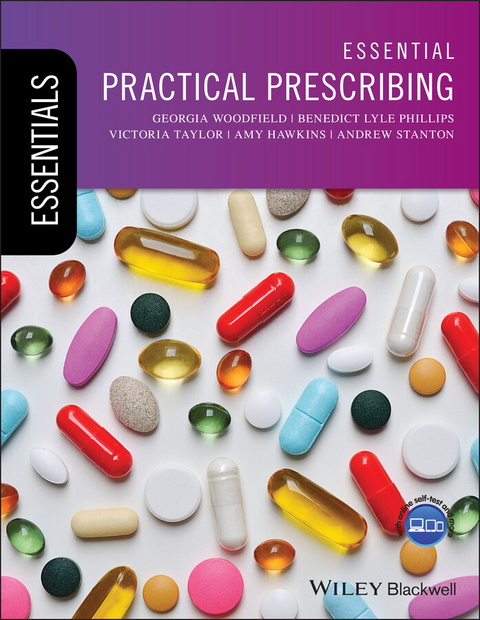
Essential Practical Prescribing (eBook)
John Wiley & Sons (Verlag)
978-1-118-83770-2 (ISBN)
Highly Commended in Medicine in the 2017 BMA Medical Book Awards
Essential Practical Prescribing is an important new textbook with a clinical, ward-based focus. It is specifically designed to help new foundation doctors working on the hospital wards and in the community, as well as medical students preparing for the Prescribing Safety Assessment.
Using an accessible format, Essential Practical Prescribing demonstrates how to manage common medical conditions, and explains the logic behind each decision. It also emphasises common pitfalls leading to drug errors, and highlights drugs that could cause harm in certain situations. Organised by hospital department, it outlines the correct management of conditions, as well as highlighting the typical trials of a junior doctor.
Essential Practical Prescribing:
- Contains a range of learning methods within each chapter including: key topics, learning objectives, case studies, DRUGS checklists, 'Top-Tips', advice on guidelines and evidence, and key learning points
- Uses patient histories to set the scene and enhance the clinical emphasis
- Offers examples of correctly completed drug charts throughout, which are also available online
- Is an ideal companion for Prescribing Safety Assessment (PSA) preparation
- Includes a companion website at www.wileyessential.com/prescribing featuring MCQs and downloadable DRUGS checklists and drug charts
Georgia Woodfield, Specialist Registrar in Gastrointestinal medicine, London
Benedict Lyle Phillips, Specialist registrar in General Surgery, NE London Deanery
Victoria Taylor, Specialist Registrar in Respiratory medicine, London
Amy Hawkins, Core Medical Trainee, London Deanery
Andrew Stanton, Consultant Respiratory Physician, The Great Western Hospital Swindon; Honorary Senior Clinical Lecturer, University of Bristol
ESSENTIAL PRACTICAL PRESCRIBING The Essentials are an international, best-selling series of textbooks, all of which are designed to support lecture series or themes on core topics within the health sciences. See www.wileyessential.com for further details. Essential Practical Prescribing is an important new textbook with a clinical, ward-based focus. It is specifically designed to help new foundation doctors working on the hospital wards and in the community, as well as medical students preparing for the Prescribing Safety Assessment. Using an accessible format, Essential Practical Prescribing demonstrates how to manage common medical conditions, and explains the logic behind each decision. It also emphasises common pitfalls leading to drug errors, and highlights drugs that could cause harm in certain situations. Organised by hospital department, it outlines the correct management of conditions, as well as highlighting the typical trials of a junior doctor. Essential Practical Prescribing: Contains a range of learning methods within each chapter including: key topics, learning objectives, case studies, DRUGS checklists, Top-Tips , advice on guidelines and evidence, and key learning points Uses patient histories to set the scene and enhance the clinical emphasis Offers examples of correctly completed drug charts throughout Is an ideal companion for Prescribing Safety Assessment (PSA) preparation For more information on the complete range of Wiley medical student and junior doctor publishing, please visit: www.wileymedicaleducation.com All content reviewed by students for students Wiley Medical Education books are designed exactly for their intended audience. All of our books are developed in collaboration with students. This means that our books are always published with you, the student, in mind. If you would like to be one of our student reviewers, go to www.reviewmedicalbooks.com to find out more.
Georgia Woodfield, Specialist Registrar in Gastrointestinal medicine, London Benedict Lyle Phillips, Specialist registrar in General Surgery, NE London Deanery Victoria Taylor, Specialist Registrar in Respiratory medicine, London Amy Hawkins, Core Medical Trainee, London Deanery Andrew Stanton, Consultant Respiratory Physician, The Great Western Hospital Swindon; Honorary Senior Clinical Lecturer, University of Bristol
Essential Practical Prescribing 3
Contents 7
Preface 8
Acknowledgements 11
How to use your textbook 12
About the companion website 14
Chapter 1 Trials of a Junior Doctor 15
Prescribing 16
Introduction 16
General prescribing principles 16
Navigating a drug chart 17
Calculating drug doses 17
Using the British National Formulary 17
Prescribing blood products 17
Prescribing fluids 19
Factors to consider when prescribing 19
Being a medical student 19
Preparing for the prescribing skills assessment 19
Preparing to be an FY1 20
Being a junior doctor 20
Common bleeps relating to prescribing 20
Things I wish I had known 20
What to do when you don’t know 20
Common pitfalls 21
Poor renal function 21
Pregnancy 21
The elderly 22
Allergies 22
Morphine preparations 22
Hyponatraemia 22
Cardiac failure 23
Compliance 23
The ‘DRUGS’ safety check 24
References 25
Chapter 2 Emergency Department 26
Cardiac arrest 27
Prescribing in cardiac arrest 27
Adrenaline in cardiac arrest: rationale and evidence 28
Adrenaline: essential pharmacology 28
Other medications used in cardiac arrest 29
Case outcome 29
Common pitfalls 29
Anaphylaxis 30
Prescribing for anaphylaxis 31
Adrenaline in anaphylaxis: rationale and evidence 32
Adrenaline: essential pharmacology 32
Chlorphenamine: rationale and evidence 32
Chlorphenamine: essential pharmacology 33
Hydrocortisone: rationale and evidence 33
Hydrocortisone: essential pharmacology 33
Further aspects of anaphylaxis management 34
Case outcome and discharge medications 35
Common pitfalls 35
Overdose 36
Prescribing for paracetamol overdose 37
Acetylcysteine: essential pharmacology 39
Further aspects of paracetamol poisoning 39
Case outcome and discharge 40
Other medications seen in overdose 40
Common pitfalls 42
Acute alcohol withdrawal 43
Prescribing for alcohol withdrawal 43
Chlordiazepoxide in alcohol withdrawal: rationale and evidence 44
Chlordiazepoxide: essential pharmacology 45
B vitamins in alcohol withdrawal: rationale and evidence 46
B vitamins: essential pharmacology 47
Further aspects of alcohol withdrawal management 47
Case outcome and discharge medications 48
Common pitfalls 48
References 49
Chapter 3 Cardiology 52
Acute coronary syndrome 53
Prescribing for suspected non-STelevation myocardial infarction 54
Aspirin: rationale and evidence 54
Aspirin: essential pharmacology 55
Clopidogrel: rationale and evidence 56
Clopidogrel: essential pharmacology 57
Low molecular weight heparin and fondaparinux: rationale and evidence 57
Fondaparinux: essential pharmacology 58
Other medications used in acute coronary syndrome 58
Further aspects of ACS management 60
Case outcome and discharge 63
Common pitfalls 64
Acute left ventricular failure 66
Prescribing for acute left ventricular failure 66
Furosemide: rationale and evidence 67
Furosemide: essential pharmacology 67
Glyceryl trinitrate: rationale and evidence 67
Glyceryl trinitrate : essential pharmacology 68
Morphine sulphate: rationale and evidence 68
Morphine sulphate: essential pharmacology 69
Other medications used in acute heart failure 69
Further aspects of acute left ventricular failure management 69
Case outcome and discharge 71
Common pitfalls 71
Chronic heart failure 73
Prescribing for chronic LVF 74
ACE inhibitors: rationale and evidence 74
ACE inhibitors: essential pharmacology 76
Beta-blockers: rationale and evidence 76
Beta-blockers: essential pharmacology 77
Aldosterone receptor antagonists: rationale and evidence 78
Aldosterone receptor antagonists: essential pharmacology 79
Diuretics: rationale and evidence 79
Diuretics: essential pharmacology 80
Other medications used in chronic heart failure 80
Further aspects of chronic heart failure management 82
Case outcome and discharge 84
Common pitfalls 84
Atrial fibrillation 85
Prescribing for atrial fibrillation 86
Beta-blockers: rationale and evidence 87
Beta-blockers: essential pharmacology 88
Digoxin: rationale and evidence 88
Digoxin: essential pharmacology 89
Other medications used in AF: rate control 90
Other medications used in AF: rhythm control 91
Further aspects of AF management 92
Case outcome and discharge 92
Common pitfalls 93
Tachycardia 94
Prescribing for tachyarrhythmias 96
Adenosine: rationale and evidence 97
Adenosine: essential pharmacology 98
Amiodarone: rationale and evidence 98
Amiodarone: essential pharmacology 100
Other medications used for tachycardias 101
Further aspects of tachycardia management 102
Case outcome and discharge 103
Common pitfalls 104
Bradycardia 105
Prescribing for bradycardia 107
Atropine: rationale and evidence 107
Atropine: essential pharmacology 107
Other medications used in bradycardia 108
Further aspects of bradycardia management 108
Case outcome and discharge 108
Common pitfalls 108
Hypertension 110
Prescribing for chronic hypertension 111
ACE inhibitors: rationale and evidence 112
ACE inhibitors: essential pharmacology 113
Angiotensin receptor blockers: rationale and evidence 113
ARBs: essential pharmacology 114
Beta-blockers: rationale and evidence 114
Beta-blockers: essential pharmacology 115
Calcium channel blockers: rationale and evidence 115
Calcium channel blockers: essential pharmacology 116
Thiazide diuretics: rationale and evidence 116
Thiazide diuretics: essential pharmacology 117
Other medications used for hypertension 117
Further aspects of hypertension management 117
Case outcome and discharge 118
Common pitfalls 118
References 120
Chapter 4 Respiratory 127
Acute asthma 128
Prescribing for acute asthma 128
Salbutamol: rationale and evidence 130
Salbutamol: essential pharmacology 130
Atrovent (ipratropium bromide): rationale and evidence 130
Atrovent (ipratropium bromide): essential pharmacology 131
Prednisolone: rationale and evidence 131
Prednisolone: essential pharmacology 131
Other medications used in acute asthma 131
Other aspects of asthma exacerbation management 133
Case outcome and discharge 133
Common pitfalls 134
Chronic asthma 135
Prescribing in chronic asthma 135
Short-acting beta agonists 135
Long-acting beta agonists 135
Inhaled corticosteroids 136
Combined ICS/LABA therapies 137
Long-acting muscarinic antagonists 138
Acute exacerbation of COPD 139
Prescribing for acute exacerbation of COPD 140
Oxygen: rationale and evidence 140
Salbutamol in COPD: rationale and evidence 141
Atrovent (ipratropium bromide) in COPD: rationale, evidence and essential pharmacology 141
Prednisolone in COPD: rationale and evidence 142
Antibiotics in COPD: rationale and evidence 143
Other medications used in acute exacerbations of COPD 143
Other aspects of COPD exacerbation management 143
Case outcome and discharge 144
Common pitfalls 144
COPD – long-term management 145
Principles of prescribing in chronic COPD 145
Long-acting bronchodilators – rationale and evidence 146
Combined inhaled steroid/ LABA in COPD – rationale and evidence 147
Community-acquired pneumonia 148
Prescribing for community-acquired pneumonia 149
Antibiotics in community-acquired pneumonia – rationale and evidence 150
Further aspects of CAP management 152
Case outcome and discharge 152
Common pitfalls 152
Prescribing in other respiratory infections 153
Prescribing in bronchiectasis 153
Other drugs used in bronchiectasis 155
Prescribing in tuberculosis 155
References 156
Chapter 5 Gastroenterology 158
Upper gastrointestinal haemorrhage 159
Prescribing for acute upper GI bleed 160
Terlipressin: rationale and evidence 161
Terlipressin: essential pharmacology 162
Ciprofloxacin: rationale and evidence 162
Ciprofloxacin: essential pharmacology 163
Proton pump inhibitors: rationale and evidence 163
Proton pump inhibitors: essential pharmacology 164
Other medications used in upper GI haemorrhage 164
Further aspects of upper GI bleed 165
Case outcome and discharge 166
Common pitfalls 166
Acute inflammatory bowel disease 168
Prescribing for acute severe colitis in IBD 170
Hydrocortisone: rationale and evidence 170
Hydrocortisone: essential pharmacology 171
Other medications used in IBD 171
Further aspects of inflammatory bowel disease management 172
Case outcome and discharge 174
Common pitfalls 174
Acute infective diarrhoea 176
Prescribing for acute infective diarrhoea 178
Metronidazole: rationale and evidence 179
Metronidazole: essential pharmacology 180
Ciprofloxacin: rationale and evidence 180
Ciprofloxacin: essential pharmacology 180
Vancomycin: rationale and evidence 180
Vancomycin: essential pharmacology 181
Other medications used in infective diarrhoea 182
Further aspects of acute infective diarrhoea management 183
Case outcome and discharge 183
Common pitfalls 183
Acute hepatitis 185
Prescribing for acute hepatitis 186
Lactulose: rationale and evidence 187
Lactulose: essential pharmacology 187
Vitamin K: rationale and evidence 187
Vitamin K: essential pharmacology 188
Other medications used for acute hepatitis: alcoholic hepatitis 188
Other medications used for acute hepatitis: hepatitis B 190
Other medications used for acute hepatitis: hepatitis C 191
Further aspects of acute hepatitis management 192
Case outcome and discharge 192
Common pitfalls 192
Constipation 194
Prescribing for constipation 195
Bulk-forming laxatives: rationale and evidence 195
Bulk-forming laxatives: essential pharmacology 196
Stimulant laxatives: rationale and evidence 196
Stimulant laxatives: essential pharmacology 196
Stimulant laxatives: essential pharmacology 196
Osmotic laxatives: rationale andevidence 196
Osmotic laxatives: essential pharmacology 197
Other medications used in constipation 197
Further aspects of constipation management 197
Case outcome and discharge 198
Common pitfalls 198
References 199
Chapter 6 Neurology 205
Stroke 206
Thrombolysis 207
Prescribing for strokes not amenable to thrombolysis 207
Aspirin: rationale and evidence 207
Aspirin: essential pharmacology 208
Other drugs used in stroke 208
Case outcome and discharge 210
Common pitfalls 210
Bacterial meningitis 211
Prescribing for suspected bacterial meningitis 212
Ceftriaxone: rationale and evidence 213
Ceftriaxone: essential pharmacology 214
Dexamethasone: rationale and evidence 214
Dexamethasone: essential pharmacology 215
Further aspects of meningitis management 215
Case outcome and discharge 216
Common pitfalls 216
Seizures and epilepsy 217
Benzodiazepines: rationale and evidence 218
Prescribing for prolonged seizures 218
Phenytoin: rationale and evidence 219
Phenytoin: essential pharmacology 219
Further aspects of seizure management 219
Case outcome and discharge 220
Pharmacological management of epilepsy 220
Common pitfalls 221
Parkinson’s disease 223
Prescribing in Parkinson’s disease 223
Levodopa (L-DOPA): rational and evidence 224
Enhancing the actions of levodopa 226
Dopamine agonists: rationale and evidence 226
Dopamine agonists: essential pharmacology 227
Other aspects of Parkinson’s disease 227
Other drugs used in Parkinson’s disease 228
Case outcome and discharge 228
Common pitfalls 229
References 230
Chapter 7 Surgery 234
Fluid management 235
Prescribing maintenance fluids 235
Maintenance fluids: rationale and evidence 236
Maintenance fluids: essential pharmacology 237
Case outcome and discharge 238
Common pitfalls 239
Maintenance electrolytes 240
Prescribing maintenance electrolytes 240
Prescribing maintenance electrolytes: rationale and evidence 241
Prescribing maintenance electrolytes: essential pharmacology 242
Case outcome and discharge 242
Common pitfalls 242
Resuscitation fluids 243
Prescribing resuscitation fluids 244
Resuscitation fluids: rationale and evidence 245
Resuscitation fluids: essential pharmacology 245
Case outcome and discharge 247
Common pitfalls 247
Blood products 248
Prescribing blood products 249
Blood products: rationale and evidence 249
Packed red cells: essentialpharmacology 250
Case outcome and discharge 251
Common pitfalls 251
Nausea and vomiting 253
Prescribing for nausea and vomiting 253
Antiemetics: rationale and evidence 253
Antiemetics: essential pharmacology 254
Case outcome and discharge 256
Common pitfalls 256
Postoperative pain 257
Prescribing for postoperative pain 258
Paracetamol: rationale and evidence 259
Paracetamol and NSAIDs: essential pharmacology 260
Weak opioids – codeine preparations and tramadol: rationale and evidence 260
Weak opioids – codeine and tramadol: essential pharmacology 261
Strong opioids – morphine: rationale and evidence 261
Strong opioids – morphine: essential pharmacology 262
Patient-controlled analgesia (PCA): rationale and evidence 263
Epidural analgesia: rationale andevidence 263
Case outcome and discharge 264
Common pitfalls 264
Venous thromboprophylaxis 265
Prescribing for venous thromboembolism prophylaxis 266
Graduated compression stockings: rationale and evidence 267
Heparin and pentasaccharide preparations for VTE prophylaxis: rationale and evidence 267
Heparin and pentasaccharide preparations for VTE prophylaxis: essential pharmacology 269
Other forms of VTE prophylaxis 269
Case outcome and discharge 269
Common pitfalls 269
Constipation 270
Prescribing for constipation 271
Laxatives: rationale and evidence 271
Laxatives: essential pharmacology 272
Other medications used in constipation 272
Further aspects of constipation management 273
Case outcome and discharge 273
Common pitfalls 273
References 274
Chapter 8 Care of the Elderly 277
Bone protection 278
Prescribing for osteoporosis 278
Calcium and vitamin D: rationale and evidence 278
Calcium and vitamin D: essential pharmacology 279
Bisphosphonates: rationale and evidence 279
Bisphosphonates: essential pharmacology 280
Other treatments used in osteoporosis 280
Case outcome and discharge 280
Common pitfalls 280
Delirium 281
Prescribing for delirium 282
Haloperidol: rationale and evidence 283
Haloperidol: essential pharmacology 284
Case outcome and discharge 284
Common pitfalls 284
Polypharmacy 285
Prescribing in polypharmacy 286
Beta-blockers: rationale and evidence 286
Beta-blockers: essential pharmacology 287
Case outcome and discharge 287
Common pitfalls 287
Hyponatraemia 288
Prescribing for hyponatraemia 289
Thiazide diuretics: rationale and evidence 290
Thiazide diuretics: essential pharmacology 291
Case outcome and discharge 291
Common pitfalls 291
References 292
Chapter 9 Anticipatory Prescribing at the End of Life 294
Pain 295
Prescribing for pain at the end of life 295
Morphine: rationale and evidence 296
Morphine: essential pharmacology 297
Other treatments used for pain management at the end of life 297
Case outcome 298
Common pitfalls 298
Breathlessness and excess secretions 299
Prescribing for breathlessness and excess secretions 300
Hyoscine butylbromide: rationale and evidence 301
Hyoscine butylbromide: essential pharmacology 301
Glycopyrronium: rationale and evidence 301
Glycopyrronium: essential pharmacology 302
Other treatments used for breathlessness and increased secretions 302
Common pitfalls 302
Nausea and vomiting 303
Prescribing for nausea and vomiting at the end of life 304
Haloperidol: rationale and evidence 304
Haloperidol: essential pharmacology 305
Other treatments used for nausea and vomiting at the end of life 305
Case outcome 305
Common pitfalls 306
Agitation 307
Prescribing for agitation at the end of life 307
Midazolam: rationale and evidence 308
Midazolam: essential pharmacology 308
Other treatments used for agitation at the end of life 308
Case outcome 308
Common pitfalls 309
References 310
Chapter 10 Renal 312
Acute kidney injury 313
Prescribing in acute kidney injury 314
Nephrotoxicity: evidence and rationale 315
Nephrotoxicity: essential pharmacology 318
Renally excreted medications: rationale and evidence 319
Renally excreted medications: essential pharmacology 319
Case outcome and discharge 320
Common pitfalls 322
Hyperkalaemia 323
Prescribing for hyperkalaemia 324
Calcium gluconate: rationale and evidence 325
Calcium gluconate: essential pharmacology 326
Insulin–dextrose infusion: rationale and evidence 326
Insulin–dextrose infusion: essential pharmacology 327
Other medications used in hyperkalaemia 327
Further aspects of hyperkalaemia management – dialysis 328
Case outcome and discharge 328
Common pitfalls 328
References 330
Chapter 11 Microbiology 332
Sepsis and antibiotics 333
Prescribing for sepsis 334
Antibiotics in sepsis: rationale and evidence 335
Antibiotics: essential pharmacology 336
Other aspects of sepsis management 345
Case outcome and discharge 345
Common pitfalls 345
Infections related to antibiotic use 347
Prescribing for Clostridium difficile infection 348
Antibiotics in Clostridium difficile infection: rationale and evidence 349
Metronidazole: essential pharmacology 349
Common pitfalls 350
Case outcome and discharge 350
Discussion of infections related to antibiotic use 350
Neutropenic sepsis 353
Prescribing for neutropenic sepsis 354
Antibiotics in neutropenic sepsis: rationale and evidence 355
Piperacillin?tazobactam: essential pharmacology 355
Other medications used in neutropenic sepsis 356
Further aspects of managing neutropenic sepsis 356
Case outcome and discharge 356
Common pitfalls 356
References 358
Chapter 12 Rheumatology 360
Osteoarthritis 361
Prescribing for osteoarthritis 361
Paracetamol: rationale and evidence 362
Paracetamol: essential pharmacology 363
The weak opioid analgesics: rationale and evidence 363
The weak opioid analgesics: essential pharmacology 364
Further aspects of osteoarthritis management 365
Case outcome 365
Common pitfalls 366
Gout 366
Prescribing for acute gout 367
Non?steroidal anti?inflammatory medications: rationale and evidence 368
Non?steroidal anti?inflammatory medications: essential pharmacology 369
Colchicine: rationale and evidence 370
Colchicine: essential pharmacology 370
Glucocorticoids in gout 371
Further aspects of managing acute gout 371
Pharmacological management of chronic gout 371
Allopurinol: rationale and evidence 371
Allopurinol: essential pharmacology 372
Other medications used to prevent gout 372
A note on pseudogout 373
Case outcome and discharge 373
Common pitfalls 373
Rheumatoid arthritis 374
Prescribing in rheumatoid arthritis 375
Glucocorticoids in rheumatoid arthritis: rationale and evidence 376
Glucocorticoids in rheumatoid arthritis: essential pharmacology 377
Methotrexate: rationale and evidence 378
Methotrexate: essential pharmacology 379
Newer therapies in rheumatoid arthritis: a brief guide 380
Other aspects of management of rheumatoid arthritis 382
Case outcome and discharge 382
Common pitfalls 382
Giant cell arteritis and polymyalgia rheumatica 383
Prescribing for suspected giant cell arteritis 384
Prednisolone: rationale and evidence 384
Prednisolone: essential pharmacology 385
Further aspects treating giant cell arteritis 385
A note on polymyalgia rheumatic 386
Case outcome and discharge 386
References 387
Chapter 13 Dermatology 390
Eczema 391
Prescribing for eczema 391
Emollients: rationale and evidence 392
Emollients: essential pharmacology 392
Topical steroids: rationale and evidence 393
Topical steroids: essential pharmacology 393
Other treatments used in eczema 393
Further aspects of eczema management 394
Case outcome and discharge 394
Common pitfalls 395
Psoriasis 396
Prescribing for psoriasis 396
Topical vitamin D analogues: rationale and evidence 397
Topical vitamin D analogues: essential pharmacology 397
Topical steroids: rationale and evidence 397
Topical steroids: essential pharmacology 398
Other treatments used in psoriasis 398
Case outcome and discharge 398
Common pitfalls 399
Allergic rashes 400
Prescribing for allergic rashes 401
Chlorphenamine: rationale and evidence 401
Chlorphenamine: essential pharmacology 402
Case outcome and discharge 402
Common pitfalls 402
Cellulitis 403
Prescribing for cellulitis 404
Penicillins: rationale and evidence 404
Penicillins: essential pharmacology 404
Case outcome and discharge 405
Common pitfalls 405
Fungal infections 406
Prescribing for superficial fungal infections 406
Terbinafine: rationale and evidence 407
Terbinafine: essential pharmacology 408
Case outcome and discharge 408
Common pitfalls 408
Acne 409
Prescribing for acne 410
Isotretinoin: rationale and evidence 410
Isotretinoin: essential pharmacology 410
Tetracycline: rationale and evidence 411
Tetracycline: essential pharmacology 411
Other treatments used in acne 411
Case outcome and discharge 412
Common pitfalls 412
References 413
Chapter 14 Obstetrics and Gynaecology 416
Introduction 417
Pain in pregnancy 418
Prescribing for pain in pregnancy 419
Paracetamol: rationale and evidence 419
Paracetamol: essential pharmacology 419
Codeine phosphate: rationale and evidence 419
Pethidine: rationale and evidence 420
Pethidine: essential pharmacology 420
Case outcome and discharge 420
Common pitfalls 420
Nausea and vomiting in pregnancy 421
Prescribing for nausea and vomiting in pregnancy 422
Cyclizine: rationale and evidence 422
Cyclizine: essential pharmacology 422
Metoclopramide: rationale and evidence 423
Metoclopramide: essential pharmacology 423
Ondansetron: rationale and evidence 423
Ondansetron: essential pharmacology 423
Other medications used in the management of hyperemesis gravidarum 423
Further aspects of hyperemesis management 423
Case outcome and discharge 424
Common pitfalls 424
Hypertensive disease in pregnancy 425
Prescribing for hypertension in pregnancy 426
Labetalol: rationale and evidence 426
Labetalol: essential pharmacology 427
Nifedipine: rationale and evidence 427
Nifedipine: essential pharmacology 427
Methyldopa: rationale and evidence 427
Methyldopa: essential pharmacology 427
Case outcome and discharge 427
Common pitfalls 428
Diabetic disease in pregnancy 428
Prescribing for diabetes in pregnancy 429
Metformin: rationale and evidence 429
Metformin: essential pharmacology 430
Case outcome and discharge 430
Common pitfalls 430
Labour 431
Analgesia in labour 431
Prescribing in labour 431
Syntocinon: rationale and evidence 432
Syntocinon: essential pharmacology 432
Managing the third stage of labour 432
Gynaecology – contraception 433
Prescribing for contraceptive purposes 434
Gynaecology – pain and bleeding in early pregnancy 437
Medical management of miscarriage 438
Misoprostol: rationale and evidence 438
Misoprostol: essential pharmacology 438
Medical management of ectopic pregnancy 438
Methotrexate essential pharmacology 439
References 440
Chapter 15 Diabetes 441
Diabetic ketoacidosis 442
Prescribing for diabetic ketoacidosis 442
Fluids: rationale and evidence 443
Fluids: essential pharmacology 444
Fixed rate intravenous insulin infusion: rationale and evidence 444
Fixed rate intravenous insulin infusion: essential pharmacology 444
Other aspects of management/treatments used in diabetic ketoacidosis 445
Case outcome and discharge 445
Common pitfalls 445
Hyperosmolar hyperglycaemic state 446
Prescribing for hyperosmolar hyperglycaemic state 447
Fluids: rationale and evidence 448
Fluids: essential pharmacology 449
Fixed rate insulin infusion: rationale and evidence 449
Fixed rate insulin infusion: essential pharmacology 449
Other treatments used in hyperosmolar hyperglycaemic state 449
Case outcome and discharge 449
Common pitfalls 450
Hypoglycaemia 451
Prescribing in hypoglycaemia 451
Oral glucose: rationale and evidence 452
Oral glucose gel: essential pharmacology 452
Glucagon: rationale and evidence 452
Glucagon: essential pharmacology 453
Intravenous dextrose: rationale and evidence 453
Intravenous dextrose: essential pharmacology 454
Case outcome and discharge 454
Common pitfalls 454
Other aspects of prescribing in diabetes 455
Hyperglycaemia in the well diabetic patient 455
Types of insulin 455
Newer diabetic agents 456
Variable rate insulin infusions in patients without DKA 457
References 457
Chapter 16 Anticoagulation 459
Venous thromboembolism 460
Prescribing for venous thromboembolism (VTE) 460
Low molecular weight heparins: rationale and evidence 462
Low molecular weight heparins: essential pharmacology 463
Warfarin: rationale and evidence 463
Warfarin: essential pharmacology 465
Prescribing in VTE: special situations 465
Novel oral anticoagulants: rationale, evidence and pharmacology 466
Other medications used in VTE 467
Further aspects of VTE management 467
Case outcome and discharge 469
Common pitfalls 470
Anticoagulation in atrial fibrillation 471
Anticoagulation reversal 473
Excess anticoagulation and bleeding on warfarin 473
Bleeding on heparin 474
Bleeding on NOACs 475
Anticoagulation prescribing in the perioperative situation 475
References 475
Index 479
EULA 499
| Erscheint lt. Verlag | 7.4.2016 |
|---|---|
| Reihe/Serie | Essentials |
| Essentials | Essentials |
| Sprache | englisch |
| Themenwelt | Medizin / Pharmazie ► Medizinische Fachgebiete ► Pharmakologie / Pharmakotherapie |
| Medizin / Pharmazie ► Studium | |
| Schlagworte | Clinical Pharmacology & Therapeutics • Community • Drugs • Hospital • Klinische Pharmakologie u. Therapie • <p>Clinical prescribing • Medical • medical education • Medical Science • Medizin • Medizinstudium • Pharmacology & Pharmaceutical Medicine • pharmacology</p> • Pharmakologie • Pharmakologie u. Pharmazeutische Medizin • Safety • Student |
| ISBN-10 | 1-118-83770-3 / 1118837703 |
| ISBN-13 | 978-1-118-83770-2 / 9781118837702 |
| Informationen gemäß Produktsicherheitsverordnung (GPSR) | |
| Haben Sie eine Frage zum Produkt? |
 PDF (Adobe DRM)
Kopierschutz: Adobe-DRM
Adobe-DRM ist ein Kopierschutz, der das eBook vor Mißbrauch schützen soll. Dabei wird das eBook bereits beim Download auf Ihre persönliche Adobe-ID autorisiert. Lesen können Sie das eBook dann nur auf den Geräten, welche ebenfalls auf Ihre Adobe-ID registriert sind.
Details zum Adobe-DRM
Dateiformat: PDF (Portable Document Format)
Mit einem festen Seitenlayout eignet sich die PDF besonders für Fachbücher mit Spalten, Tabellen und Abbildungen. Eine PDF kann auf fast allen Geräten angezeigt werden, ist aber für kleine Displays (Smartphone, eReader) nur eingeschränkt geeignet.
Systemvoraussetzungen:
PC/Mac: Mit einem PC oder Mac können Sie dieses eBook lesen. Sie benötigen eine
eReader: Dieses eBook kann mit (fast) allen eBook-Readern gelesen werden. Mit dem amazon-Kindle ist es aber nicht kompatibel.
Smartphone/Tablet: Egal ob Apple oder Android, dieses eBook können Sie lesen. Sie benötigen eine
Geräteliste und zusätzliche Hinweise
Buying eBooks from abroad
For tax law reasons we can sell eBooks just within Germany and Switzerland. Regrettably we cannot fulfill eBook-orders from other countries.
aus dem Bereich